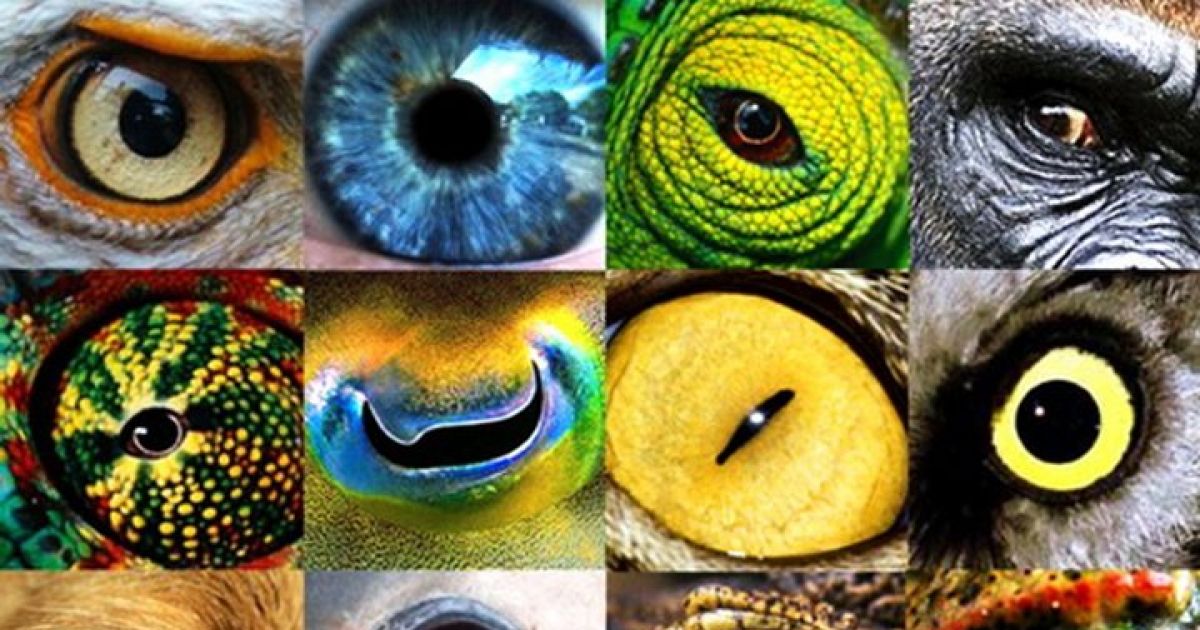
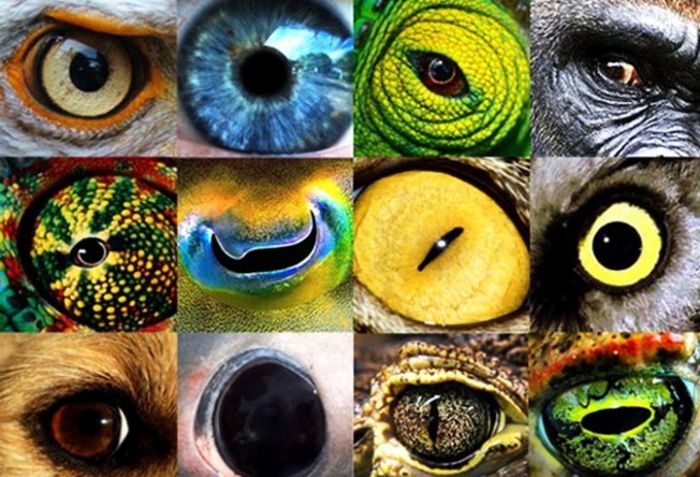
We cannot actually see through another life form’s eyes, but through science we can make a close approximation, and it's pretty amazing.
advertisement
#1 Have You Ever Wondered Just What Your Dog Or Fish Is Seeing When They Look At The Same Things We Do?
The following are side by side comparisons of how humans and animals view the world differently. The images are pretty cool!
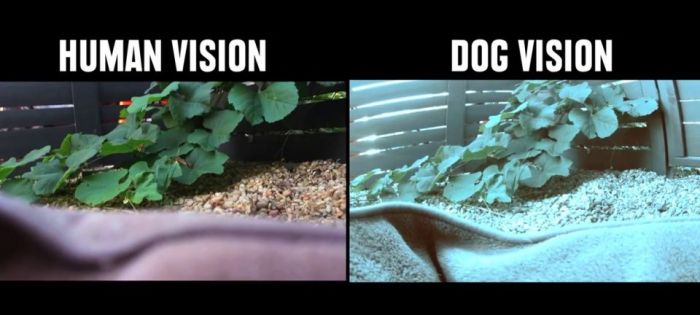
#2 Dog Vision
Dogs can see browns, yellow, and blue, and have a wide peripheral view due to the way their eyes are set. Their vision is not strong, and they rely on scent and sound primarily as their sensory detection. Most of the things they see would look grey in color to humans.
advertisement
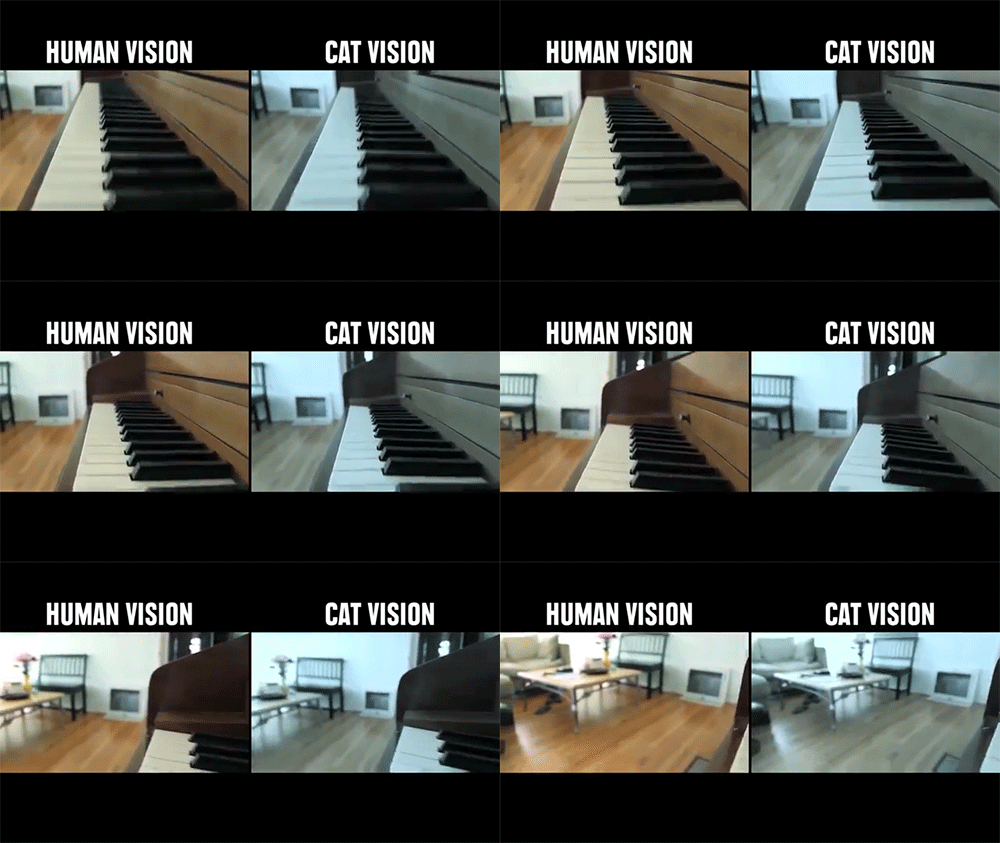
#3 Cat Vision
Cats in particular have weak vision. They are color blind, and cats more so than dogs. They have a second, inner eye lid for protection from dust and dirt, and see only in yellow, brown, and light blue. Just like dogs, they rely on other senses like their hearing for detection.
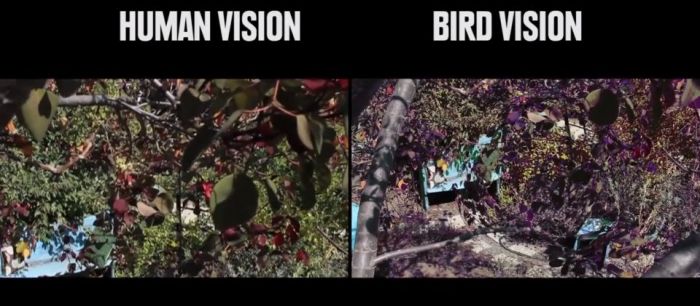
#4 Bird Vision
Unlike humans, birds are tetrachromats. Their four types of cone cells let them see red, green, blue, and ultraviolet together. Although their peripheral vision is much wider than ours. Their sight is keen and sharp, and can usually see for long distances. Many birds can see differently. Pigeons, for example, can see literally millions of different hues and are thought to be among the best at color detection ability of any animal on earth.
advertisement
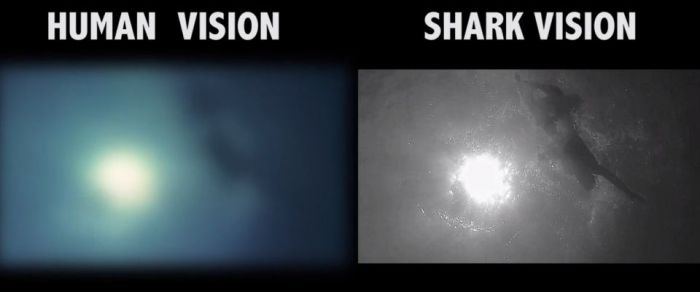
#5 Shark Vision
Sharks see in black and white. I guess in the ocean they don't really need to see in color. Everything they see, is crisp and clear, even in dirty water. They also have a great sense of smell which aids them in tracking food. Their eyes look similar to humans, but function very differently.
advertisement
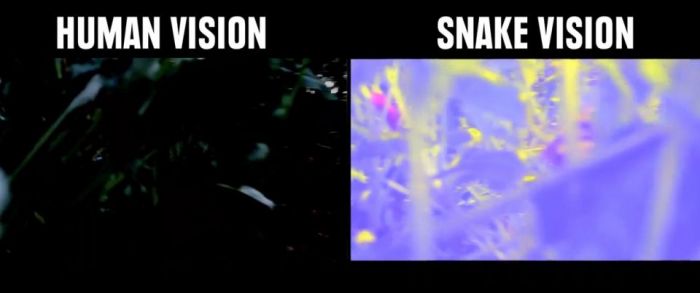
#6 Snake Vision
Snakes have two sets of eyes. One set is the normal eyes that you see, and they detect color quite well. But they also have vision pits that detect heat and "see" living creatures like an infrared detector. There is no getting away from a snake once you're spotted. That closed door won't help. Luckily most snakes are more likely to retreat than attack.
advertisement
#7 Fish Vision
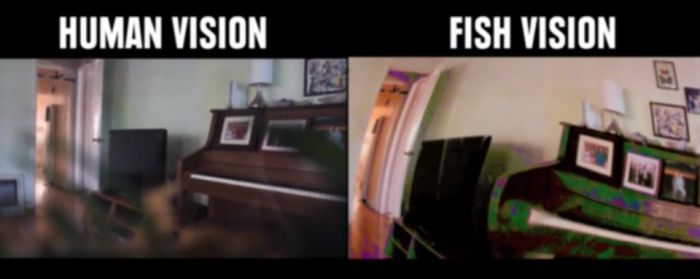
Fish have ultraviolet receptors, and can see red, yellow, and blue. A fish's vision varies significantly from species to species. Ornamental fish such as goldfish have even better vision than humans. A fish's eyes are located on either side of its head, each boasting a 180-degree field of perception. They have just one blind spot, right behind the tail fin. They can make out the tiniest detail in clear waters.
advertisement
#8 Rat Vision
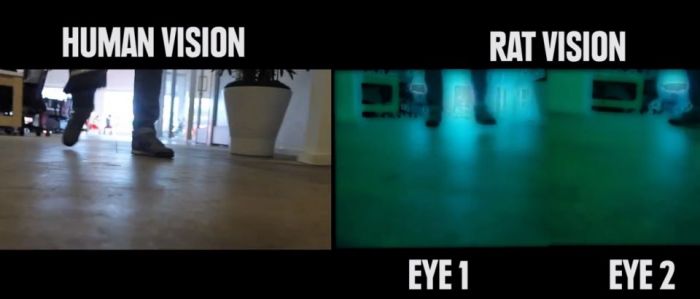
Rats can actually move each eye individually. This just makes them a little more creepy and disgusting. In the realm of vision, a human's vision is much better than a rat's. Humans see three colors (blue, green and red) at high saturation levels, while rats probably perceive just a hint of ultraviolets, blues and greens. Rats depend on sound and scent for a lot of their sensory perception. However, they are able to look both left and right at the same time.
advertisement
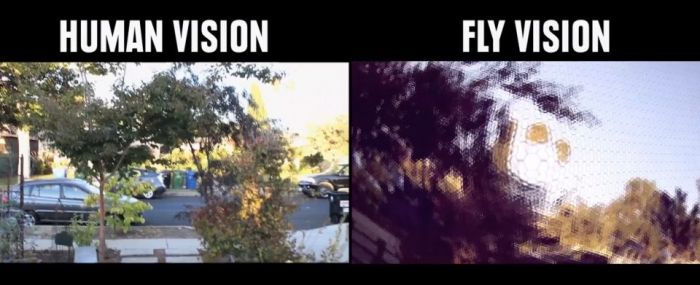
#9 Fly Vision
Flies can see everything. Their brain works so rapidly, it perceives most movement in slow motion. Flies do see color, but not usually as clearly as other animals. Their vision assists them in detecting movement. That's why they're so hard to kill! With their hundreds of thousands of tiny lenses in each eye, they can detect UV light from a long distance.