How The World's Currencies Got Their Names
By
Shehzad in
Amazing
On 18th March 2016
From country to country, monetary units vary nearly as much as the cultures and languages that use them. But have you ever wondered why a dollar is called a "dollar"?
A recent post on the Oxford Dictionary's OxfordWords blog explained the origins of the names of the world's most common currencies. In the slides below, find out where these everyday words come from.
#1 Dollar
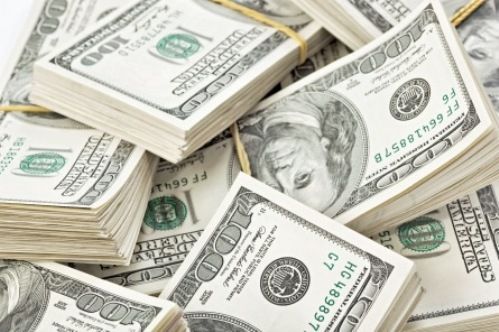
The dollar is the world's most common currency, used in the US, Australia, Canada, Fiji, New Zealand, and Singapore and elsewhere.
The sign is first attested in business correspondence in the 1770s as a scribal abbreviation "ps", referring to the Spanish American peso,that is, the "Spanish dollar" as it was known in British North America. These late eighteenth- and early nineteenth-century manuscripts show that the s gradually came to be written over the p developing a close equivalent to the "$" mark, and this new symbol was retained to refer to the American dollar as well, once this currency was adopted in 1785 by the United States.
According to OxfordWords, the Flemish or Low German word "joachimsthal" referred to Joachim's Valley, where silver was once mined. Coins minted from this mine became "joachimsthaler," which was later shortened to "thaler" and which eventually morphed into "dollar."
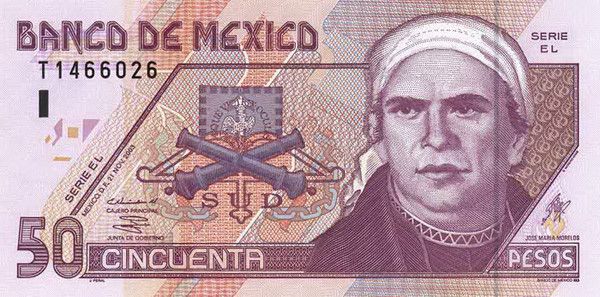
#2 Peso - literally means "weight" in Spanish.
The peso (meaning weight in Spanish, or more loosely pound) was a coin that originated in Spain and became of immense importance internationally. Peso is now the name of the monetary unit of several former Spanish colonies.
#3 Lira
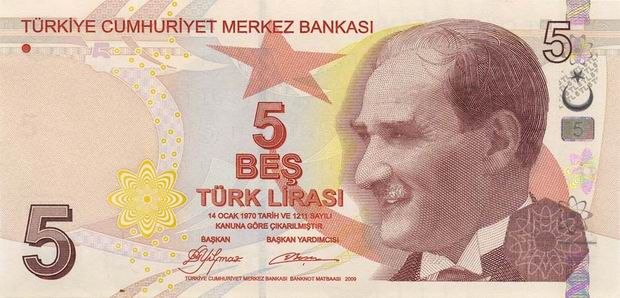
Lira (plural lire) is the name of several currency units. It is the current currency of Turkey and also the local name of the currencies of Lebanon and Syria. It is the former currency of Italy, Malta, San Marino and the Vatican City, all of which were replaced in 2002 with the euro, and of Israel, which replaced it with the old shekel in 1980. The term originates from the value of a Troy pound (Latin libra) of high purity silver. The libra was the basis of the monetary system of the Roman Empire. When Europe resumed a monetary system, during the Carolingian Empire, the Roman system was adopted, the so-called £sd (librae, solidi, denarii).
Particularly this system was kept during the Middle Ages and Modern Age in England, France, and Italy. In each of these countries the libra was translated into local language: pound in England, livre in France, lira in Italy. The Venetian lira was one of the currencies in use in Italy and due to the economic power of the Venetian Republic a popular currency in the Eastern Mediterranean trade.
During the 19th century, Egypt and the Ottoman Empire adopted the lira as their national currency, equivalent to 100 piasters or kuruÅŸ. When the Ottoman Empire collapsed in years 1918-1922, many among the successor states kept the lira as their national currency. In some countries, such as Cyprus, which have belonged to both empires, the Ottoman Empire and the British Empire, the words lira and pound are used as equivalents.
For Turkish lira, the Turkish lira sign (Turkish lira symbol 8x10px.png) is used. Otherwise L, sometimes in a double-crossed script form (₤) or less often single-crossed (£), is usually used as the symbol (occasionally a plain capital "L" crossed by a bar is used)
The Italian and Turkish "lira" come from the Latin word "libra," meaning "pound."
The Turkish lira was introduced in 1844 during Ottoman reign. Turkish Lira is now the currency of Turkey and Turkish Republic of Northern Cyprus.
#4 Mark
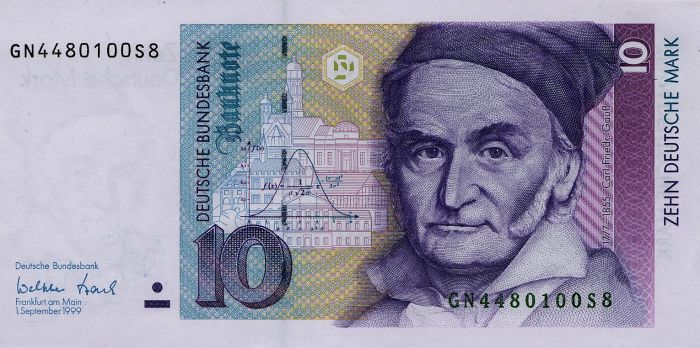
The mark was a currency or unit of account in many nations. It is named for the mark unit of weight. The word mark comes from a merging of three Teutonic/Germanic words, Latinised in 9th century post-classical Latin as marca, marcha, marha or marcus. It was a measure of weight mainly for gold and silver, commonly used throughout Western Europe and often equivalent to eight ounces. Considerable variations, however, occurred throughout the Middle Ages.
As of 2015, the only circulating currency named "mark" is the Bosnia and Herzegovina convertible mark.
#5 Rial
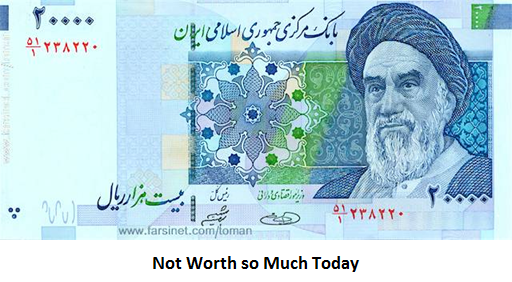
The Latin word "regalis," meaning "royal," is the origin for the Omani and Iranian "rial."
Similarly, Qatar, Saudi Arabia, and Yemen all use a currency called the "riyal." Before the euro, Spain used "reals" as well.
#6 Rand
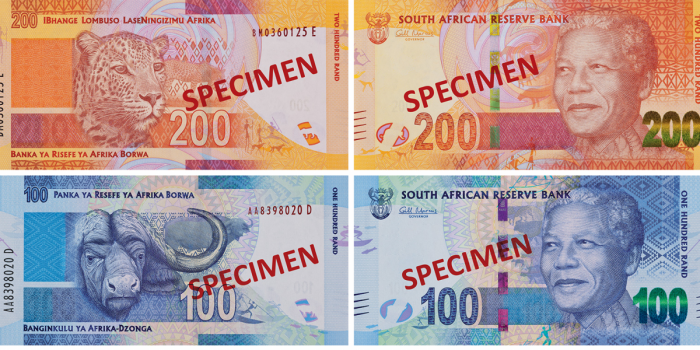
Like the dollar, South Africa's rand comes from the Dutch name for the South African city Witwatersrand, an area rich in gold.
The rand (sign: R; code: ZAR) is the currency of South Africa. The rand has the symbol "R" and is subdivided into 100 cents, symbol "c". Unlike the dollar, the decimal separator between a rand and cent is expressed by a comma. The ISO 4217 code is ZAR, from Dutch Zuid-Afrikaanse Rand (South African rand). The rand is the currency of the Common Monetary Area between South Africa, Swaziland, Lesotho, and Namibia.
Historical users of the South African rand included South-West Africa and the nominally independent bantustans under the apartheid system: Bophuthatswana, Ciskei, Transkei and Venda.
#7 Chinese yuan, Japanese yen, and Korean won
The Chinese character "圓," meaning "round" or "round coin," is responsible for the name of the Chinese yuan, Japanese yen, and Korean won.
#8 Crown
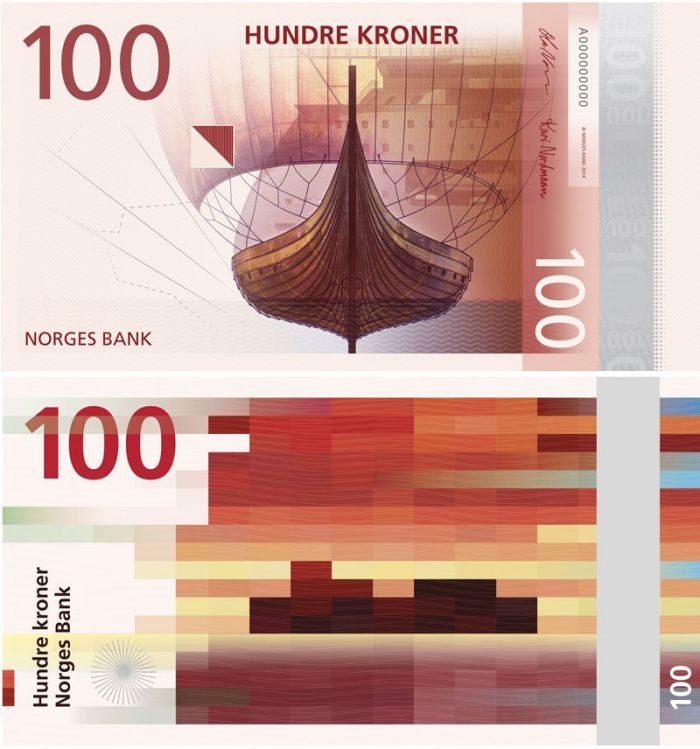
The crown is a monetary unit (currency) used in the countries of Czech Republic, Denmark (including the territory of Faroe Islands and Greenland), Iceland, Norway and Sweden. It was formerly also used by Slovakia and Estonia until 2009 and 2011, respectively.
The names are derived from the Latin word corona ("crown"). The symbol of crown is usually "kr". Some countries use another symbol for it like ÃÂkr, -, KÄÂ. Various names for crown depend on official language of country
#9 Dinar
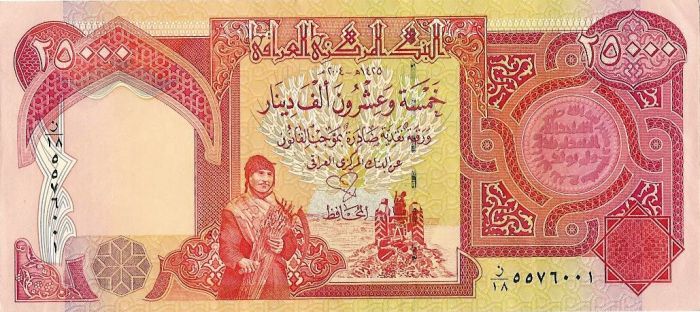
The dinar or denar is a main currency unit in modern circulation in nine mostly-Islamic countries, and has historic use in several more.
The English word "dinar" is the transliteration of the Arabic دينار (dÄ«nÄÂr), which was borrowed via the Syriac dÄ«narÄ from the Greek δηνάÏÂιον (denárion), itself from the Latin dÄ“nÄÂrius. The gold dinar was an early Islamic coin corresponding to the Byzantine denarius auri.[3] A gold coin known as the dÄ«nÄÂra was also introduced to India by the Kushan Empire in the 1st century AD, and adopted by the Gupta Empire and its successors up to the 6th century.The modern gold dinar is a modern bullion gold coin.
#10 Rupee
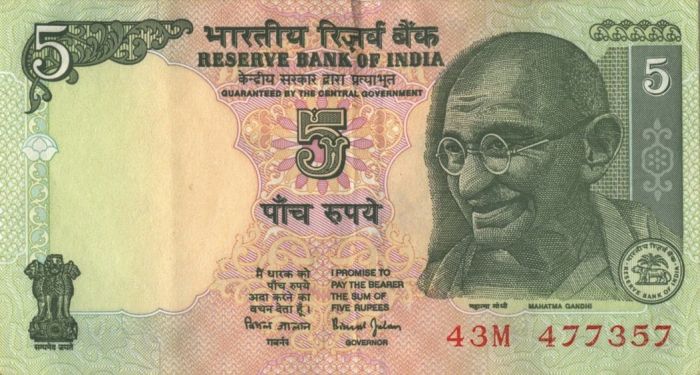
The rupee is the common name for the currencies of India, Sri Lanka, Nepal, Pakistan, Indonesia, Mauritius, Seychelles, Maldives, and formerly those of Burma and Afghanistan.
In the Maldives, the unit of currency is known as the rufiyah, which is a cognate of the Hindi rupiya. The Indian rupees (₹) and Pakistani rupees (₨) are subdivided into one hundred paise (singular paisa) or pice. The Mauritian and Sri Lankan rupees subdivide into 100 cents. The Nepalese rupee subdivides into one hundred paisas (both singular and plural) or four sukas or two mohors.
#11 Pound
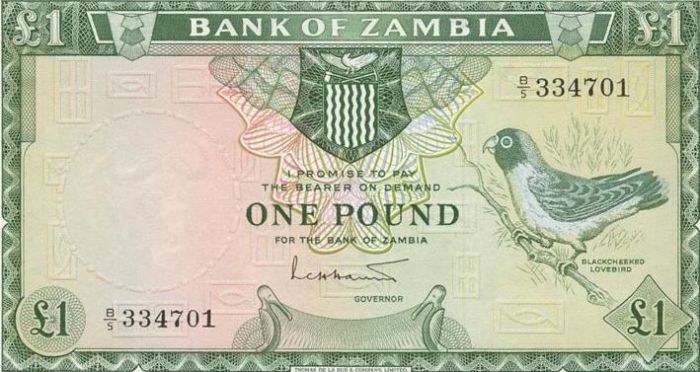
The pound is a unit of currency in some nations. The term originated in Great Britain as the value of a pound (weight) of silver.
The word pound is the English translation of the Latin word libra pondo, which means "weighed on to scales" and was the unit of account of the Roman Empire. The British pound derived from the Roman libra, which is why the pound (mass) is often initialised to 'lb'; along with the French livre, the Italian lira and the Portuguese Libra, when, during Middle Ages the European countries adopted the LSD system.
The currency's symbol is £, a stylised representation of the letter L, standing for livre or lira. Historically, £1 worth of silver coins were a troy pound in weight; in April 2011 this amount of silver was worth approximately £300 sterling.
Today, the term may refer to a number of (primarily British and related) currencies and a variety of obsolete currencies. Some of them, those official in former Italian states and in countries formerly belonging to the Ottoman Empire, are called pound in English, while in the local languages their official name is lira.
#12 Ruble
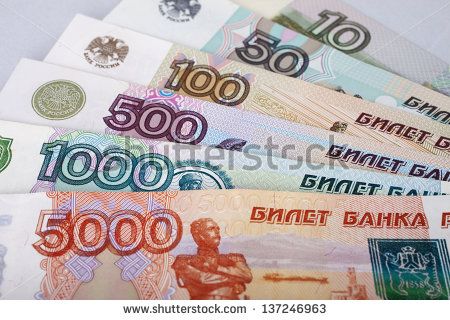
Russia's and Belarus' ruble are named after a measure of weight for silver.
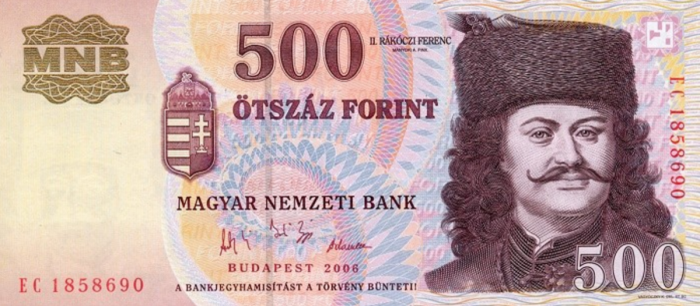
#13 Forint
The Hungarian forint comes from the Italian word "fiorino," a gold coin from Florence.
The fiorino had a flower, or "fiore" in Italian, stamped on it.
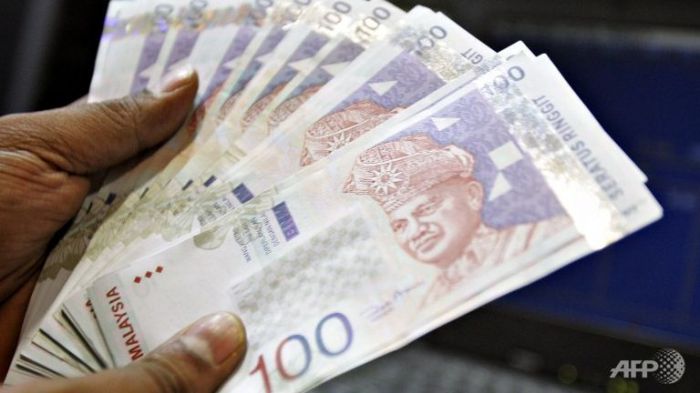
#14 Ringgit
When coins were minted in precious metals, thieves would shave off small portions of the metal to create new coins.
To combat this, countries began minting coins with jagged edges.
The Malaysian word for jagged is "ringgit," the name of the currency.
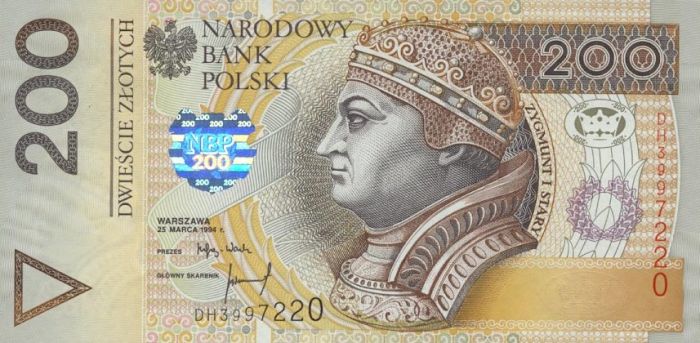
#15 Zloty
"Zloty" is the Polish word for "golden."