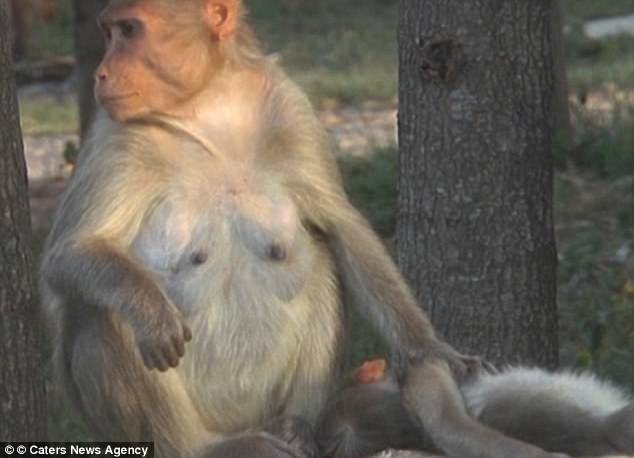
Macaque mother is seen EATING the remains of her own mummified baby after carrying its dead body around for weeks in 'astonishing' case of cannibalism.
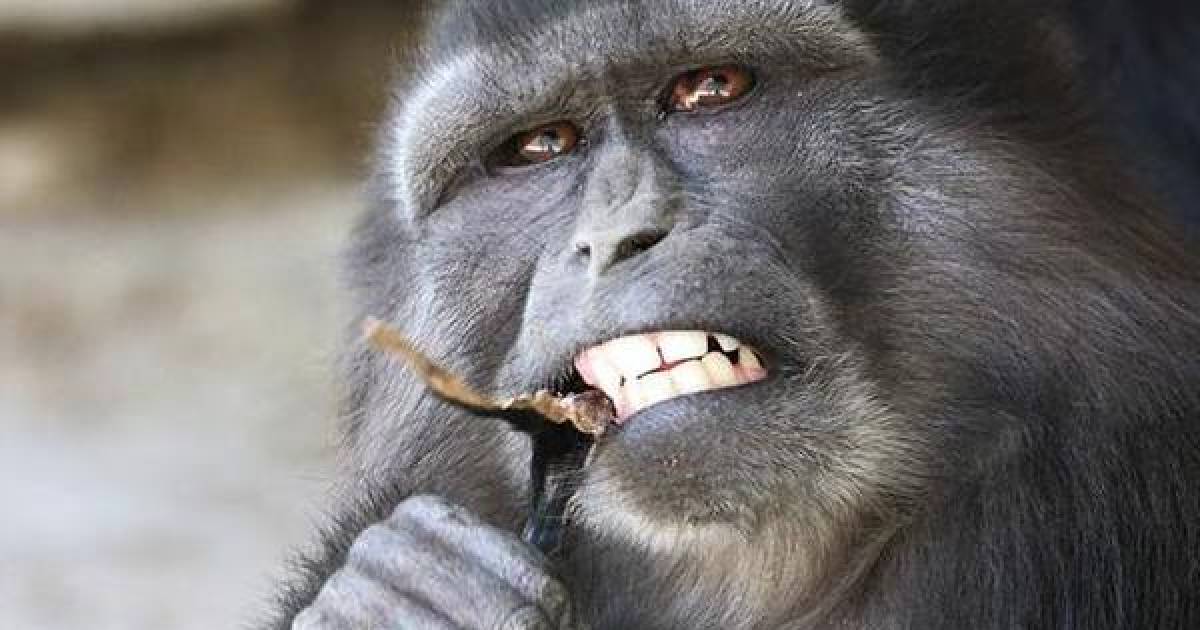
In A Bizarre Turn Of Events, Mother Monkey Is Observed Eating Her Mummified Baby.
By
Michael Avery in
Bizarre
On 29th September 2017
advertisement
#1
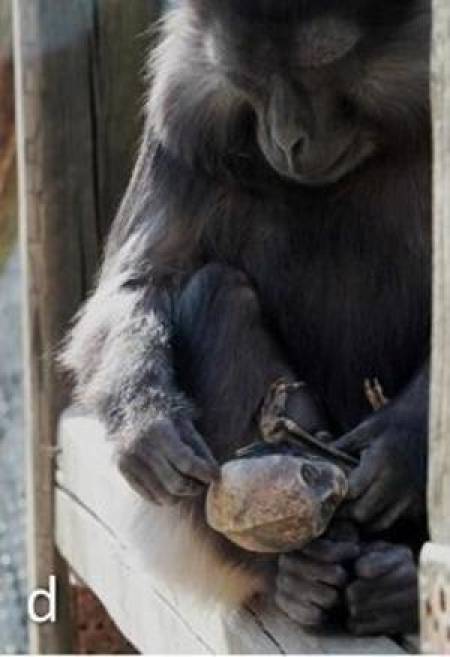
An episode of filial cannibalism observed in a normally vegetarian Tonkean macaque has baffled researchers who are trying to understand what motivated such behavior. A team of researchers observed the 4-year-old macaque, named Evalyne, in a wildlife park in Italy over a period of about four weeks following the birth of her baby.
#2
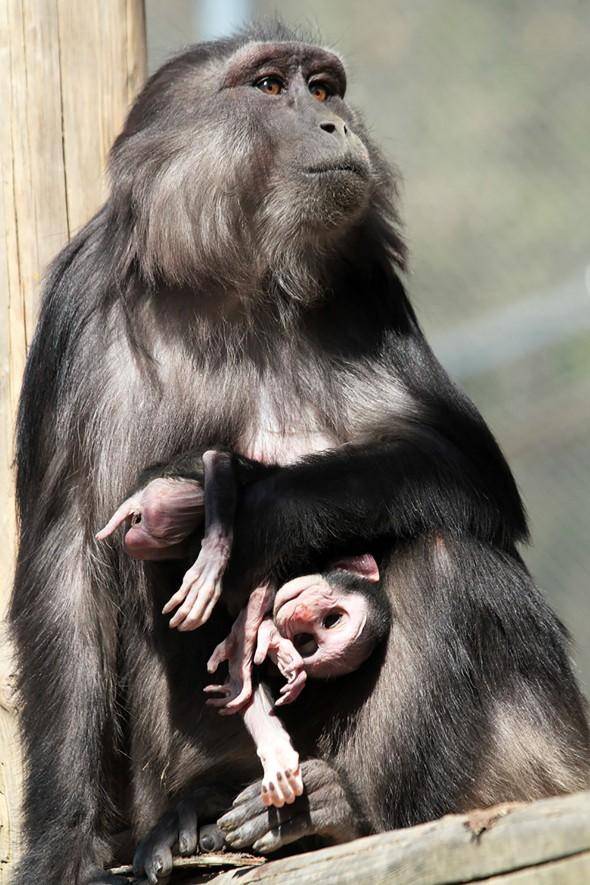
Researchers studying macaques at the Parco Faunistico di Piano dell’Abatino animal sanctuary observed a new mother named Evalyne "caring" for her deceased infant for weeks, and then consuming its mummified body until nothing but a single bone remained. Tonkean macaques — which are native to Southeast Asia — tote around their babies' corpses for hours or, even days. It could be a manifestation of grief or an absence of understanding that the offspring is dead.
advertisement
#3
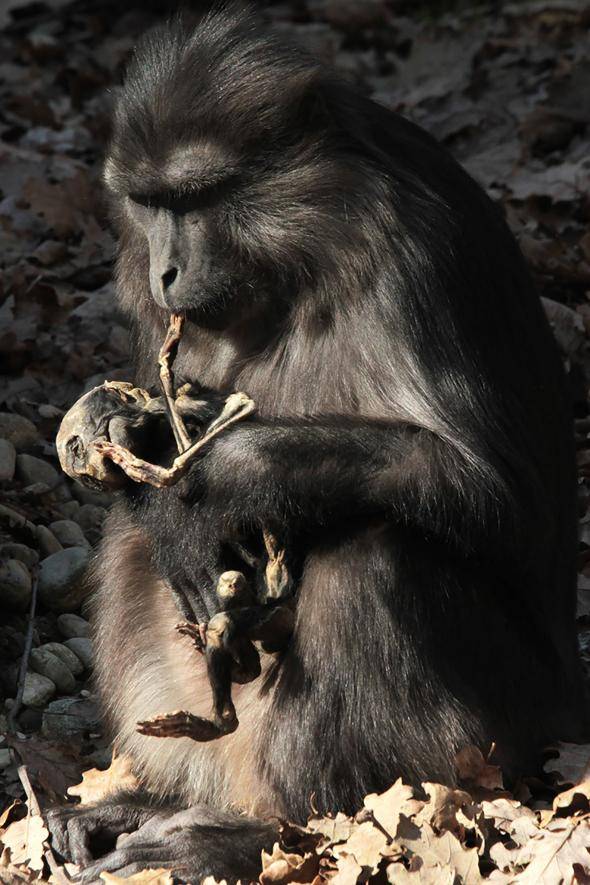
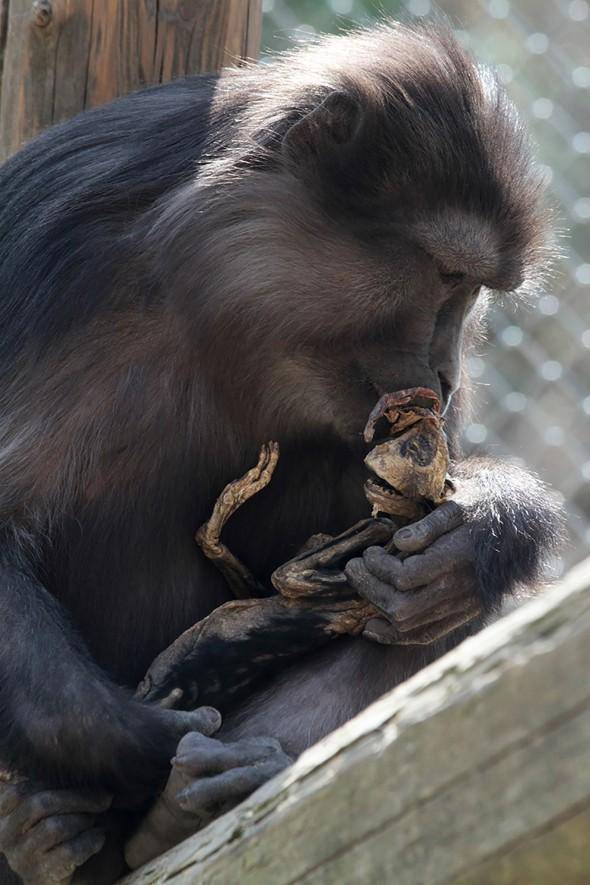
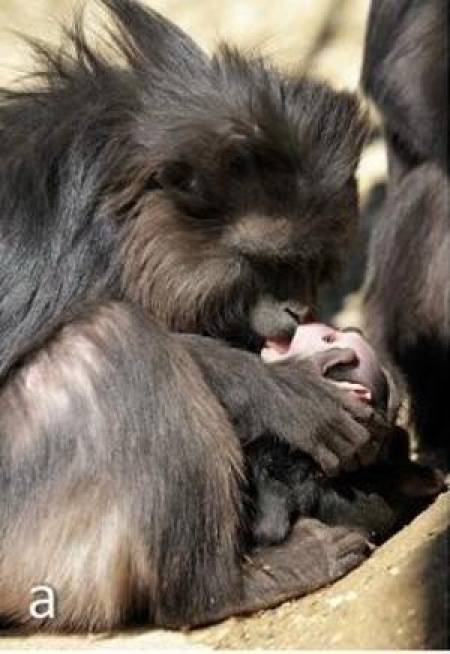
Evalyne was experiencing her first pregnancy, and the primates' first babies are often born dead or die after a few days. In Evalyne’s case, the infant died on the fifth day after the birth, for reasons the researchers weren’t able to assess. The death affected Evalyne’s behavior, which researchers describe as agitated and “repeatedly staring and screaming at her own image.” The macaque continued to take care of the infant corpse, licking it and grooming it for the entire first week after the baby’s death.
#4
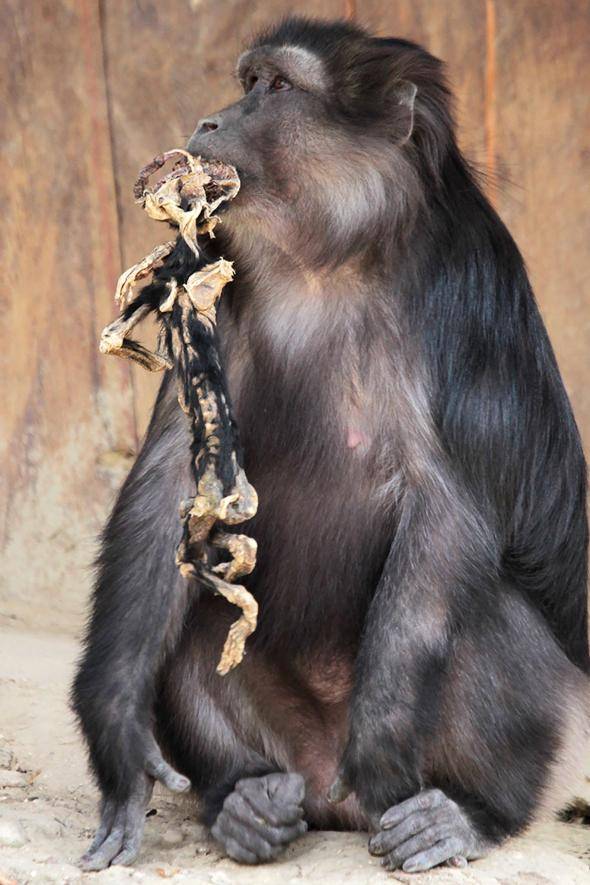
“This kind of behavior has been documented in chimpanzees and a few other primates, with mothers carrying their dead infant until it disintegrates,” notes Frans de Waal, a primatologist at Emory University who was not involved in the new research. Evalyne continued caring for the corpse for another week, even as the body reached complete mummification on the eighth day following its death. The skull detached on the 14th day. She would carry the body in her hand or in her mouth, holding it against her belly when resting.
advertisement
#5
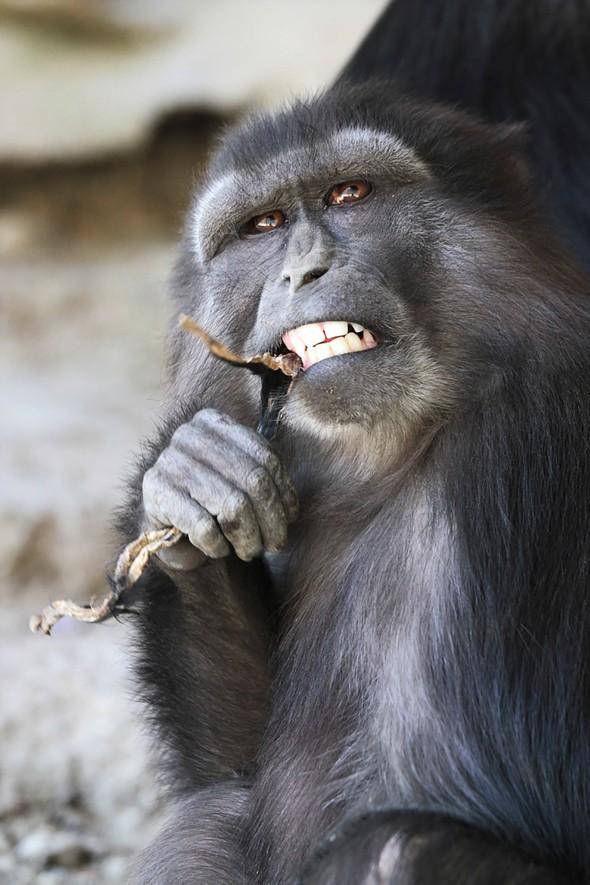
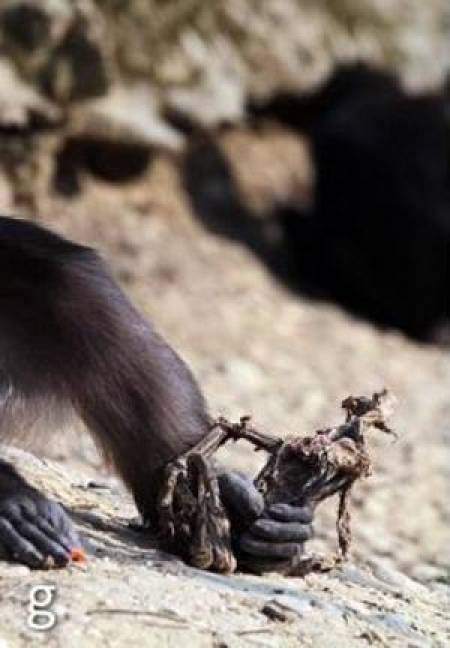
Researchers monitoring the macaque observed her detaching herself from the body only after 18 days. By comparison, most primates abandon their infant’s corpses within the first week of their death. Then, after 19 days, Evalyne was first observed “gnawing the dried flesh of the mummified corpse and eating small parts of it,” as researchers described it. By the 25th day since the infant’s death, all but one bone—likely an arm or a leg—had disappeared.
advertisement
#6
"The new part here is the cannibalism,” says de Waal. “Macaques do not normally eat each other.” Not only do Tonkean macaques not eat their own kind, “they are a vegetarian species and never eat meat," adds Arianna De Marco, an evolutionary biologist at Fondazione Ethoikos in Italy who led the research.
advertisement
#7
According to De Marco, both the length of the attachment to the body and the cannibalism episode are remarkable features of the case, the first time such behavior has been observed in the Italian wildlife park and one of the few such cases of filial cannibalism documented in academic literature—another such case was observed in Japanese macaques. De Marco told Newsweek that in other cases they have observed in the wildlife park, reactions to the infant corpses varied from curiosity to disgust, especially when the corpse begins to putrefy. Evalyne was the first among the macaque's group to tend to an infant's’ corpse, so she could not have mimicked previous behaviors.
advertisement
#8
“It is difficult to give an explanation for this behavior,” says De Marco, adding it may occur in the wild, too. “The dramatic change of maternal behavior from caretaking to cannibalistic attitude is astonishing." Other possible explanations for Evalyne's bizarre actions include her newness as a mother and the fact her baby was alive long enough to form a bond. In that sense, cannibalism may be the final, extreme expression of attachment to her baby, De Marco concludes.
advertisement
#9
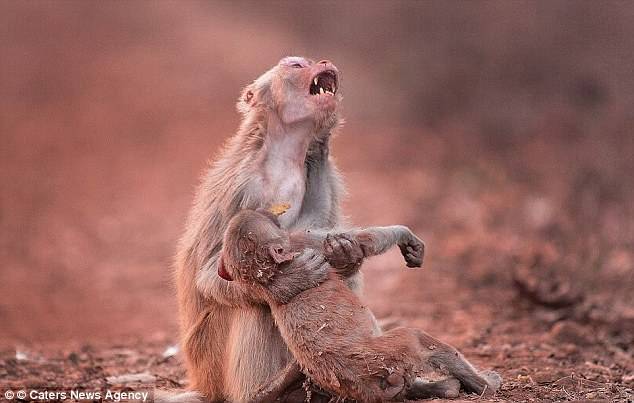
While many monkeys, such as this one in Jabalpur, India, are known to mourn their babies, this is one of the first times a monkey has been seen to eat their remains.
advertisement
#10
Many species of monkey are known to carry their babies' dead bodies around for several days in an act of grief. Pictured is a mother monkey who carried her baby for day in Bangalore after it died.