

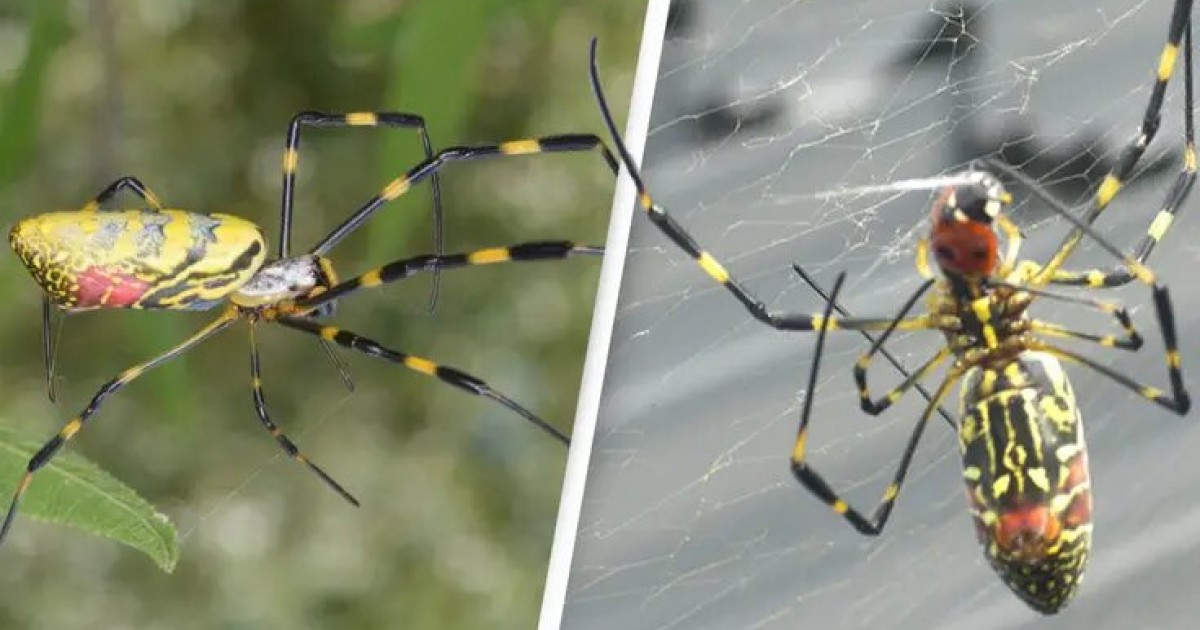
This is not for the faint-hearted, and especially not for those who are afraid of spiders. According to a study conducted by a group of University of Georgia scientists, the East Coast, notably Georgia, would see an influx of a spider species known as Trichonephila clavata, or the Joro spider in Korea, China, and Taiwan.
Invasive Parachuting Spider Could Cover Entire East Coast, Study Says
By
Haider Ali in
News
On 9th March 2022
advertisement
Because of their capacity to withstand colder temperatures, the spiders are projected to continue expanding from Georgia across the whole East Coast, according to CBS.
'So in our experiment, we exposed them to a brief period of cold only for a couple of minutes at below-freezing temperatures and most of the Joros did just fine,' co-author of the study, Andy Davis, reflected.
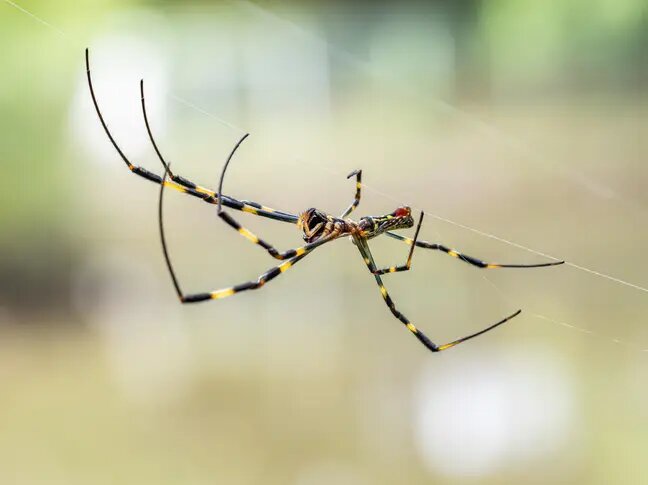
A Joro spider. (Alamy)
Researchers discovered that the Joro will be able to rain down on the East Coast and ride the wind by utilizing their webs as parachutes. According to The Independent, spiders may use this technique to travel up to 100 miles.
Benjamin Frick, an undergraduate at the University of Georgia's Odum School of Ecology and a co-author of the study, noted how swiftly the spiders are expected to spread because they have "no predators" on the East Coast.
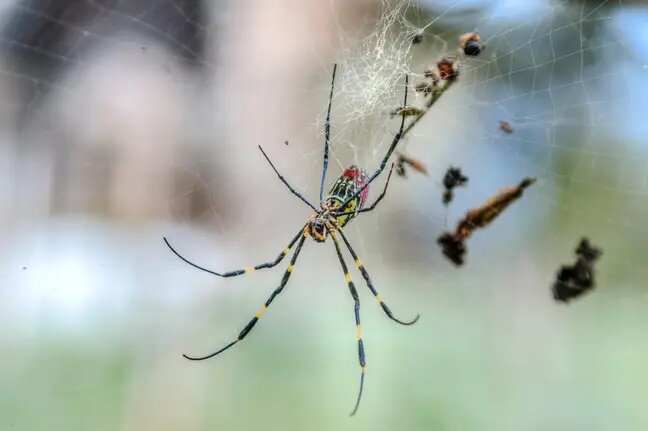
A Joro spider. (Alamy)
advertisement
He said: 'No predators, it doesn’t have anything that’s controlling its population size in the new habitat, but it has perfect conditions to spread.’
'We had a Joro being found in Oklahoma, we tracked the person who made the observation and it turned out it was a student from here', Davis noted.
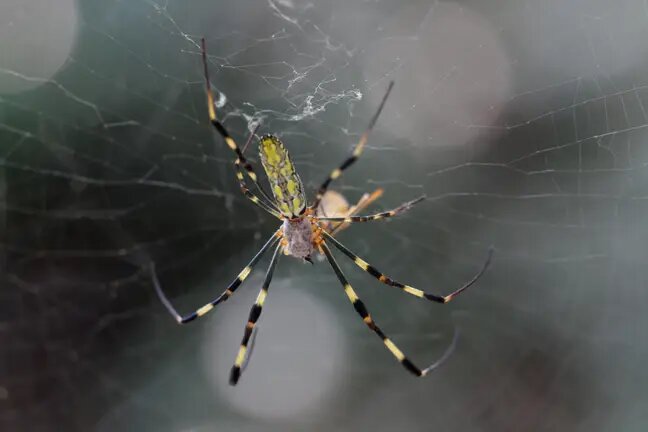
A Joro spider. (Alamy)
To reassure the public, researchers noted that being bitten by one of the venomous spiders is extremely rare.
'Its fangs are so small relative to most human skin that it probably won’t be able to get its fangs into you even if it wanted to,' Frick commented.
If you were to get bitten, the amount of venom is said to be so small that you wouldn't need medical attention.
advertisement
According to the Associated Press, the spiders in this category are noted for their ability to spin stunning wheel-shaped webs.
Around late spring and early summer, keep an eye out for an inflow of parachuting spiders (May and early June). Although the largest webs are formed by the group's female spiders, who are distinguished by their bright blue, red, and yellow markings, you'll have to wait until Autumn to see them.
advertisement
While some people were outraged by the news, Nancy Hinkle, an entomologist at the University of Georgia, pointed out the importance of spiders in crop protection.
She said: 'This is wonderful. This is exciting. Spiders are our friends. They are out there catching all the pests we don’t want around our home.'