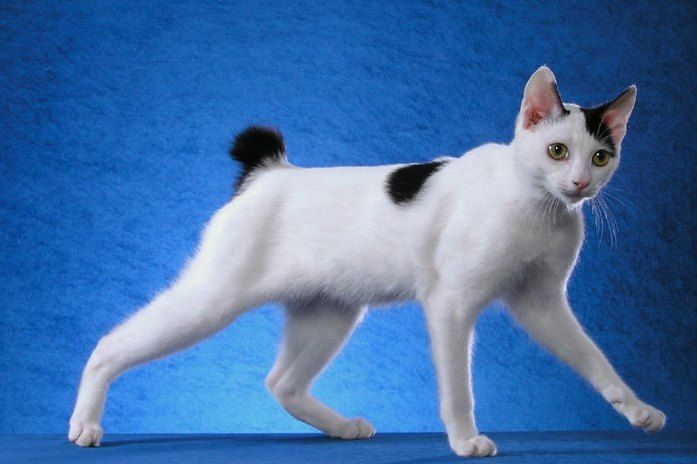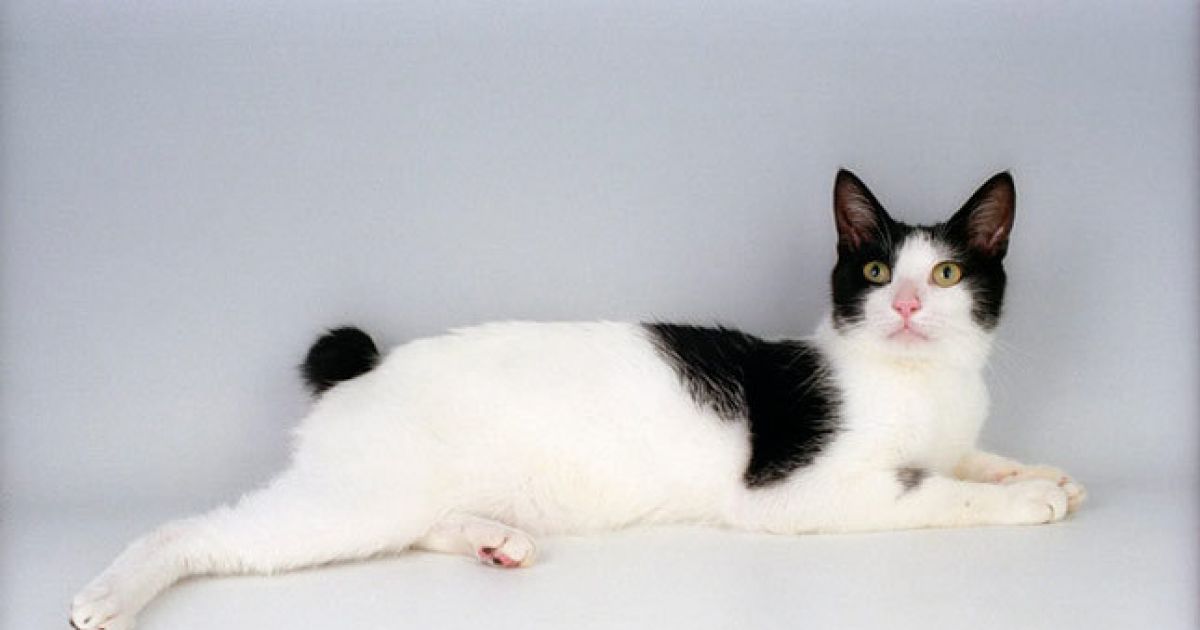
This fun-loving cat brings good luck to everyone who is fortunate enough to live with him — or so it’s believed in his homeland of Japan.
advertisement
The Japanese Bobtail is a rare and ancient breed, found in Japan and across most of southeast Asia.
The breed has been depicted in works of art that we know to be centuries old. The cat is much-cherished in its native land; many myths and legends (as well as historical stories) surround the breed.
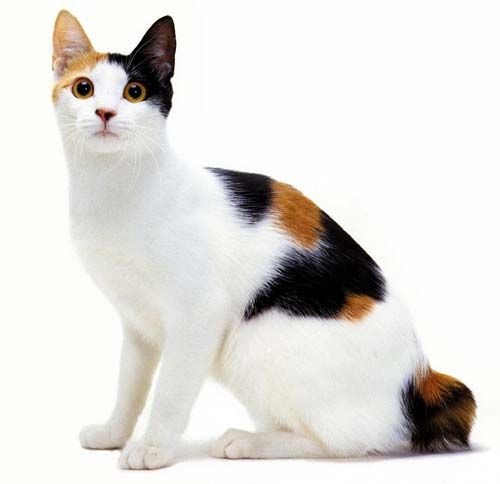
One of the more famous surrounds the maneki-neko, the beckoning cat, which is a stylized rendition of a Bobtail seated with one paw raised.
Considered to be a good-luck charm, a maneki-neko statue is often found in store fronts.
advertisement
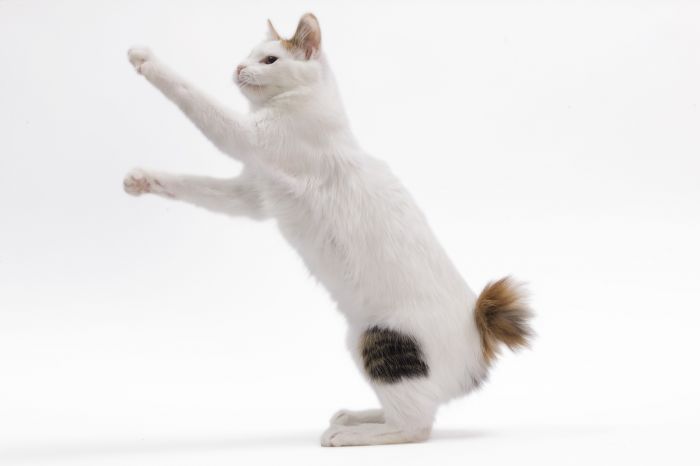
His stump of a tail, which resembles a pom-pom, is the result of a natural genetic mutation.
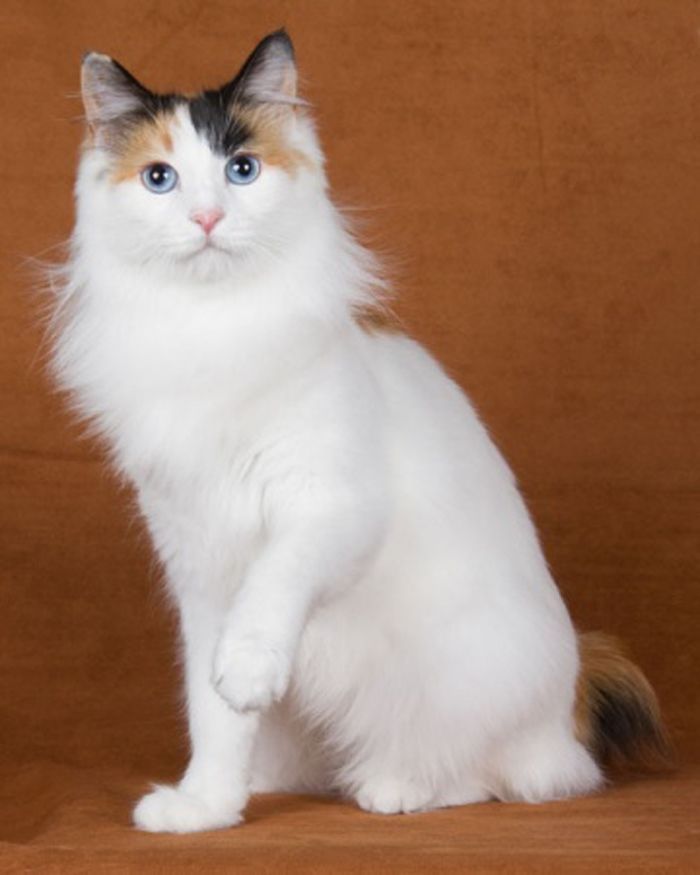
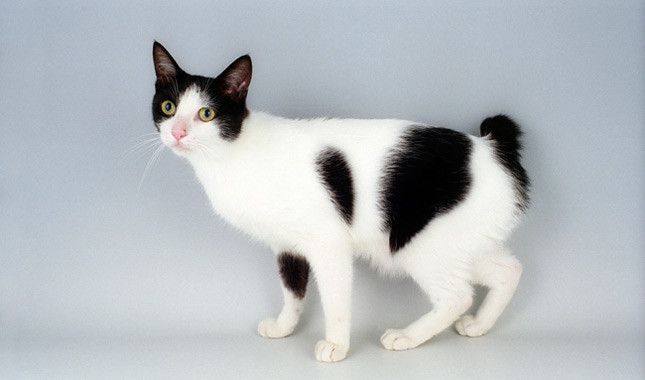
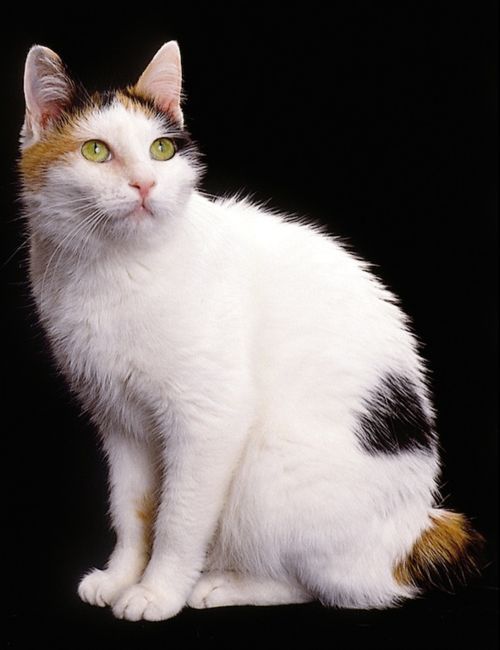
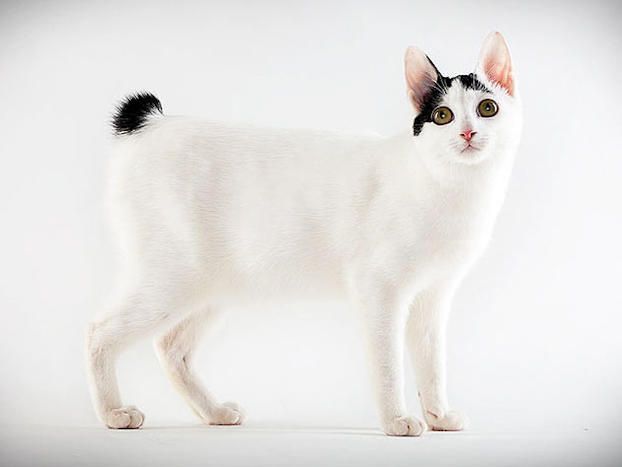
Other characteristics of the breed are a triangular head, high cheekbones, a long nose, oval eyes that may be blue or odd colored, and hind legs that are slightly longer than the front legs. The Japanese Bobtail is a small cat, weighing 5 to 10 pounds. He has a soft, silky coat that can be short or long and comes in a variety of colors and patterns, but the tricolor is most popular.
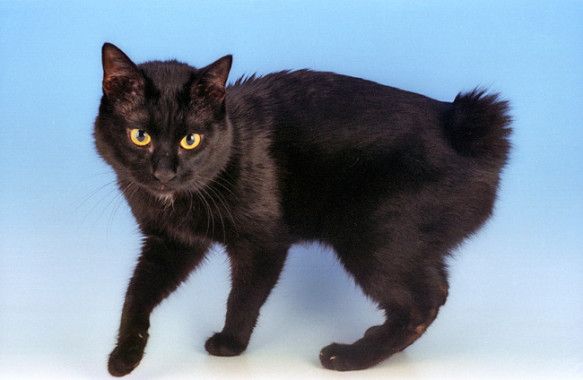
The Japanese Bobtail is active and intelligent. It’s not unusual to find him splashing his paw in water, carrying toys around, or playing fetch
He is highly curious and loves to explore his surroundings. Japanese Bobtails are talkative, communicating with a wide range of chirps and meows. Their voices are described as almost songlike.
advertisement
A born show cat, the Japanese Bobtail is bold, curious, alert, and easily smitten with strangers.
Always attentive and loving, the Bobtail makes for a wonderful companion. In fact, if it sees a distraught person, the Bobtail will offer a paw for comfort.
advertisement
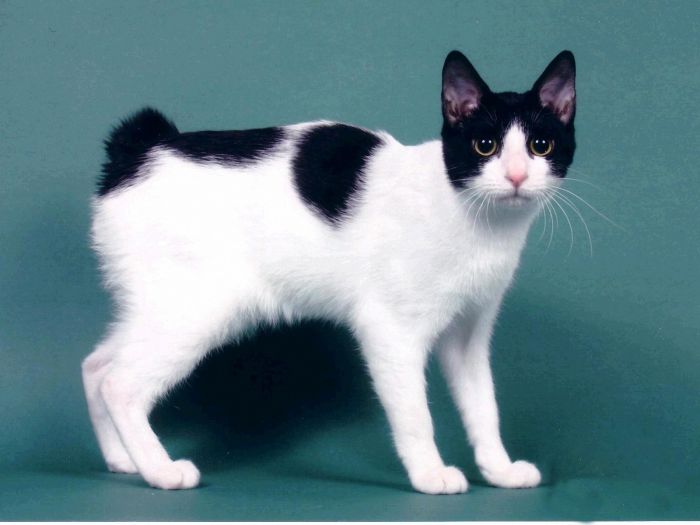
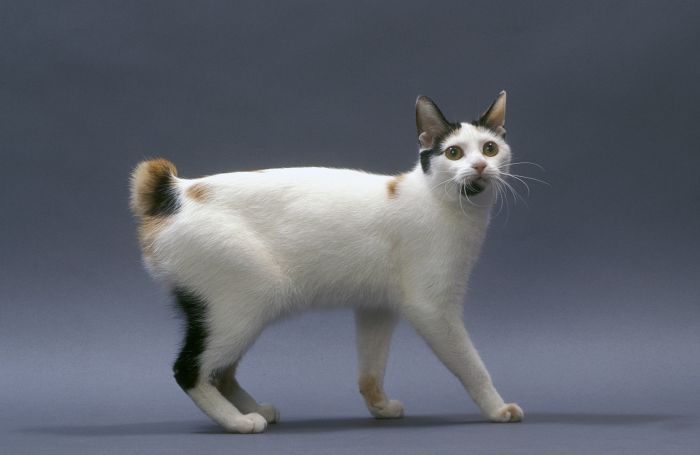
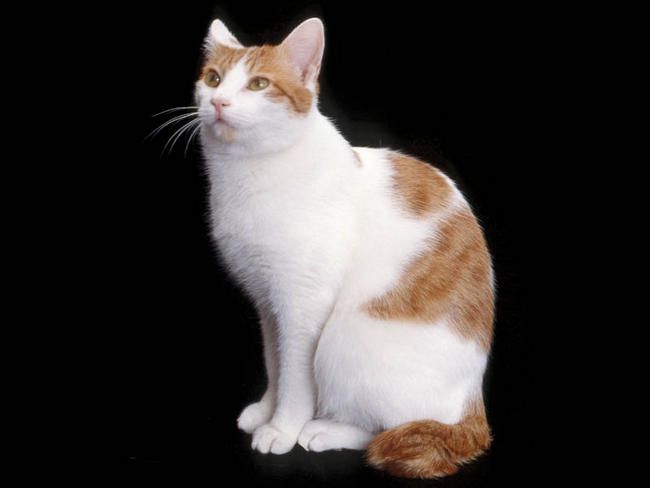
The most popular color is known as Mi-ke (translates into “three fur”), which is white with red and black splotches.
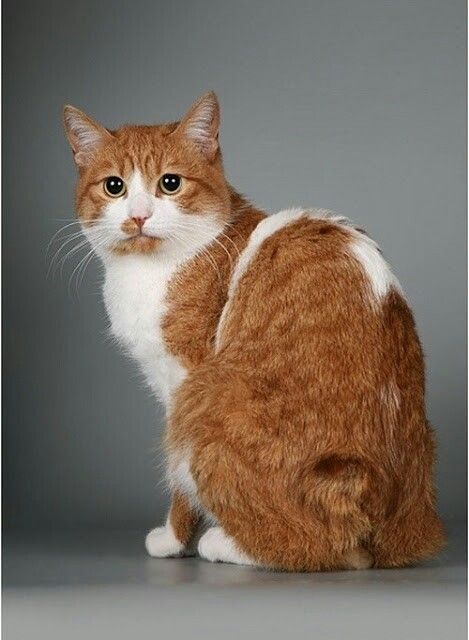
This breed comes in shorthaired and longhaired varieties and features bi-color and tri-color coats in solids, tabby patterns and tortoiseshells.
advertisement
Noticeably missing is a long bushy tail.
Most Japanese Bobtails are tailless, but some do have a short tail or a "rise" tail. The tails can be rigid or flexible but rarely longer than three inches.
advertisement
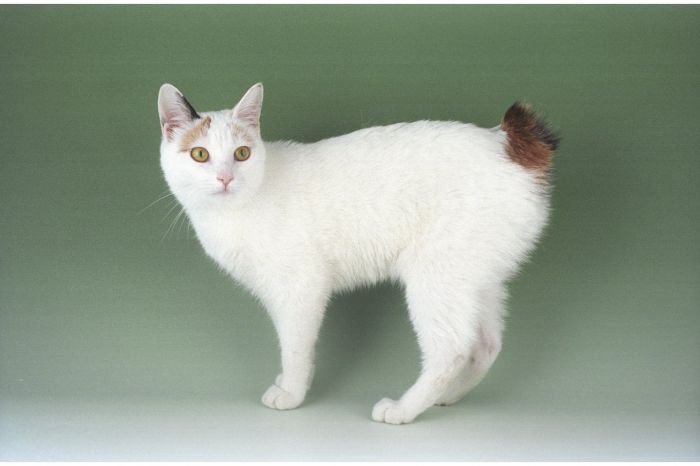
The gene responsible for the pom-pom tail is a simple recessive
Bobtail to Bobtail crosses produce 100 percent Bobtail offspring. The Bobtail gene is not related to the Manx gene and doesn't appear to be associated with any genetic defects. The tail's fur camouflages the underlying bone structure, which varies greatly from cat to cat. The tail is usually about 4 inches (10 cm) long, but curls into a corkscrew shape so it appears much shorter.
advertisement
The tail is unique not only to the breed, but to each individual cat.
Like out finger prints, no two tails are ever alike. The tail must be clearly visible and is composed of one or more curves, angles, or kinks, or any combination. The furthest extension of the tailbone from the body should be no longer than three inches. The direction in which the tail is carried is not important. The tail may be flexible or rigid and should be of a size or shape to harmonize with the rest of the cat. The genetic factor which created the Japanese Bobtail is due to dominant genes and breeds true.
advertisement
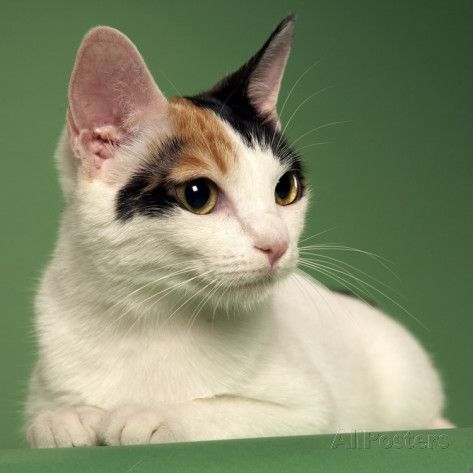
The other unique feature that distinguishes this breed from other breeds is that the back legs are slightly longer than the front legs, giving the back legs a very muscular appearance
The head of the Japanese Bobtail is triangular, and their ears are upright and at right angles to the head. Their eyes appear oval rather than round, giving an oriental cast to the face. They are a medium-sized cat, with males being slightly larger than the females.
advertisement
The Japanese Bobtail is one of the oldest naturally occurring breeds of cat and is native to the islands of Japan.
From written records it seems certain that the domestic cat first arrived in Japan from China or Korea at least one thousand years ago. It is believed that the original domestic cats came with the Buddhist monks in 600-700 A.D. and were brought to keep the rats out of the rice paper scrolls in the temples. In the 1600s, the silk trade found itself in jeopardy due to rats, and the Japanese Bobtail was pressed into service and thus became the street cat that it is today in Japan.
advertisement
Japanese Bobtails are very strong and healthy cats.
They usually have litters of three to four kittens that are large for newborns. Compared to other breeds, the kittens are active earlier, walk earlier, and start getting into trouble earlier!
This breed has a low kitten mortality rate and a high disease resistance rate.
Kittens are never born tailless, nor are they born with full tails. They are active, intelligent, talkative cats. Their soft voices are capable of nearly a whole scale of tones; some people say they sing. Since they adore their human's companionship, they almost always speak when spoken to.
advertisement
The Japanese Bobtail coat is easy to groom with twice-weekly brushing or combing.
You'll need to brush him more often during the spring and fall shedding seasons. Trim the nails as needed.