

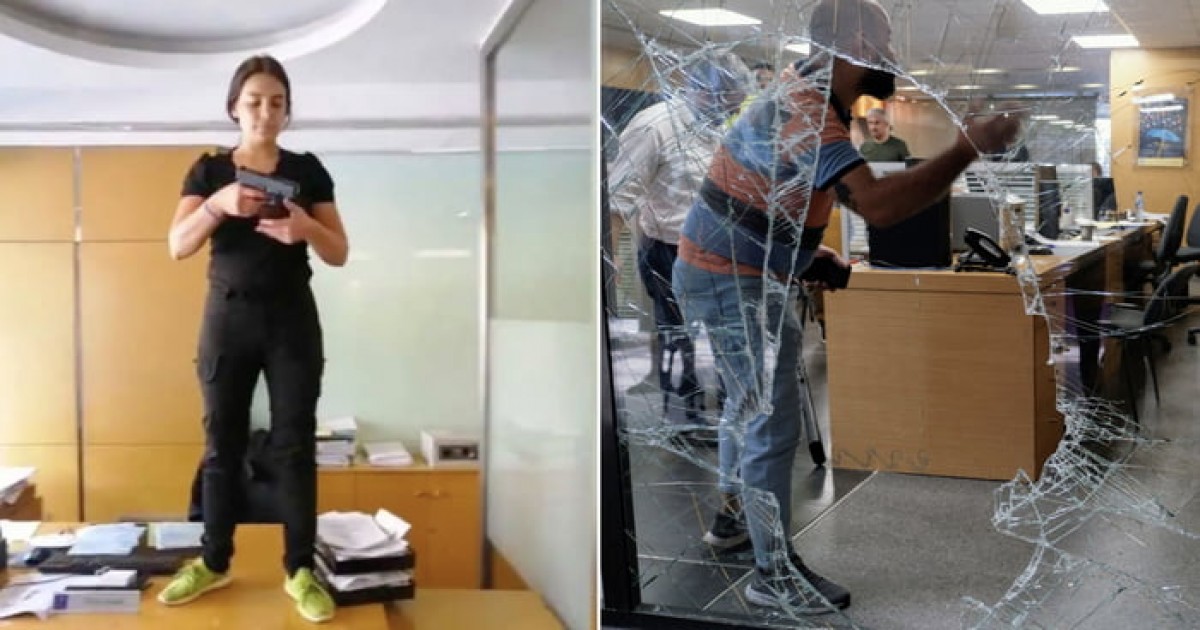
This Beirut woman is hailed a hero as she entered the bank with her nephew's toy gun and threatened to shoot the bank manager if they do not give her access to her trapped savings in the bank. The young woman told local media that she needs the money for her sister's cancer treatment and has nothing to lose now.
advertisement
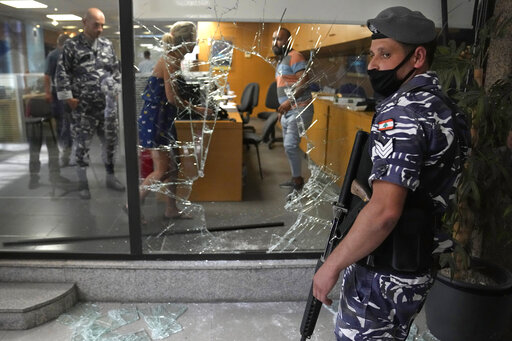
A woman in Lebanon along with activists broke into a Beirut bank branch on Wednesday with a toy pistol and took $13,000 from her trapped savings.
Sali Hafez told the local Al-Jadeed TV that she desperately needed the money for her sister's cancer treatment and she repeatedly begged the bank to help her. But she was informed that she could only receive $200 a month in Lebanese pounds.
Hafez confirmed the toy pistol belonged to her nephew.
Hussein Malla/AP
"I had begged the branch manager before for my money, and I told him my sister was dying, didn't have much time left," she said in the interview. "I reached a point where I had nothing else to lose."
Lebanon's cash-strapped banks have imposed strict limits on withdrawals of foreign currency since 2019, tying up the savings of millions of people.
About three-quarters of the population has slipped into poverty as the tiny Mediterranean country's economy continues to spiral.
Hussein Malla/AP
advertisement
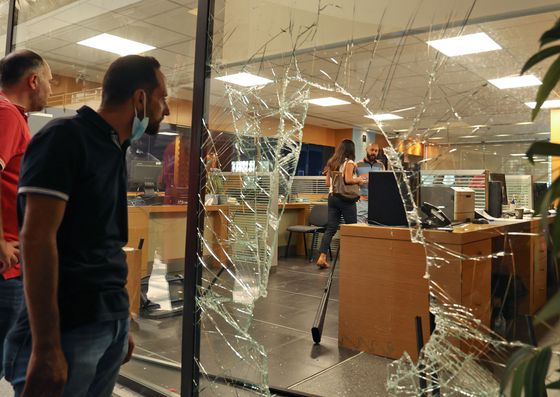
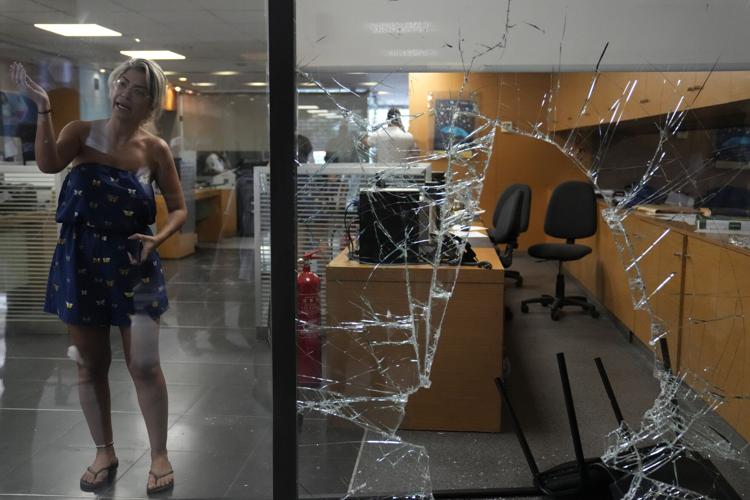
Hafez and activists from a group called Depositors' Outcry entered the BLOM Bank branch and stormed into the manager's office. Then they forced the bank employees to hand over the $12,000 and the equivalent of about $1,000 in Lebanese pounds.
Hafez told local media that she had a total of $20,000 in the bank and had already sold a lot of her personal belongings and was even considering selling her kidney to help with her 23-year-old sister's treatment.
Hussein Malla/AP
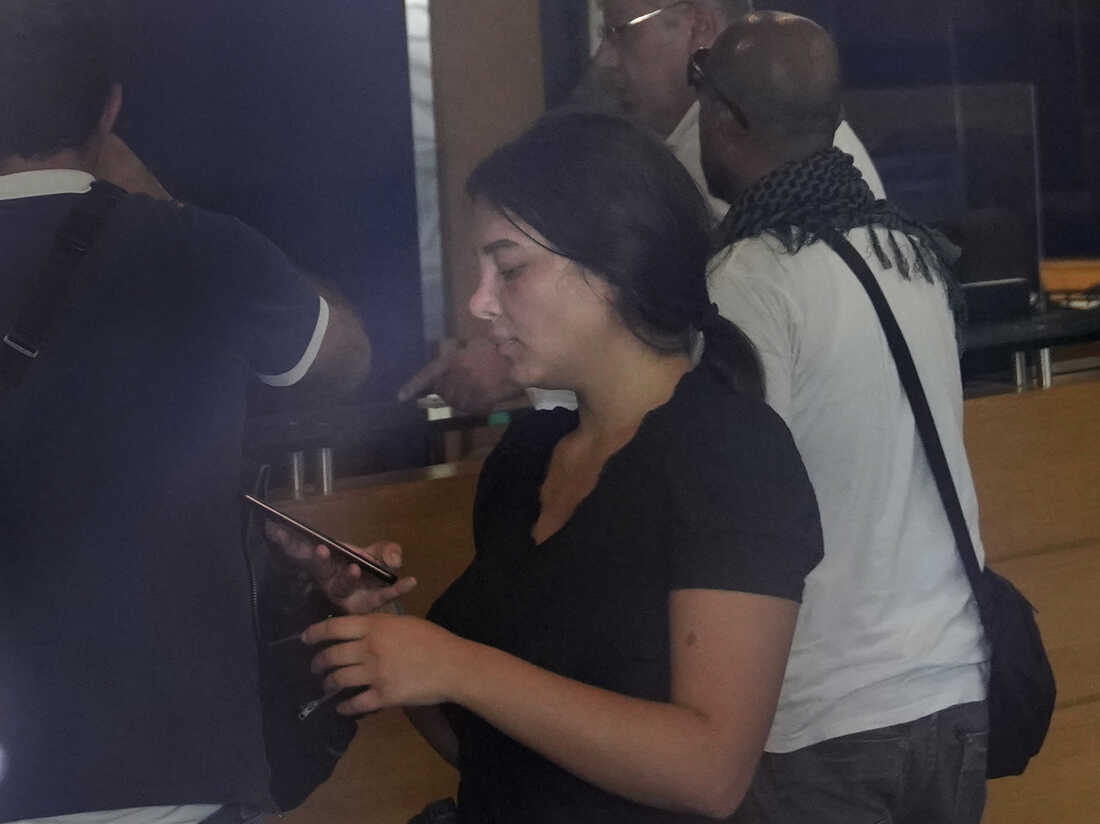
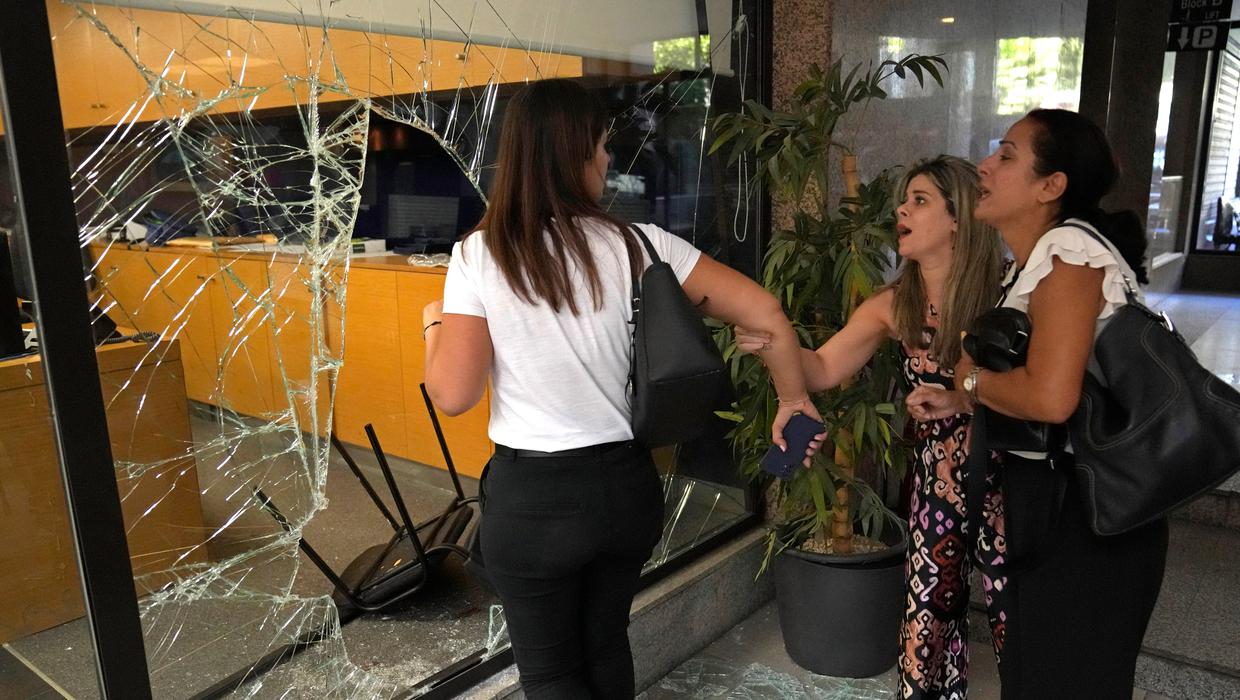
Nadine Nakhal, a bank customer, said the intruders "doused gasoline everywhere inside, and took out a lighter and threatened to light it." She said the woman with the pistol threatened to shoot the manager if she did not receive her money.
Hafez said in a live-streamed video she posted on her Facebook account that she did not intend to do harm. "I did not break into the bank to kill anyone or set the place on fire," she said. "I am here to get my rights."
Hussein Malla/AP
advertisement
As the news of a woman breaking into the bank viral, many across the country celebrated the young woman as a hero. Hafez also encouraged others to take the same path to gain access to their life savings.
Some of the activists entered the bank with Hafez, while others staged a protest at the entrance. Hafez eventually left with cash in a plastic bag, witnesses said.
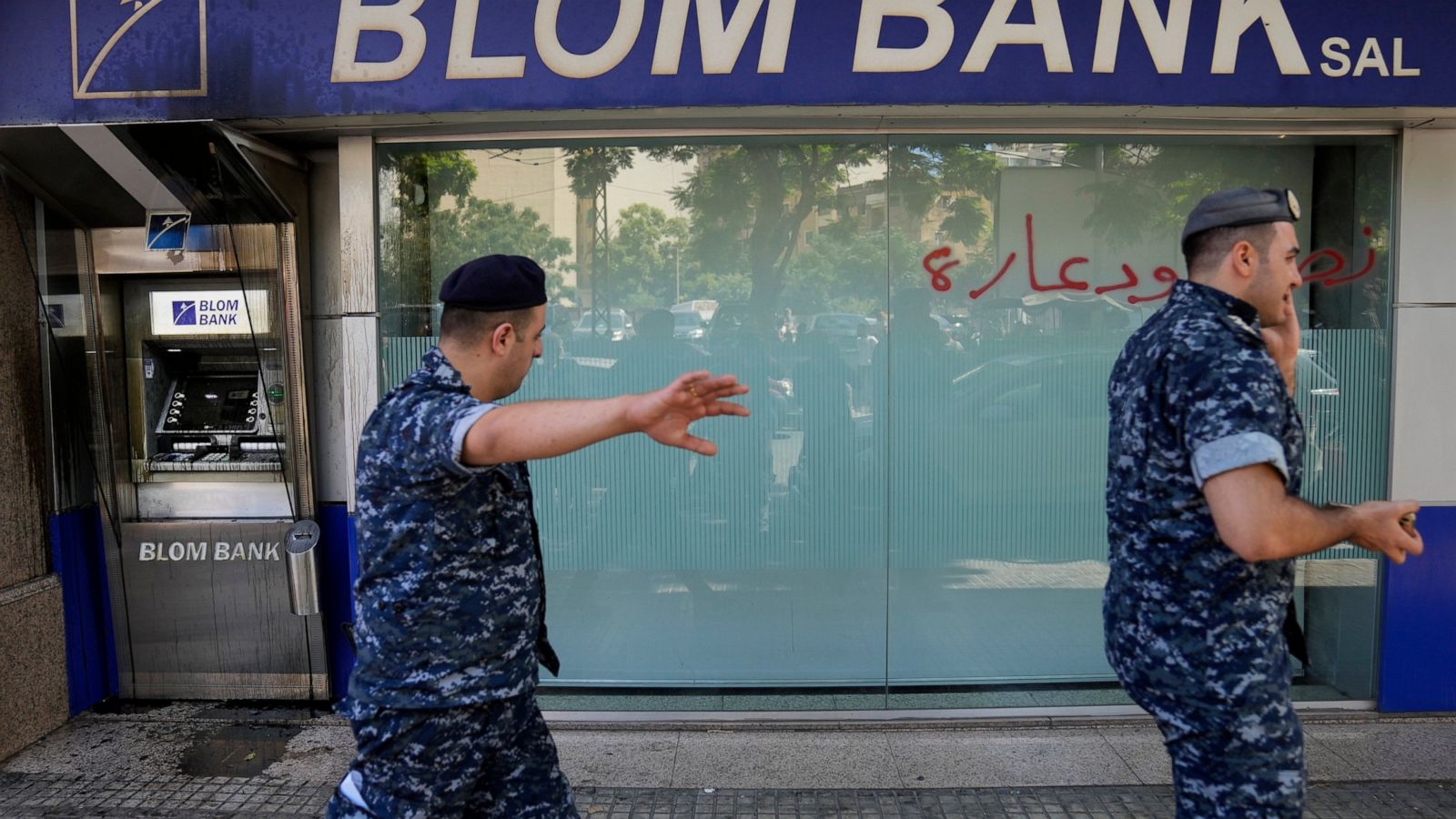
Security forces standing outside arrested several of the activists, including a man carrying what looked like a handgun. It was not immediately clear if this was also a toy gun.

Hussein Malla/AP
advertisement
Meanwhile, Alaa Khorchid who heads the Depositors' Outcry protest group said that a man communicating and coordinating with the group broke into a bank in the mountainous town of Aley to retrieve his trapped savings.
According to the local media, the man forcefully entered the BankMed branch with a shotgun without any shells loaded. However, he was unable o retrieve his savings and got apprehended.
Both incidents occurred weeks after a food delivery driver broke into another bank branch in Beirut and held 10 people, hostage, for seven hours, demanding tens of thousands of dollars in his trapped savings. Most hailed him as a hero.
"There is no government, no economic recovery plan, and little reserves left," Khorchid told the AP, adding that people have no choice but to "take matters into their own hands".
Hussein Malla/AP
advertisement
"These people worked for decades, but not for the rulers to build palaces while they can't afford a bottle of medicine."
On Wednesday night, activists closed a major road in Beirut outside a police barracks holding two activists who stormed the bank earlier in the day with Hafez. The protesters demanded the immediate release of the two men.
Hussein Malla/AP
For the past two years, Lebanon has been going through the worst economic crisis. So far, the country has failed to reach an agreement with the IMF on a recovery program that would give the country access to billions of dollars in international loan and aid to make the country viable again. Its government has struggled to function in a caretaker capacity since May, and its recently elected Parliament remains deeply divided.
advertisement
In the meantime, millions are struggling to cope with rampant power outages and soaring inflation.
"We need to put a stop to everything that is happening to us in this country," Nakhal said. "Everyone's money is stuck in the banks, and in this case, it's someone who is sick. We need to find a solution."
Hussein Malla/AP