Letting The Water Blast In Your Face... And Other Ways You’ve Got Showering Entirely WRONG
#1 Some common habits could do more harm than good
MANY of us wouldn't dream of skipping our morning shower.
But experts have warned that showering daily, and even the ways many of us do so could be harmful - and revealed their top tips for a healthy showering habits.

#2 Don't wash too often - Experts say there's no need to shower daily
A study at the University of California found that washing too often can cause problems as it disturbs the skin's natural bug flora, which are used by the body to help prevent infections.
John Oxford, Professor of Virology at Queen Mary's School of Medicine and Dentistry, in London, explains: "As long as people wash their hands often enough and pay attention to the area of the body below the belt, showering or bathing every other day would do no harm.
"Even twice a week would not be a problem if people used a bidet daily as most infectious bugs hang around our lower halves.
"We pay too much attention to the body beautiful and smelling good, with perfumes for men and women.
"We should wash to stop cross-infection, not for grooming reasons."
Washing too vigorously can also strip the skin of its own oils, which can cause dehydrated, dry skin and make conditions such as eczema worse.
The heat of the water bringing blood to the surface of the skin can also cause inflammation and itchiness.
And when you do get in the shower, you should be sure to not stay in there too long - as you may not realise it, but too much exposure to water can actually lead to dry skin.
Dr Anjali Mahto, a constultant dermatologist and British Skin Foundation spokesperson told MailOnline: "You probably shouldn't be showering for more than 20 minutes. Water is an irritant, so the longer you're in there, the more irritated and dry your skin will become.
"Oil from the sebaceous glands hydrate the skin, so showering for too long strips it of moisture."

#3 Turn the temperature down - Hot, hard water can exacerbate skin conditions
The kind of water you shower in can also have an effect - with cooler, softer water being the preferable option.
Dr Laura Ishmail, an aesthetic doctors, warns that water with a high level of calcium can irritate the skin of eczema sufferers - and even recommends getting a water filter for your shower.
Meanwhile, you might think that letting the hot water from the shower run on your face will make it extra clean - but it actually causes unsightly damage.
Kaye Scott told Daily Mail Australia: "A hot shower can cause and exacerbate fragile capillary networks in the cheeks, leading to unattractive, visible capillary networks and worsened impaired skin conditions."
And hot water is also bad news for your hair - as it causes the sebaceous gland to secrete extra oil, making your hair more greasy.
But this effect can be combatted to some extent by washing the hair gently - and only using a small amount of shampoo.
Hairdresser Andrew Barton explains: "Don't rub your scalp too vigorously. This will encourage oil secretion from the sebaceous gland.
"By working your shampoo into the top section of the hair and then rinsing it out, it automatically cleanses the ends and stops damage occurring in the lengths."
It's also advisable to moisturise straight after a shower to combat the effects of hot water and prevent dryness, as the skin's pores are open
#4 Don't use so much soap - Soap can upset the body's balance of bacteria
While plenty of moisturiser is a must, it's a good idea to lay off other products - which could do more harm than good.
Experts warn that using soap everyday, in particular products containing harsh chemicals, can kill the 'good' bacteria which keeps skin clear and free of conditions such as eczema and acne.
As well as this, upsetting the body's balance of bacteria by using too much soap can affect our health - as the body is left unable to tell the difference between friendly and harmful germs.
In fact, Dr. Robyn Chutkan, founder of the Digestive Center for Women in Maryland, USA, told Health.com that the only places on the body which need daily soaping are the armpits and the groin - and the rest of the body can simply be rinsed.
She said: "Dirt doesn't cause diseasebut repeatedly killing off the good bacteria on our skin may actually harm our immunity."
Dr. Chutkan recommends washing your hands more regularly during cold and flu season - with soap and water for at least two seconds - but says not to bother with hand bacterial gels and hand sanitisers.
Instead, she encourages people to actually spend time in dirtier environments, such as farms and parks, to expose the body to new bacteria.
And Dr. Chutkan's advice is echoed by Hugh Pennington, Professor Emeritus of bacteriology at the University of Aberdeen.
He is concerned that many of us use harsh cleansers on our faces - which make us look better, but can once again encourage harmful bacteria to thrive.
He explains: "Cleansing is mainly to clear away dirt, which makes you look cleaner but as far as bacteria go, it could be a bad thing because it makes it more likely that harmful bugs will take their place."
#5 Ditch the shower accessories - Poufs should be replaced at least every 2 months
Poufs and loofahs feature in almost every bathroom - but while they're great for exfoliating, dead skin cells can get stuck in them, creating a haven for bacteria.
Dermatologist Dr Sam Bunting says: "The warm, damp environment of the shower is an ideal growth medium for bacteria and mould.
"Also, because poufs take time to dry and may well retain dead skin cells, it's a potential source of infection."
He also warns against over-exfoliating, which can put the skin at risk by breaking down the skin's barrier against infection - and advises replacing poufs every two months, and regularly cleaning by microwaving on a medium heat for 30 to 60 seconds.
Meanwhile, natural loofahs can be washed with soap and soaked in a litre of water with four - before leaving to dry naturally.
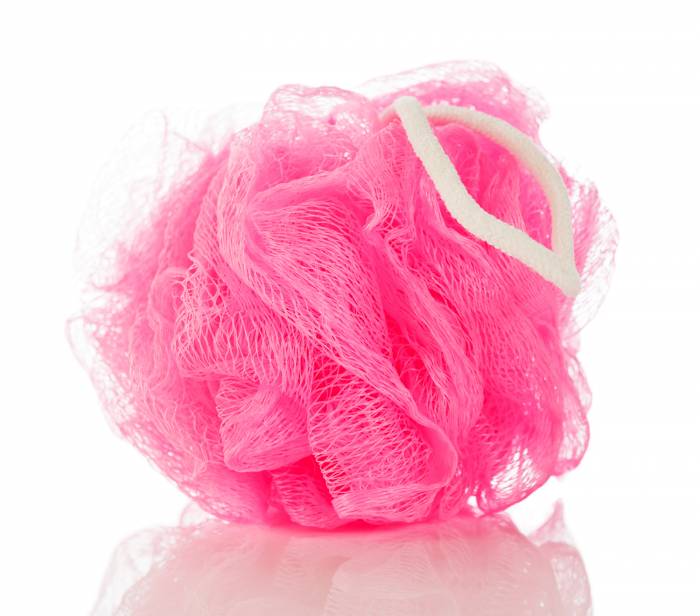
#6 Razors and poufs can be a breeding ground for bacteria
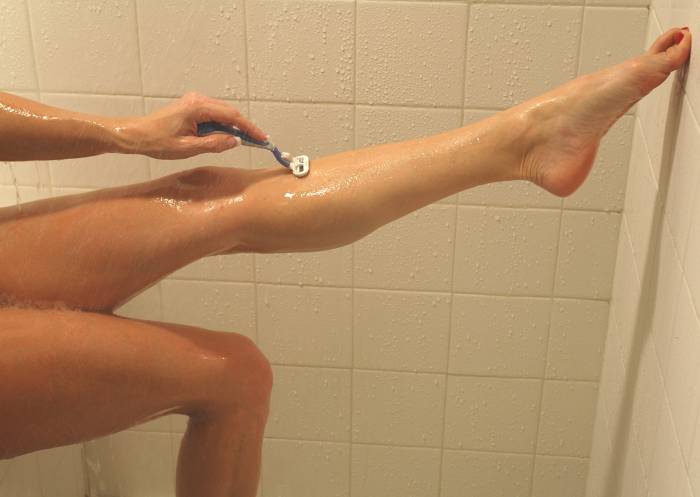
Many of us also keep a trusty razor in the shower - but stubble and potentially dangerous mould can gather in its mechanism, while the moisture can blunt its blades, leading to ingrown hairs and irritation.
Instead, it's best to keep a razor on a dry surface, clean it with surgical spirit and towel dry - and remember to replace it regularly.
Dr. Bunting advsies: Change a blade at the first sign that it starts to drag against the skin.
"If used every day, 10 days is a good rule of thumb."
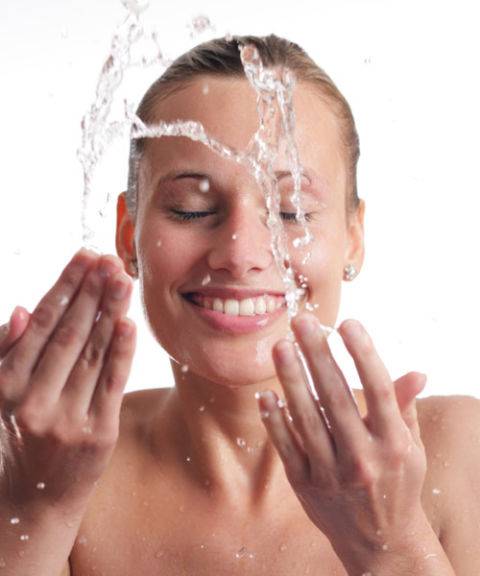
#7 LETTING THE SHOWER BLAST ON YOUR FACE
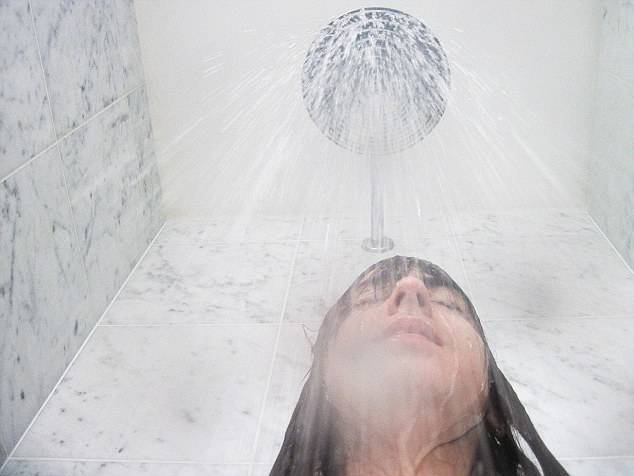
While many of us would assume that tilting our face upwards beneath refreshing running water is the key to getting squeaky clean skin, the heat and pressure of the water is in fact causing damage, skincare expert Kaye Scott told Daily Mail Australia.
'A lot of people still wash their faces under the shower, at the same temperature and pressure as what they wash their body with,' revealed Ms Scott, founder and co-director of The Clinic in Sydney's Bondi.
'But this is not a good idea.
'A hot shower can cause and exacerbate fragile capillary networks in the cheeks, leading to unattractive, visible capillary networks and worsened impaired skin conditions,' she said.
Other dermatologists agree that such hot conditions for our skin can lead to over-cleansing and can also rid our faces of their natural, protective oils.
Pleasurable as it might feel to stand under scalding hot water, it can serve to irritate and dry out the skin as well as dilating blood vessels - making your face look more red.
'The best way to keep your skin looking its flawless best is to cleanse and rinse at the bathroom sink, always ensuring the tap water is tepid, no hotter,' Scott said.
Because you're not directly facing in to the stream of water to rinse off your cleanser, you save your skin from damage.
When you wash your face at the sink you're cupping the water, which means you're using less and you are also making it cooler on your skin.
Plus, such a cleansing technique also gives you the option to turn on the cold tap and splash your face at the end of your routine, which can help to close your pores and stimulate circulation.
#8 WASHING YOUR FACE WITH A HARSH CLEANSER
Washing your face removes many bugs from the surface of our skin, particularly if you use cleansers containing alcohol as this kills bacteria.
Most cleansers also contain soap, and this reduces the amount of oil in our skin, which loosens the bacteria's hold so they fall off, explained Hugh Pennington, an emeritus professor of bacteriology at the University of Aberdeen.
This cleanliness is short-lived, as the layer of bugs rebuilds itself within about 20 minutes.
The problem is that we have bacteria on our hands, and when we touch our faces, as we inevitably do, many of the bugs that have adapted to live on moist surfaces such as our face will quickly be transferred back.
So, as Professor Pennington said, ‘cleansing is mainly to clear away dirt, which makes you look cleaner but as far as bacteria go, it could be a bad thing because it makes it more likely that harmful bugs will take their place'.
Both good and bad bacteria have an equal chance of recolonising the skin, added Dr Bowater, but antibacterial face washes may tip the balance in favour of the bad.
This is because they contain harsh chemicals that dry out the skin if used regularly, so could make it less friendly to good bacteria that like moisture, and give more chances for bad bugs to survive.
Swabs from various areas of the face have revealed 18 different kinds of bacteria that live exclusively on the side of our nose (in the crease between the nostril and our cheek), and 15 different species that live behind our ears, said Dr Bowater.
It is thought our relationship with these bugs is mutually beneficial.
The bugs act as a ‘barrier' to harmful bugs, while for the bugs themselves these fuller parts of the skin (compared with, say, the dry skin on our legs) is rich in nutrients such as salt from sweat and chemicals in hair follicles that they can live on.