


Going through a divorce is tough and often filled with bitter feelings, yet one man's reaction to his wife's decision to end their marriage was beyond what anyone could have anticipated.
advertisement
In the midst of a divorce, it's common to see disputes over assets like the family home or who gets custody of the kids.
However, for this particular man, the stakes were raised to an unprecedented level.
This was because, back when their relationship seemed to be on a more positive track, he had made the extraordinary gesture of donating one of his kidneys to his wife.
Such an act is profoundly moving, seemingly symbolizing the ultimate expression of love and dedication.
advertisement
However, Dr. Richard Batista took a drastic turn away from the spirit of this generous act when he demanded that his wife, Dawnell, either give back the kidney or compensate him with $1.5 million after she initiated divorce proceedings.
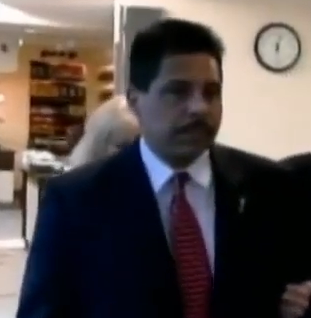
Dr Richard Batista demanded his wife return the kidney he donated.
Credit: CBS
The pair had married in 1990 and had three children during their time together.
Dr. Batista suggested that their marriage was already under strain due to Dawnell's health challenges.
Following her two unsuccessful kidney transplants, he chose to donate one of his kidneys in 2001, hoping it would save her life and perhaps salvage their marriage.
advertisement
He expressed to the media: "My first priority was to save her life. The second bonus was to turn the marriage around."
However, it appears that while Dawnell's life was indeed saved by the transplant, the hoped-for 'bonus' of a rejuvenated marriage did not materialize, leading her to file for divorce in 2005.
advertisement
In an extreme response, Dr. Batista accused his wife of infidelity and made the unusual demand for the return of his kidney or payment of $1.5 million in the divorce settlement.
His attorney, Dominic Barbara, stated that Dr. Batista was "asking for the value of the kidney" he donated to Dawnell.
advertisement
The consensus among experts, ranging from legal professionals to medical ethicists, was that Dr. Batista's claim was entirely unfounded.
Medical ethicist Robert Veatch commented: "It's her kidney now and ... taking the kidney out would mean she would have to go on dialysis or it would kill her."

Dawnell Batista filed for divorce in 2005.
Credit: CBS
Predictably, Dr. Batista's quest to reclaim the kidney or receive monetary compensation was unsuccessful in the divorce process.
advertisement
The Nassau County Supreme Court, in a detailed 10-page ruling, dismissed his claim, defining the kidney as a gift.
"The defendant's effort to pursue and extract monetary compensation therefore not only runs afoul of the statutory prescription, but conceivably may expose the defendant to criminal prosecution," matrimonial referee Jeffrey Grob elaborated.
advertisement
In the United States, the donation of an organ is legally recognized as a gift, a safeguard to deter the commercial trade of organs.
Despite the clear legal stance, Batista proceeded with his peculiar demand.
advertisement
Dawnell's lawyer, Douglas Rothkopf, expressed satisfaction with the ruling, stating: "We are pleased with the decision. Human organs are not commodities that can be bought or sold."