

Who would have thought that a persistent cough could be the harbinger of a parasitic nightmare? Well, for one unfortunate man, that's precisely what happened. When he went to the hospital to check his cough, he discovered that his body was infested with dozens of tapeworms.
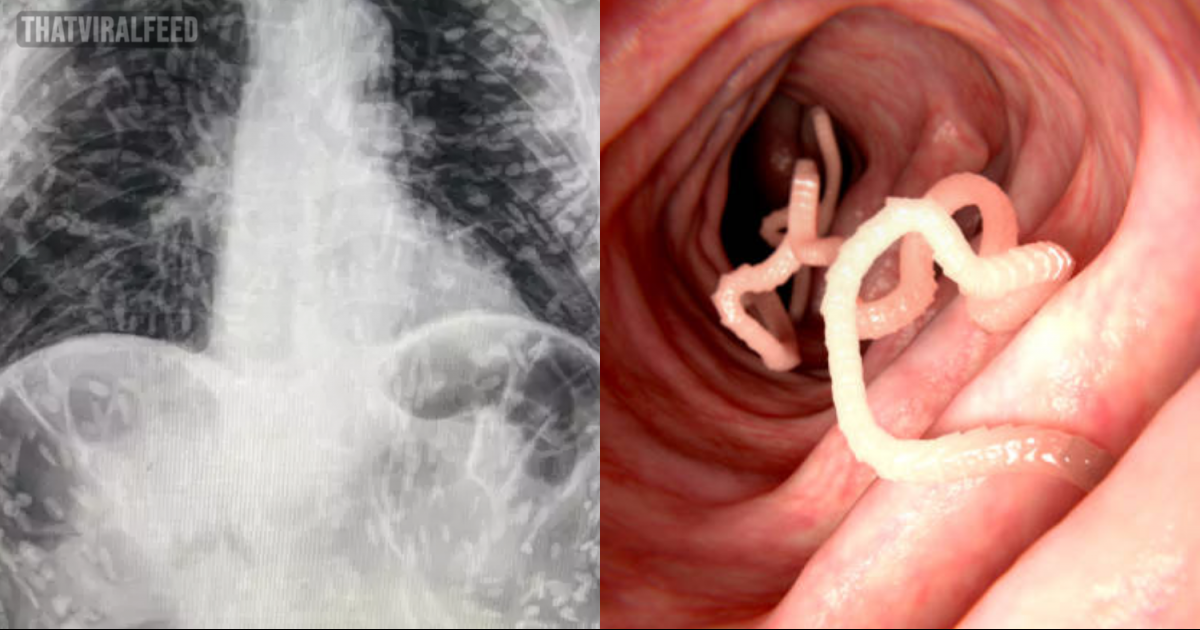
Man Who Went To Hospital With Cough Shocked To Discover He’s Swarming With Tapeworms
By
Aleena in
Health and Fitness
On 11th May 2023
advertisement
Dr. Vitor Borin P. de Souza, a reputable practitioner at the Hospital das Clínicas Botucatu in São Paulo, Brazil, recently shared a spine-chilling x-ray image on Twitter.
The image revealed the gruesome discovery of dozens of writhing tapeworms in the body of an unsuspecting patient.
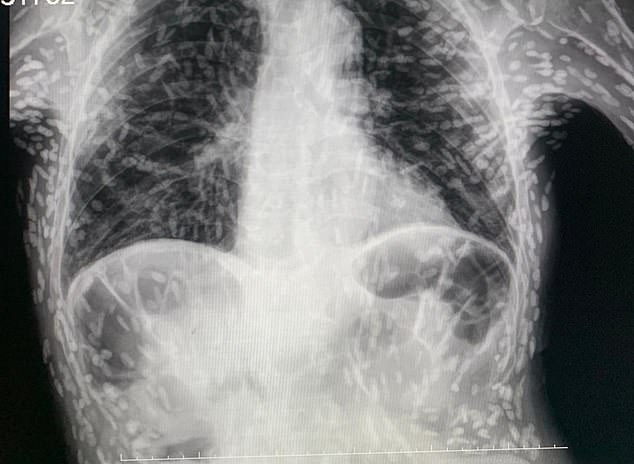
Credit: Twitter/Vitor Borin de Souza
The sight of these parasitic creatures clinging to the walls of the patient's intestines was enough to make anyone's stomach churn.
Further analysis by medical experts revealed that the patient was suffering from cysticercosis, a type of parasitic infection also known as taeniasis.
advertisement
Cysticercosis occurs when tapeworm larvae, usually found in undercooked pork, invade the body and form cysts in the muscles, brain, and other tissues.
According to the Centers for Disease Control and Prevention (CDC), the infection can be caused by different tapeworms; the Taenia solium is the only one that causes serious health problems.
It continues: "This infection occurs after a person swallows tapeworm eggs. The larvae get into tissues such as muscle and brain, and form cysts there."
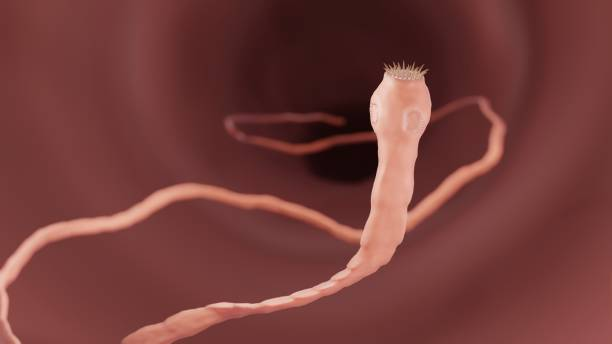
Credit: Shutterstock
advertisement
The infection can be transmitted between humans through contaminated feces via tainted water supplies, poor hand hygiene during food preparation, or directly through the consumption of infected meat.
Symptoms can range from mild stomach pain and diarrhea to seizures, blindness, and even death in severe cases.
advertisement
Did you know that once ingested, tapeworms can travel to various parts of the body, such as the eyes, lungs, brain, and spinal cord, causing cysts to form?
These cysts can be a real pain, both figuratively and literally. Nodule-like structures surround the larvae to help them survive, and these bumps can even be felt through the skin.
advertisement
The white dots on the X-ray are actually calcified cysts and remains of the tapeworm parasite. Scary stuff, right? And it gets worse - these cysts can take months or even years to develop after the initial infection.
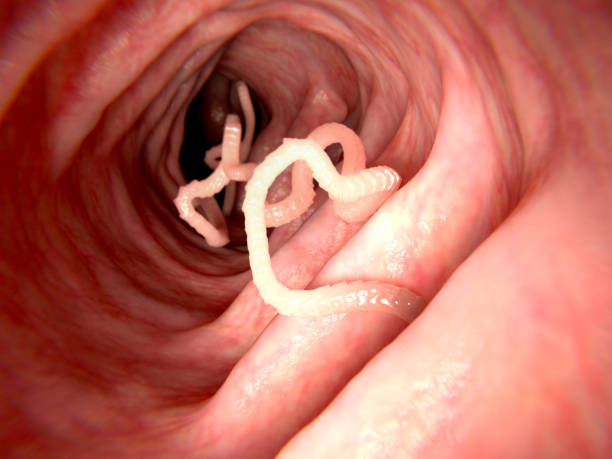
Credit: Shutterstock
advertisement
But fear not! Cysts can be easily removed through surgery or medication, so it's essential to seek medical attention as soon as possible if you suspect you have an infection.
advertisement
Dr de Souza said in the since-deleted thread that, despite appearances, there's actually little cause for concern, noting: "Cysticercosis is acquired from ingestion of tapeworm eggs (present in the faeces of humans with tapeworms).
"Don't want to (catch) it? Wash your food well before consuming."
advertisement
According to Dr. de Souza, the patient was undergoing an MRI scan to locate a cyst in his brain, which can cause a range of symptoms, including headaches, seizures, confusion, dizziness, and disturbed vision.
advertisement
If left untreated, the cyst can even lead to hydrocephalus, an abnormal cerebrospinal fluid accumulation in the brain.
In cases like this, surgery is typically necessary to remove the cysts and alleviate the symptoms. While the situation may sound daunting, it's important to remember that modern medical technology and skilled surgeons can effectively treat these conditions.
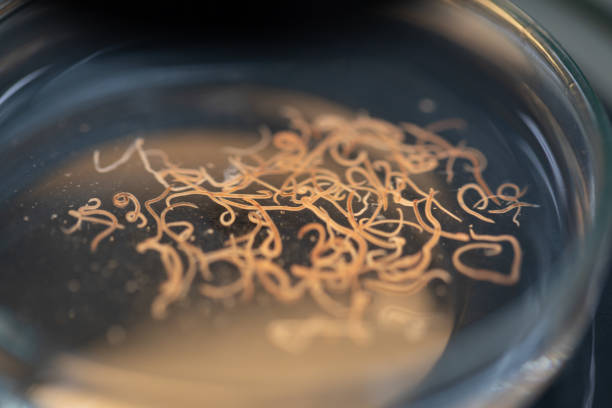
Credit: Shutterstock
advertisement
"If you don't have any injury inside the head, spinal cord or eyes, you don't even need to treat," Dr de Souza insisted.
"These lesions are calcified so they are not viable cysticerci (tapeworm larvae)."
He concluded: "If it doesn't cause any discomfort life goes on."