

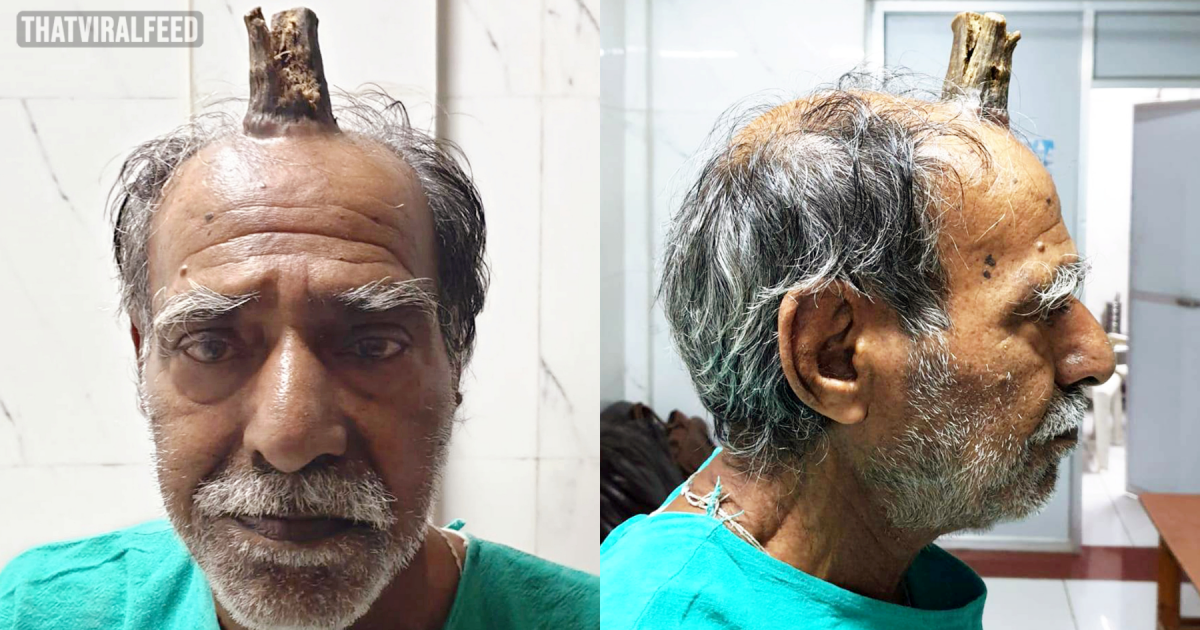
Shyam Lal Yadav had a large growth sprouting from the top of his head after suffering an injury.
advertisement
In India, a man had to undergo surgery to remove a large, horn-like growth from the top of his head after it developed over several years.
Back in 2014, Shyam Lal Yadav suffered an injury to his head and soon after, he started to notice a small growth emerging from the top of his scalp.
At first, the growth didn't bother Shyam much, and he simply had it trimmed by his barber since it wasn’t causing him any pain or discomfort.
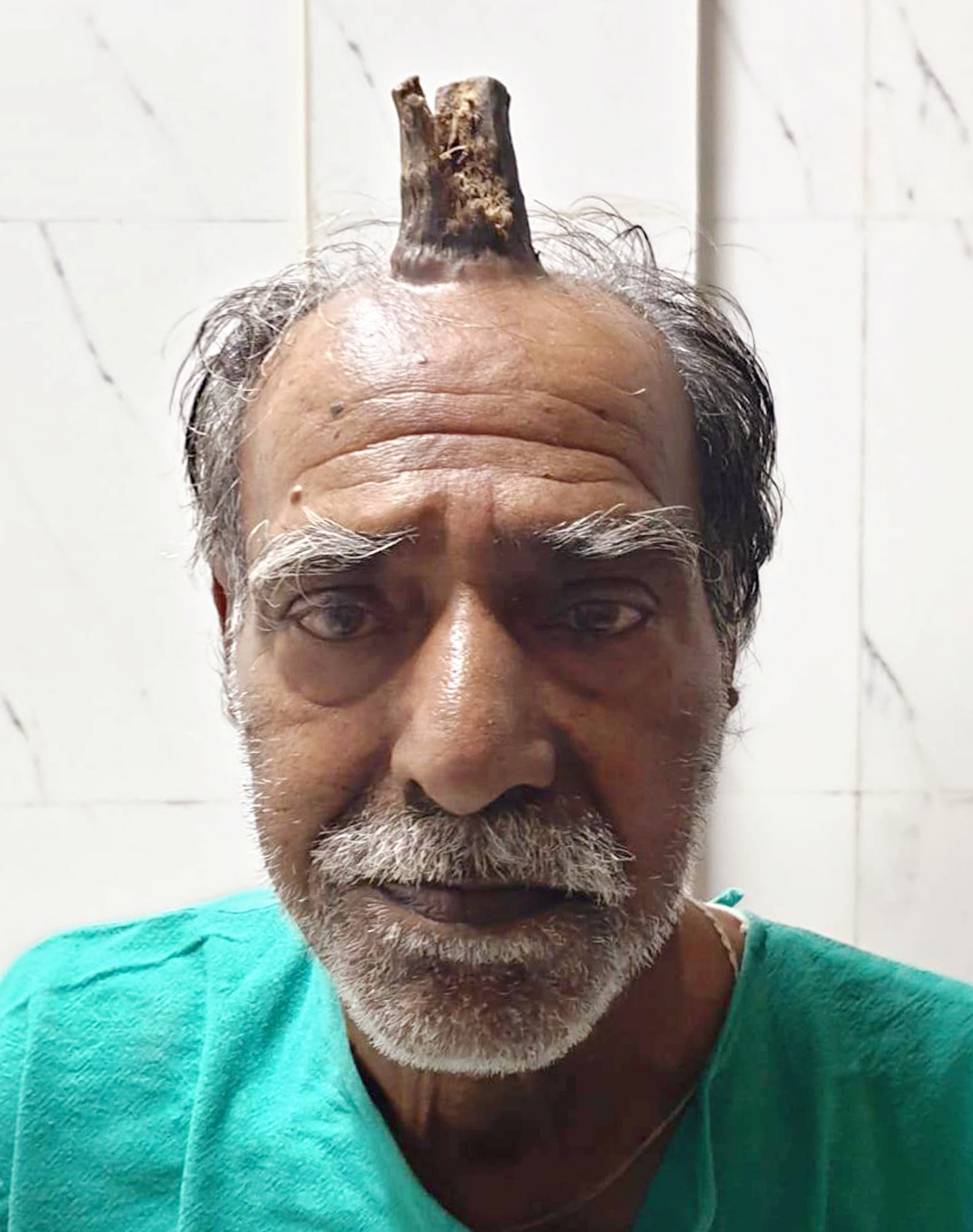
However, as time passed, the situation grew more concerning for the 74-year-old when he observed the growth beginning to harden and take on the shape of a horn.
Mature Content
By clicking this image you confirm that you're 18+ years old
Shyam Lal Yadav sought medical help over the growth.
SWNS
Realizing the seriousness of the situation, Shyam, who hails from Madhya Pradesh in central India, decided it was time to consult with medical professionals.
advertisement
The doctors identified the growth as a sebaceous horn.
This type of growth is made up of compacted keratin, the same material that makes up our hair, nails, and skin.
Keratin is also found in nature, forming parts of animals like rhino horns, bird feathers, and beaks.
The exact causes of such growths in humans are not clearly understood. However, they are more commonly seen in older individuals.
advertisement
Sebaceous horns typically appear on parts of the body that get a lot of sun exposure, like the head or shoulders.
This particular case was handled by Surgeon Dr. Vishal Gajbhiye at Bhagyoday Tirth Hospital in Sagar, Madhya Pradesh.
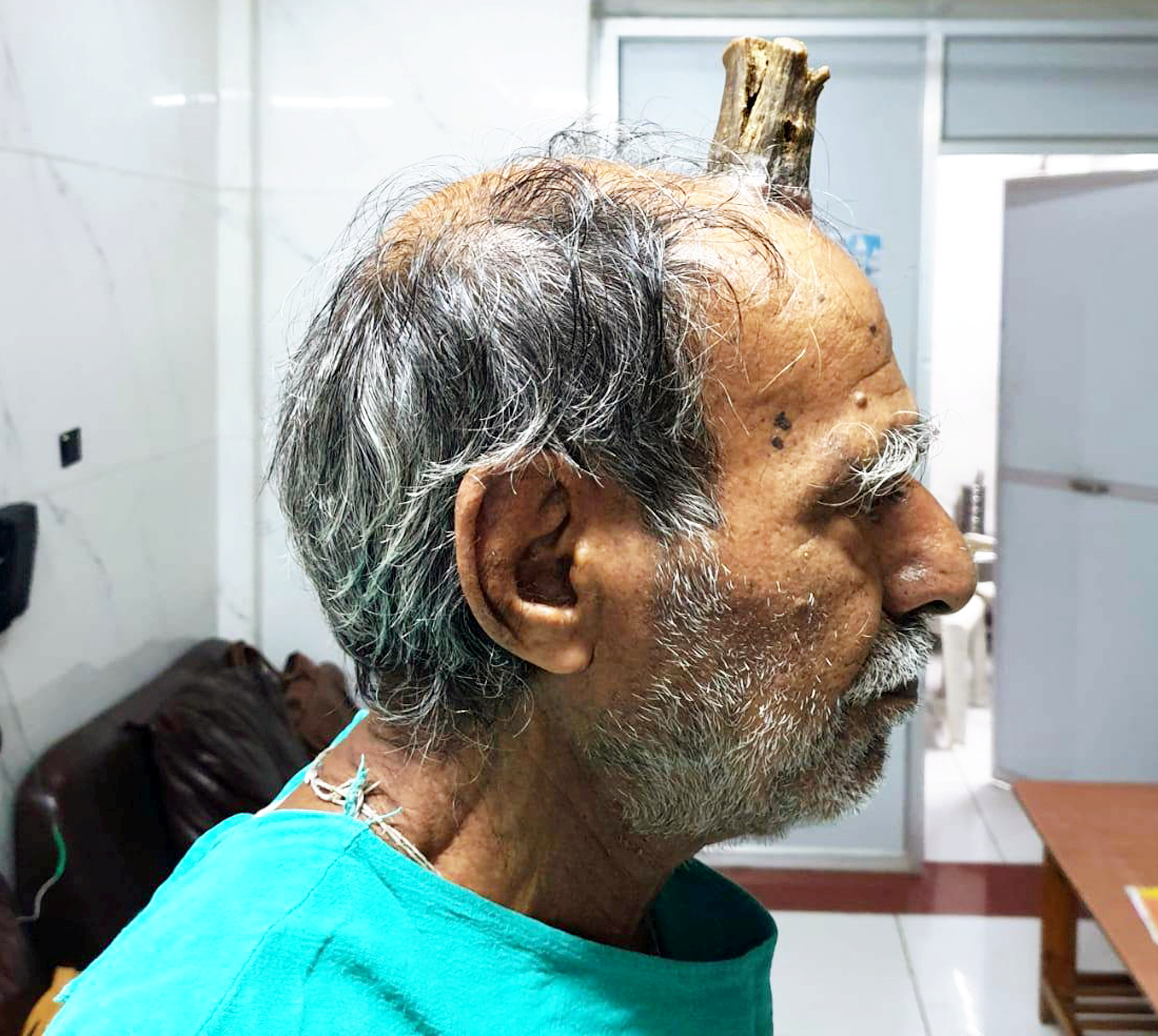
Surgeons were able to remove the growth and graft skin on top.
SWNS
Dr. Gajbhiye shared his insights: "Around five years ago the patient had hurt his head after which a lump started growing.
advertisement
"Initially, he ignored it as it did not cause any discomfort. Also, he got the growth cut by the local barber.
"But, when the lump hardened and started growing further, he approached the hospital at Sagar.
advertisement
"In medical term, this type of rare growth is called sebaceous horn (devil's horn).
"As the horn is composed of keratin, the same material found in fingernails, the horn can usually be removed with a sterile razor.
advertisement
"However, the underlying condition will still need to be treated."
Although the growth can be removed, it might also suggest the presence of a malignant tumor in the body.
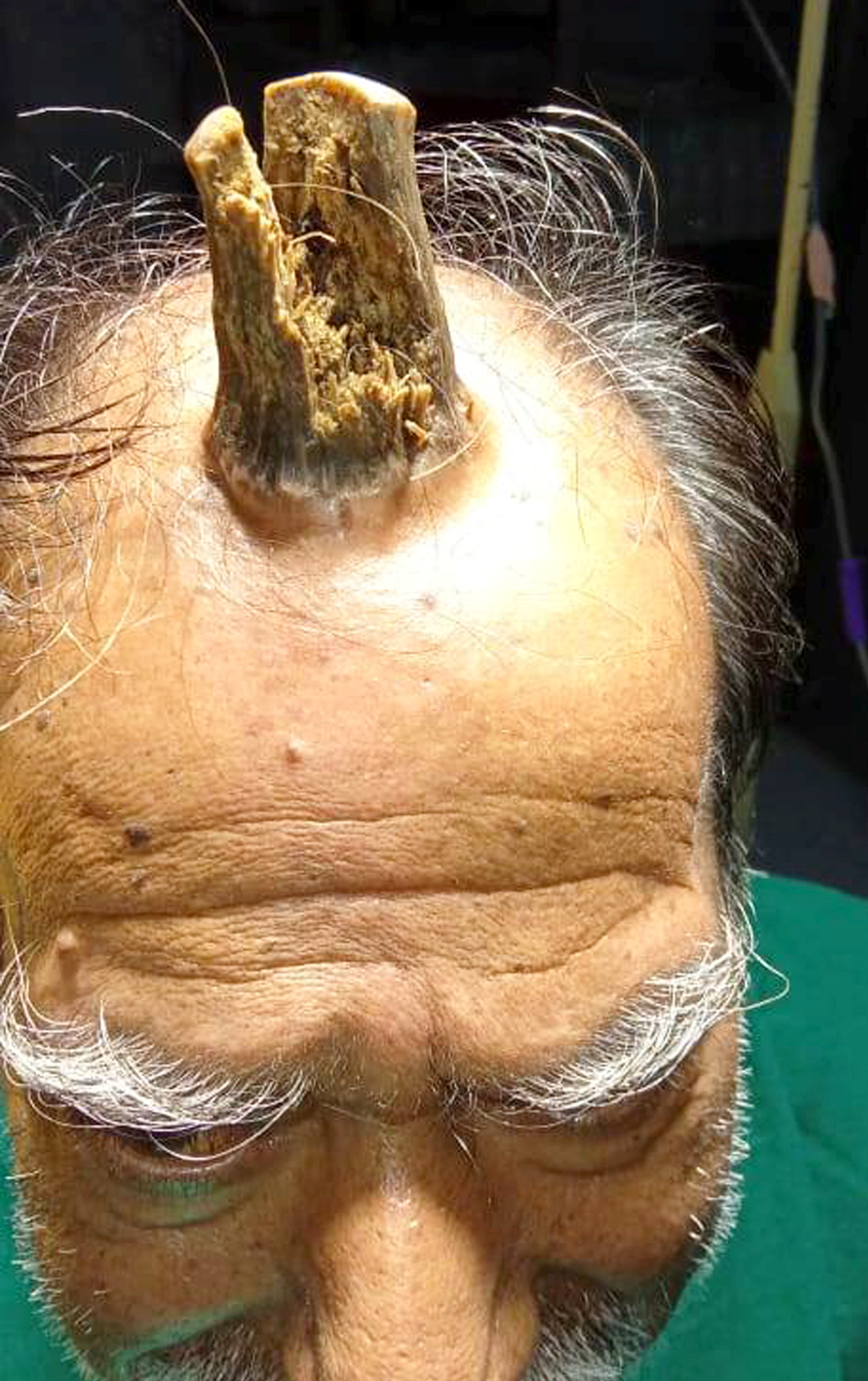
SWNS
Dr. Gajbhiye further explained: "The sebaceous horns are predominantly benign lesions however the possibility of malignant potential should always be kept in mind.
advertisement
"Treatments vary, but they can include surgery, radiation therapy, and chemotherapy. Immediately after its removal, skin was grafted on the wound which has now healed completely."
After the removal surgery, Shyam spent ten days in the hospital recovering.
advertisement
A biopsy conducted on the removed growth confirmed it was harmless.
Such unusual growths are quite rare, and this particular case was documented and sent to the International Journal of Surgery.