

If you’ve got trypophobia, this might not be for you...
NASA's Mars Rover Finds Strange Sphere-Filled Rock That Has Scientists Completely Baffled
By
Khadija Pervez in
Space
On 29th March 2025
advertisement
A recent discovery on Mars has left NASA scientists scratching their heads after a rock with an unexpected texture showed up during one of the rover’s explorations. They're still working to figure out exactly where it came from and how it formed.
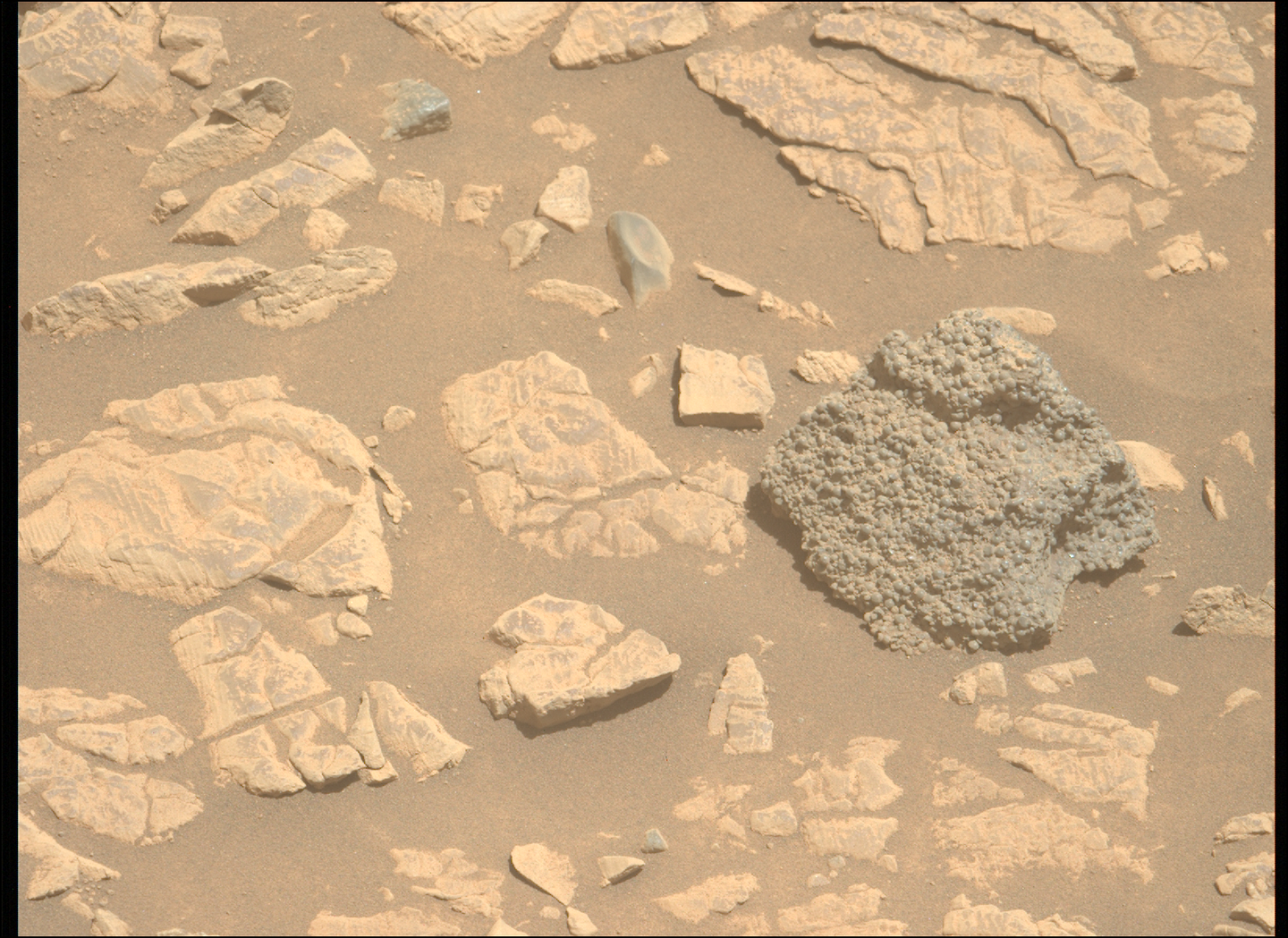
On March 23, NASA announced that its Perseverance rover had made a bizarre find while exploring a part of the Jezero crater rim known as the lower Witch Hazel Hill area.
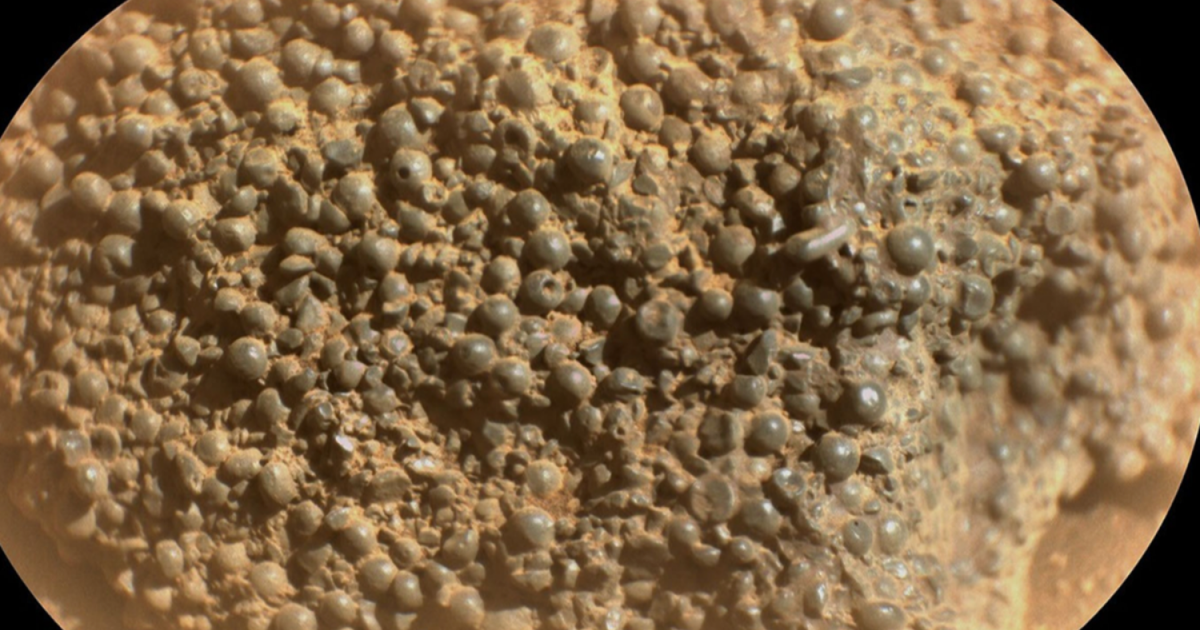
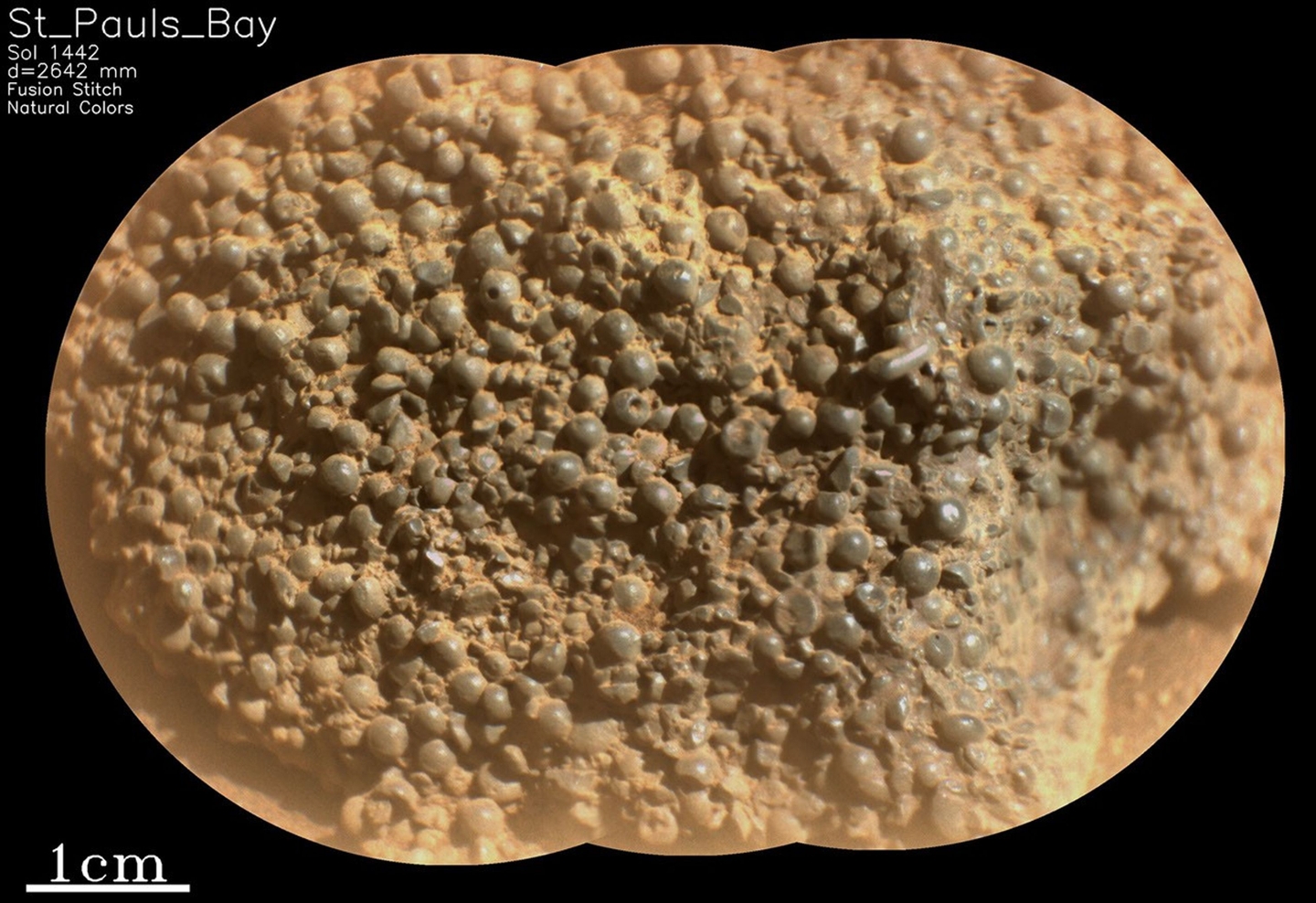
According to NASA's website, the rover came across a strange rock that’s made up of hundreds of tiny, round spheres - each just a few millimetres in size. The discovery was so unusual, it got an official highlight in their recent mission update.
After the discovery, the Perseverance Science Team gave the rock the nickname ‘St Paul’s Bay’ and have been running detailed tests on it ever since to understand what makes it so unique.
NASA’s update said the rock seemed to be made up of a mass of small, dark grey spheres, most measuring just a few millimeters. Some were stretched into longer shapes, while others had jagged or broken edges that looked like shattered pieces of round fragments.
It posed the question: "Some spheres even possessed tiny pinholes! What quirk of geology could produce these strange shapes?"
advertisement
And that’s not the only odd thing about this rock. Besides the fact it’s packed with spheres, it also falls into a rare category - it’s what geologists call a ‘float rock’.
The term ‘float rock’ is used when a rock appears out of place, meaning it didn’t form where it currently sits. It likely moved from somewhere else, making its origin an even deeper mystery.
The NASA team is now focused on figuring out how this rock fits into the larger geological puzzle of Witch Hazel Hill and the surrounding area on Mars.
NASA's Perseverance made the discovery
NASA/JPL-Caltech/ASU
"Initial observations have provided tantalizing indications that it could be linked to one of the dark-toned layers identified by the team from orbit," the update mentioned, although researchers are still in the process of trying to come up with a more definitive explanation.
The update also noted: "Placing these features in geologic context will be critical for understanding their origin, and determining their significance for the geological history of the Jezero crater rim and beyond!"
This isn’t the first time strange sphere-like formations on Mars have sparked curiosity. The Red Planet has a bit of a track record when it comes to baffling finds like this.
NASA has nicknamed the rock 'St Paul's Bay'
NASA/JPL-Caltech/LANL/CNES/IRAP.
advertisement
In July 2024, the Perseverance rover came across a rock that they later named ‘Cheyava Falls’. This arrowhead-shaped rock was about 3.2 feet long and two feet wide, and what really caught attention were some colored spots that hinted at a possible link to ancient life.
The shape of the rock, the spots on it, and the location where it was found all added up to one thing - it probably had water flowing through it at some point in Mars' distant past.
Earlier in the year, back in February, Perseverance uncovered what NASA described as a “one-of-a-kind treasure” at a place called Blue Hill.
advertisement
The rock samples collected from Blue Hill turned out to be of major interest to scientists because they were rich in a mineral known as low-calcium pyroxene, or LCP for short, which gives important clues about Mars' volcanic history.
"This marks our first Noachian-aged outcrop sample, an important milestone in our mission to uncover the geological history of Jezero Crater," NASA shared in their findings at the time.