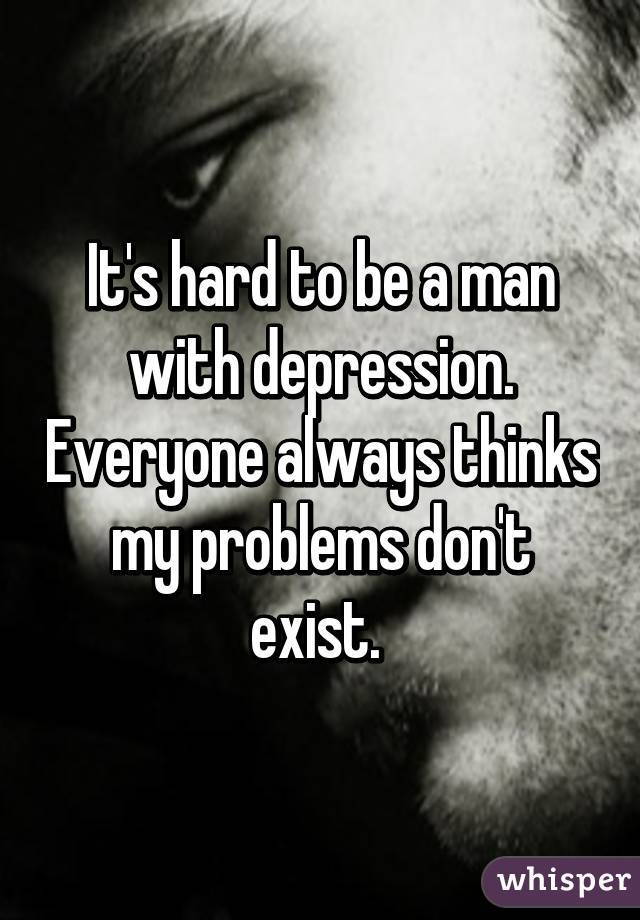
Talking about your feelings isn't always considered "masculine"
Men Open Up About What It's Like To Deal With Depression
By
Teresa Thomerson in
Confessions
On 24th May 2016
advertisement
#1 Male depression is a serious medical condition, but many men try to ignore it or refuse treatment.
When we feel hopeless, helpless, or overwhelmed by despair we tend to deny it or cover it up by drinking too much, behaving recklessly, or exploding with anger. But depression in men is a common condition. The first step to recovery is to understand there's no reason to feel ashamed.
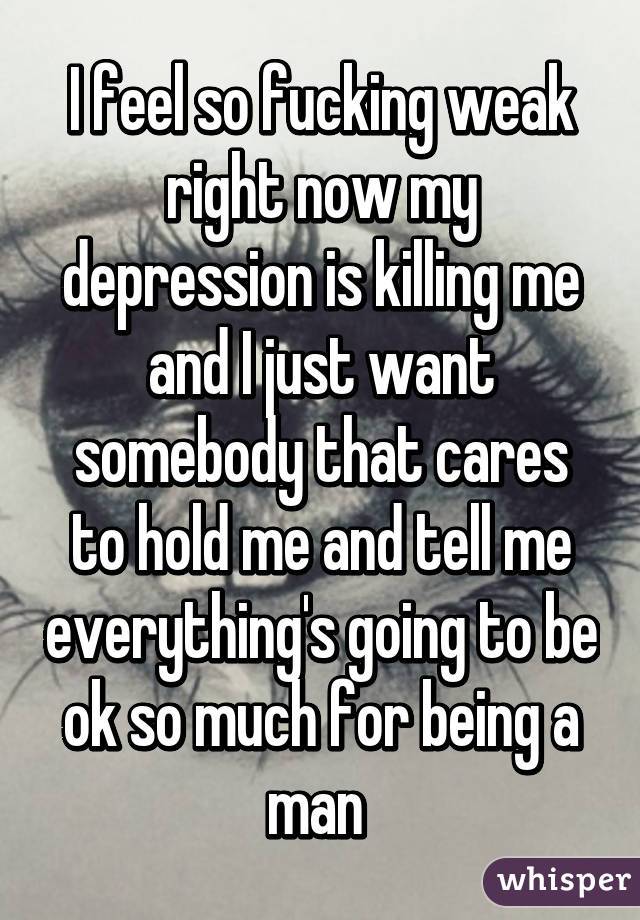
#2 Both men and women get depression. But men can experience it differently than women.
Men may be more likely to feel very tired and irritable, and lose interest in their work, family, or hobbies. They may be more likely to have difficulty sleeping than women who have depression. And although women with depression are more likely to attempt suicide, men are more likely to die by suicide.
advertisement
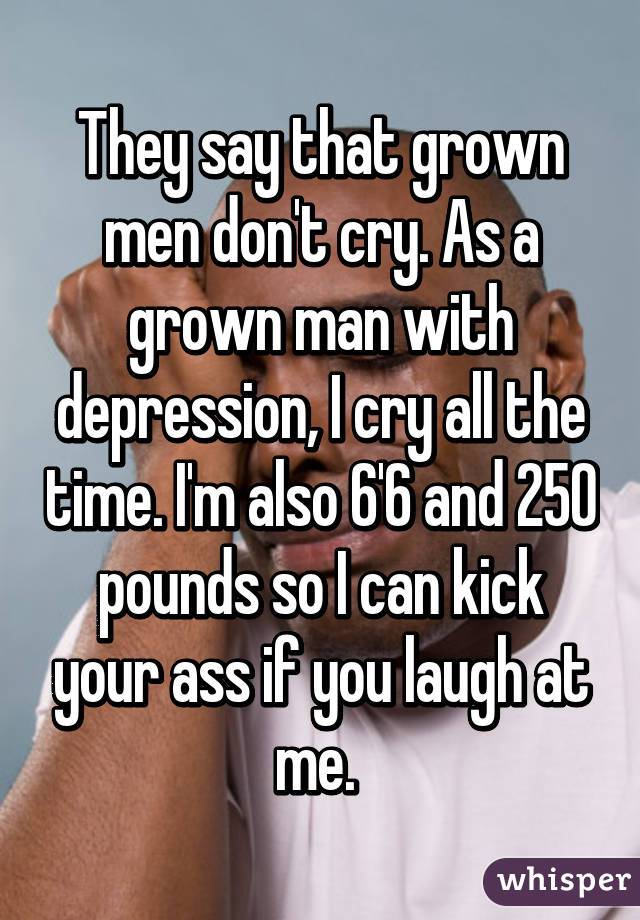
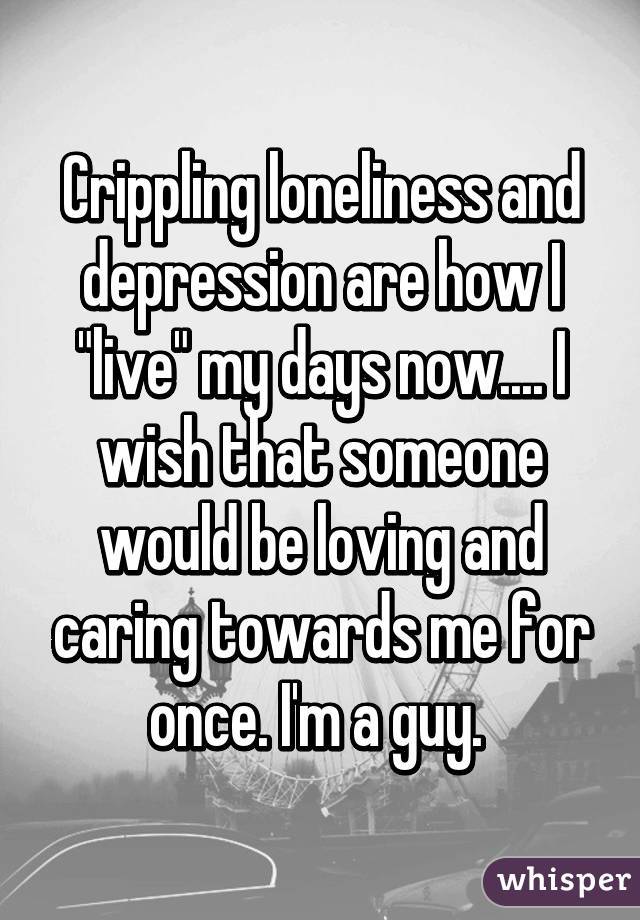
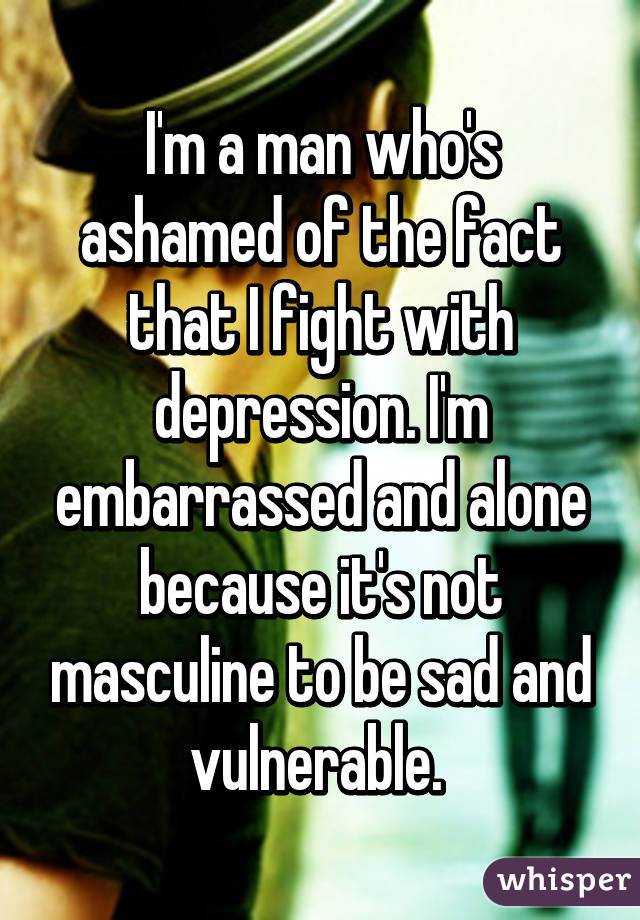
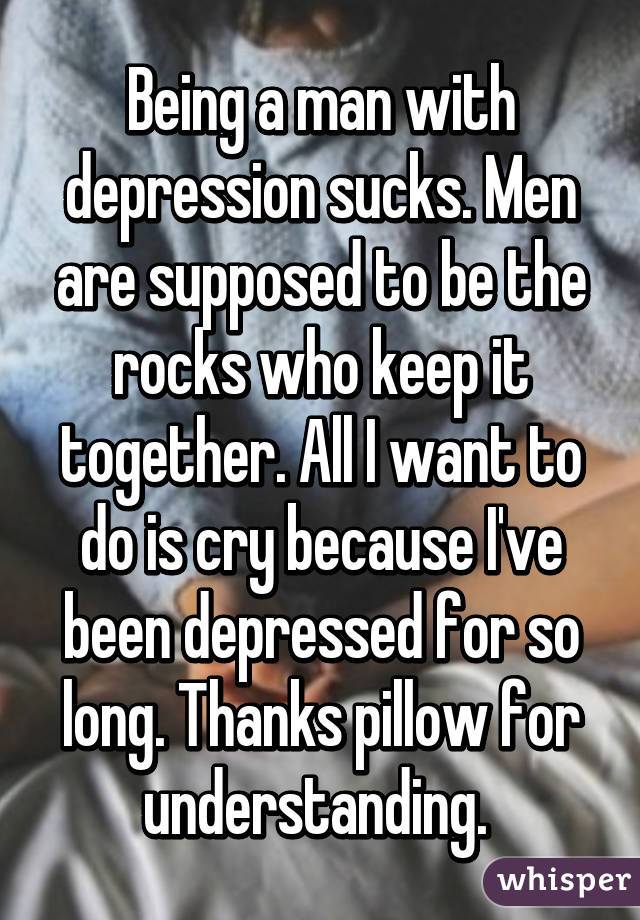
#3 There are many reasons why the symptoms of depression in men are not recognized. Men tend to deny having problems due to "being strong."
American culture suggests that expressing emotion is largely a feminine trait. As a result, men who are depressed are more likely to talk about the physical symptoms of their depression -- such as feeling tired --- rather than symptoms related to emotions.
#4 What are the signs and symptoms of depression in men?
Different people have different symptoms. Some symptoms of depression include:
Feeling sad or "empty"
Feeling hopeless, irritable, anxious, or angry
Loss of interest in work, family, or once-pleasurable activities, including sex
Feeling very tired
Not being able to concentrate or remember details
Not being able to sleep, or sleeping too much
Overeating, or not wanting to eat at all
Thoughts of suicide, suicide attempts
Aches or pains, headaches, cramps, or digestive problems
Inability to meet the responsibilities of work, caring for family, or other important activities.
advertisement
#5 What causes depression in men?
Several factors may contribute to depression in men.
Genesmen with a family history of depression may be more likely to develop it than those whose family members do not have the illness.
Brain chemistry and hormonesthe brains of people with depression look different on scans than those of people without the illness. Also, the hormones that control emotions and mood can affect brain chemistry.
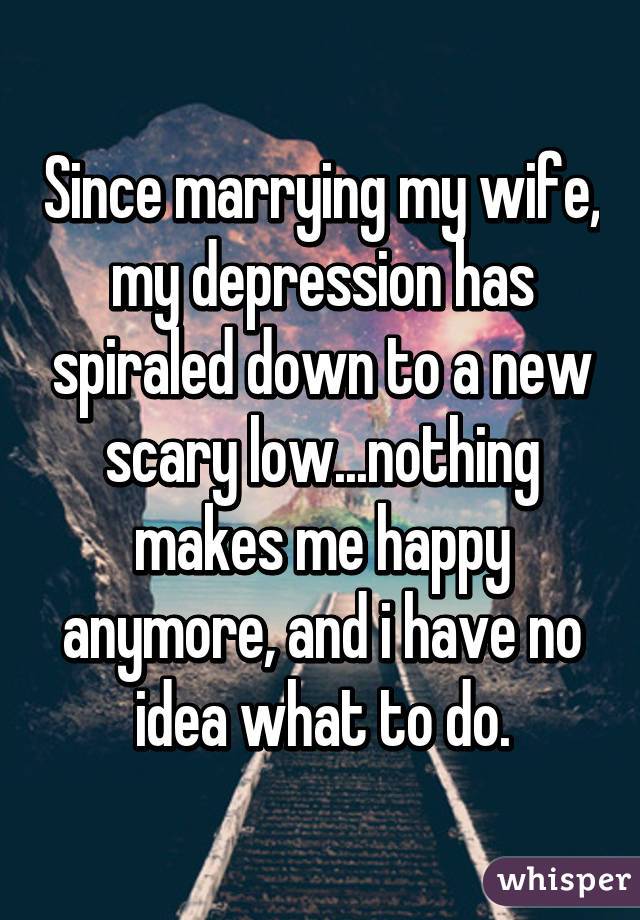
Stressloss of a loved one, a difficult relationship or any stressful situation may trigger depression in some men.
Most of the time, it is likely a combination of these factors.
advertisement
#6 Does depression in men affect sexual desire and performance?
Yes. Depression in men can affect sexual desire and performance. Unfortunately, some antidepressants and other medications can do the same. Men often are unwilling to admit to problems with their sexuality. Many mistakenly feel that the problems are related to their manhood, when, in fact, they are caused by a medical problem such as clinical depression.
advertisement
#7 What are the consequences of untreated depression in men?
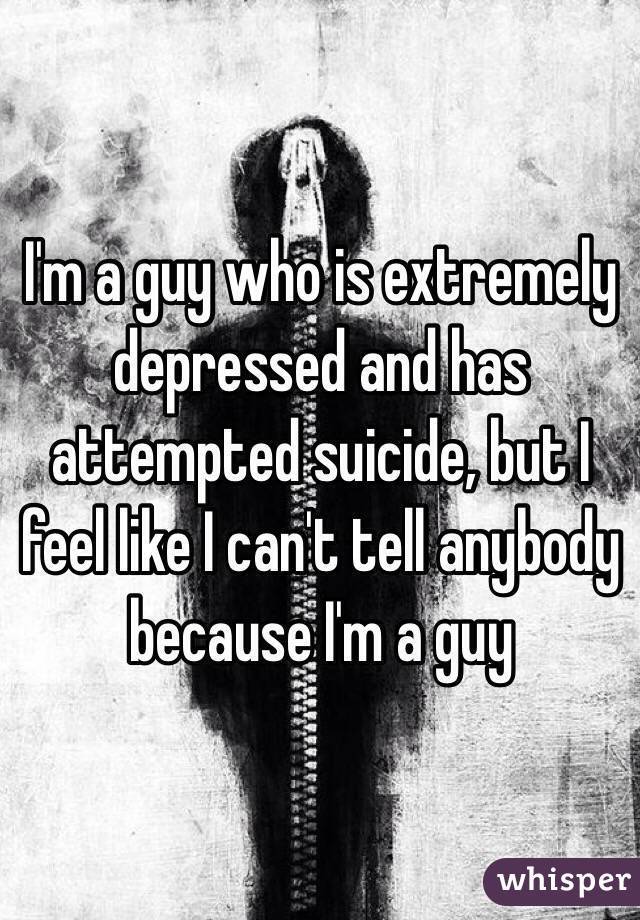
Depression in men can have devastating consequences. The CDC reports that men in the U.S. are about four times more likely than women to commit suicide. A staggering 75% to 80% of all people who commit suicide in the U.S. are men. Though more women attempt suicide, more men complete the act of actually ending their lives. This may be due to the fact that men tend to use more lethal and violent methods of committing suicide, for example using a gun rather than taking an overdose of pills.
advertisement
#8 Is a stigma attached to depression in men?
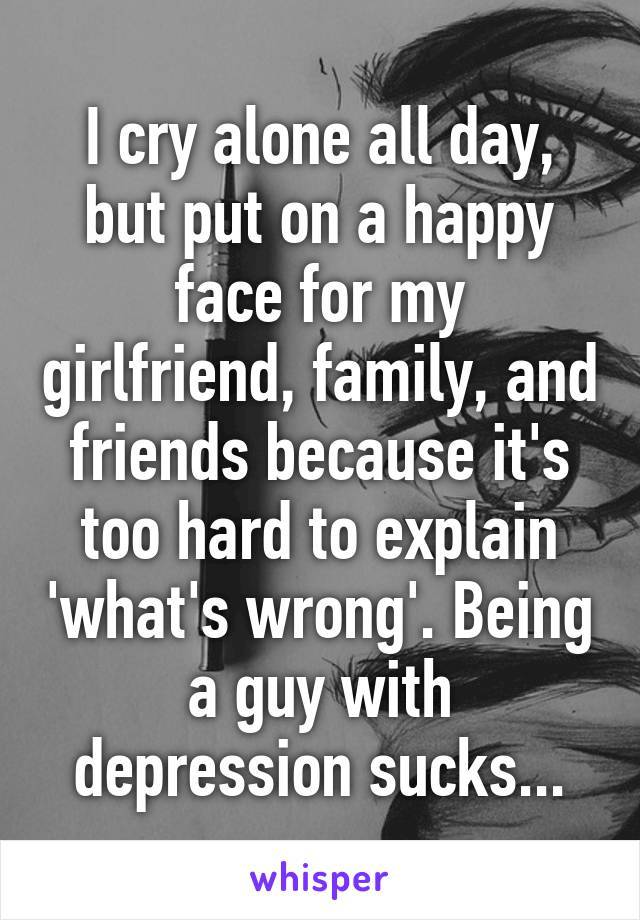
Yes. And men generally have a hard time dealing with the stigma of depression. They are more likely to deal with their symptoms by drinking alcohol, abusing drugs, or pursuing other risky behavior. Many men avoid talking about depressed feelings to friends or family.
advertisement
#9 Get help when you need it
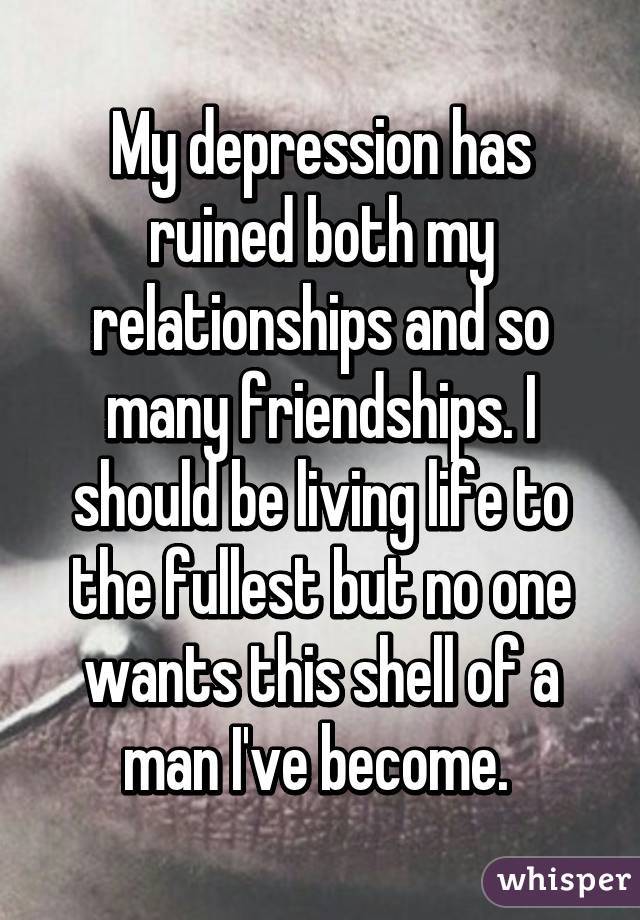
Asking for help can be hard for men. But without treatment, depression is unlikely to go away, and it may get worse. Untreated depression can make you and the people close to you miserable. It can cause problems in every aspect of your life, including your health, career, relationships and personal safety.
Depression, even if it's severe, usually improves with medications or psychological counseling (psychotherapy) or both. If you or someone close to you thinks you may be depressed, talk to your doctor or a mental health professional. It's a sign of strength to ask for advice or seek help when you need it.
advertisement
#10 Male depression and coping skills
Treatment with a doctor or mental health professional can help you learn healthy coping skills. These may include:
Goals. Set realistic goals and prioritize tasks.
Support. Seek out emotional support from a partner or family or friends.
Coping. Learn ways to manage stress, such as meditation and mindfulness, and develop problem-solving skills.
Decisions. Delay making important decisions, such as changing jobs, until your depression symptoms improve.
Activities. Engage in activities you enjoy, such as ball games, fishing or a hobby.
Health. Live a healthy lifestyle, including healthy eating and regular physical activity, to help promote better mental health.
Many effective treatments are available for depression. So don't try to tough out male depression on your own the consequences could be devastating.