

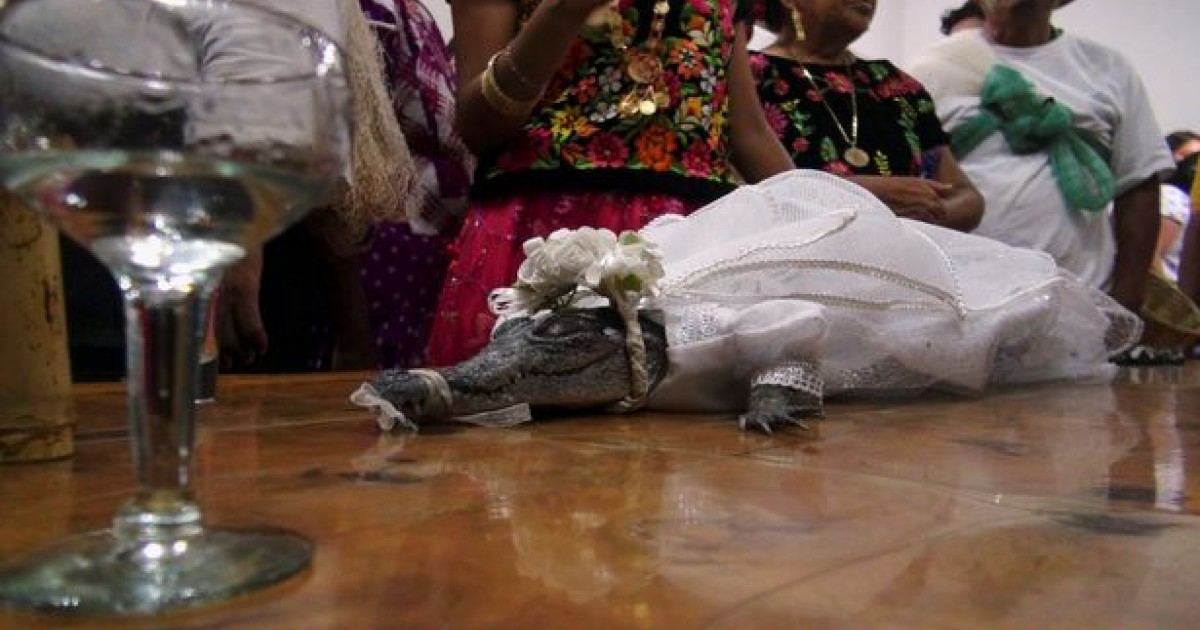
The mayor of a small Mexican community wed an alligator bride in a unique ceremony that has been going on for generations and is meant to represent the union of the divine and human beings.
advertisement
The marriage of an alligator by the mayor of a tiny Mexican community has been praised as a "very beautiful tradition."
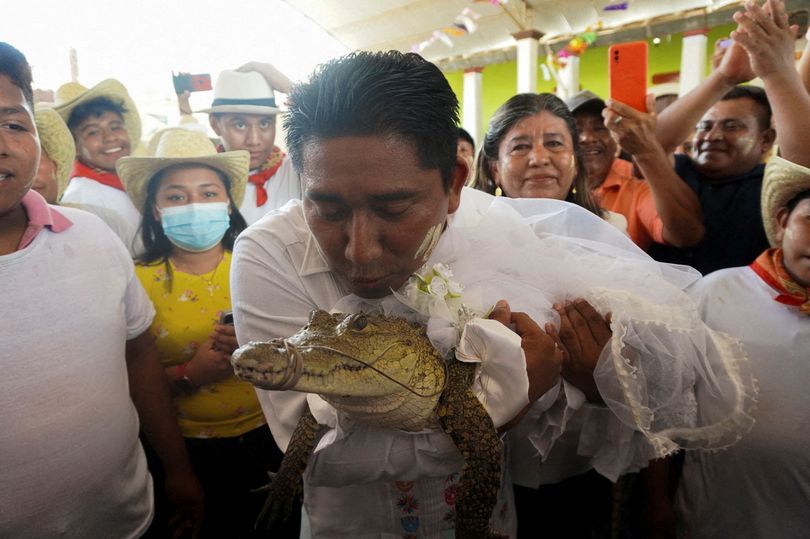
In a colorful ceremony Victor Hugo Sosa, the mayor of San Pedro Huamelula in Oaxaca, married his wife, who was wearing a white bridal gown.
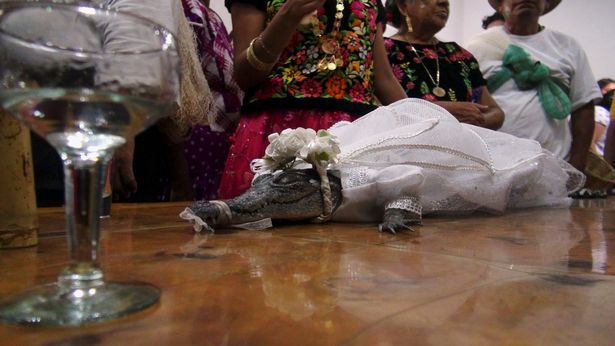
( Image: X80002)
Traditional indigenous music played in the background as partygoers danced and urged Sosa to seal the marriage with a kiss.
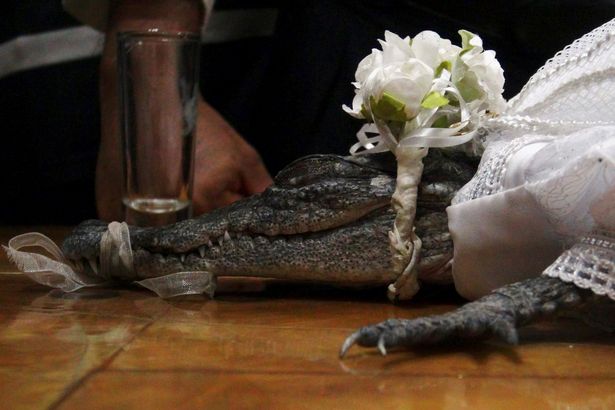
He agreed, stooping to peck the reptile whose mouth had been tied together to prevent mishaps on the wedding day.
( Image: X80002)
advertisement
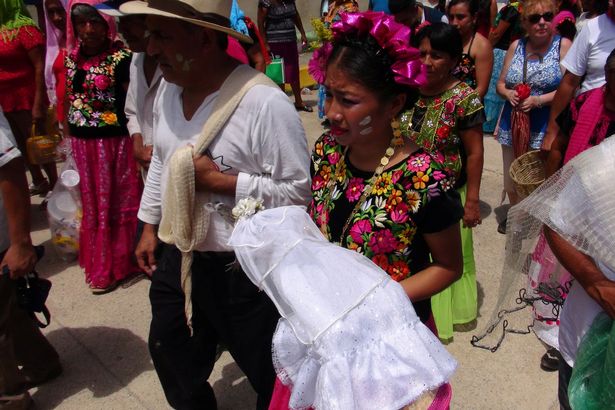
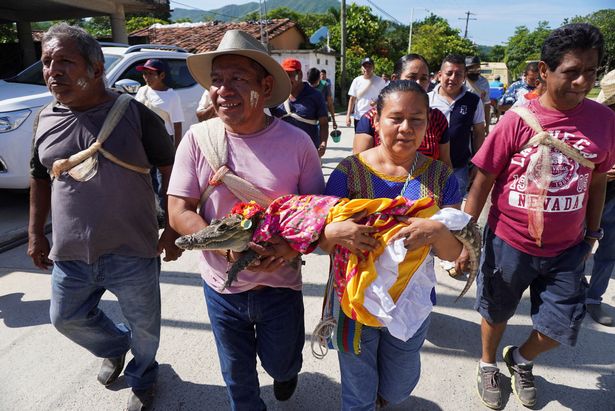
The newlyweds were then fanned with hats by the guys who lined the streets while the alligator was carried through the hamlet by locals.
The strange union is said to be a centuries-old custom of the Oaxaca indigenous Chontal and Huave groups.
( Image: X80002)
The ceremony is linked to nature and good harvests.
"We ask nature for enough rain, for enough food, that we have fish in the river," said Sosa.
Reuters
advertisement
San Pedro Huamelula is a small fishing village on Oaxaca's Pacific coast, one of Mexico's poorest regions.
The region is home to what is likely the richest indigenous culture in the nation, where many people still adhere to pre-Hispanic customs and languages.
Reuters
advertisement
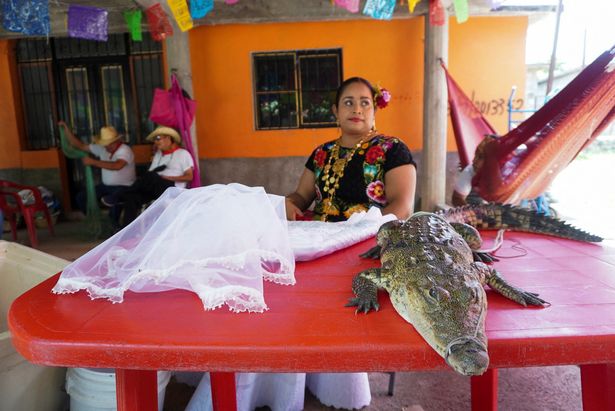
This particular custom has developed certain Catholic components through time, which is why the alligator was dressed in a white, flowing bridal gown.
The seven-year-old reptile is believed to be a deity representing mother Earth. Her marriage to a local leader is meant to symbolise the unity between humans and the divine.
Reuters
advertisement
Wedding guests referred to her as "little princess."
The ceremony's planner, Elia Edith Aguilar, said she was honored to have done it and spent a lot of time finding the ideal attire for the scaly bride.
"It gives me so much happiness and makes me proud of my roots," she said.
"It's a very beautiful tradition."