

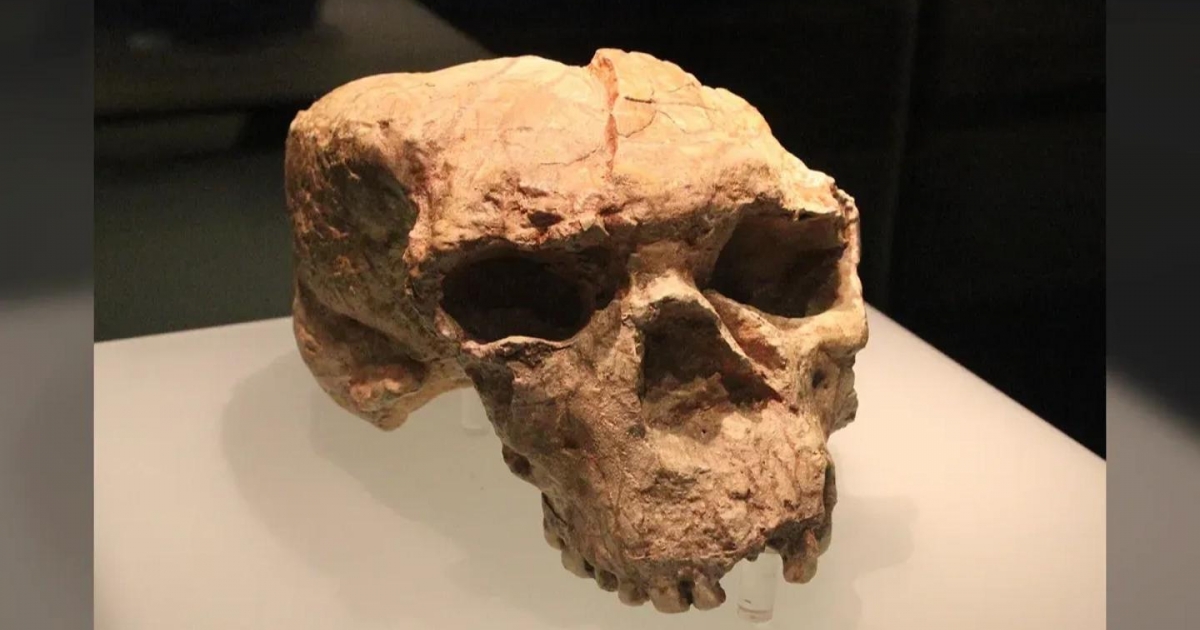
This ancient skull discovery could completely change how we see the story of early humans
advertisement
A human skull that may be over a million years old is challenging long-held beliefs about how our species evolved.
Scientists are calling the find a breakthrough after studying the ancient cranium, named Yunxian 2, which was first uncovered in China’s Hubei province back in 1990.
The fossil was badly crushed and distorted when discovered, and for decades it had been thought to belong to Homo erectus, a primitive human species. That assumption was based on features such as its large brain case, pronounced jaw, and other broad traits usually tied to early humans.
But fresh analysis has sparked a very different idea. Researchers now suggest the overall structure of the skull and its teeth more closely resemble Homo longi. If this proves true, it could mean Homo sapiens may have first appeared outside of Africa, a theory that would shake up our current understanding of human origins.
Using modern imaging and reconstruction methods, the team digitally restored the skull and found it could have belonged to a lineage more directly connected to Denisovans, who once lived alongside our ancestors.
If confirmed, the fossil would represent the closest known link to the evolutionary split between modern humans, Neanderthals, and Denisovans — a divergence that could date back at least 400,000 years earlier than previously thought. This would also provide a fresh look at the physical traits of early humans.
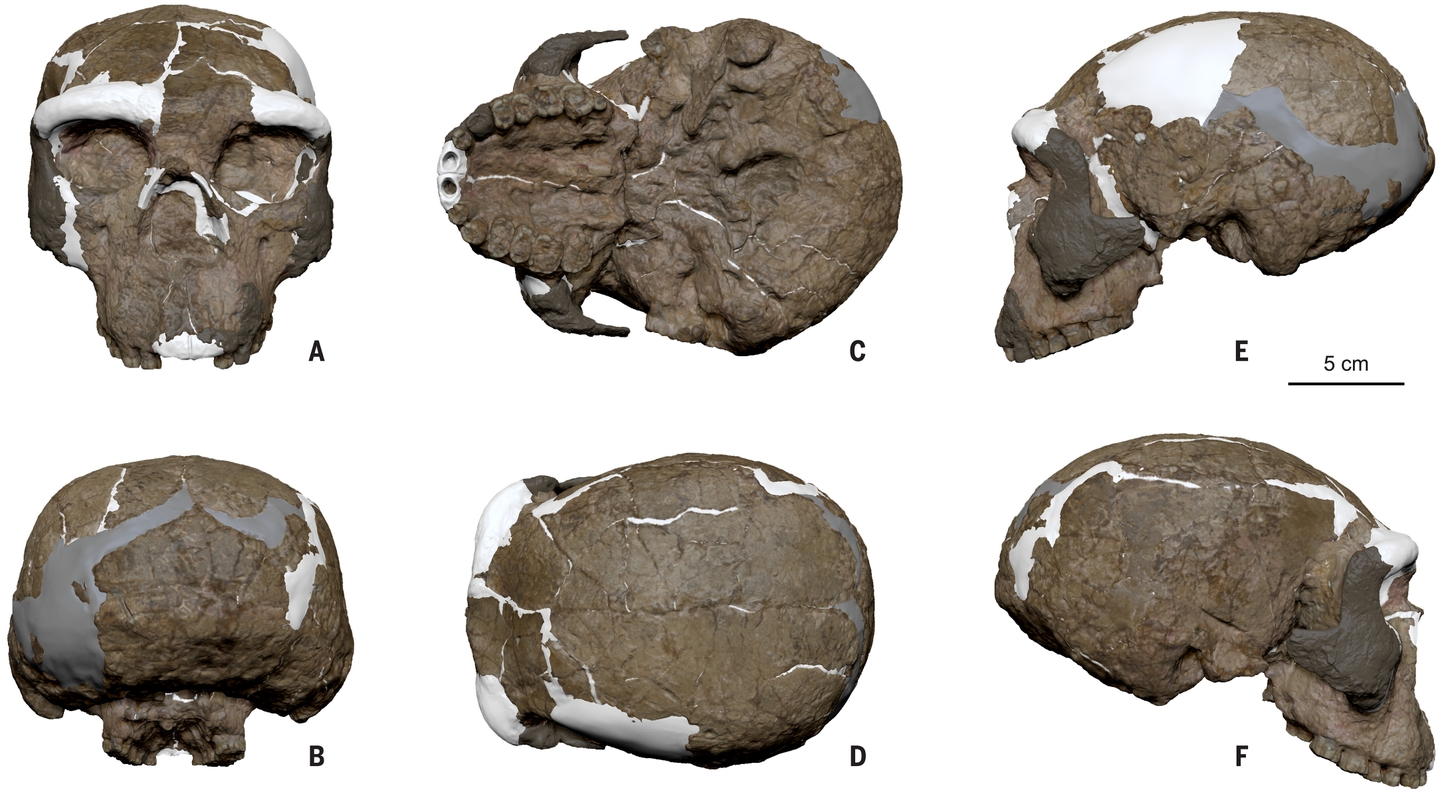
The study involved a reconstruction of the fossil
Science
advertisement
Such a finding would completely change the timeline of the last million years of human history, even suggesting that the earliest Homo sapiens may have originated in Western Asia rather than Africa.
Professor Chris Stringer, an anthropologist and research leader in human evolution at the Natural History Museum in London, noted: "This changes a lot of thinking because it suggests that by 1 million years ago our ancestors had already split into distinct groups, pointing to a much earlier and more complex human evolutionary split than previously believed."
"It more or less doubles the time of origin of Homo sapiens."
It could change what we understand about evolution
Getty
He also pointed out: "This fossil is the closest we've got to the ancestor of all those groups."
The researchers used advanced CT scans and digital modeling to reconstruct the skull virtually, giving them the clearest picture yet of what it may have looked like in life.
"We feel that this study is a landmark step towards resolving the 'muddle in the middle' that has preoccupied palaeoanthropologists for decades," the professor said, emphasizing just how important the study could be in clearing up long-standing debates in paleoanthropology.
advertisement
Dr. Frido Welker, an associate professor in human evolution at the University of Copenhagen who was not directly part of the study, also weighed in: "It's exciting to have a digital reconstruction of this important cranium available," according to The Guardian.
"If confirmed by additional fossils and genetic evidence, the divergence dating would be surprising indeed. Alternatively, molecular data from the specimen itself could provide insights confirming or disproving the authors' morphological hypothesis."