Moon Is Slowly Drifting Away From Earth And It's Having A Major Impact On Time
Scientists believe they have found the reason why the days on our planet are getting longer.
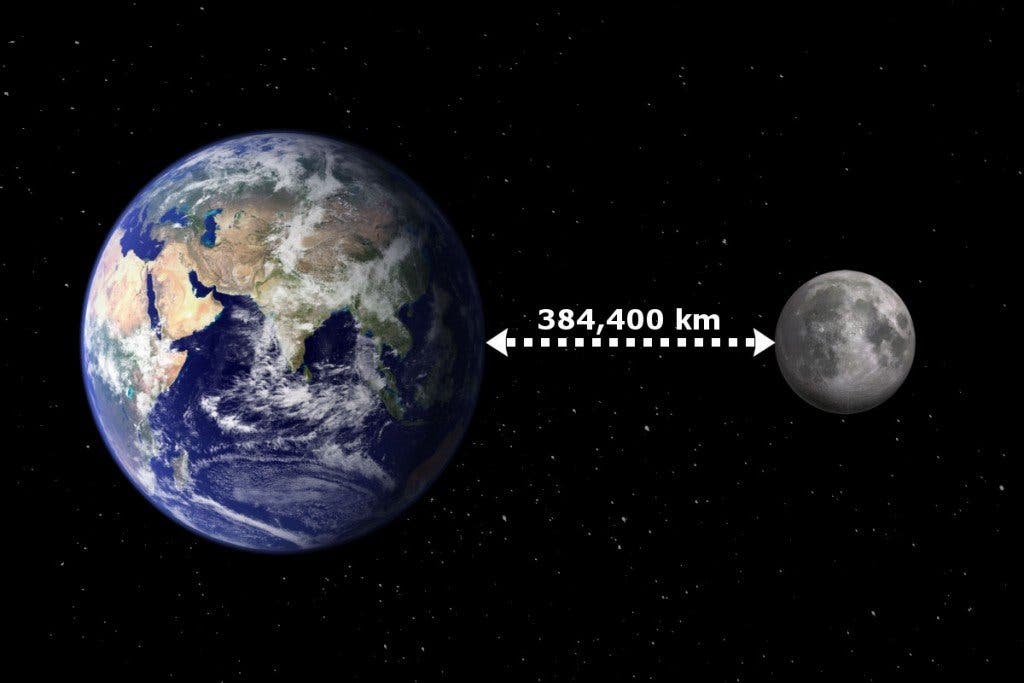
According to research, the moon used to be closer to Earth, and the closer it was, the shorter the days were on Earth. In fact, according to the researchers, at one point, a day on Earth 1.4 billion years ago, lasted just 18 hours.
This is much shorter compared to the 24 hours we’re accustomed to in the 21st century. But over the years, the celestial body has drifted far from Earth, and thus, the reason why days on our planet are getting longer.
Experts at the National Radio Astronomy Observatory (NRAO) made the startling discovery with the help of Apollo-mission-era reflective panels that were installed on the Moon in 1969.
These panels helped them in measuring the distance between the panels and the Earth.
According to the experts, this behavior has already been predicted but the rate at which it is happening is quite alarming.
Scientists explain this phenomenon by a term called “Milankovitch cycles".
According to NASA, "Milankovic cycles" are small changes that occur in the Earth's orbit around the Sun, changing the amount of sunlight the planet receives.
This cycle influences the climate we experience on our planet and dictates both the dry or wet weather.
Milankovitch cycles have previously been responsible for a period of greening in the Sahara desert and their forces have been known to impact the size of lakes on Earth.
These cycles also determine the distance between the moon and the Earth.
These cycles are very carefully monitored and one important effect they have is on the tidal changes that the Earth experiences.
As the moon moves further away from Earth, the strength of the pull is also reduced and so having an overall impact on the shipping and fishing that relys on the tidal patterns.
Based on studying these cycles, scientists have suggested the reason that the days are getting longer is that the moon is drifting away from Earth.
We always believed that the Earth's only natural satellite which is the moon has remained at a constant distance from the Earth because of its gravitational pull, but, according to NASA, scientists think this is no longer the case.
As per the experts, the connection between the moon and the Earth is weakening and this weak connection has resulted in our planet spinning slower and thus, taking a little longer to complete a full day’s rotation.
Research by scientists shares that the moon used to be much closer to the Earth and the closer the moon is, the shorter the days on Earth are.
At one point, scientists think that a day on Earth 1.4 billion years ago, lasted just 18 hours.
This is much shorter compared to the 24 hours we’re accustomed to in the 21st century.
Professor Stephen Meyers, of the University of Wisconsin-Madison says
“As the moon moves away, the Earth is like a spinning figure skater who slows down as they stretch their arms out,”
“One of our ambitions was to use Astrochronology to tell time in the most distant past, to develop very ancient geological time scales,”
“'We want to be able to study rocks that are billions of years old in a way that is comparable to how we study modern geologic processes.”
Astrochronology is the method of linking astronomical theory with geological observation.
Professor Meyers, the co-author of the study, worked with his team to look back at the Earth’s past and recreate what he believes the solar system previously looked like.
Last year, Professor Meyers studied sediments from a 90 million-year-old rock formation.
This is how the team reportedly discovered the Earth’s climate cycles.
From the findings, we know that the moon is currently receding from the Earth at a rate of 1.5 inches (3.82 centimeters) every year.
So as the moon drifts, days on Earth are set to get longer.
Thus, they have concluded that the moon once used to be so close to our planet that its gravitational force could easily rip apart the moon.
Professor Alberto Malinvero, co-author of the study said,
"It was exciting because, in a way, you dream of this all the time; I was a solution looking for a problem."
However, it is important to note that scientists know that the moon itself is 4.5 billion years old.
Therefore, their calculations could be somewhat inaccurate.
Though, it is conclusive that days on Earth are definitely getting longer.