

Whether it's over a gut-wrenching political drama, a slow-burning slice-of-life biopic, or even a seemingly comical animated flick, we've all shed a tear or two watching a film (though some of us may never admit it). Crying can be cathartic, especially when catalyzed by something as artistic and carefully crafted as a movie, and scenes that spark the waterworks are usually among the most memorable. If you're looking to let it all out over some particularly poignant films, and even some unexpectedly sentimental ones, you've come to the right place. Grab your pint of Ben & Jerry's and a box of tissues (and beware of spoilers!) as we take a look at some movies sure to make you cry.
Movies That Will Break Your Heart And Leave You In Tears.
By
Michael Avery in
Entertainment
On 22nd March 2017
advertisement
The Iron Giant
We feel the need to preface this first pick with a demand… er, gentle recommendation: please watch The Iron Giant. This 1999 Brad Bird-directed animated film weaves the tale of the spunky Hogarth Hughes and his titular metal-eating mate as they embark on an exciting adventure in post-Sputnik suburban Maine. Set during the inception of the oftentimes tumultuous Space Age in 1950s America, The Iron Giant blends into its narrative elements of militaristic action and patriotism. And there's none more heroic than the Iron Giant himself, who makes the ultimate sacrifice in order to save the town of Rockwell. The kicker? Having previously bonded over the crime-fighting Superman comics with Hogarth, the Iron Giant imagines himself as the caped crusader as he soars through the sky in the moments before detonation. We guarantee you'll well up.
Interstellar
If you've caught Christopher Nolan's unexpectedly touching space epic Interstellar, which picked up a handful of Oscar nominations in 2015, you'll know what's coming next. This story of headstrong astronaut Joseph Cooper (played wonderfully by Matthew McConaughey), determined to complete a galactic mission that spans decades, isn't one you'd anticipate to have you bawling like a baby, but oh, it absolutely does.
Let's rewind a bit and ask why astro-McConaughey is even launching into the stars in the first place. Simple: Earth has been ravaged of its crops, and humanity's survival is in doubt, so Cooper and the crew of the spaceship Endurance head out in an attempt to bring energy back to Earth before their children pass. This is what makes Interstellar so heartbreaking. While en route, Cooper receives messages from his children, Murphy and Tom, who have aged significantly since he left. In the clips, Tom catches Cooper up to speed on his marriage and the birth (and eventual death) of his son, and Murphy mentions that she's the same age as Cooper was when he left. Compound this with McConaughey's gripping performance, and this scene has left us decidedly not "alright, alright, alright." (Don't even get us started on when Cooper and Murphy eventually reunite.)
advertisement
Guardians of the Galaxy
2014's magnificent addition to the Marvel Cinematic Universe, Guardians of the Galaxy, garnered a ton of well-deserved attention mostly for its charming lead in Chris Pratt, its tongue-in-cheek take on the superhero genre, and its bangin' soundtrack. But what it's also gained is a bit of reputation for making its audience cry.
As evidenced in one of our previous picks, the innocent gentle giants of films are often the first to make a sacrifice to secure the wellbeing of their loved ones. This James Gunn-spearheaded film is no exception, with the tree-like creature Groot breaking his body down to save the rest of the Guardians from ultimate peril. Groot stretches his arms out wide, thousands of branches bursting left and right, to encapsulate his teammates in an unbreakable sphere. But the tears really start flowing when Rocket the Raccoon asks Groot why he would give his life for theirs, prompting a poignant twist on the big guy's signature three-word mantra.
The Green Mile
Adapted from the 1996 Stephen King novel, The Green Mile can seem on the surface a darker, weightier film than most, but what lies below is a web of relationships that will tug at your heartstrings. The most touching of all? John Coffey (the late Michael Clark Duncan) and Paul Edgecomb (Tom Hanks), who form an unusual alliance at Cold Mountain Penitentiary, where Paul is the death row supervisor and John is awaiting execution for a crime he didn't commit. Supremely and supernaturally gifted, John cures many of their ailments, including (you guessed it) Paul.
While The Green Mile has plenty of emotional moments, one in particular will leave you in disbelief at just how many tears your eyes can produce in a single sitting. Though the entire group of Cold Mountain guards know John is an innocent man, and have difficulty coming to terms with ending his life, John confides in Paul that he wants to die, as the world is too cruel a place for him to live, and so the men respect his wishes. Moments before John is killed, Paul steps forward to shake his hand, a subtle reminder that their bond was true and a thank you for sending him onward.
advertisement
Up
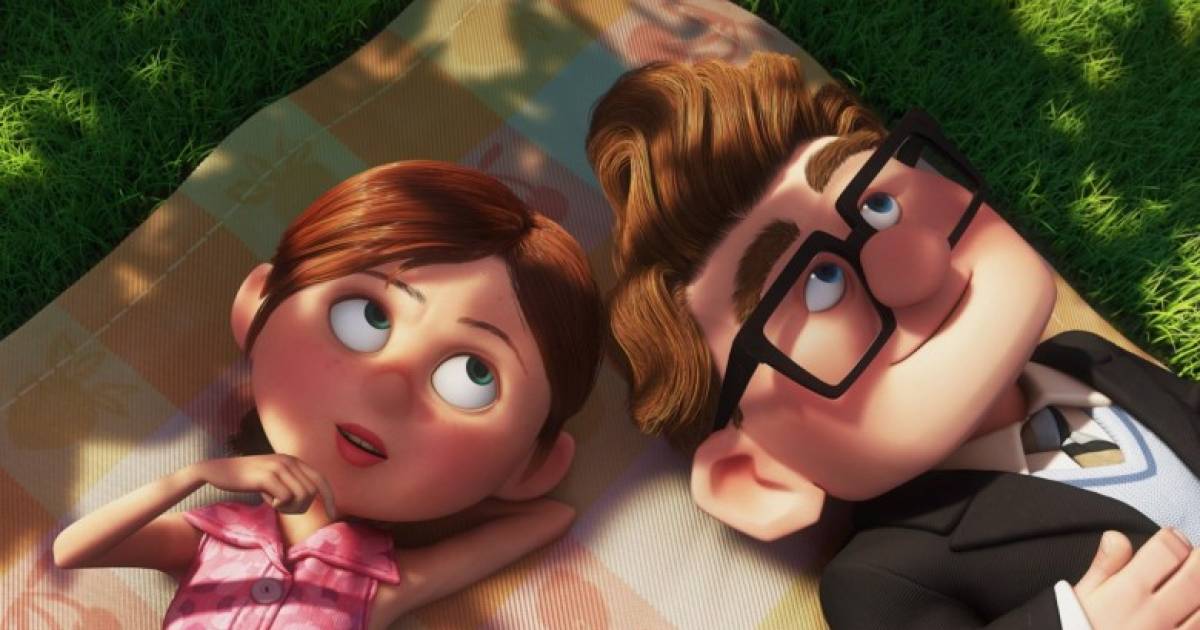
Okay, you might've seen this one coming from a mile away, but how could we not include perhaps the most chest-compressing film Pixar has ever made? Up has become notorious for its opening sequence, one that comes out of left field and snatches the hearts of anyone watching. Little compares to watching the movie for the very first time—expecting a quirky tale of a curmudgeonly old man who builds a balloon home, meets a chubby boy scout, and befriends some colorful beasts on his journey through the skies—and then getting effectively punched in the stomach with sentiment. Pixar proves it's much more than that twee tale right from the get-go, offering up a sprawling scene that details the life and death of Carl's wife, Ellie. We freely admit we sobbed and sniffled and sighed at the ten-minute montage, and we know you will, too.
advertisement
The Lord of the Rings: The Return of the King
Even fans of one of the most beloved novel-to-film franchises of all time aren't immune from tear-stained cheeks. The Lord of the Rings: The Return of the King, based on the second and third volumes of J. R. R. Tolkien's epic series The Lord of the Rings, doesn't wrench us with all-out brutality or countless gruesome deaths, but with its purity and its people. The moment everything falls to tears is a small but impactful one, when the newly-crowned king recognizes the Hobbits for what they're worth and delivers a line none of us will soon forget: "My friends, you bow to no one." After watching them bravely trek the world to finally vanquish Sauron once and for all, we couldn't agree more. Pass the tissues, please.
advertisement
Manchester by the Sea
Directed by award-winning playwright Kenneth Lonergan and starring Casey Affleck and Michelle Williams, Manchester by the Sea has a pretty devastating premise, as it deals with the internal, emotional, and real-life aftermath of an untimely death, but it still manages to leaven its heavy drama with humor. No amount of chuckles, however, could blunt the movie's wrenching turning point.
Following the death of his brother, Lee (Affleck) takes in his nephew, Patrick, and the two spend their days fishing in the waters of their quaint Massachusetts hometown. Grappling with grief and all the complexities that come with it, both Lee and Patrick attempt to bury their emotional distress, but things come bubbling to the surface in one devastating scene. Overcome by the loss of his brother to heart failure and of his happiness to depression, Lee tells Patrick he can't bear to stay in Manchester-by-the-Sea any longer, as tragic reminders linger all across the small-town seacoast. Four words will crush you as you watch: "I can't beat it."
advertisement
The Shawshank Redemption
Widely regarded as one of the greatest films ever made, The Shawshank Redemption, adapted from the Stephen King novella Rita Hayworth and Shawshank Redemption, received seven Oscar nominations, glowing critic reviews, and the attention of a ton of heartbroken moviegoers. This 1994 flick stars Tim Robbins as Andy Dufresne, a banker sent to Shawshank Prison following his murder conviction, and Morgan Freeman as Ellis Boyd "Red" Redding, another prisoner serving a life term. The pair learn from one another the virtues of patience, fortitude, mild manners, and the intricacies of justice against reality. Alongside the initially unlikely duo is Brooks Hatlen (James Whitmore), a convict incarcerated since 1905, who's finally released in his old age. Realizing just how much the "the world went and got itself in a big damn hurry" while he was locked up, Brooks is unsure how to navigate even the simplest tasks, and his health suffers because of it.
"I have trouble sleepin' at night. I have bad dreams like I'm falling. I wake up scared. Sometimes it takes me a while to remember where I am," Brooks says. "I don't like it here. I'm tired of being afraid all the time. I've decided not to stay. I doubt they'll kick up any fuss. Not for an old crook like me. P.S: Tell Heywood I'm sorry I put a knife to his throat. No hard feeling, Brooks."
Brooks delivers this farewell monologue, addressed to those still inside Shawshank Prison, in a cutting and ugly-cry-inducing scene that culminates in his suicide. Just before he passes, he carves "Brooks was here" into a ceiling beam inside his home. (Yeah, we're welling up just thinking about it.)
advertisement
Field of Dreams
There's nothing quite like a moving father-son scene, but it's made even more powerful in a film like Field of Dreams, which marries the idiosyncrasies of familial ties with the driving force of desires, no matter how fantastic. After receiving visions and hearing voices in his head, Iowa corn farmer Ray Kinsella (Kevin Costner) constructs a heavenly baseball diamond that draws in one very special attendee: Ray's father, John. We won't give away too much of the context, but the pain of Ray's journey to see his father once more (and to have him beam with pride) makes the movie's end melt into sweet sadness—and will reduce you to a puddle of tears. As with most films on our list, a single line stabs us right in the chest in Field of Dreams: "Hey Dad, you wanna have a catch?"
advertisement
The Imitation Game
This Benedict Cumberbatch and Keira Knightley-led historical drama brings light to one of Britain's most brilliant minds: Alan Turing, the computer scientist and cryptanalyst famous for his efforts to crack the code on the German-backed Enigma machines, used during World War I to transmit diplomatic and military communication. Though lauded for his exceptional talent and unwavering perseverance, Turing was subject to extreme ridicule by the United Kingdom's legal system following the discovery that he was in a same-sex relationship with a young man named Arnold Murray. The Imitation Game depicts this arresting account of discrimination and unjust, inhumane treatment with dexterity, but the tipping point comes in a minute moment of vulnerability.
Facing the risk of losing his career, accomplishments, and credibility because he's gay, Turing collapses inward, begging Joan (Knightley) to help save his latest machine, which he lovingly named Christopher after a boy he fell in love with in school. "They'll take him away from me," he says. "You can't let them do that. You can't let them leave me alone. I don't want to be alone."
advertisement
Pan's Labyrinth
Pan's Labryrinth is the beautiful brainchild of brilliant writer and director Guillermo del Toro, and follows a young girl named Ofelia through an eccentric maze beneath the ground—and through the trials she's forced to endure above it. Set in post-Civil War Spain at the start of the Francoist period, the story sees Ofelia gain a new stepfather in the Falange officer Captain Vidal, discover the fairy-tale-like underworld, and attempt to complete tasks to save her ailing mother, Carmen, from succumbing to illness and entering the underworld for good. Desperate to escape Vidal's cruelty and cowardice, Ofelia is told she must spare a few drops of an innocent's blood to fully open the portal to the ethereal underworld. And though she could use her baby brother for this purpose, she refuses to harm him.
Not only does del Toro construct an aesthetically awe-inspiring environment unlike any other, he also concludes his story with a death few anticipated, but many find satisfying. (We'll explain, we promise.) In an intense scene in which rebels track down Captain Vidal, he lashes out at Ofelia and shoots her. As she rests on the ground near the entrance of the labyrinth's stone staircase, her blood is shed—innocent blood, the last thing needed to open the portal. What follows is a reunion poignant enough to excuse Ofelia's death, as she appears truly, finally at peace.
advertisement
The LEGO Movie
We're ending on a softer note, one that doesn't center around loss or grief or any of that trademark sad stuff. Instead, we bring you hope so bright and gleaming, it'll leave your eyes glassy with inspiration.
The LEGO Movie might seem like a peculiar choice for this list, and the majority of the block-based animated flick focuses on its dazzling cast takin' on the bad guys with a badass ferocity, but it all takes a deeper turn in the last few minutes. Beneath the comical exterior is a real-life family, Finn and "the Man Upstairs," whose story is framed in the context of the tiny toy characters and their topsy-turvy world; Finn uses the LEGO figures to work through the strains of his relationship with his father.
In a final moving speech, the Man Upstairs (Will Ferrell) realizes his son's dreamt-up antagonist, President Business, is actually based on him, his perfectionism, and his tendency to resort to condescension. He asks Finn what his protagonist, Emmet, would say to President Business, and the response will have you weeping.
"You don't have to be the bad guy. You are the most talented, most interesting, and most extraordinary person in the universe," Finn says to his father, through the LEGO character Emmet. "And you are capable of amazing things. Because you are the Special… and you still can change everything."
Excuse us, we have something in our eye…