Hollywood is clearly obsessed with prequels, sequels, and remakes. While it's easy to identify the biggest of the bunch, especially when they're piggybacking off classics like Ghostbusters, Ben-Hur, and The Magnificent Seven, sometimes it can be difficult to identify the remakes that go under the radar. Here are some movies you didn't know audiences had already seen.
advertisement
Ocean's Eleven
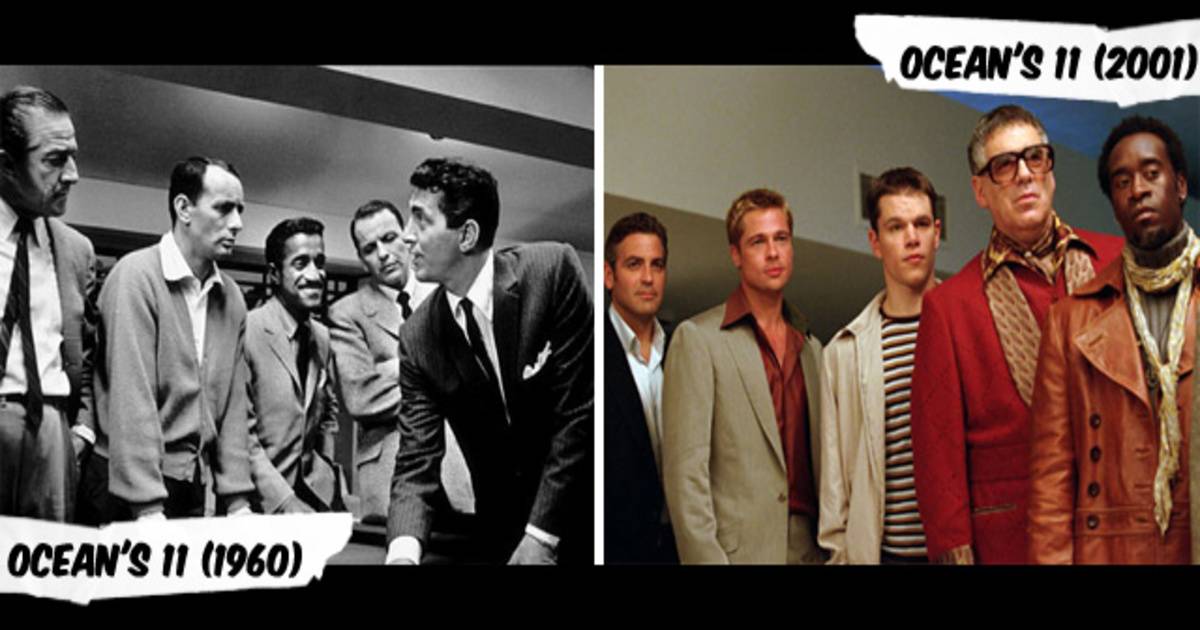
It's rare to see a remake improve so substantially on the original that people actually forget the first film ever existed, but that's what happened with Ocean's Eleven. Director Steven Soderbergh worked with producer Jerry Weintraub and writer Ted Griffin to remake the Rat Pack-starring Ocean's Eleven from 1960, based on the story by George C. Johnson and Jack Golden Russell.
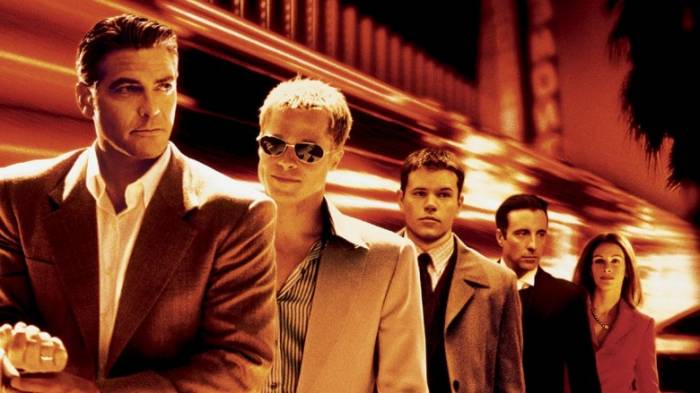
Starring an all-star ensemble that included George Clooney, Brad Pitt, Julia Roberts, Andy Garcia, Matt Damon, and others, Ocean's Eleven was such a huge hit that the movie's success convinced Warner Bros.—as well as the cast and crew—to continue with a franchise. Over the next few years, Ocean's Twelve and Ocean's Thirteen, which saw Catherine Zeta-Jones and Al Pacino join the cast, arrived; there were even plans for a fourth installment, but Clooney said he wanted to "go out strong" with Ocean's Thirteen. Eventually, the cast definitively decided not to continue the series following Bernie Mac's untimely death.
Stuck for a sequel, the studio opted to go with a soft reboot featuring an all-female cast with eight in the gang instead of 11, and Sandra Bullock leading the charge as Danny Ocean's estranged sister Debbie Ocean. Time (and box-office receipts) will tell how many adventures these ladies get up to.
The Last House on the Left
Hollywood might love franchising and remaking horror movies most of all. They're often low-budget productions that yield high returns, even though they don't break box office records. They also have the tendency to kickstart the careers of up and coming stars—and even if lighting doesn't strike right away, they can just wait a few years before diving into a remake. Take, for example, Dennis Iliadis' The Last House on the Left.
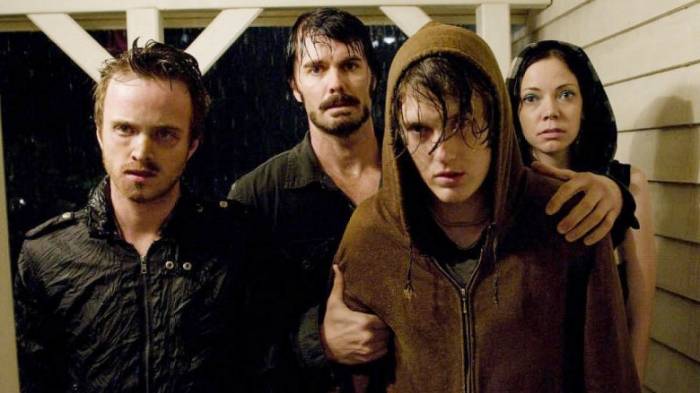
Iliadis' film is a remake of the Wes Craven-directed film of the same name from 1972—with Craven on board as a producer because he was interested in seeing what the movie would be like with more money involved. "There were many aspects of the story I simply couldn't afford to explore," Craven admitted of his original film. "Fortunately, the new version has a much bigger budget, so we were able to greatly expand the production's scope and take more time and care in shooting."
The Last House on the Left remake arrived in 2009, capitalizing on the resurgence of torture porn in the mid-to-late 2000s via hits like Saw and Hostel. Although it didn't do well with critics, it was a hit at the box office, earning just over $45 million worldwide.
advertisement
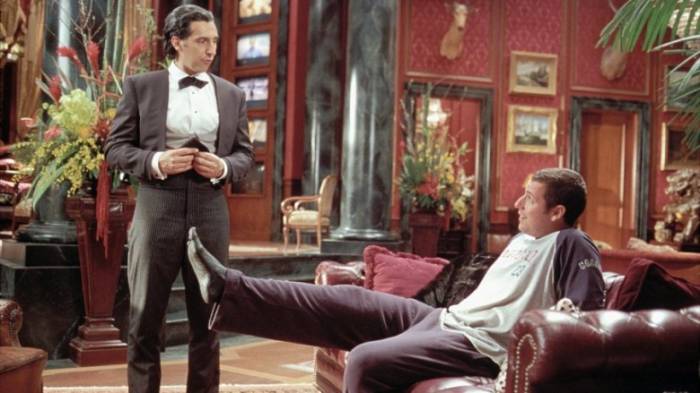
Mr. Deeds
Adam Sandler has been in a bit of a slump recently, having put out a string of disappointing movies, but one of his earliest blunders was starring in Steven Brill's comedy Mr. Deeds. Centering on amateur greeting card writer who unexpectedly inherits a fortune from his late uncle, Sandler stars as Longfellow Deeds in the 2002 comedy, alongside Winona Ryder as Babe Bennett. Though it's technically based on the 1935 short story Opera Hat by Clarence Budington Kelland, the movie is a remake of the 1936 film Mr. Deeds Goes to Town, directed by Frank Capra, and starring Gary Cooper as Longfellow Deeds and Jean Arthur as Babe Bennett.
At best, Brill's film is a testament to why Hollywood shouldn't remake certain movies. The consensus among critics is that the remake doesn't "hold a candle to the original, and even on its own merits, Mr. Deeds is still indifferently acted and stale." Put the Oscar-winning original's reputation up against Sandler's version, and the remake doesn't even begin to compare.
The Ladykillers
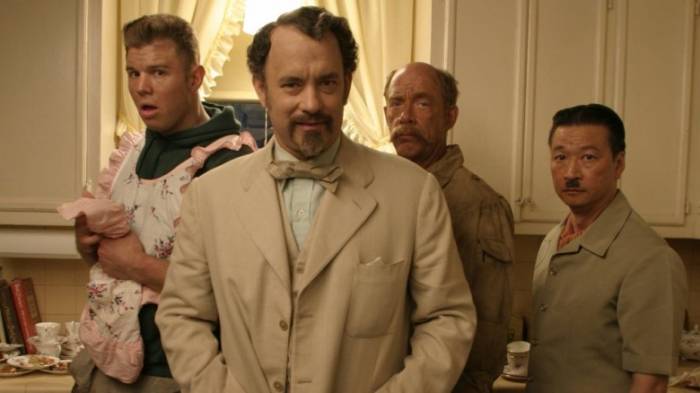
Joel and Ethan Coen love creating original stories, like Fargo, The Big Lebowski, and Inside Llewyn Davis. That's what makes their 2004 black comedy The Ladykillers so unique: based on the British comedy movie of the same name from 1955, written and created by William Rose, it was the first Coens film that wasn't an original production.
Rose may have created the story, but Alexander Mackendrick directed the film, with Alec Guinness, Peter Sellers, and other legendary actors starring in the leading roles, and the end results included an Academy Award nomination for Best Original Screenplay (plus, it holds an impressive 100 percent rating on Rotten Tomatoes).
Unfortunately, critics consider the Coens' remake to be one of the brothers' less-than-stellar efforts, although they praised Tom Hanks' performance as Goldthwaite Higginson Dorr. Even though it didn't live up to the reputation of the original, the Coens' Ladykillers remains an enjoyable watch.
advertisement
A Fistful of Dollars
Hollywood has a rich tradition of taking inspiration from Japanese films for American Westerns. Legendary filmmaker Akira Kurosawa directed hits such as Rashomon, Seven Samurai, and Yojimbo—each of which spawned English remakes, such as The Outrage, The Magnificent Seven, and, of course, A Fistful of Dollars.
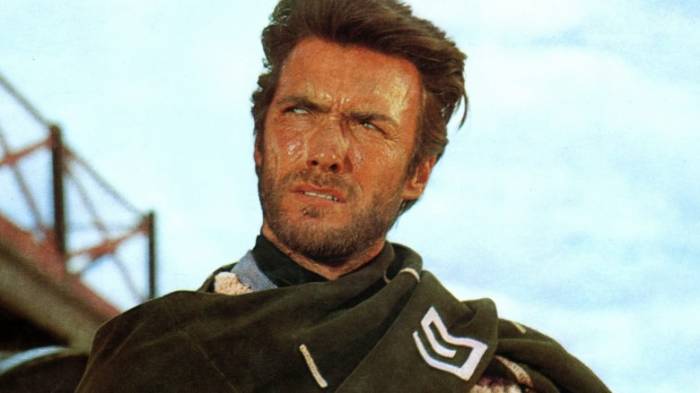
One of Sergio Leone's classic spaghetti Westerns, A Fistful of Dollars marked the first installment in his acclaimed Dollars trilogy—arguably one of the greatest trilogies in cinema history—and it also marked the first time Clint Eastwood starred in a leading role. Though it was an unofficial remake of a Japanese film, and an iconic one at that, A Fistful of Dollars initiated a Renaissance in the stagnant Western genre.
Despite its influence on the genre, A Fistful of Dollars was still an unauthorized remake of Yojimbo, and Kurosawa didn't appreciate it. According to postproduction lead Tonino Valerii, Kurosawa sent Leone a stern letter, saying: "Signor Leone—I have just had the chance to see your film. It is a very fine film, but it is my film. Since Japan is a signatory of the Berne Convention on international copyright, you must pay me." According to reports, the two filmmakers settled out of court, with Kurosawa receiving 15 percent of the total box office gross, with a minimum of $100,000.
advertisement
Meet the Parents
Sometimes when an independent movie or short film garners critical acclaim, Hollywood studios pick up the rights and expand the story to fit wider audiences. Recent examples include Whiplash and Lights Out, both adapted into feature films, but an earlier case is Greg Glienna's 1992 short Meet the Parents. Glienna and Mary Ruth Clarke wrote and starred in Meet the Parents, which centered on a young man meeting his girlfriend's mom and dad, with the situation getting more uncomfortable as the film goes on. Although it never saw wide release, it was a hit with critics who saw it—and that led to Universal eventually picking up the rights.
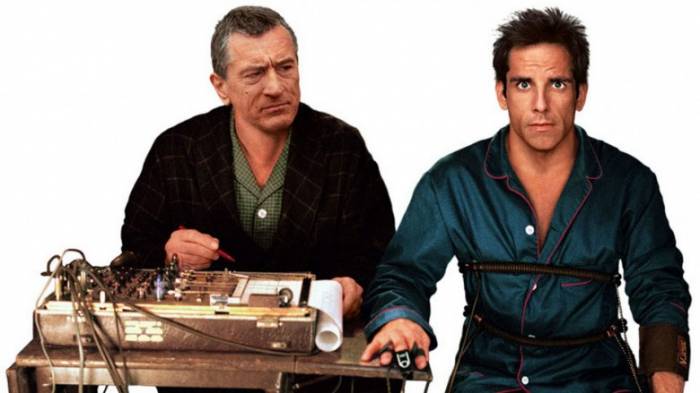
Jay Roach led the charge as director on the remake, based on a script by Jim Herzfeld and John Hamburg, which expanded upon the story of the original movie. Starring Robert De Niro, Ben Stiller, Teri Polo, Blythe Danner, and Owen Wilson, it quickly became one of Stiller's most recognizable and commercially successful roles and spawned two sequels, Meet the Fockers in 2004 and Little Fockers in 2010. It also inspired the creation of the reality shows Meet My Folks as well as the comedy series In-Laws, both of which debuted on NBC in 2002.
advertisement
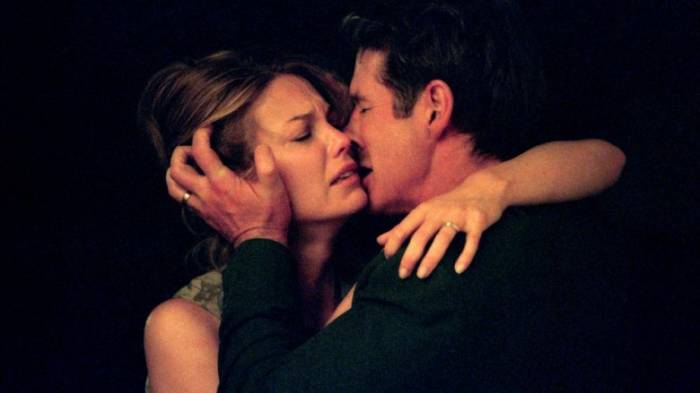
Unfaithful
A lot of Hollywood remakes of foreign films draw their inspiration from U.K. movies, but French cinema is fair game too. In the early 2000s, Adrian Lyne directed a remake of the 1969 French film La Femme infidèle (The Unfaithful Wife), directed by Claude Chabrol and starring Stéphane Audran, Michel Bouquet, Michel Duchaussoy, and Maurice Ronet. It's unclear how much the film made at the box office, but there were reportedly over 682,000 ticket admissions in France.
The remake starred Richard Gere as Edward Sumner and Diane Lane as the unfaithful wife, Constance Sumner, as well as Olivier Martinez, Erik Per Sullivan, and Chad Lowe. It's no doubt that more than half a million people saw the English remake—Unfaithful earned almost $120 million worldwide.
Financial success notwithstanding, Unfaithful received mixed-to-negative reviews, although critics were quick to credit Lane with an outstanding performance. She walked away with awards for best actress from the New York Film Critics and National Society of Film Critics, and was nominated for a Golden Globe and an Academy Award in the same category.
advertisement
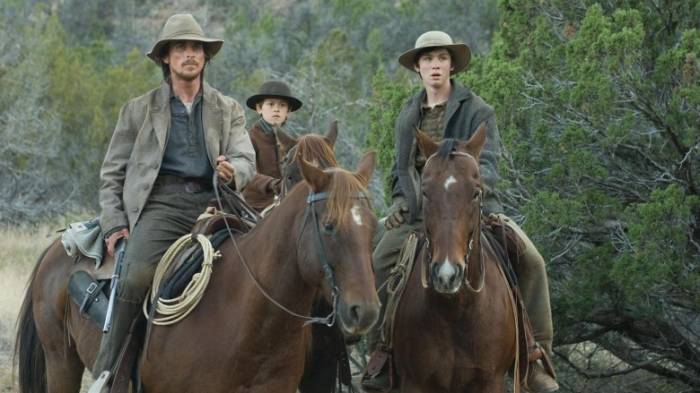
3:10 to Yuma
Westerns are a big part of Hollywood's history, and even though they aren't as plentiful or popular as they once were, filmmakers like to go back to that simpler time every once in awhile. In the mid-2000s, director James Mangold remade Delmer Daves' movie 3:10 to Yuma, which itself is based on the short story of the same name by Elmore Leonard—but Mangold chose to base his remake on the 1957 film instead of the short story.
Casual moviegoers today may not know Mangold's Western film is a remake, considering that the original movie came out more than 50 years ago—but that doesn't mean the original isn't a classic. In 2012, the Library of Congress selected the film for preservation due to being "culturally, historically, or aesthetically significant." Considering Mangold's version features a cast that includes Russell Crowe and Christian Bale, newer generations would be more inclined to recognize the 2007 film over the one from 1957. And though the movie was a departure for Mangold, whatever he learned while making 3:10 to Yuma undoubtedly came in handy when he was filming Logan, which had a heavy neo-Western vibe.
advertisement
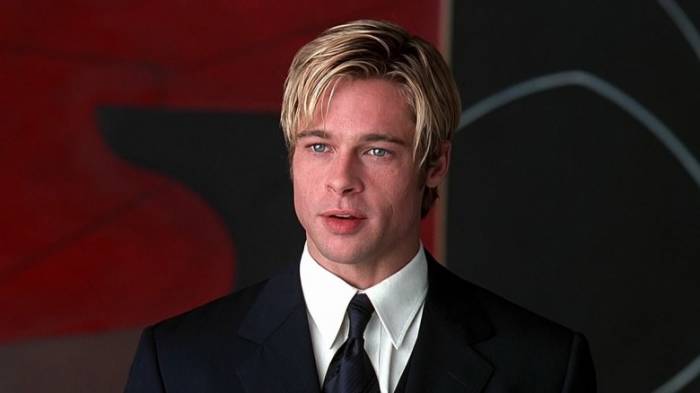
Meet Joe Black
Brad Pitt arrived on Hollywood's radar in the mid-'90s with movies such as Seven, Thelma & Louise, and Meet Joe Black—the latter of which was loosely based on the 1934 film Death Takes a Holiday, directed by Mitchell Leisen.
Interestingly, Leisen's film arrived in the time between the era of silent films and the establishment of censorship guidelines, and it also happened to be based on Alberto Casella's Italian play La Morte in Vacanza. The film's intriguing concept made it ripe for remakes and adaptations, of which there have been several over the years, with the latest being Martin Brest's Meet Joe Black. In Brest's version, Pitt plays Death incarnate, a.k.a. Joe Black.
Though the film earned more than $142 million at the worldwide box office, its hefty production budget prevented it from being a total success. Critics also weren't too impressed with the story—or Pitt's performance, for that matter. On a side note, Brest disputed the heavy edits the studio made for the airline version of the film and ended up disowning the project altogether, opting to have his name replaced with the notorious pseudonym Alan Smithee.
advertisement
The Italian Job
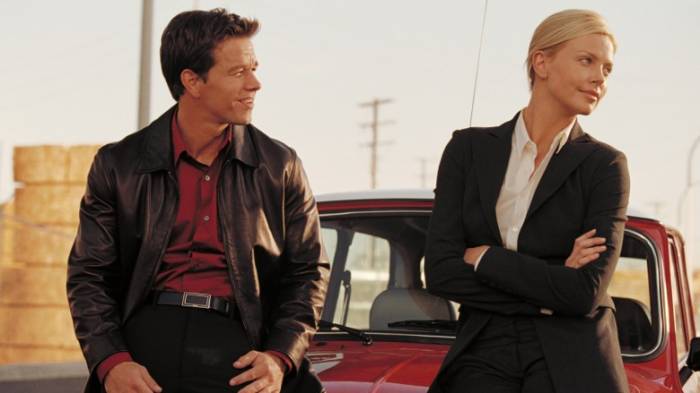
When younger filmgoers think of Michael Caine, the first thing that pops into their head is probably Bruce Wayne's trusty butler Alfred Pennyworth, but one of the actor's earliest and most famous roles came as Charlie Croker in Peter Collinson's 1969 caper The Italian Job. F. Gary Gray directed an American remake in 2003, starring Mark Wahlberg, Charlize Theron, Edward Norton, and Donald Sutherland, among others. Audiences shouldn't be faulted for remembering the remake over the original; while they share a handful of fundamental similarities, the movies are significantly different in terms of plot and tone.
In fact, Gray said he wanted his movie to be more of a tribute. "I just want to make sure everybody who's a real big fan of the original [movie] understands that [my film] is really an homage to the original," told IGN. "We pretty much have a different story. I mean the similarities between this story and the original are the Minis, the gold heist, and the traffic jam. That's it. It's pretty much a different story [beyond that]."