

Astronomers at the Université de Montréal came across the ocean planet through NASA’s Transiting Exoplanet Survey Satellite that is 100 million light years away from Earth and it completes an orbit of its star every 11 days. It is believed that the newly-discovered planet is 70 percent larger than Earth, and its density could be consistent with having a deep ocean.
NASA Has Discovered An 'Ocean World' Where One Year Lasts Just 11 Days
By
Samantha in
Science and Technology
On 27th August 2022
advertisement
NASA has discovered a water planet 100 million light years away from Earth that completes an orbit of its star every 11 days.
Astronomers at the Université de Montréal came across the ocean planet through NASA’s Transiting Exoplanet Survey Satellite or TESS, according to a study published in The Astronomical Journal.
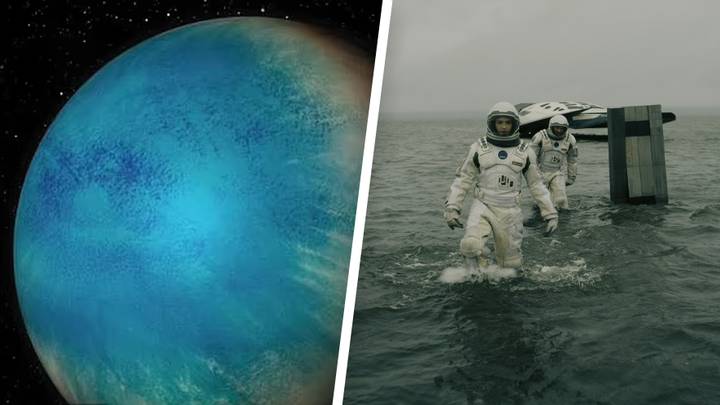
CNET reports the planet was covered by a blanket of water, named TOI-1452 b by scientists, is thought to live 100 million light years from Earth and orbits within a binary star system among the Draco constellation.
Credit: Stocktrek Images
Université de Montréal Professor René Doyon said in a press release: “I’m extremely proud of this discovery because it shows the high calibre of our researchers and instrumentation.
“It is thanks to the OMM, a special instrument designed in our labs called SPIRou and an innovative analytic method developed by our research team that we were able to detect this one-of-a-kind exoplanet.”
Credit: Stocktrek Images
advertisement
There is a need for more research on the matter, it is the newly-discovered planet is 70 per cent larger than Earth, and its density could be consistent with having a deep ocean.
Lead author of the study Charles Cadieux shared: "TOI-1452 b is one of the best candidates for an ocean planet that we have found to date.
Credit: Stocktrek Images
"Its radius and mass suggest a much lower density than what one would expect for a planet that is basically made up of metal and rock, like Earth."
It sounds like something right now in Christopher Nolan’s Interstellar; when astronauts visit Miller’s planet, which is covered by a seemingly endless shallow ocean. Honestly, just set up some floating cafes and a shopping district and we can call it home,
However, surprisingly the planet is reported to sit close enough to its star, accumulating a mild temperature that could potentially support life.
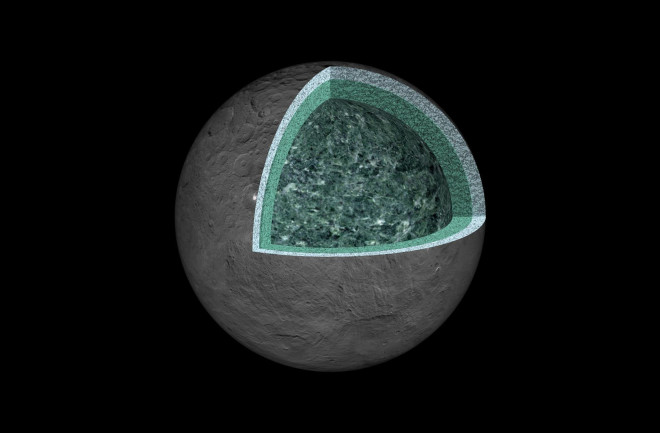
Credit: Stocktrek Images
advertisement
Researchers are currently working to understand if life could thrive on this planet.
Professor Doyon revealed that the exoplanet needed to undergo further observation with NASA's James Webb Space Telescope, the largest optical telescope in space known for its high infrared resolution, capturing shoots deep into the universe.
“Our observations with the Webb Telescope will be essential to better understanding TOI-1452 b,” she said.
“As soon as we can, we will book time on Webb to observe this strange and wonderful world.”
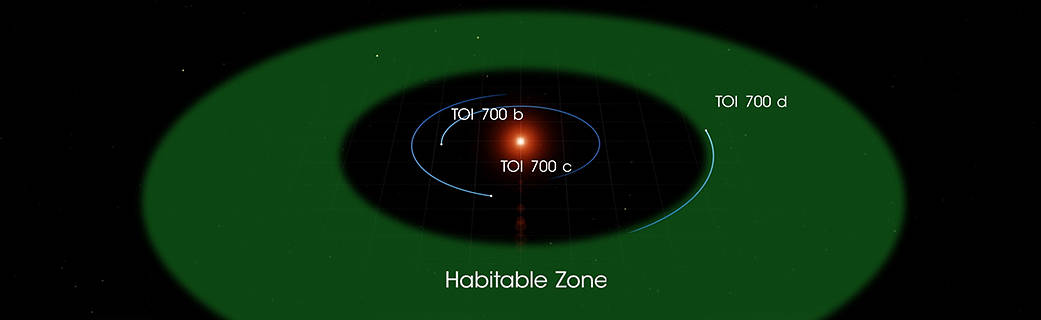
Credit: Stocktrek Images