

Scientists say they’ve never come across anything quite like this before
NASA Discovers Strange Deep Space Object Sending Signals To Earth Every 44 Minutes
By
Khadija Pervez in
Space
On 12th June 2025
advertisement
If the endless unknowns of deep space already give you chills, then brace yourself because NASA just made a discovery that's both thrilling and a little eerie.
The US space agency recently stumbled upon a strange object out in space that has been sending repeating signals to Earth, and it's doing so every 44 minutes like clockwork.
This mysterious object is located about 16,000 light-years from our planet. What’s more surprising is that astronomers didn’t go looking for it—they found it by accident. And according to the experts, it’s not like anything they’ve ever seen before.
The object, officially named ASKAP J1832-0911, gives off intense bursts of energy every 44 minutes. Each pulse sticks around for about two minutes before fading out again.
ASKAP belongs to a fairly new category of cosmic phenomena known as long period radio transients. These are mysterious space objects that send out radio pulses on much slower cycles compared to the fast and steady beat of pulsars—those fast-spinning neutron stars that emit radiation in consistent, tight patterns.
Instead of seconds or milliseconds, these long-period transients operate on timescales of minutes, which makes them incredibly rare and interesting to researchers.
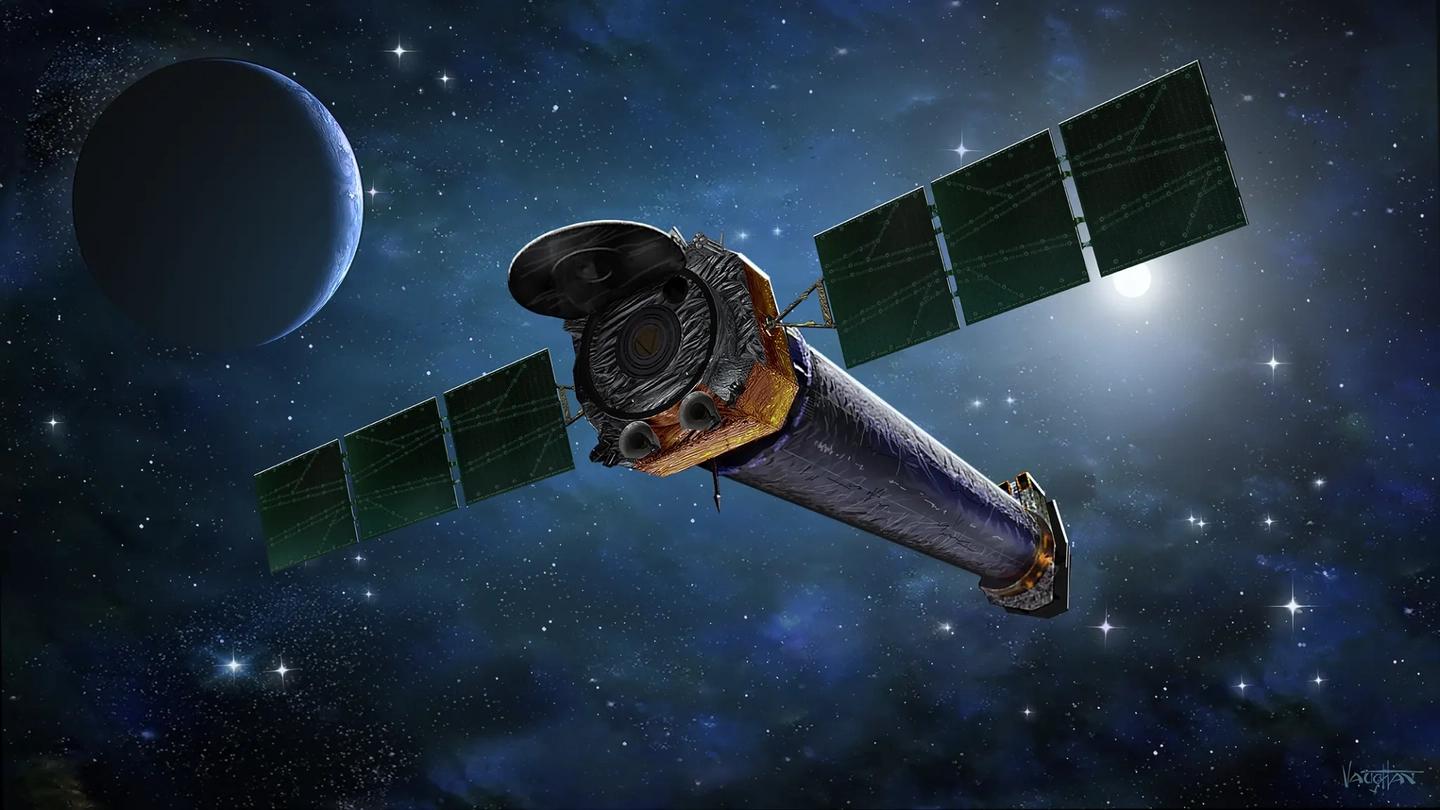
The Chandra X-ray Observatory picked up on the phenomenom
NASA/CXC & J. Vaughan
advertisement
Astronomers working with NASA’s Chandra X-ray Observatory—currently the most powerful X-ray telescope ever built took a closer look and made an unexpected discovery. They found that ASKAP J1832-0911 doesn’t just give off radio waves. It also pulses in X-rays, and what’s even more incredible is that both signals follow the same 44-minute rhythm.
This kind of dual behavior has never been seen before in a space object like this. It’s raised all kinds of new questions about what ASKAP really is and what might be causing these synchronized emissions.
"This object is unlike anything we have seen before." said lead researcher Andy Wang, an astronomer from Curtin University in Perth, Australia.
"ASKAP J1831-0911 could be a magnetar (the core of a dead star with powerful magnetic fields), or it could be a pair of stars in a binary system where one of the two is a highly magnetized white dwarf (a low-mass star at the end of its evolution)."

The unusual object is located 16,000 light years away
Pawel Libera/Getty Images
advertisement
Wang added more to the mystery by saying, "However, even those theories do not fully explain what we are observing."
Things got even more puzzling when astronomers noticed that ASKAP’s signals had dramatically weakened over a six-month stretch.
When the team checked back on the object in August, they found that its radio signal had dropped by a factor of 1,000. Even more surprising, the object had completely stopped emitting X-rays. Back in February, it had been doing both.
advertisement
That kind of sudden change left the researchers with more questions than answers.
"We looked at several different possibilities involving neutron stars and white dwarfs, either in isolation or with companion stars." said Nanda Rea, a co-author of the study from the Institute of Space Sciences in Barcelona, Spain. She added, "So far nothing exactly matches up, but some ideas work better than others."
Adding to the mystery, ASKAP appears to be aligned in the sky with a glowing cloud of gas from a supernova remnant—the leftovers of a massive star explosion. But scientists believe this is likely just a coincidence and not actually connected to ASKAP itself.
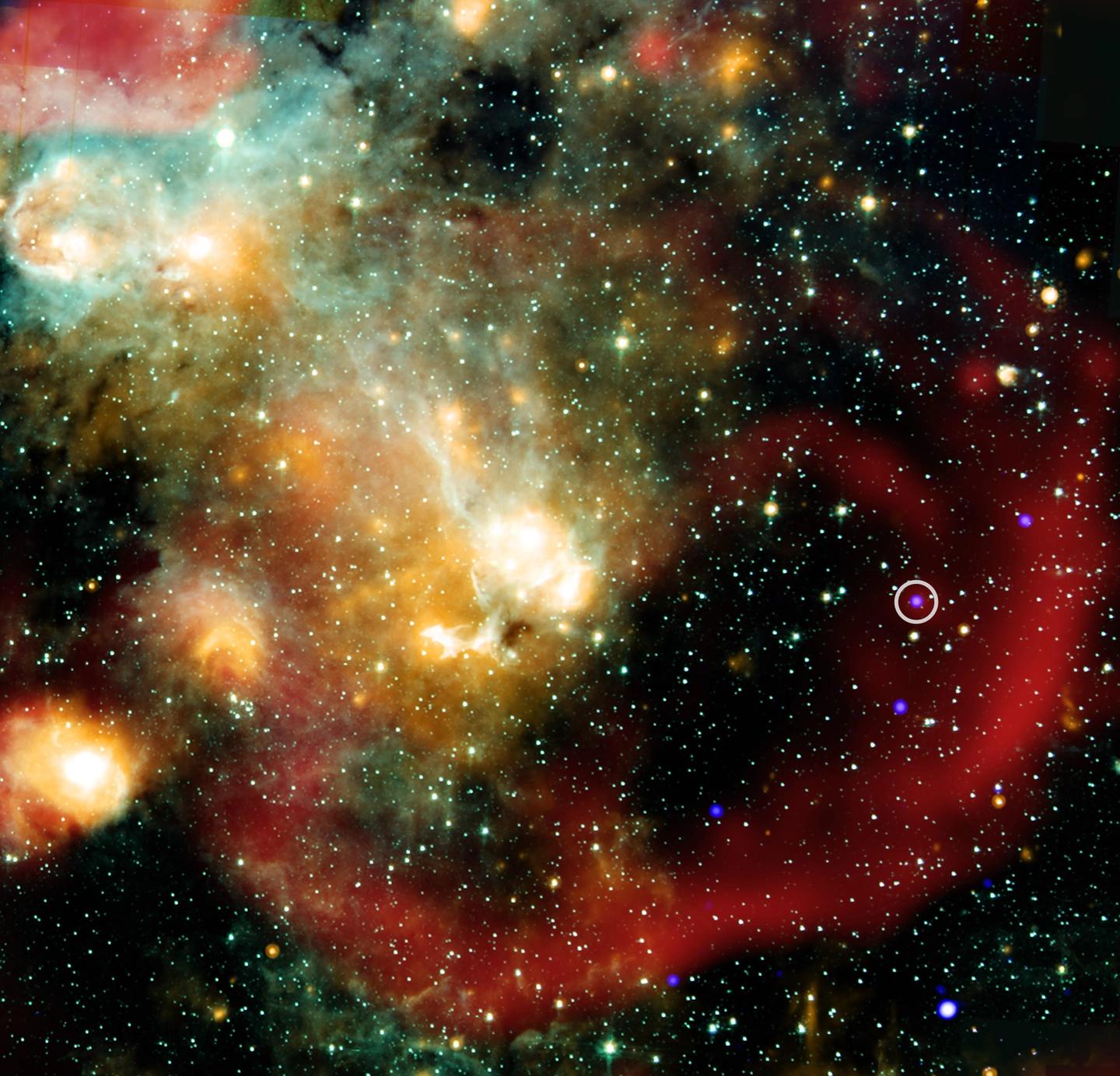
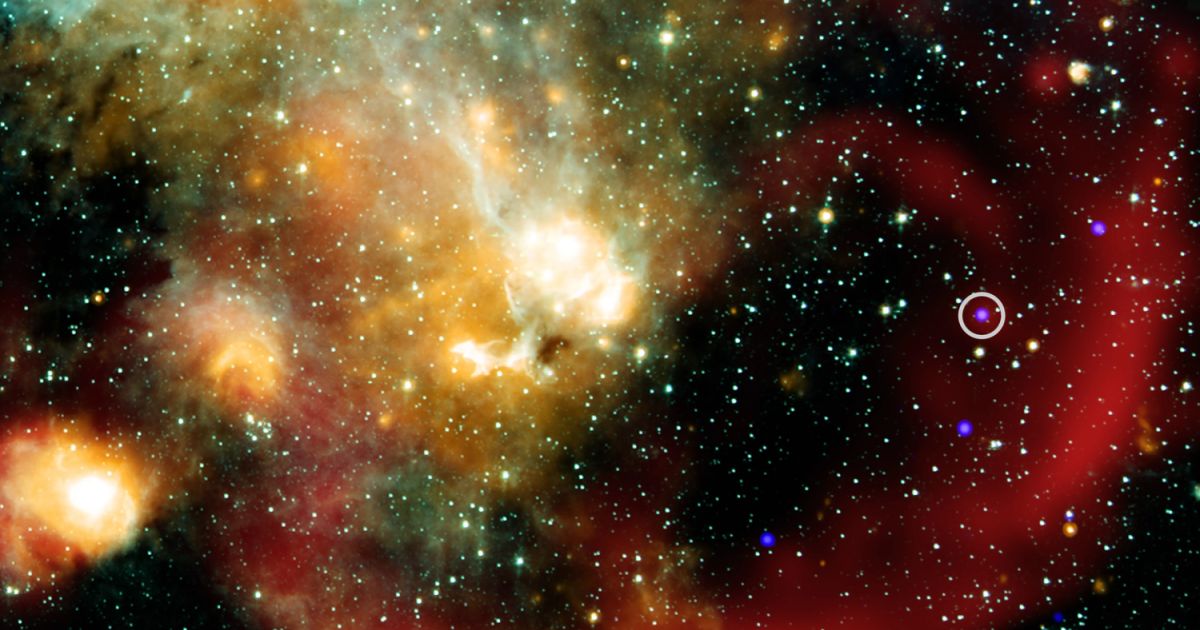
Circled is the mysterious Askap
NASA/CXC/ICRAR, Curtin Univ./Z. Wang et al
advertisement
That supernova remnant seems to sit in the foreground, kind of like a cloud drifting past the sun. Meanwhile, ASKAP J1832-0911 is positioned far deeper in space, well behind it.
At the moment, the true nature of this cosmic beacon remains unknown.
"Finding a mystery like this isn't frustrating." said co-author Tong Bao of the Italian National Institute for Astrophysics. He continued, "It's what makes science exciting."