

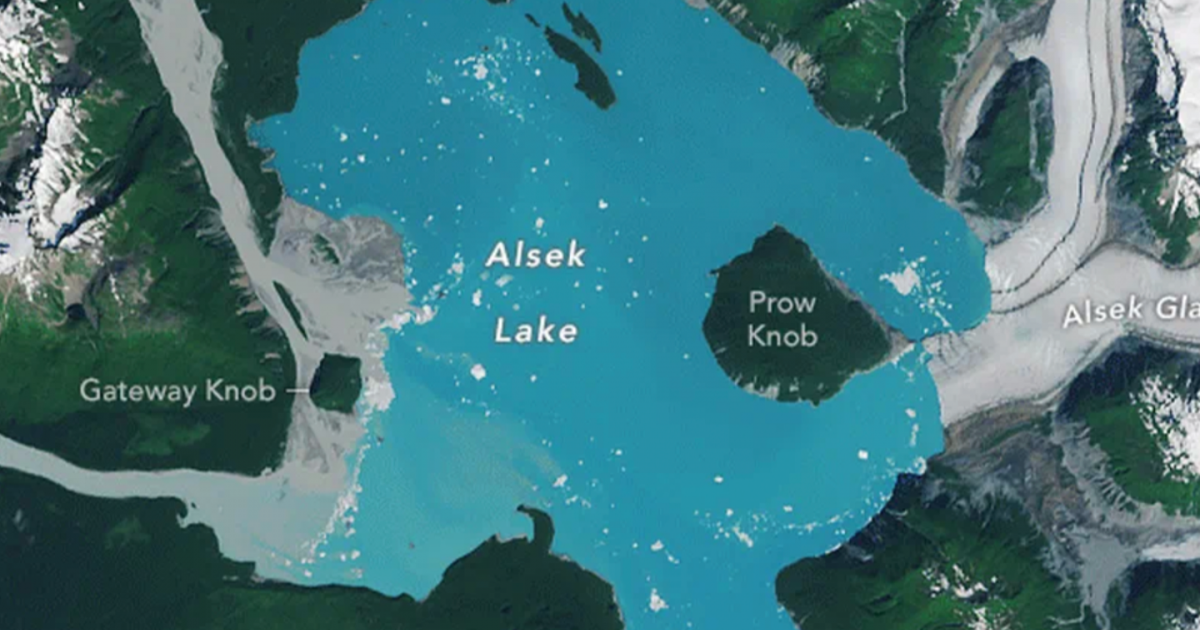
NASA satellites tracked its slow formation over more than forty years
advertisement
NASA has sounded a serious warning about the effects of climate change after confirming that a brand new island has appeared in Alaska.
Over the last forty years, NASA satellites have tracked a melting glacier along the coastal plain in southeastern Alaska. The ice loss caused an expanding lake to surround a once-connected landmass.
Now, as of this summer, that piece of land has fully separated and is officially recognized as its own island.
The new island covers roughly two square miles and contains Prow Knob, a small mountain that decades ago was encircled by the frozen waters of the Alsek Glacier.
As the glacier gradually thinned and melted, large amounts of runoff water created what scientists call 'proglacial lakes'. These lakes slowly expanded, overtaking the area where thick ice used to dominate.
NASA has now confirmed that Prow Knob is standing alone, fully cut off by the growing waters of Alsek Lake, making it a true island as of this year.
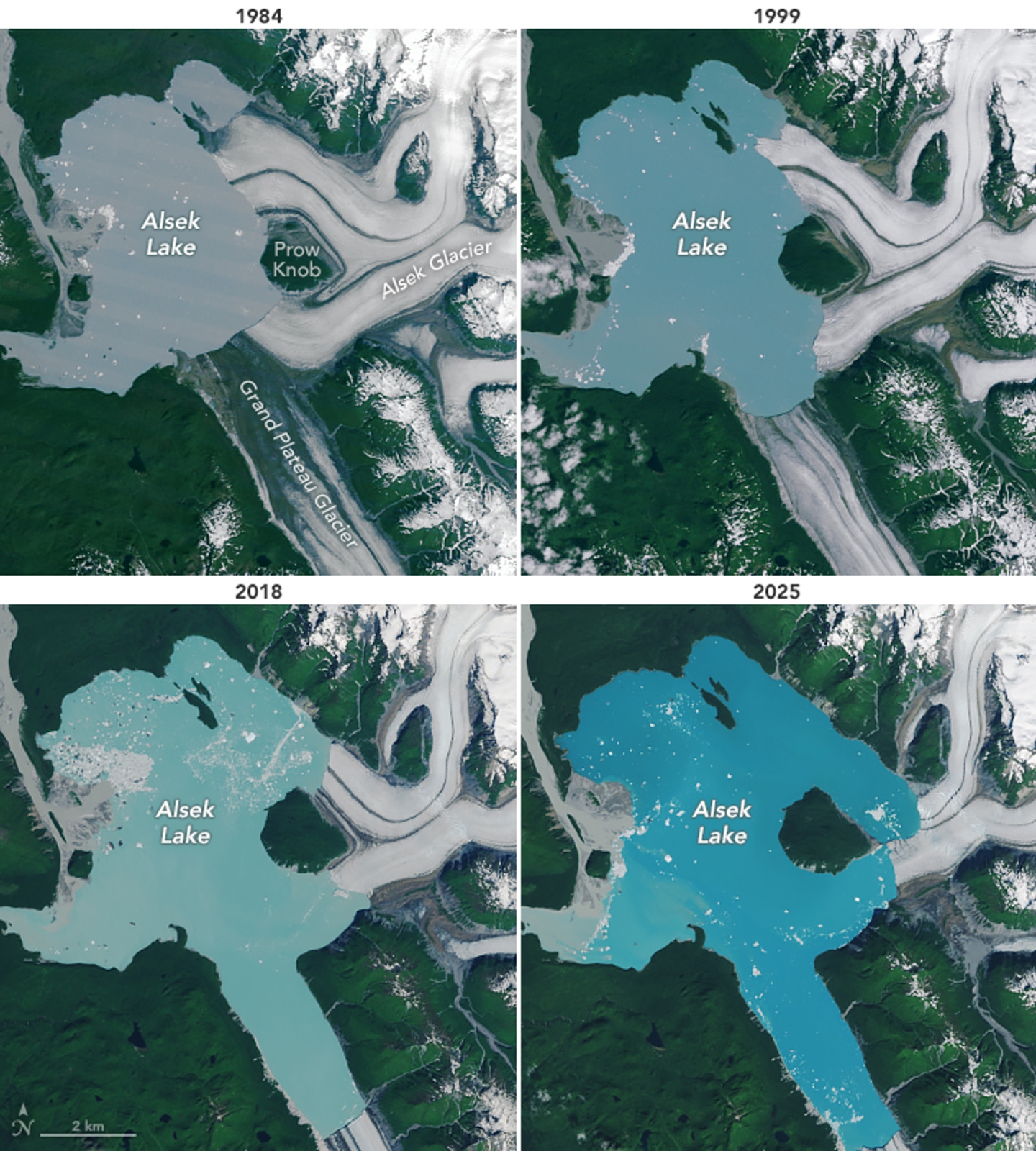
The lake over time from 1984 to 2025
NASA
advertisement
Researchers warn this dramatic change is yet another visible consequence of climate change, with rising global temperatures fueling faster glacial melt and reshaping entire coastlines.
The first clear images of Prow Knob were captured by the Landsat 5 satellite back in July 1984. At that time, its western edge touched the lakeshore, while the rest of the mountain was still encased in the massive Alsek Glacier.
Since then, NASA’s satellites have documented the retreat of both the Alsek Glacier and the nearby southern Grand Plateau Glacier, showing how the ice has been melting away over four decades.
As the glaciers pulled back, meltwater flooded into the gaps and steadily expanded Alsek Lake. Over time, the growing waters swallowed up the remaining ice surrounding Prow Knob.
The final stretch of ice holding the mountain to the glacier disappeared this past summer, officially leaving Prow Knob isolated as its own island.
NASA estimates the full separation happened sometime between July 13 and August 6.
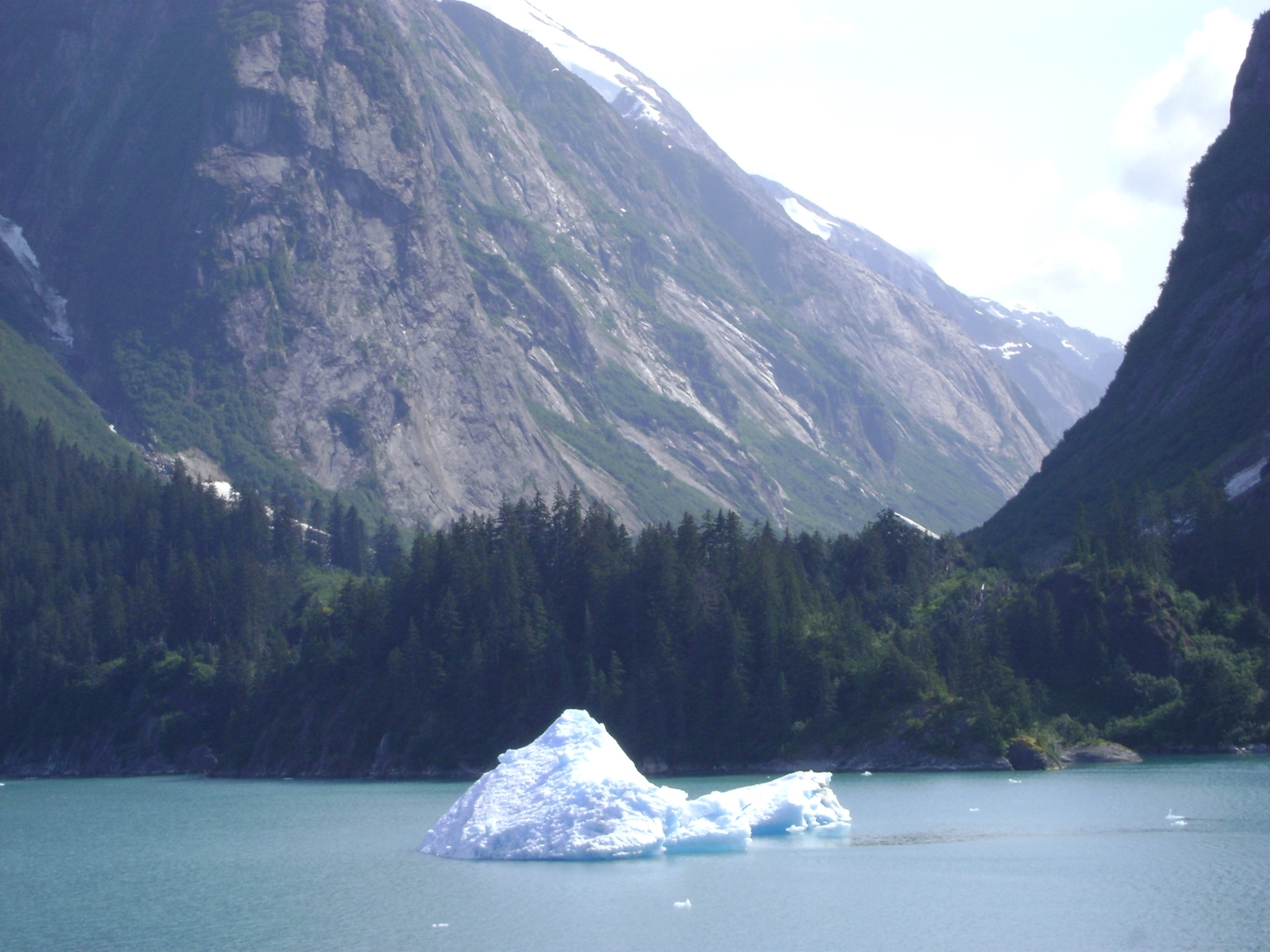
NASA warns even more could melt away now it is even less stable
Getty Images
advertisement
Historical records show that in the early 1900s, the Alsek Glacier reached as far as Gateway Knob, located three miles west of Prow Knob.
By the mid-20th century, the glacier had already begun retreating eastward, though Prow Knob was still surrounded by ice. It was around this time that late glaciologist Austin Post gave the mountain its name, noting its resemblance to the prow of a ship.
By 1984, much of the glacier’s edge had turned into lakeshore, and by 1999, both the Alsek and Grand Plateau glaciers were in noticeable retreat.
advertisement
Since those earlier observations, Alsek Lake has nearly doubled in size, growing from about 45 square kilometers to 75 square kilometers.
NASA now warns that further melting should be expected in the years ahead, especially now that the glacier no longer touches the mountain.
They explained that since the glacier has 'lost contact' with Prow Knob, the remaining ice in the area is less stable and increasingly vulnerable to breaking apart, or 'calving'.