

The physicist claims humanity could face a much shorter future because of nuclear war risks
advertisement
A physicist who shared the Nobel Prize in Physics in 2004 has issued a stark warning about the future, after giving his view on when humanity could face destruction.
There is no doubt that the world feels deeply unstable right now. The threat of nuclear war also appears to feel more real than it did around 20 years ago, especially as global tensions continue to rise.
With an unpredictable US president, war in Europe, and the ongoing crisis in the Middle East, there is a clear sense of unrest across many parts of the world.
David Gross has now shared a chilling warning about humanity’s future, saying mankind could be wiped out in just over three decades if the risks continue to grow.
Speaking to Live Science, he explained how experts have long tried to estimate the danger of nuclear conflict, saying: "Even after the Cold War ended, when we had strategic arms control treaties, all of which have disappeared, there were estimates that there was a one percent chance of nuclear war every year."
"I feel it's not a rigorous estimate that the chances are more likely two percent. So that's a one-in-50 chance every year."
Humanity's destruction is on the horizon, according to the physicist
Getty Stock Photo
advertisement
Gross continued: "Currently, I spend part of my time trying to tell people … that the chances of you living 50 [more] years are very small."
"Due to the danger of nuclear war, you have about 35 years."
Based on that warning, the timeline would point to the year 2061 as a possible point by which humanity could face destruction.
A warning built around risk, not certainty
Gross was not presenting the year as a fixed prophecy or a guaranteed end date. His warning is based on the idea that even a small yearly chance of nuclear war becomes much more serious when stretched over decades.
That is what makes his claim so unsettling. A risk that sounds small in one year can become far more frightening when people think about living through the same danger again and again for 30, 40, or 50 years.
His comments also fit into a wider concern shared by many scientists, arms control experts, and campaigners: humanity has created weapons powerful enough to destroy itself, but the systems meant to control those weapons have become weaker over time.
advertisement
Gross also pointed to the major upheaval happening around the world right now, saying the situation has become far more worrying over time: "Things have gotten so much worse in the last 30 years, as you can see every time you read the newspaper."
As with many modern global risks, artificial intelligence has also become part of the discussion. Gross said that while AI can bring major benefits, it may also create new dangers if it becomes tied to weapons, military systems, or fast-moving crisis decisions.
"The agreements, the norms between countries, are all falling apart," the physicist added, suggesting that old rules and understandings between countries are no longer as strong as they once were.
advertisement
"Weapons are getting crazier. Automation, and perhaps even AI, will be in control of those instruments pretty soon."
"It's going to be very hard to resist making AI make decisions because it acts so fast."
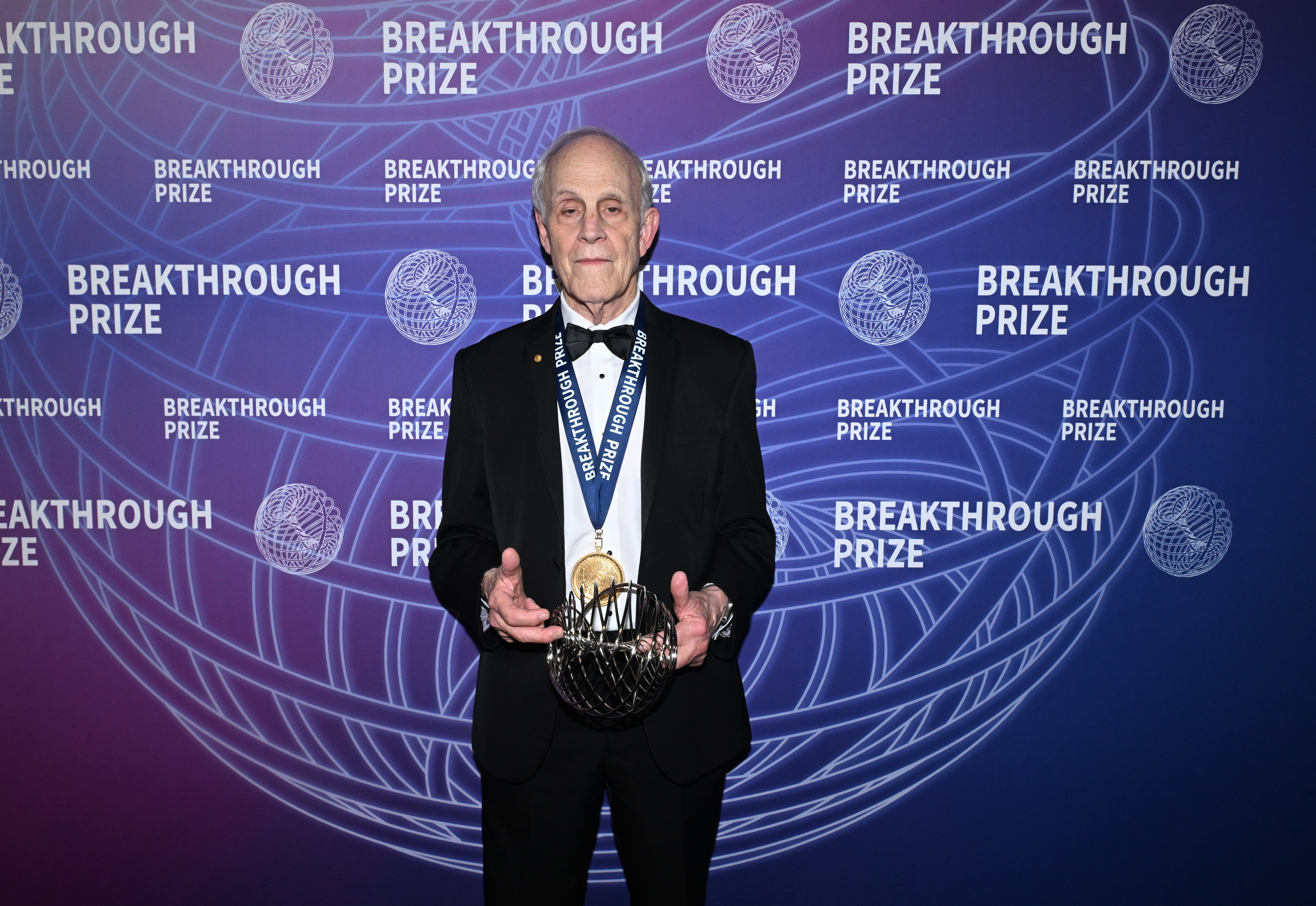
David Gross believes AI could play a role
Vivien Killilea/Getty Images for Breakthrough Prize
advertisement
Why AI makes the warning more complicated
The concern around AI is not only about what the technology can do now, but also about how quickly it may be added to systems that already carry huge risks.
In a military setting, speed can be tempting. If a machine can process information faster than a person, leaders may feel pressure to use it when they believe every second matters.
But that same speed can become dangerous if the system makes a mistake, misunderstands data, or pushes people toward action before humans have time to check the facts carefully.
advertisement
Gross then pointed to the errors that can come with AI, and he warned that those mistakes could become dangerous on a global scale if the technology is used in high-stakes decisions.
He added: "If you play with AI, you know that it sometimes hallucinates."
The Doomsday Clock, which was created to warn the public about how close humanity may be to destroying the world, is another measure often used to show how serious the current danger feels.
advertisement
This year, the Doomsday Clock was set at 85 seconds to midnight, moving four seconds closer than it was last year.
Melissa Parke, Executive Director at ICAN, explained the meaning behind the measure and said: "The Doomsday Clock is not a prediction, it's a warning."
"Nuclear weapons, wars from Ukraine to Gaza, the climate crisis and runaway technologies are all part of the problem – but they are all created by humanity."
advertisement
"That means we can also change course. The Treaty on the Prohibition of Nuclear Weapons (TPNW) is a clear path to turn back the hands of the clock."
advertisement
The warning still leaves room for change
The overall message from Gross and from groups that track global danger is not that destruction is certain. Instead, the warning is that the current path carries serious risks if countries keep moving away from agreements, trust, and restraint.
Nuclear weapons remain central to the concern, but the warning also includes war, climate pressure, and fast-moving technology. Each issue is serious on its own, but together they create a much harder problem for world leaders to manage.
The key point is that these threats were created by human choices. That means different choices, including stronger agreements, better safeguards, and more control over dangerous technology, could still reduce the risk.