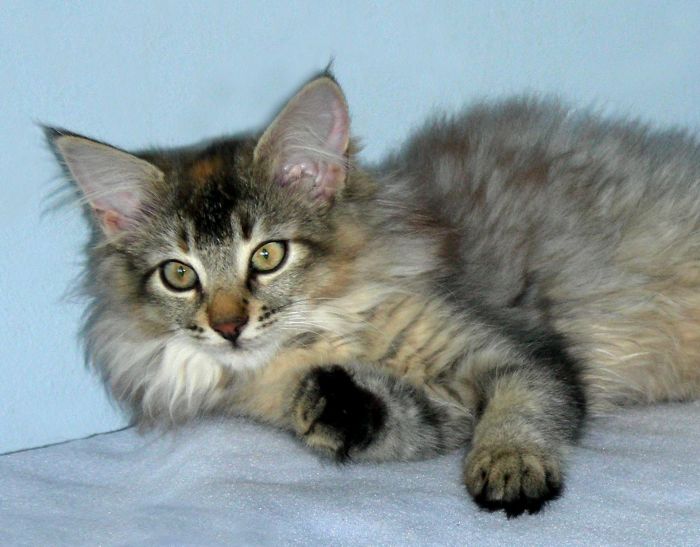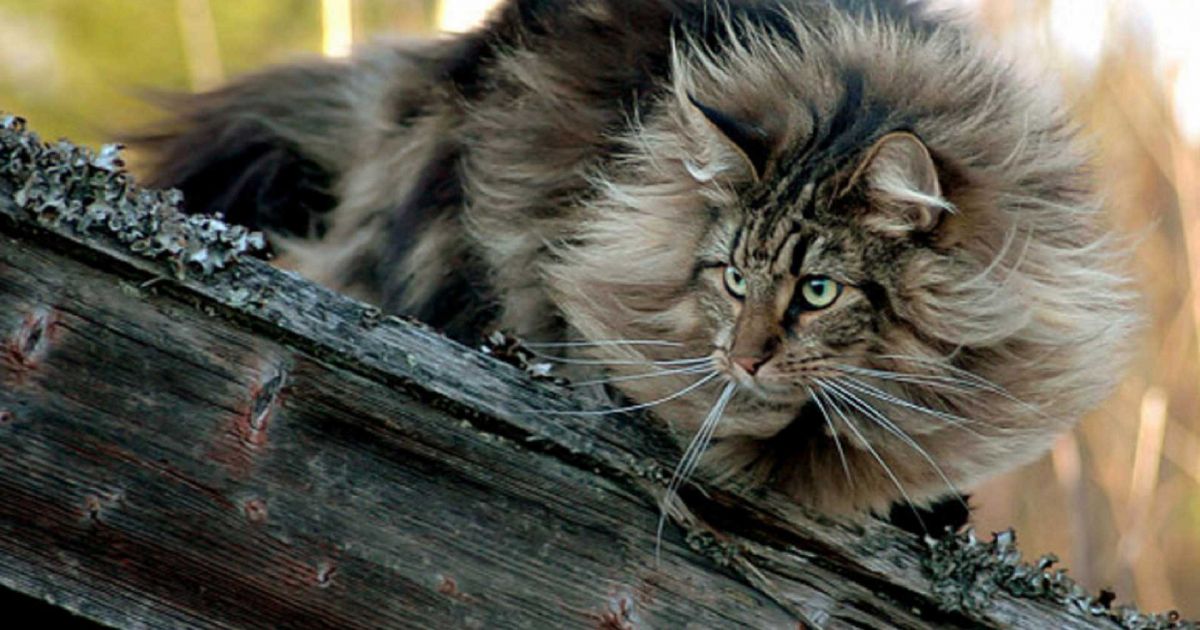
Known for being tolerant toward children and other pets. They are very intelligent, and enjoy climbing. They are not easily stressed, and adapt better to change than many other breeds of cat.
advertisement
Known as the Skogkatt in its native Norway, the Norwegian Forest Cat is a large, semi-longhaired cat whose rugged appearance fits its name. Despite the hardy facade, this breed is very much a homebody that enjoys the company of other pets and particularly their human companions. Their relationship with you can best be described as “on their own terms.” Yes, Forest Cats can be lap cats, but THEY will decide when to get on or off that lap.
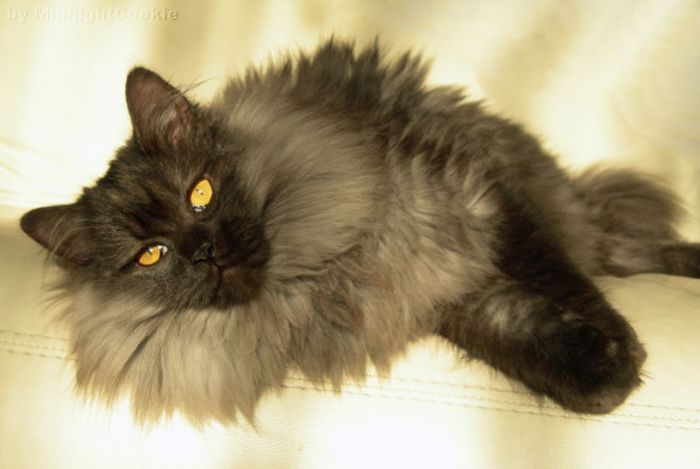
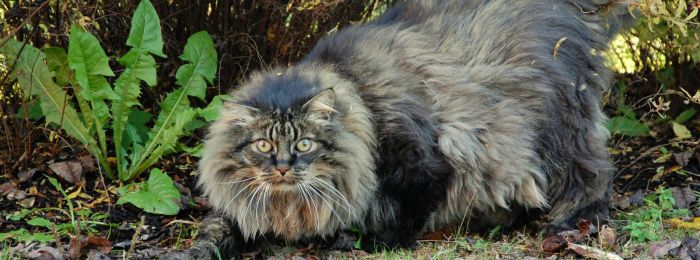
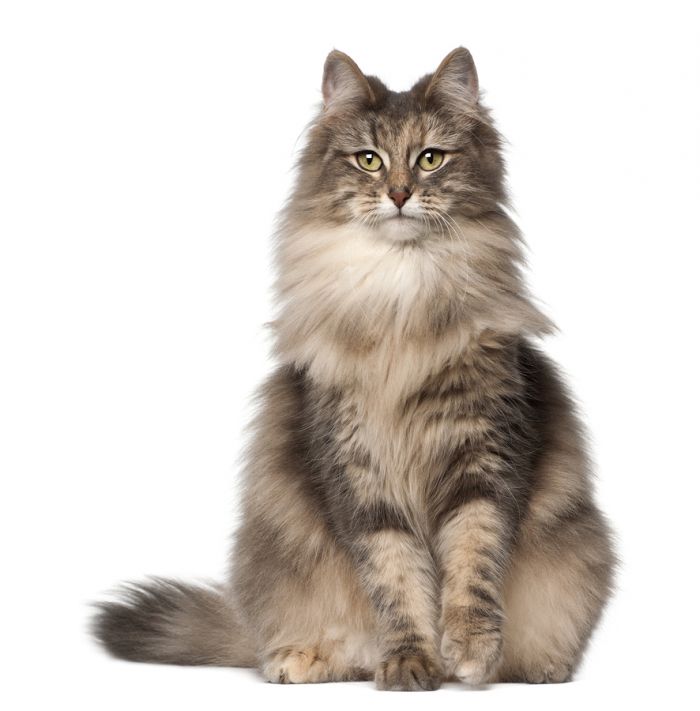
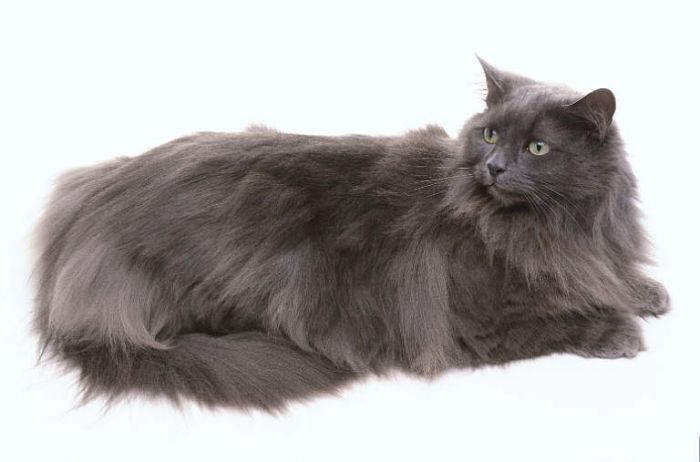
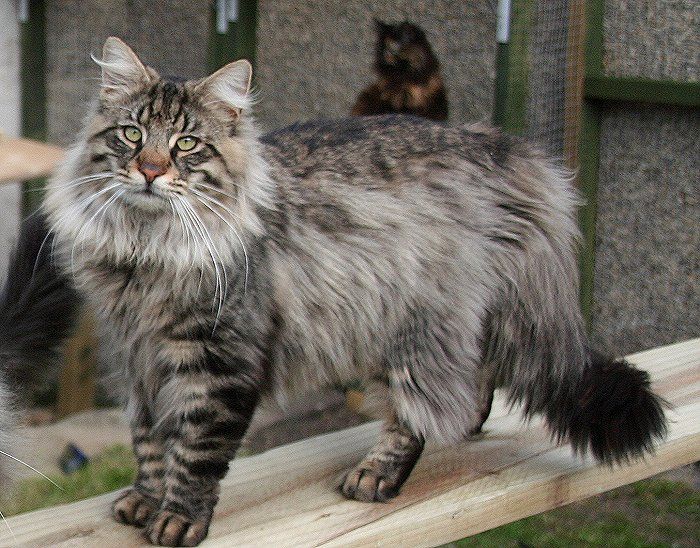
The Norwegian Forest Cat has an insulated, waterproof double coat that was designed to withstand the Scandinavian winters of its origin. The texture of this coat also matches that environment – longer, coarse guard hairs over a dense undercoat. A full frontal ruff, bushy tail, rear britches, and tufted paws help to equip this feline for life in a region that borders the Arctic. Surprisingly, this coat does not require the care of some of the longhair breeds: weekly combing along with a little more attention in the springtime should cover it.
advertisement
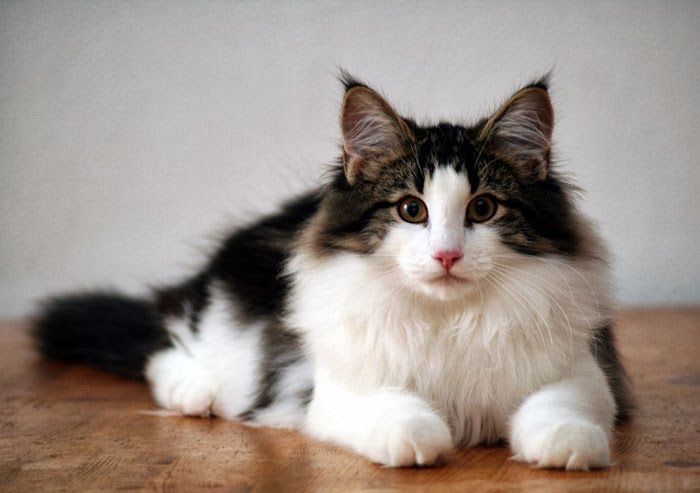
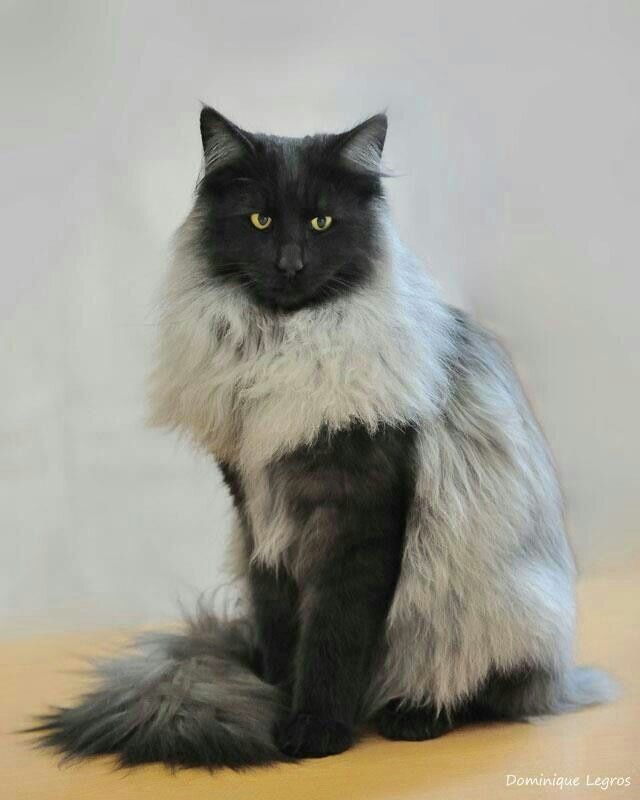
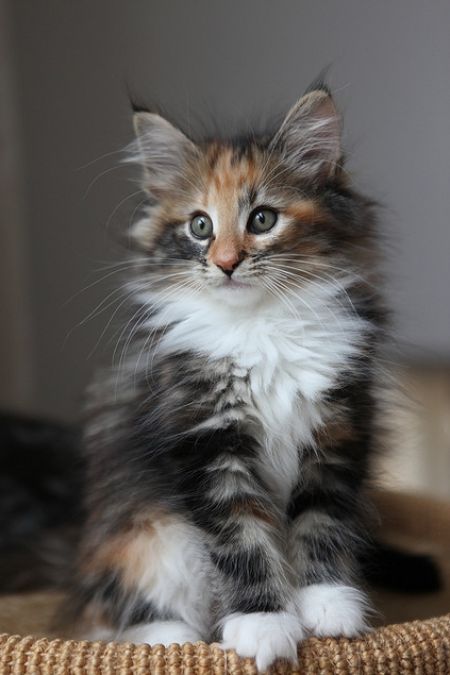
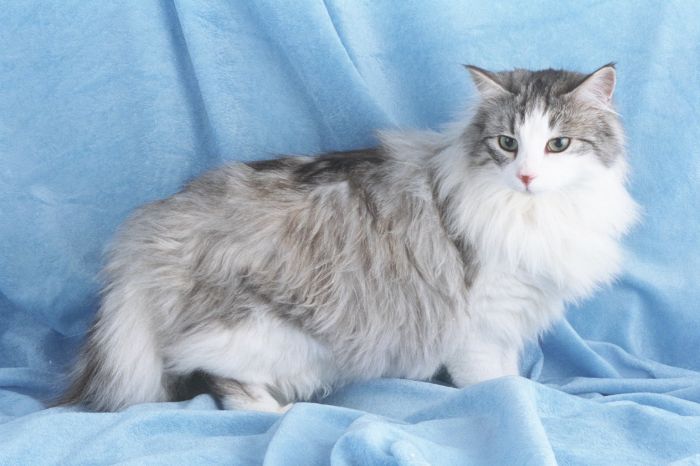
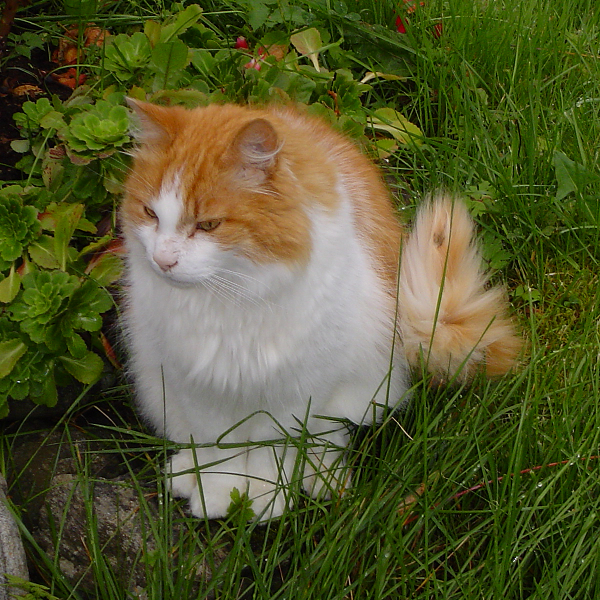
Norwegian Forest Cats come in a many different colors and patterns, including tabby, patched tabby, solid and tortoiseshell. Their eyes can be green, gold or copper. These cats are on the large size. Males can weigh from 10 to 16 pounds, females from 8 to 12 pounds.
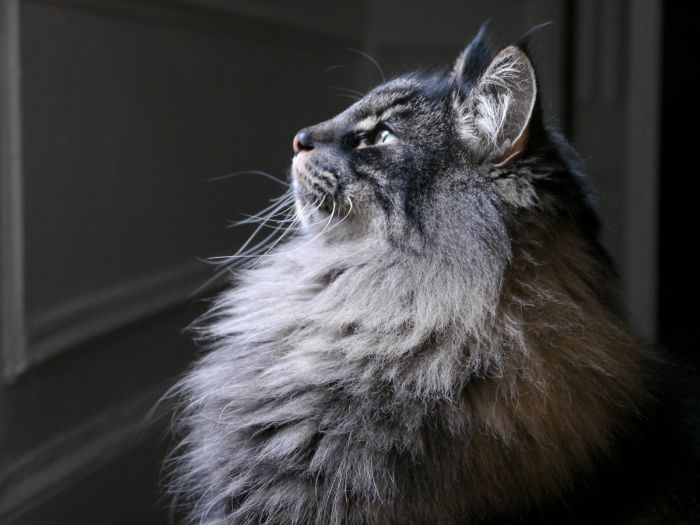
Norwegian Forest Cats have long tails that are covered profusely in fur. The head is triangular in shape, and the facial expression is sweet. Their paws are large and round, and have heavy tufting between the toes.
advertisement
Natural athletes, Norwegian Forest Cats love to investigate counters, bookcases, and the loftiest peaks of their cat trees. Wegies are active and playful and retain their fun-loving spirit well into adulthood, but don't be fooled by the breed's impressive muscles and all-weather exterior. They are sweet, friendly, and family-oriented, and they love their human companions. Despite the wild years in the forests of Norway, or perhaps because of it, they would much rather cuddle than prowl.
advertisement
Because of those harsh survival years (perhaps), nothing fazes them much, either. They take new people and new situations in stride; as cats go, Forest Cats are the strong, silent types. They are conversely great purrers, particularly when perched beside their favorite humans. Out-going and gregarious, they tend not to bond with one person, but rather love everyone unconditionally and enthusiastically.
advertisement
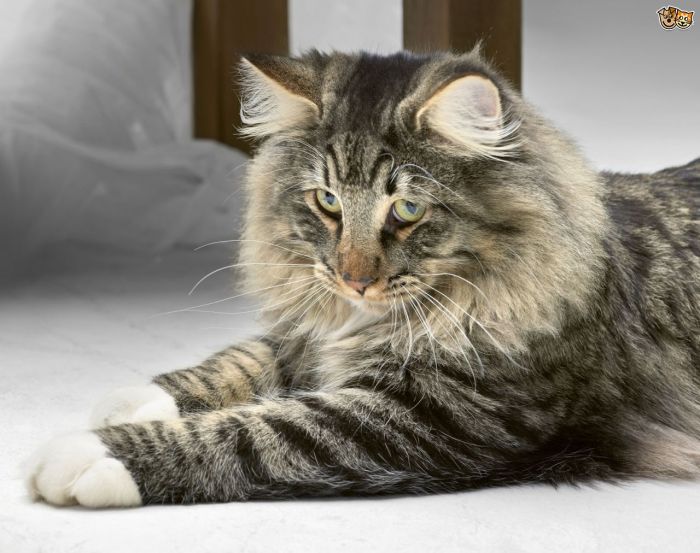
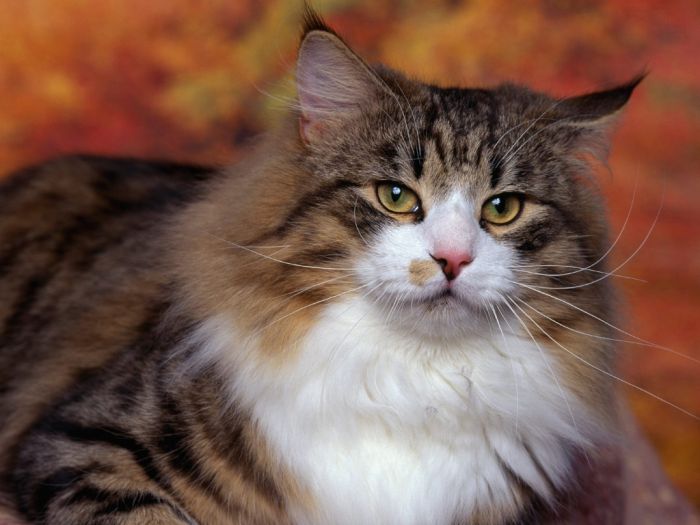
The product of natural selection, the Norwegian Forest Cat is large and robust. The coat has two layers, designed to insulate and shed water. The outer coat should feel silky. In winter the cat has a full ruff around the neck and britches in addition to the expressive plumed tail carried year-round. Heavily muscled hind legs make them great climbers. The combination of an equilateral-triangle shape to the head and almond-shaped eyes that tilt upward give the face an almost-sultry look. While brown tabby and white is the most popular, the coats come in a rainbow of patterns and colors
advertisement
Wegies (as Forest Cats are affectionately known) arrived in the United States in 1980. The same year, a small group of American fanciers founded the Norwegian Forest Cat Fanciers' Association and began working to get the Forest Cat recognized by North American cat registries. TICA, the first to recognize the breed, accepted the Wegie for Championship competition in 1984. The breed attained CFA Championship status in 1993 and won over the last association, ACA, in 1995.
advertisement
Their history is long. This cat is a part of Norway’s history and is mentioned in mythological tales. Cats were brought to Norway in around 1000 AD. Oslo was founded by the Vikings in about 1000 AD. At this time the Vikings of Norway where trading with the Byzantine East. It is accepted that the domestic cat was introduced into Europe by the Romans (e.g. British Shorthair cat). There is evidence that the first Norwegian Forest Cats came from the Roman Empire during the period that the Vikings were trading with the Romans.
advertisement
There is also a connection between cats and gods in Norse mythology. There is a cat that was too big for the god Thor to lift and the cats that pulled the carriage of the goddess Freya.
advertisement
A cat’s health is the most important aspect of the cat but something that is not readily visible. As a semi-wild cat this cat was pretty robust. I would have expected this breed to the same as any other mixed breed cat before she became a show cat. TICA says that the Norwegian Forest Cat is a healthy, robust, breed. The book, Medical, Genetic & Behavioural Aspects of Purebred Cat edited by Dr Clark, DVM (published 1992) says that at that time few medical problems were known. The book also says that a few instances of flat chests, pectus excavatum have been reported. I would doubt if this is significant.
advertisement
One disorder however seems to be particular to this cat breed, namely Type IV glycogen storage disease (type IV GSD). This is a disease found in humans too. It is called Andersen disease or amylopectinosis. It is a rare disorder linked to an autosomal–recessive gene. It results in a deficiency in the behaviour of an enzyme. The enzyme is required to produce glucose. It is an inherited disease in this cat breed. As the disorder is due to a recessive gene (autosomal – sex related) both parents have to carry the gene for the disorder to be present in the offspring which are sometimes still born and if not die at about 4-5 months due to “neuromuscular degeneration”.
Also retinal dysplasia may be present more frequently than normal in this breed of cat. It results in the malformation of the retina. The symptoms can be more or less severe, causing a small blind spot (relatively minor) or blindness. This disease can be inherited. There is no treatment currently.
advertisement
Norwegian Forest Cats were almost lost as a distinct breed through hybridization with the free-roaming domestic shorthairs in Norway. Interest was aroused among Norwegian cat fanciers who became determined to save the breed, but World War II put a hold on their efforts. Efforts after the war were finally successful, resulting in the Norwegian Forest Cat being not only welcomed into the show ring in Europe, but also designated the official cat of Norway by the late King Olaf. They were not exported from Norway until the late 1970s, and the first pair arrived in the United States in November of 1979. The Norwegian Forest Cat was presented to the CFA Board for registration acceptance in February 1987 and in 1993 was accepted for full championship status.
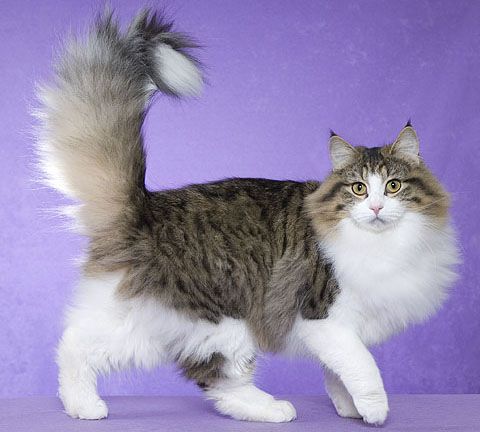
The Norwegian Forest Cat is accepted by the cat associations in all traditional colors. Here are some important points on appearance:
the eyes are wide set, open, large and almond shaped;
the head should be triangular. In fact all three side of the triangle should be equal. The profile should be straight and the chin strong. The profile should be straight from the forehead to the nose;
the ears should be wide at the base, wide apart, set high on the head and have heavy ear furnishings (ear hair) with lynx like tufts at the tip;
a full ruff is preferred and what is called "britches" meaning longer hair on the hind legs;
the coat should be smooth and water repellent (so that it beads up when wet);
the body should be large, the bone structure solid and there should be good musculature;
the eye colour is unrelated to coat colour;
the tail, as mentioned is bushy and long. It should be the same length as the body