You know you've seen the articles and pictures about what your couple sleeping style says about your relationship. How does spooning or not sharing a bed actually effect your relationship? These scientists put the facts back into the sleeping debates.
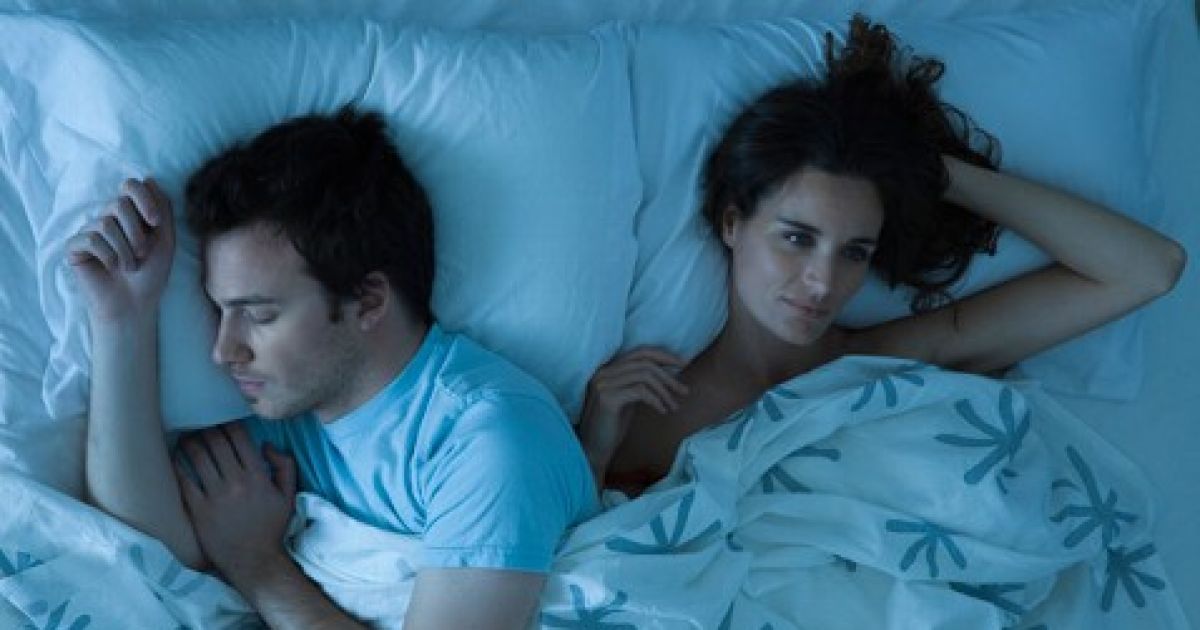
Not Sleeping Together Is Good For Your Relationships.
By
Teresa Thomerson in
Life Style
On 17th January 2016
advertisement
#1
In recent years, a consensus has emerged that sleep is a critical health issue, but researchers have largely focused on individual behavior.
One area that has lagged behind is what researchers calls dyadic sleep, or sleep concordance. Sixty percent of people sleep with another person. When one person has sleep issues, both can suffer.
Certain sleep disorders, like snoring, have been shown to reduce the quality of relationships, largely because the non-snorer's sleep is disrupted. Women living with snorers, for instance, are three times as likely to report sleep problems themselves. Insomnia has also been linked to lower relationship satisfaction.
Research into couples' sleeping patterns reveals a curious dynamic. When objective measures like brain waves or eye movements are examined, people are found to generally sleep better by themselves than with a bed partner.
Yet when they're asked about sleeping alone, people say they are less satisfied.
A chief impediment to sleeping together is different preferences for what time to go to bed. As early as the 1970s, researchers began looking at the distinction between morning people and night people, often referred to as "larks" or "owls."
Invented in 1976, the Morningness-Eveningness Questionnaire became a popular self-assessment that uses 19 questions to help determine what time of day a person's alertness peaks.
More recent research has shown the variance is largely determined by genetics, with some input from age and gender.
Till Roenneberg, a professor of chronobiology at Ludwig-Maximilian University in Munich, Germany, studies the biological roots of sleep. He told me that each person has a sleep chronotype, an internal timing profile that is specific to that individual and can vary up to 12 hours with others.
#2
He likened them to foot size and fingerprints, meaning there is an infinite number because everyone is unique.
Instead of dividing ourselves into owls and larks, he stressed, we should be speaking of an owl-lark spectrum.
Roenneberg says the best way to determine your chronotype is to identify your preferred midpoint of sleep. To do that, calculate your average sleep duration, divide the number in two, then add the outcome to your average bedtime on free days.
If you go to bed at 11 and wake up at 6, for example, add 3½ hours to 11. Your midsleep is at 2:30. His research shows that 60 percent of the population has a midsleep from 3:30 to 5 a.m. Women tend to have earlier midpoints than men, he noted, a difference of up to two hours.
Problems arise, Roenneberg said, when there's a disconnect between our preferred sleep times and what our personal or work lives demand of us. Roenneberg calls this "social jet lag," which he defines as the difference between your midsleep on free days and on work days.
Over 40 percent of his research subjects have social jet lag of two hours or more. In relationships, this gap can be especially pernicious, he said, as sleep schedules become a convenient scapegoat for problems that have nothing to do with sleep.
The good news is that we can adjust our internal clocks. Researchers have found camping resets our natural sleep time to be more in line with nature. But for most of us, who work indoors under artificial light all day and stare at screens all evening, trying to adjust for the sake of our bed mates is likely to fail, Roenneberg said.
advertisement
#3
"It will be very hard to demand of your partner to override their internal clocks in order to spend more time together," he said. "It's possible, but not very beneficial, I think. If you don't sleep during your own internal timing window, you will not be as socially capable or as effective at work, and you will have somebody to blame for it, and that is your spouse."
Also, having different sleep schedules can benefit relationships, he said. Those with babies can time-shift caring for the children, and others can schedule time to themselves.
Psychologist Heather Gunn is a couples sleep researcher at the University of Pittsburgh who also advises patients in a sleep clinic.
She said that the most important thing she's learned is that couples do not need to sleep at the same time to have a healthy relationship.
"There's even some evidence that well-adjusted couples who have mismatched sleep schedules are actually much better at problem solving," she said.
She advises couples who sleep at different times to make sure they find other times to connect, whether it's the morning, the half-hour before the first partner goes to sleep, or even the weekend.
And if one partner insists the other change?
"As a psychologist, I would ask why is it important that you go to bed at the same time?" she said. "My hunch is that the person feels a need for more closeness or security. We don't innately need to go to bed at the same time; the desire usually comes from someplace else."
Given that these problems appear to be widespread, I couldn't help wondering whether we could try to prevent them before we end up in long-term relationships with someone on the opposite end of the owl-lark scale.
Roenneberg told me that in the future we would be able to identify our chronotype with a simple prick of blood. Perhaps we should include this information in our dating profiles?
"Absolutely not," he said.
"First of all, we don't want to breed toward early types and late types, and that's exactly what we would be doing.
"Second," he continued, "what we need from the start is to increase our awareness of differences and tolerate them. Once we do that, we'll realize that different sleep schedules are not marriage straining, they're actually marriage preserving."