

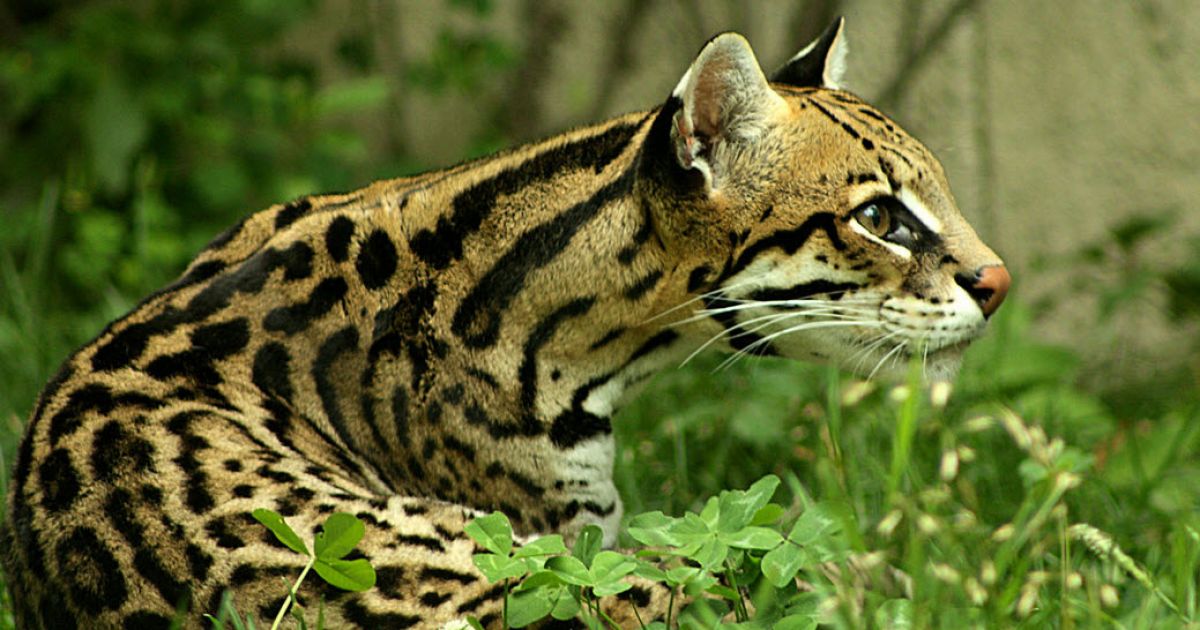
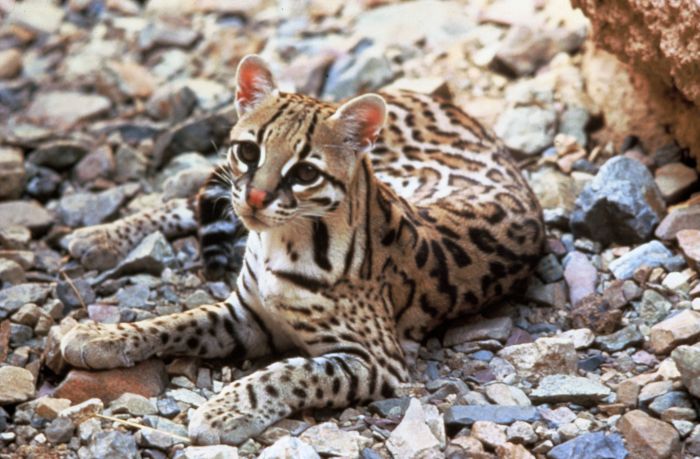
Twice as big as the average house cat, the ocelot is a sleek animal with a beautiful spotted fur.
advertisement
The ocelot is a wild cat distributed extensively within South America
The ocelot is similar in appearance to a domestic cat. Its fur resembles that of a clouded leopard or jaguar and was once regarded as particularly valuable. As a result, hundreds of thousands of ocelots were once killed for their fur. The feline was classified as a vulnerable species from 1972 until 1996, and is now listed as Least Concern on the IUCN Red List.
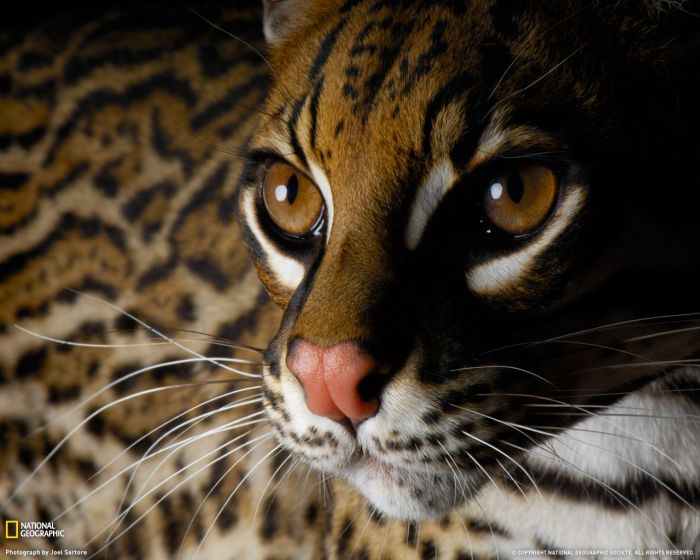
Twice the size of the average house cat, the ocelot is a sleek animal with a gorgeous dappled coat.
These largely nocturnal cats use keen sight and hearing to hunt rabbits, rodents, iguanas, fish, and frogs. They also take to the trees and stalk monkeys or birds. Unlike many cats, they do not avoid water and can swim well.
advertisement
Like other cats, ocelots are adapted for eating meat.
They have pointed fangs used to deliver a killing bite, and sharp back teeth that can tear food like scissors. Ocelots do not have teeth appropriate for chewing, so they tear their food to pieces and swallow it whole. Their raspy tongues can clean a bone of every last tasty morsel.
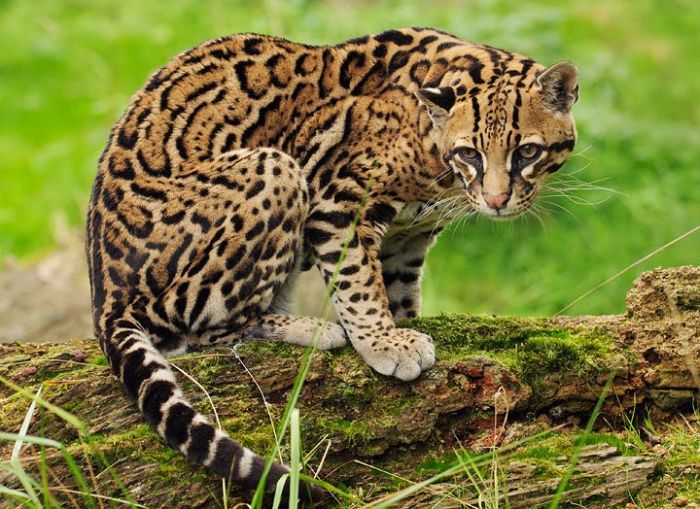
This cat is probably the best known of the South American cats because of its pelt being the mainstay of the fur trade, and for the fact that it was frequently kept as a pet.
Due the fact that Ocelots are high strung, unpredictable, comedic little cats, humans de-fanged, de-clawed, de-scented, and altered these cats in order to make them conform to the "pet" industry. Like all exotic cats, these creatures, male or female, altered or not, spray a foul smelling urine on everything they wish to mark as theirs including their keepers.
advertisement
In the 1980’s, Ocelot fur coats sold for $40,000.00 and the live animal as a pet sold for $800.00.
At one time, more than 200,000 ocelots per year were killed for their coats. Today, with laws prohibiting hunting for the fur trade, there are no Ocelot coats for sale, and the "pet" Ocelot is a thing of the past.
advertisement
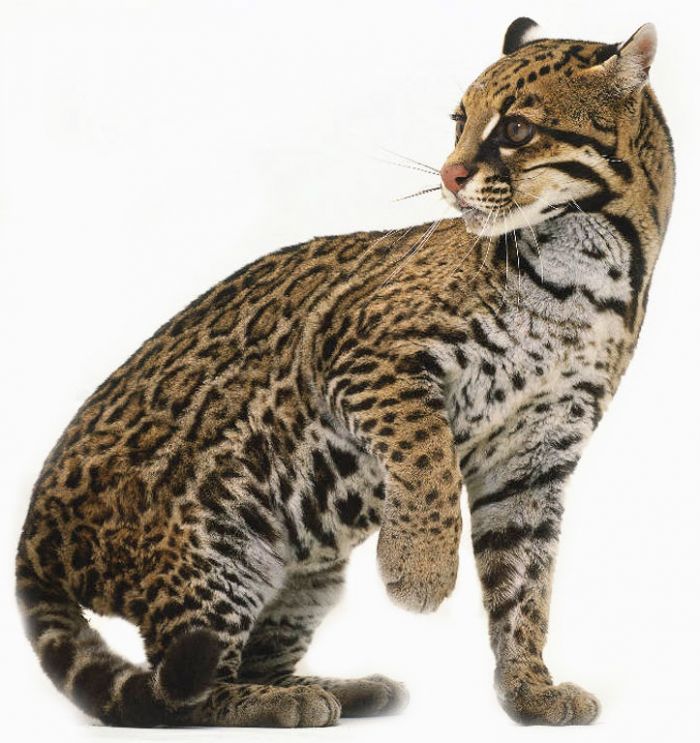
The Ocelot weighs between 17-24 pounds, stands 16-20 inches tall, and reaches lengths of 48-64 inches.
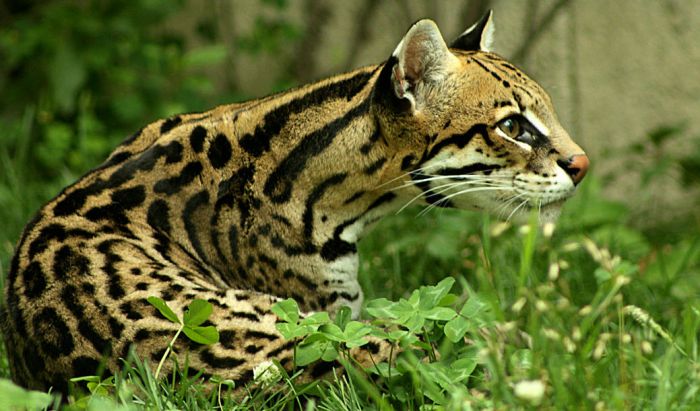
Its coat tends to be more blotched than spotted, and the chain-like blotches and spots are bordered with black, but have a lighter colored center. These markings run the entire length of the cat. The ground color varies from whitish or tawny yellow through reddish gray to gray. The underside is white, and the backs of the ears are black with a central yellow spot.
advertisement
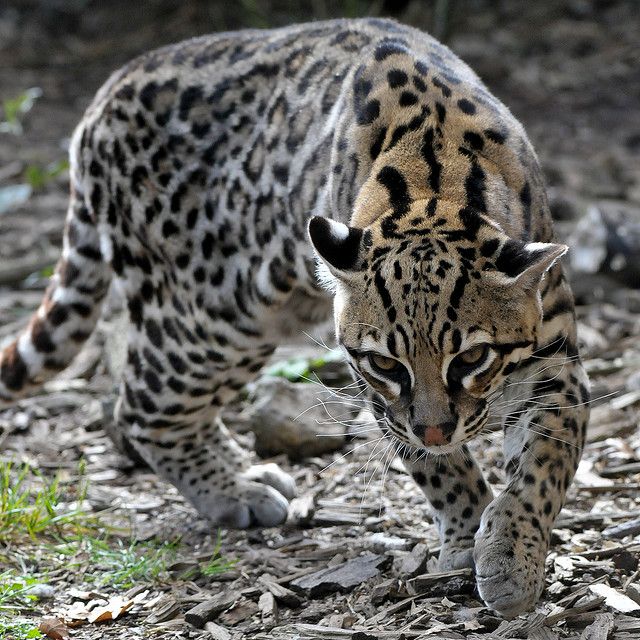
The ocelot is mostly nocturnal and territorial.
It will fight fiercely, sometimes to the death, in territorial disputes. In addition, the cat marks its territory with urine. Like most felines, it is solitary, usually meeting only to mate. However, during the day it rests in trees or other dense foliage, and occasionally shares its spot with another ocelot of the same sex
advertisement