

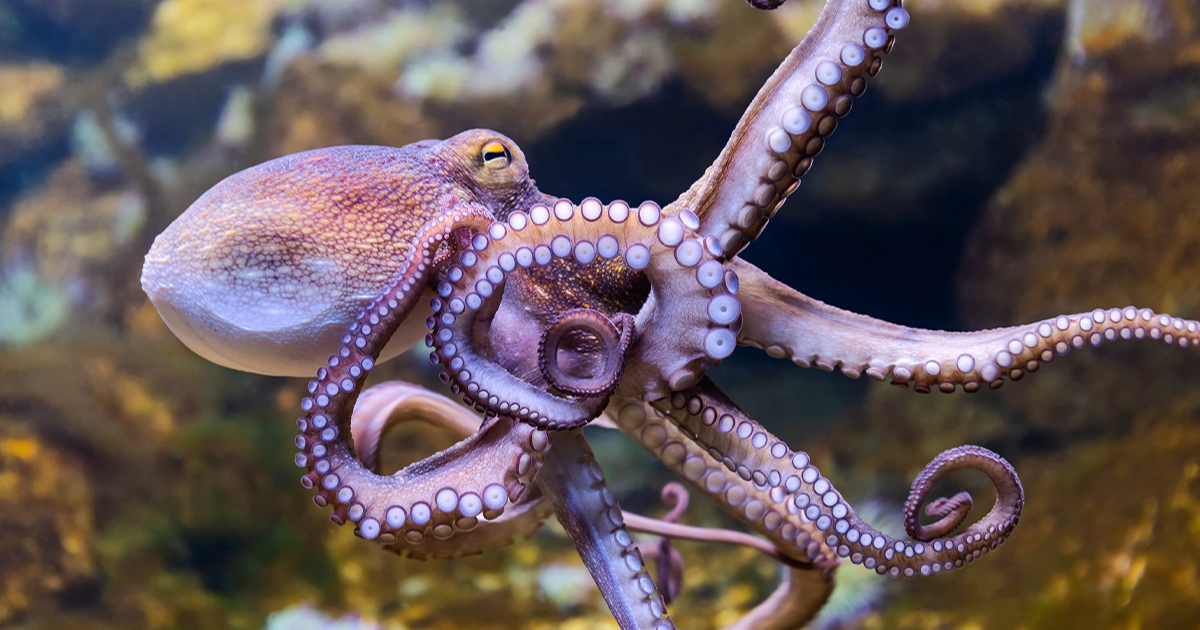
Researchers studied how octopuses behaved after being given the drug
advertisement
Scientists carried out an unusual experiment in which they administered MDMA to octopuses to observe what would happen.
The research, which was first published in the journal Current Biology, focused on how the drug affected the animals’ social behavior.
MDMA, often referred to as ecstasy, is a stimulant that remains illegal in many parts of the world. Despite that, it continues to be widely used in certain social settings.
The drug is often linked to rave culture because it can create bursts of energy and strong feelings of euphoria.
It works by binding to transporter proteins in neurons, which increases levels of serotonin in the brain. Serotonin plays a key role in mood and social bonding, and researchers wanted to see whether this same chemical process would influence octopuses.
Octopuses are known for their intelligence and complex behavior, so the scientists closely monitored how their actions shifted once they were exposed to MDMA.
MDMA is illegal, but is commonly associated with the rave scene
D-Keine/Getty
advertisement
Gül Dölen, a neuroscientist at the Johns Hopkins School of Medicine, co-authored the 2018 study.
"As human beings, we like to know where we came from," said Dölen.
"MDMA is an amazing tool for studying social behaviors across multiple species."
So what actually happened when the octopuses were given MDMA?
The team studied California two-spot octopuses, a species that does not usually display strong social behavior. They placed two octopuses in the same tank at the Marine Biological Laboratory in Woods Hole, Massachusetts.
One of the animals was positioned under a mesh pot inside the tank. This setup allowed the octopuses to see and touch each other without the risk of causing harm.
advertisement
When the octopuses were sober, the free-moving octopus typically stayed on the opposite side of the tank from the one under the mesh pot. This response matched what researchers expected from a species that is not usually social.
However, once the water in the tank contained dissolved MDMA, their behavior shifted in noticeable ways.
The octopuses appeared more relaxed in their posture and movements. Some even floated more loosely in the water and performed movements that looked like somersaults.
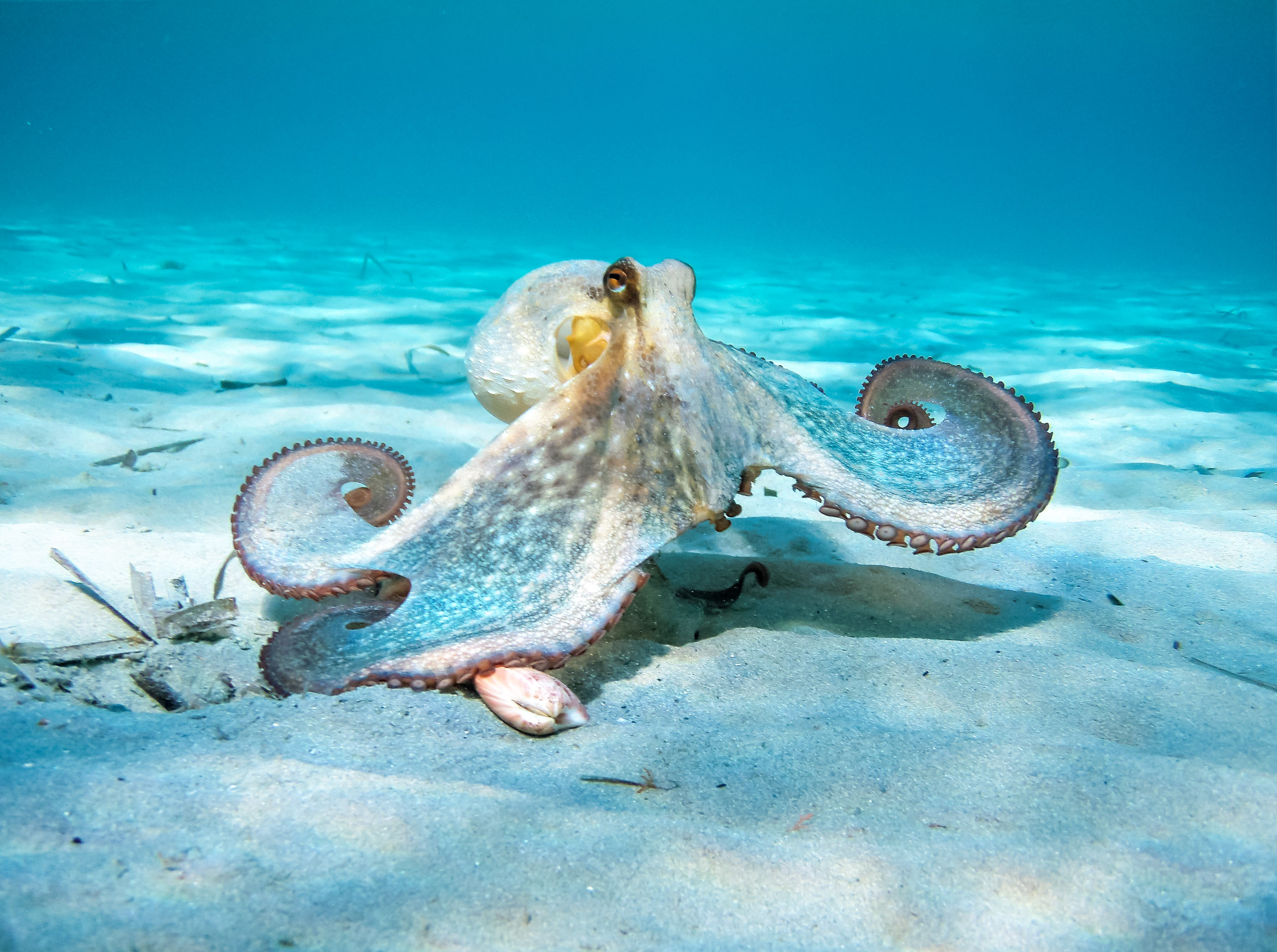
Octopuses are very intelligent
Nikos Stavrinidis/500px/Getty
advertisement
Another key change involved how they responded to the mesh enclosure containing the other octopus.
Instead of avoiding it, the octopuses approached the enclosure more often. They reached out with their arms, made contact, and appeared to engage with the other animal in a way they had not done before.
The findings suggested that the brain systems involved in social bonding may be rooted deep in evolutionary history. The study proposed that the mechanisms behind social behavior in humans might have developed from ancient biological pathways, possibly through what researchers described as an evolutionary accident.
advertisement
Dölen said: "This reiterates the importance of understanding function [at] the level of molecules. Focusing on brain regions does not give us the whole story."