Evolving some 10 million years ago
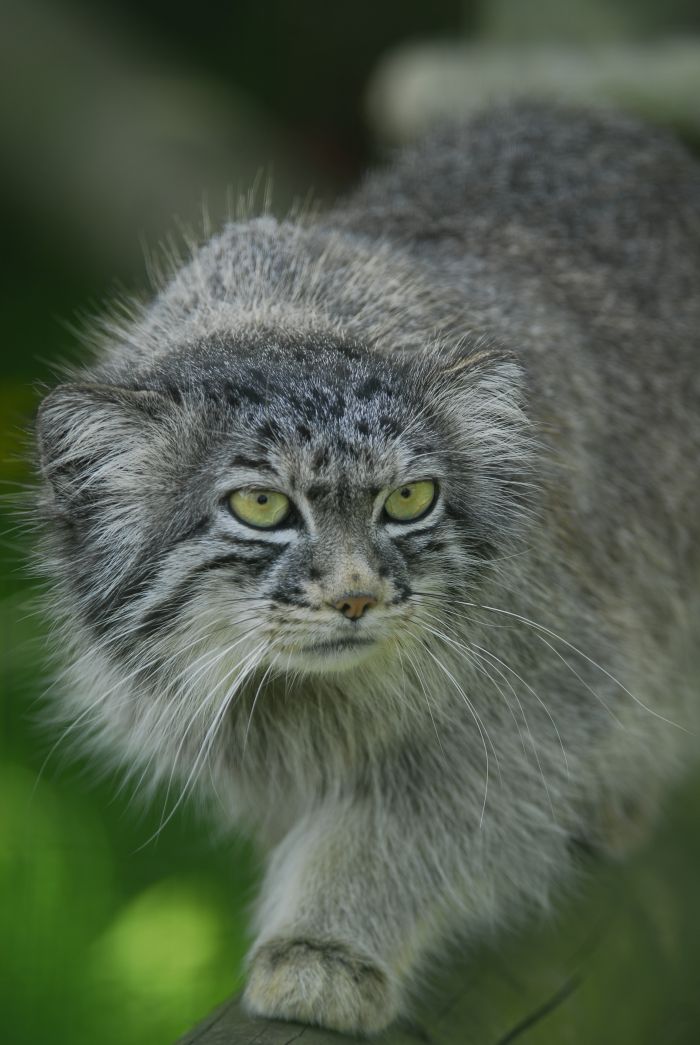
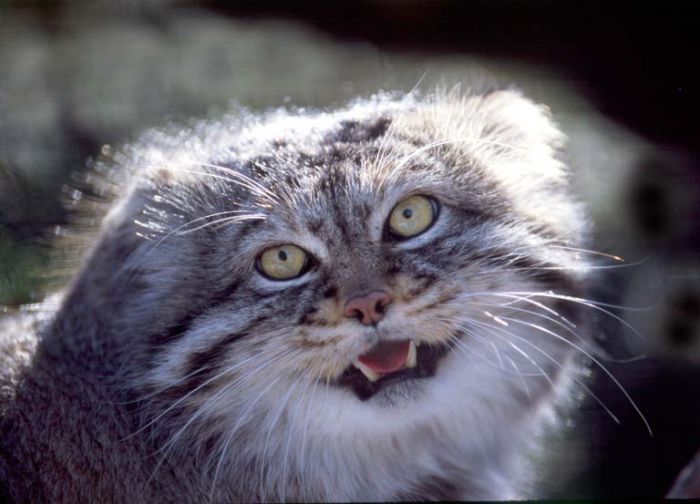
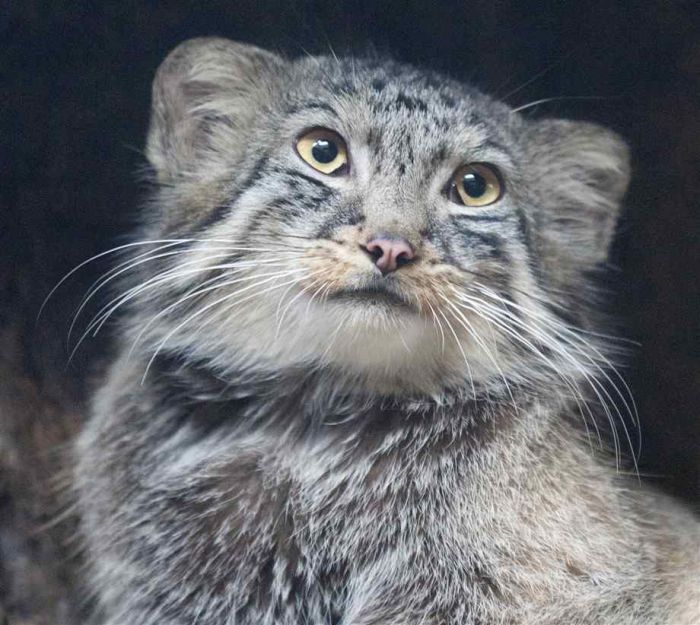
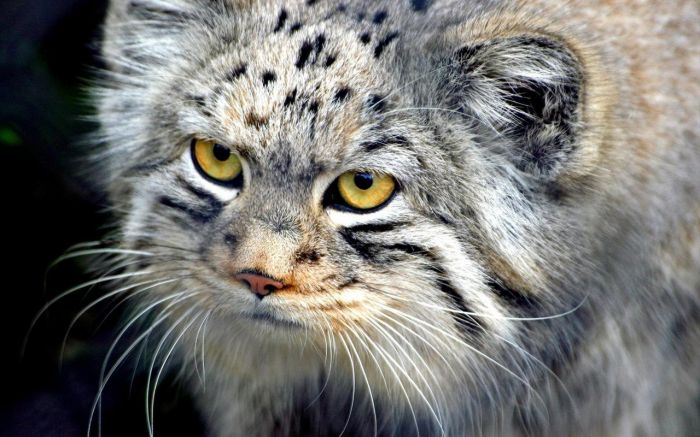
Pallas' cat is similar to the lynx in facial structure, with a large, sturdy body and short legs. Its head is short and broad, with large round eyes and blunt wide-set ears. Its long, silky coat varies in color from light grey to russet brown, with white tips to its hairs giving a sparkling, almost iridescent appearance. There are dark lines on its cheeks, rings on its tail, and its lips, chin, and throat are white.
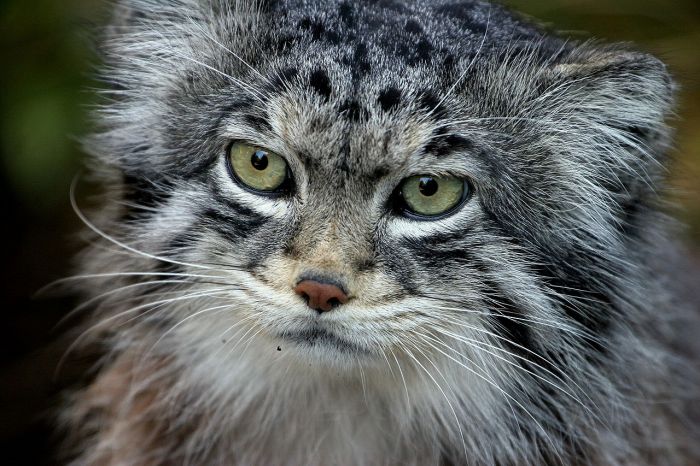
One of the most amazing-looking cats in the world is the pallas cat, which weighs 6 to 10 pounds.
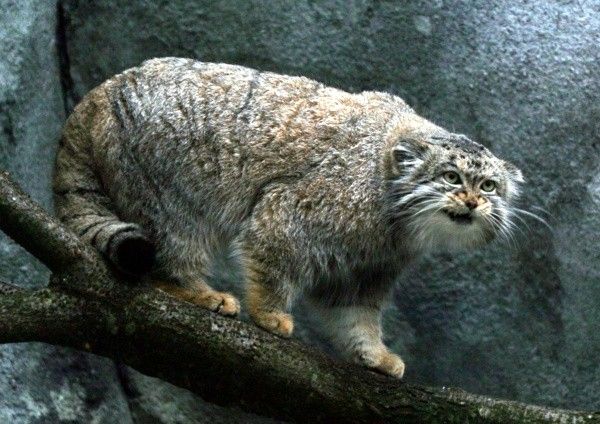
It appears larger because of its massive coat and giant, furry tail, which keep it warm on the cold rocky steppes of Mongolia and central Asia. The pallas cat's small ears and flat forehead allow it to peek over rocks before pouncing on prey. In addition to its stocky build this cat makes a unique bark-like call.
The cats are classified as "near threatened" by the IUCN.
They have historically been killed for their fur, although protective laws have helped to decrease hunting, according to Wildscreen Arkive. However, Pallas' cats still face an assortment of dangers. Their primary food sources, the pika (i.e. the inspiration for Pikachu) and vole, are both poisoned in large numbers because they are viewed as pests. Additionally, habitat degradation and climate change continue to threaten the cats.
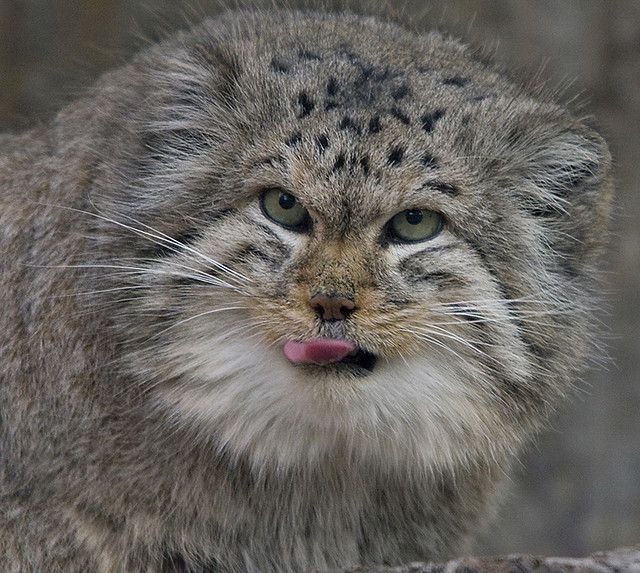
The Pallas’ cat (Otocolobus manul) is a small wildcat known for its unusual, and adorable, look:
a flattened and rounded face, stocky build, and super fluffiness make it appear stout and plush.
But they're more than just pretty faces. Read on to find out what else makes the Pallas' cat truly awesome.
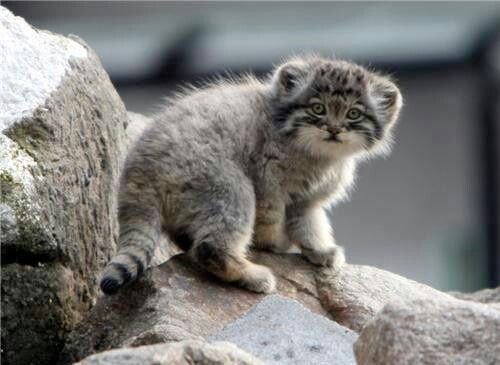
The Pallas’ cat also goes by the name manul.
German naturalist Peter Pallas originally classified the cat as Felis manul in 1776. The word ‘manul' has its roots in the Mongolian language. Its current scientific name, Otocolobus, comes from the Greek language and can be translated to ‘ugly-eared.' When Pallas first described the cat, he erroneously suggested it was the ancestor of the domestic Persian breed because of its long fur, stout build, and flattened face.
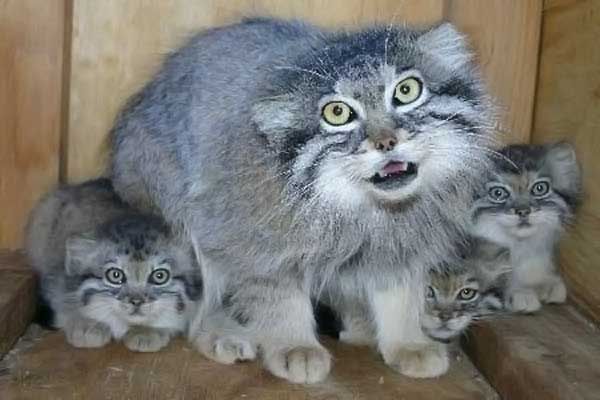
All that fluff creates the illusion of size.
Pallas' cats appear to be bigger and heavier than they actually are due to their stocky builds and long, dense coats. In reality, they're about the size of domestic cats: they measure up to 26 inches in body length (with an 8-12 inch tail) and weigh only around 10 pounds.
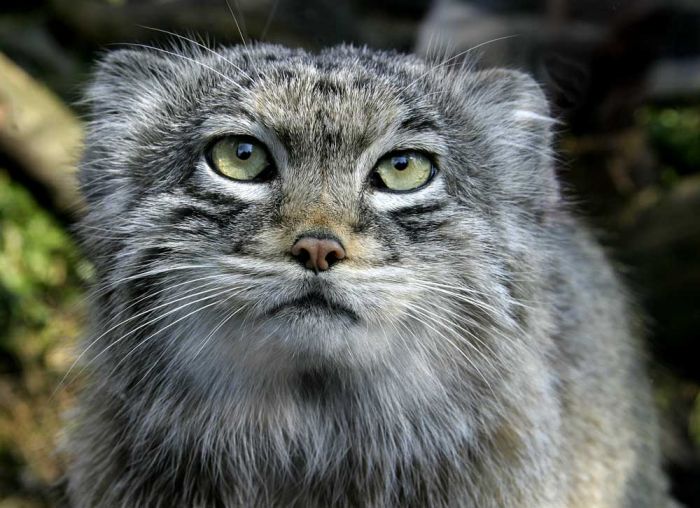
They have unusual pupils.
Unlike other cats, the pupils of Pallas' cats contract into small circles rather than vertical slits.
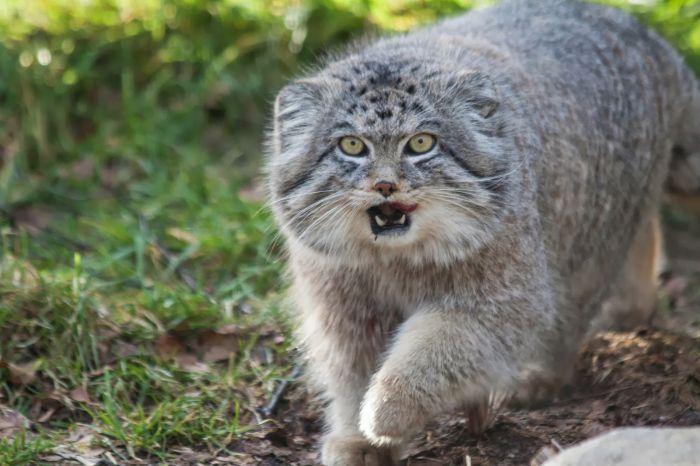
Pallas’ cats are particular about their habitat.
They live throughout central Asia, from western Iran to western China. Within this range, Pallas' cats prefer the cold and arid environments of rocky steppes and grasslands at elevations up to about 15,000 feet.
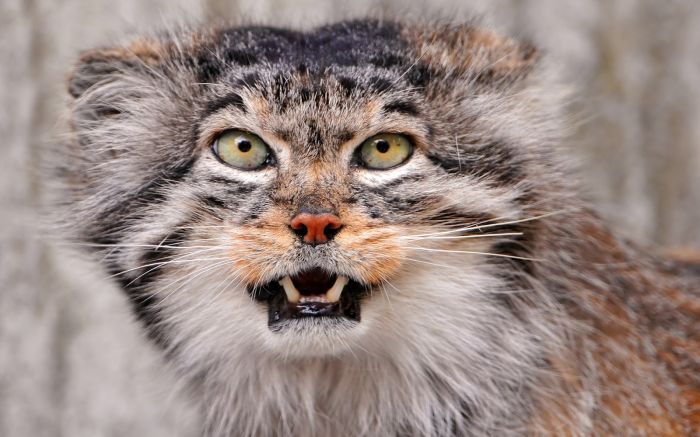
Pallas’ cats have the longest and densest fur of any cat.
Their fur is nearly twice as long on their belly and tail as on their top and sides. Presumably, this helps keep the cats warm as they hunt on snow or frozen ground. The length and density of their fur also changes seasonally, growing longer and heavier in the winter.
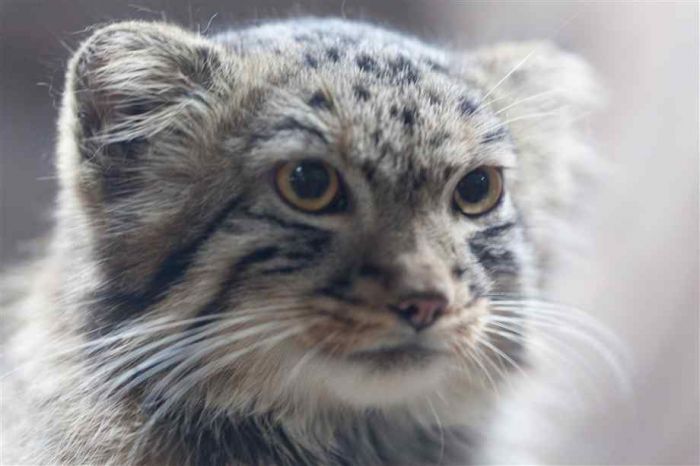
Pallas’ cats go through two major color phases.
In the winter, their coats are grayer and more uniform in color, while in the summer they have more stripes and ochre colors in their fur. They have black rings on their tails, scattered black spots on their foreheads, and dark stripes running from their eyes down their cheeks. The frosted, silvery appearance of their coats is due to the white tips on their hairs.
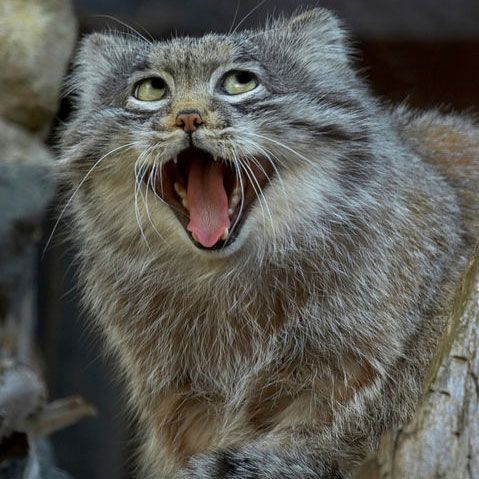
Pallas’ cats are loners.
They are solitary and territorial, with both males and females scent marking territories of about two to three miles. Pallas' cats spend their days in caves, crevices, and burrows made by other animals, emerging toward dusk to hunt.
They have an extremely short mating season.
Female Pallas' cats are in estrus for only 26 to 42 hours, a shorter period than most cats. Mating occurs in February and March and females give birth to a litter of two to six kittens in April and May. By four months old, the kittens begin hunting with their mother, and they reach adult size by six months. They're ready to breed at the age of ten to eleven months.
Pallas’ cats are ambush hunters.
They stalk their prey using short vegetation and rocky terrain for cover, or sometimes wait at entrances to burrows and pounce when their inhabitants exit. Pallas' cats prey mainly upon pikas as well as other small rodents, birds, and the occasional insect.
They’re poor runners.
The Pallas' cat's compact body makes it a poor runner. When chased, it seeks refuge on boulders or in small crevasses.
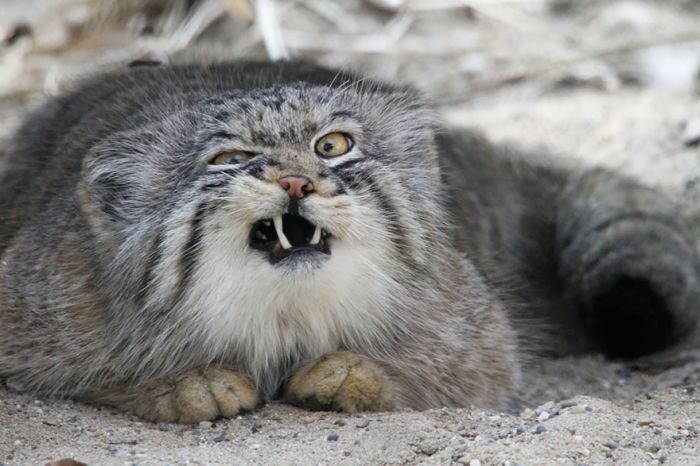
Pallas’ cats make a variety of sounds.
They yelp or growl when excited, making a sound similar to a small dog. Pallas' cats can also purr.
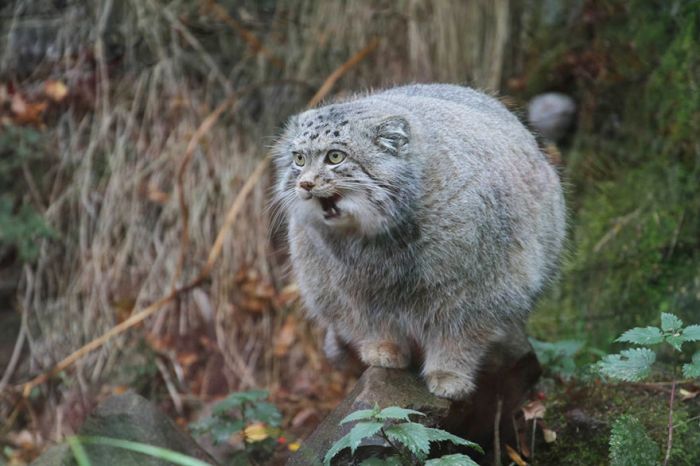
The manul has long been hunted for its fur in relatively large numbers in China, Mongolia, and Russia, although international trade in manul pelts has largely ceased since the late 1980s
About 1,000 hunters of Pallas's cats are in Mongolia, with a mean estimated harvest of two cats per year. Cats are also shot because they can be mistaken for marmots, which are commonly hunted, and trapped incidentally in leghold traps set for wolves and foxes and snares set for marmots and hares. They are also killed by herding dogs. The fat and organs of the cats are used as medicine in Mongolia and Russia. While Mongolia has not recorded any trophy exports, skin exports have grown since 2000, with 143 reported exported in 2007
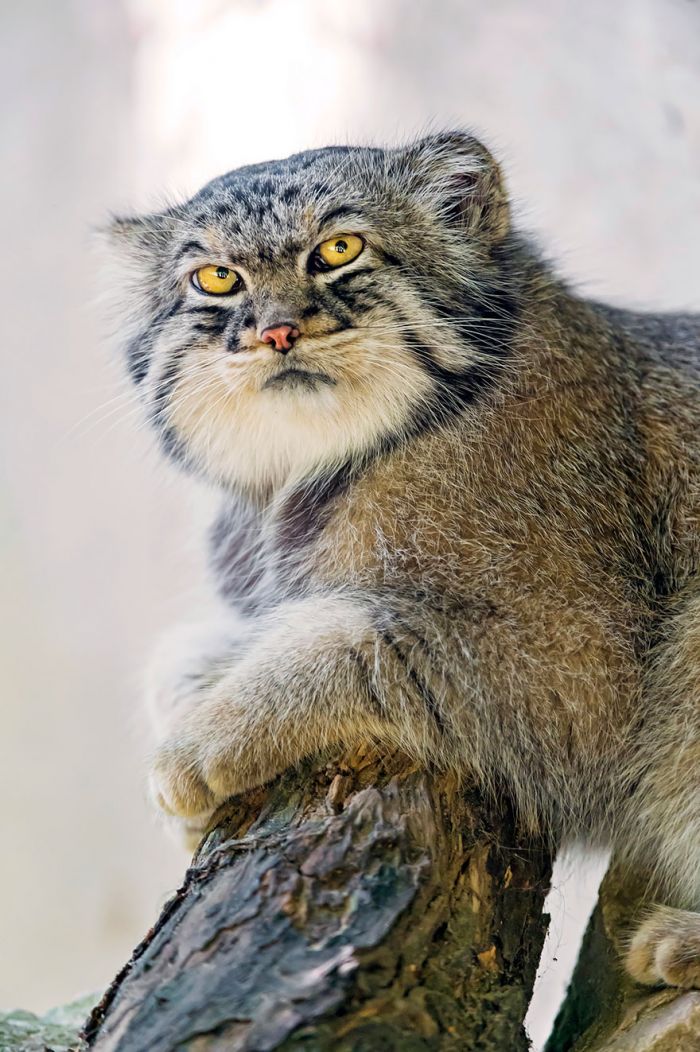
We're convinced that the elusive nature of this wise-looking creature is the only reason why the Pallas' cat didn't become the star of the Internet long ago. Seriously, just look at these guys...
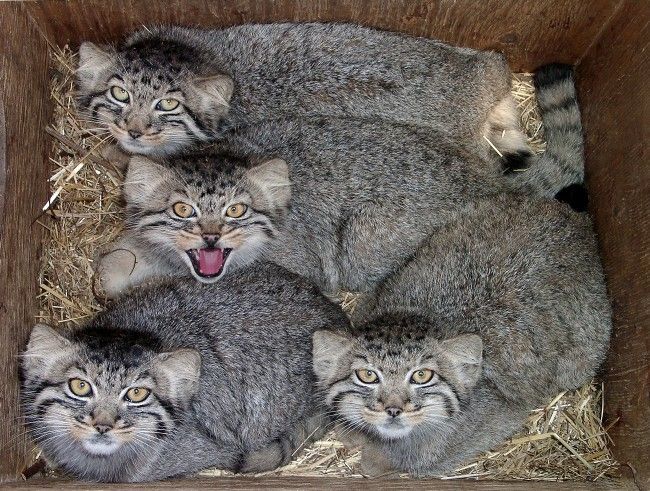
They start out cute...
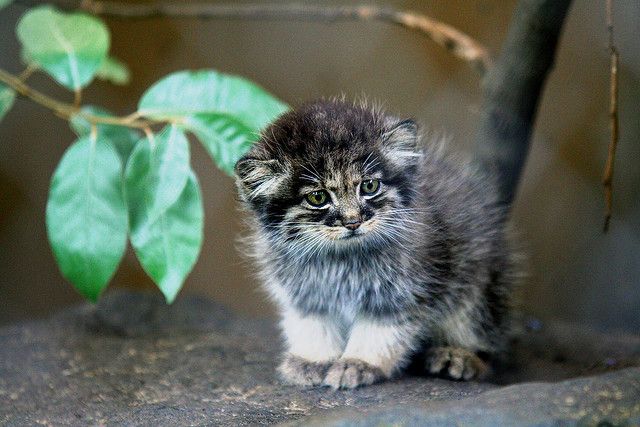
and they stay that way.
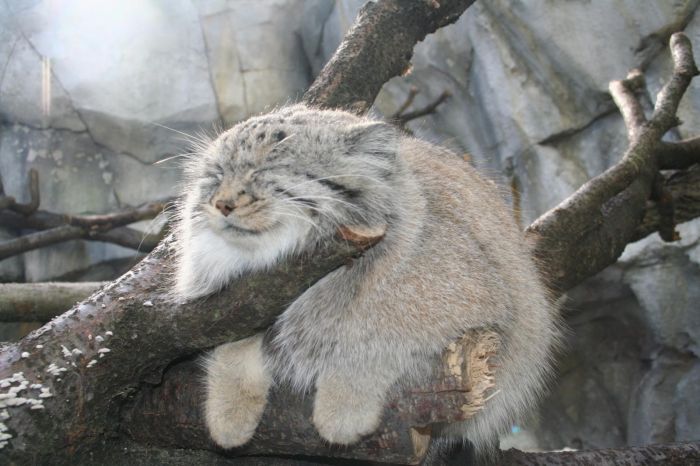
Pallas' cats, while adorable to look at, should not be kept as pets.
Not only is it difficult for them to survive at low altitudes, but they are truly wild animals. A Pallas' cat kept as a pet would be truly miserable, and would probably make you miserable, too.