

A Spanish research team used an experimental multi-drug approach to eliminate tumors in laboratory models

Scientists Report Permanent Removal Of Pancreatic Cancer Tumors In Major Breakthrough Study
By
maks in
Health and Fitness
On 31st January 2026
advertisement
Spanish researchers have reported a major breakthrough in pancreatic cancer research after successfully eliminating the disease in laboratory mice.
The team, based at the Spanish National Cancer Research Centre (CNIO), managed to fully remove pancreatic tumors and detailed the process in the journal Proceedings of the National Academy of Sciences (PNAS).
Pancreatic cancer remains one of the deadliest forms of the disease. Fewer than 10 percent of patients survive more than five years after diagnosis, and in the US alone it affects 67,530 people and causes 52,740 deaths each year, according to the American Institute for Cancer Research.
The research builds on a study published last year and was led by Dr Mariano Barbacid, a scientist known for helping identify the first human oncogene, a type of genetic mutation linked to cancer development.
This latest work focuses on the KRAS oncogene, which is mutated in around 90 percent of pancreatic cancer cases and has long been considered one of the most difficult targets in cancer treatment.
Previous efforts to block KRAS have often failed because tumors quickly adapt, becoming resistant to treatment within a few months.
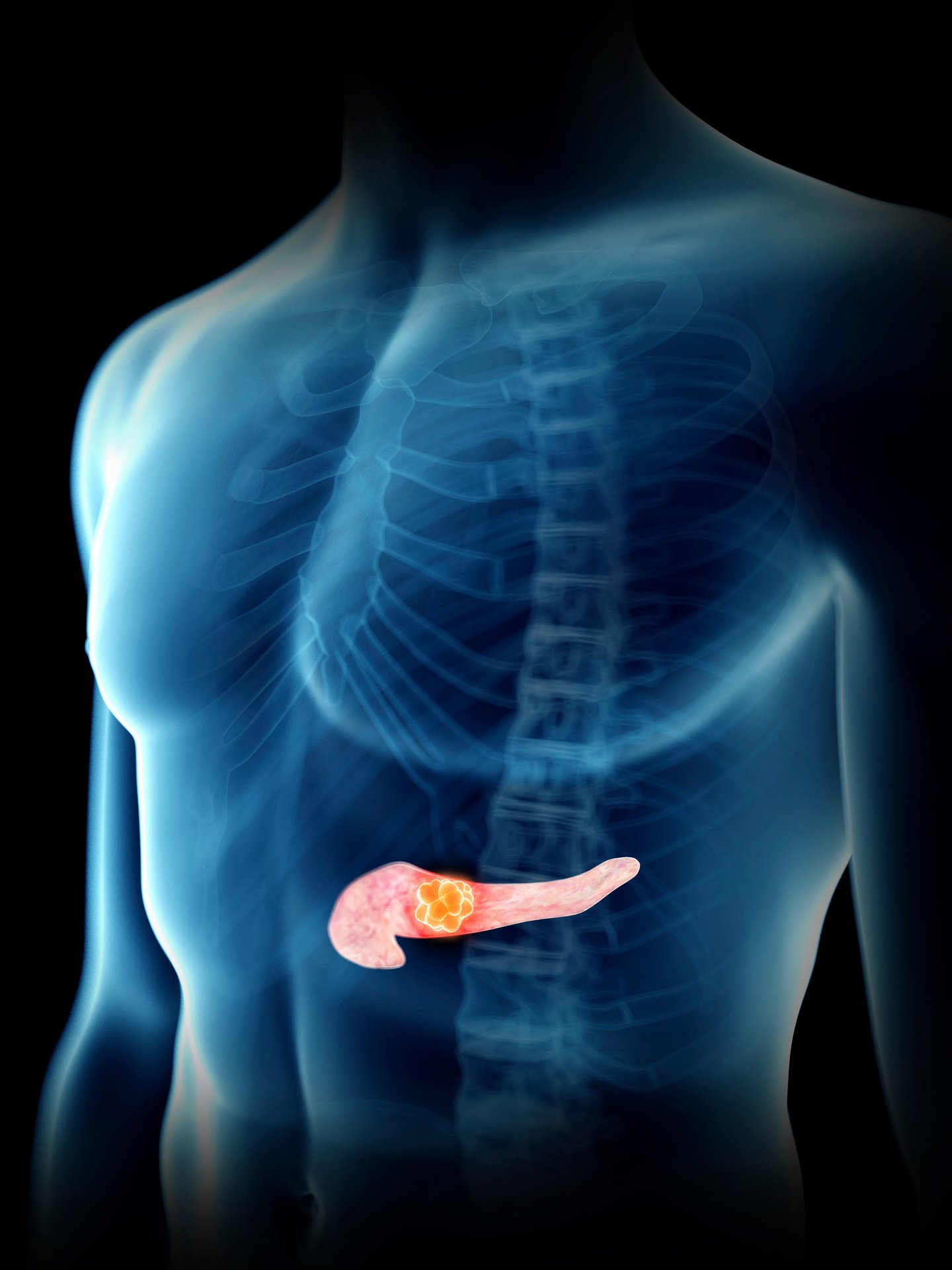
The study saw tumors reduced in mice
Getty Stock Image
advertisement
The new strategy tackles that problem by using a combination of three drugs that block the KRAS pathway at different stages, making it far harder for the tumor to adapt.
When tested in mice, the treatment completely removed pancreatic tumors and prevented them from returning, without causing serious side effects.
The researchers explained in their paper: "These studies open a path to designing new combination therapies that can improve survival for patients with pancreatic ductal adenocarcinoma [the most common pancreatic cancer]."
"These results point the way for developing new clinical trials."
The findings suggest that attacking cancer from multiple angles at once could be far more effective than relying on a single drug.
Experts say this approach may help overcome one of the biggest challenges in treating aggressive cancers like pancreatic ductal adenocarcinoma.
advertisement
The Embassy of Spain in the UK highlighted the discovery on X on January 28, pointing to its potential impact on future cancer care.
In a statement, the embassy said: "A team of scientists from the Spanish Cancer Research Centre, led by the renowned Dr Mariano Barbacid, has achieved the complete and permanent disappearance of pancreatic cancer in experimental models. This discovery could make a difference in the fight against this disease."
Despite the promising results, the researchers stressed that the treatment is still experimental and not ready for use in humans.
Dr Barbacid clarified in a press release: "It is important to understand that, although experimental results like those described here have never been obtained before, we are not yet in a position to carry out clinical trials with the triple therapy."
advertisement
While the team acknowledged that turning this discovery into a safe and effective treatment for people will take time, they believe it could lead to meaningful advances.
The researchers said the findings could open the door to new therapies that improve outcomes for patients with pancreatic ductal adenocarcinoma in the future.
For a disease that has seen little progress in decades, the results offer a rare and hopeful step forward.