

The debate around alcohol consumption has always been never-ending. The recent study, published in The Lancet, marks the latest piece of evidence to show drinking in moderation is safe. US researchers have shown through their studies how 40 to 64-year-olds can drink two glasses of wine or bottles of beer per day and their risk of stroke, diabetes and heart disease would be lower.

People Over 40 Can Only Benefit From Drinking Up To Two Glasses Of Wine Or Bottles Of Beer Every Day
By
Samantha in
Health and Fitness
On 19th July 2022
advertisement
People over 40s can safely consume a glass of wine or a beer bottle, scientists say and in fact, it might even be good for you.
They also say that swigging one or two a night isn't likely to cause any long-term health-related harm.
The study, published in The Lancet, marks the latest piece of evidence to show drinking in moderation is safe — amid a never-ending debate.
For years, adults have been confused by a series of conflicting studies.

Getty Images
However, Washington University researchers have made it clear how much people should be drinking according to their age and confirm that drinking in moderation has health benefits for middle-aged adults.
They claim alcohol can help ward off heart disease and type 2 diabetes, potentially staving off an early death.
Scientists say drinking alcohol in moderation can even boost levels of good cholesterol and antioxidants in the blood, which can boost heart health.
It is also thought to improve blood glucose levels and boost levels of adiponectin - a hormone that improves insulin sensitivity, protecting against type 2 diabetes.

Getty Images
advertisement
Now even though people over-40s have been given the green light to drink, under-40s have been advised to stay tee-total.
It provides them with no health benefits and 'presents many health risks', raising the risk of injuries, car accidents and suicide, the researchers said.

Meanwhile, researchers say that young men should stick to just 10ml of wine (two teaspoons) or 38ml of beer (a small shot glass), while women could have two tablespoons of wine or 100ml of beer.
Dr Emmanuela Gakidou, senior author of the study, said older people 'may benefit from drinking small amounts' while young people 'should not drink'.
'While it may not be realistic to think young adults will abstain from drinking, we do think it's important to communicate the latest evidence so that everyone can make informed decisions about their health,' she said.

Alamy
advertisement
Apparently, the current guidelines for Britons ask them to drink no more than 14 units per week, which is around six pints of beer or 10 small glasses of wine.
Research has produced mixed results on the health risks and benefits from drinking alcohol.
In fact, research shows that teetotallers are more at risk of early death than people who enjoy alcohol in moderation.
Drinking too much can even raise health-related risks, including cancer, heart disease and liver disease.

Getty Images
advertisement
Studies further add that light consumption is also dangerous as it has been previously linked with cancer and poor brain health. It has prompted some to urge people to avoid alcohol completely.
Some 1.78million people worldwide are thought to have died in 2020 due to alcohol consumption, with men aged 15 to 49 most at risk.
Washington University researchers examined the Global Burden of Disease database, which contains health information and trends worldwide.

Alamy
advertisement
Based on this database, the researchers created a model that calculates the risks of drinking which outweigh any benefits.
Adults aged 40-64 can drink between half and two standard drinks a day — classed as those containing 10g of pure ethanol — before their habit posed a risk.
Meanwhile, those aged over 65 could have up to 3.5 drinks per day without seeing their health deteriorate.
The researchers said one standard drink is equivalent to a small glass of red wine, a can or bottle of beer, or a shot of whisky or other spirits.
Among 15 to 39-year-olds, men could only drink 0.136 drinks per day — equivalent to 10ml of wine (two teaspoons) or 38ml of beer (one small shot glass).

Getty Images
advertisement
As a matter of fact, women in the cohort could drink slightly more, at 0.273 drinks, which is around two tablespoons of wine or 100ml of beer.
'Any level of drinking leads to a higher probability of injuries, while small amounts of alcohol decrease the risk of some conditions prevalent in older ages, such as ischaemic heart disease and diabetes,' the authors wrote.
Apart from this, young men and women were found more at risk from the harmful effect of alcohol.
Six in 10 of those drinking harmful amounts of alcohol were 15 to 39 years old, with 1billion being men and 300million being women.
Harmful alcohol use was highest among young men in Australasia, Western Europe and central Europe.
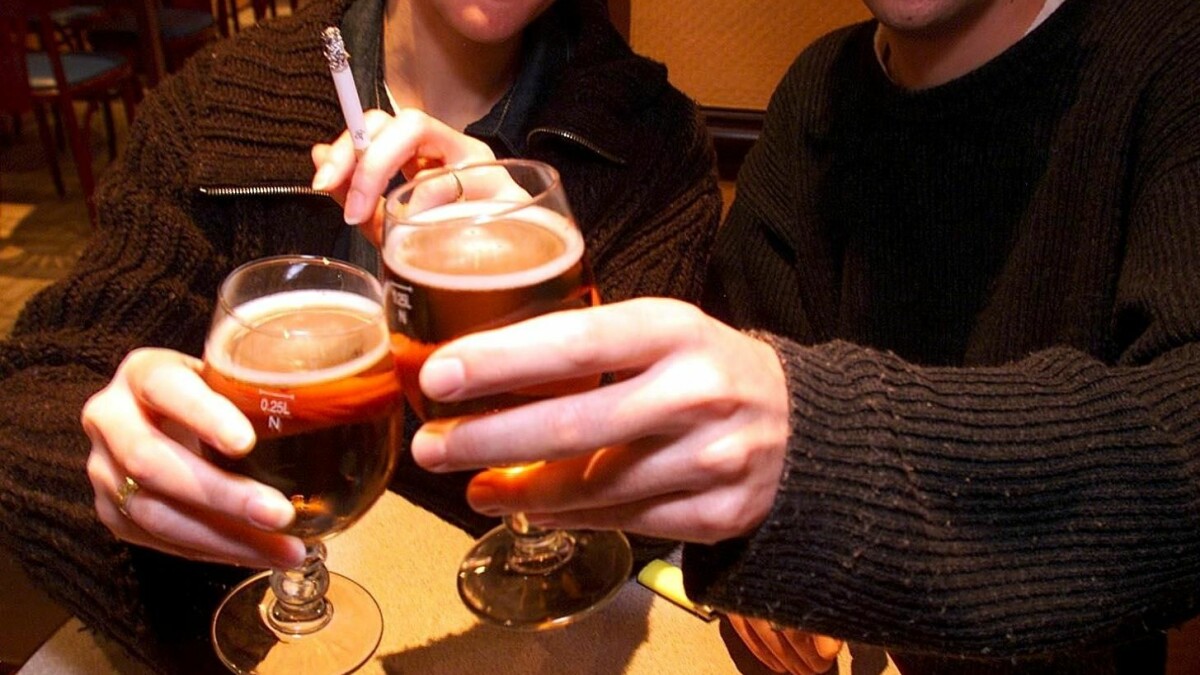
Alamy
advertisement
Overall, the recommended alcohol intake for adults remained low at between zero to 1.87 standard drinks per day, regardless of geography, age or sex.
Dr Gakidou said: 'Although the risks associated with alcohol consumption are similar for males and females, young males stood out as the group with the highest level of harmful alcohol consumption.
'This is because a larger proportion of males compared to females consume alcohol and their average level of consumption is also significantly higher.'
The studies also finds that alcohol risk was overall based on data that did not distinguish between those who drank over several days and those who engaged in binge drinking.

Getty Images
advertisement
And alcohol consumption was self-reported, so may contain inaccuracies, they said.
Lead author Dana Bryazka, a researcher at the university's Institute for Health Metrics and Evaluation, said even if the lowest level of safe consumption is used in alcohol guidelines, the findings implies that the recommended level of alcohol consumption is still too high for younger populations.'

Getty Images