

The connection between Mars and Earth has turned out to be stronger than what many may have guessed.
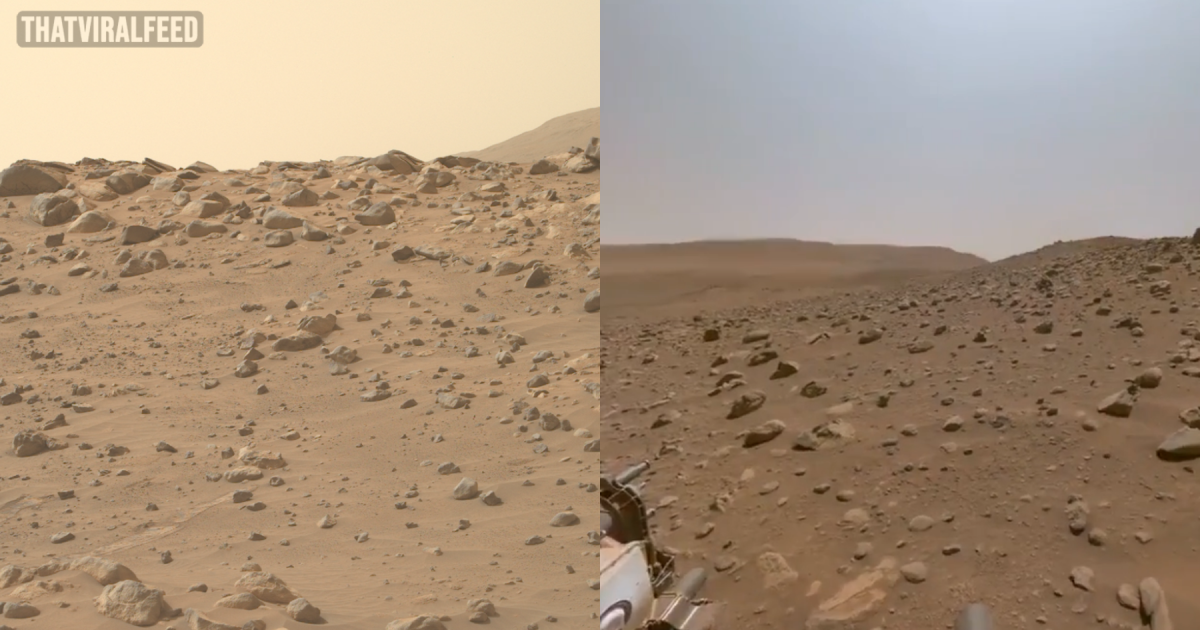
People Shocked At How Similar Mars Is To Earth As New NASA Footage Goes Viral
By
maks in
Science and Technology
On 9th March 2024
advertisement
Not too long ago, NASA's Perseverance rover, after its launch from Earth in 2020 and its touchdown on Mars in early 2021, stumbled upon conditions on the Red Planet that could have once supported life.
The rover's prime focus has been the expansive Jezero Crater, a site stretching 28 miles wide and brimming with geological intrigue.
Scientists have been eagerly analyzing the area, and recent findings are promising.
"The delta deposits in Jezero crater contain sedimentary records of potentially habitable conditions on Mars," the study points out, shedding light on the crater's past.
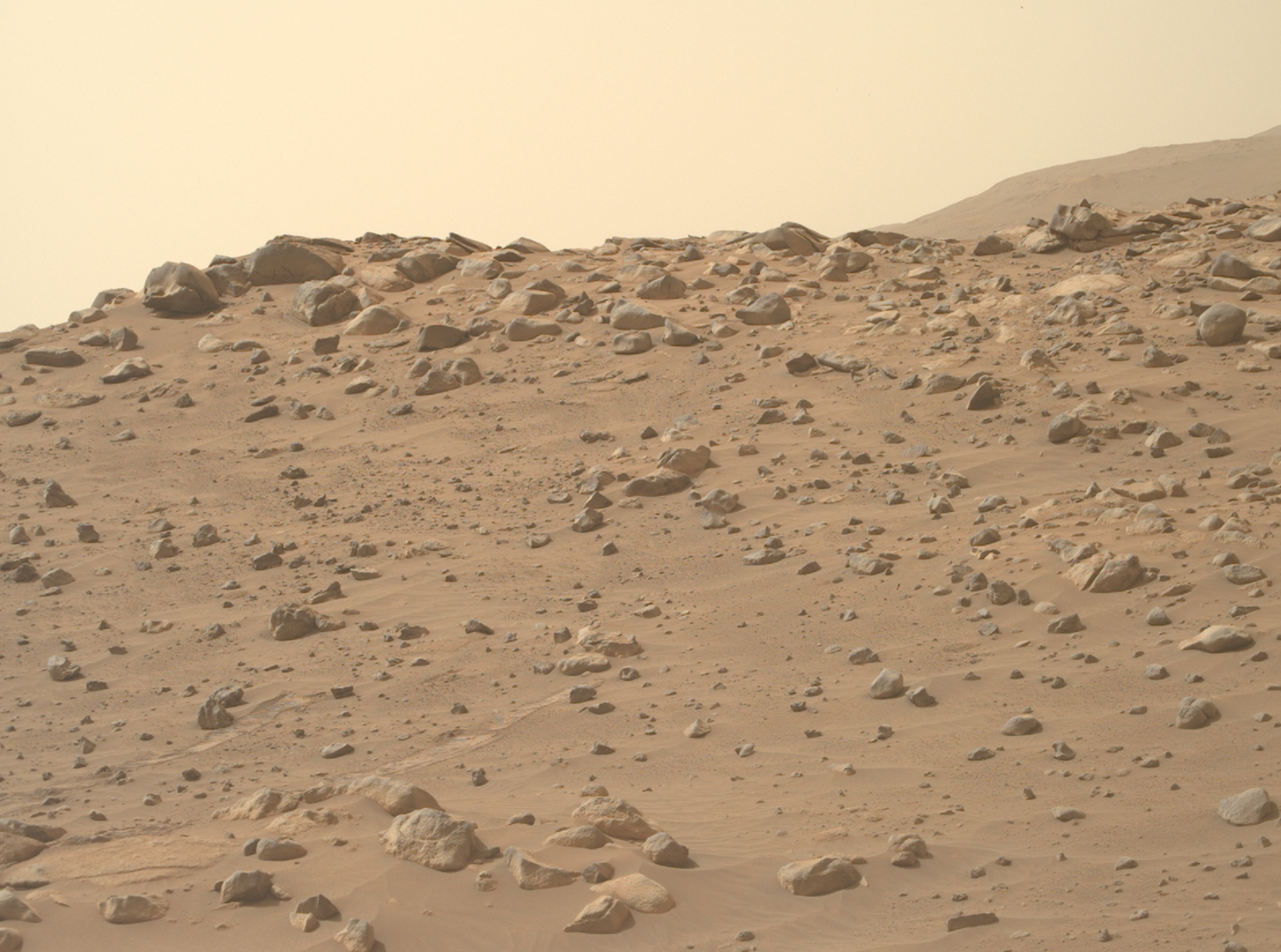
NASA recently acquired this photo of Mars from its Perseverance rover.
Credit: NASA
David Paige, a planetary scientist at the University of California, Los Angeles, shared insights on the matter.
advertisement
"From orbit, we can see a bunch of different deposits, but we can't tell for sure if what we're seeing is their original state, or if we're seeing the conclusion of a long geological story," he explained, highlighting the complexity of the mission's research.
As Perseverance roams the Martian terrain, it's been snapping photos and capturing video, beaming these images back to Earth.
Some of these photos, now available on NASA's website, reveal landscapes that seem eerily similar to our own planet.
In fact, with Earth's 70-plus deserts, some areas bear a striking resemblance to the Martian surface.
advertisement
advertisement
This resemblance has sparked conversations on social media, with people noting how much Mars looks like certain places on Earth.
One social media user commented last month, "NASA has a satellite in Mars and mars looks just like earth…..aliens in the mall in Miami…..only a matter of time and that's all imma say [sic]."
advertisement
Others drew parallels with Earthly locations, with one person remarking, "Looks like Egypt," and another finding similarities with Arizona.
A different user noted, "Looks very much like parts of planet Earth!"
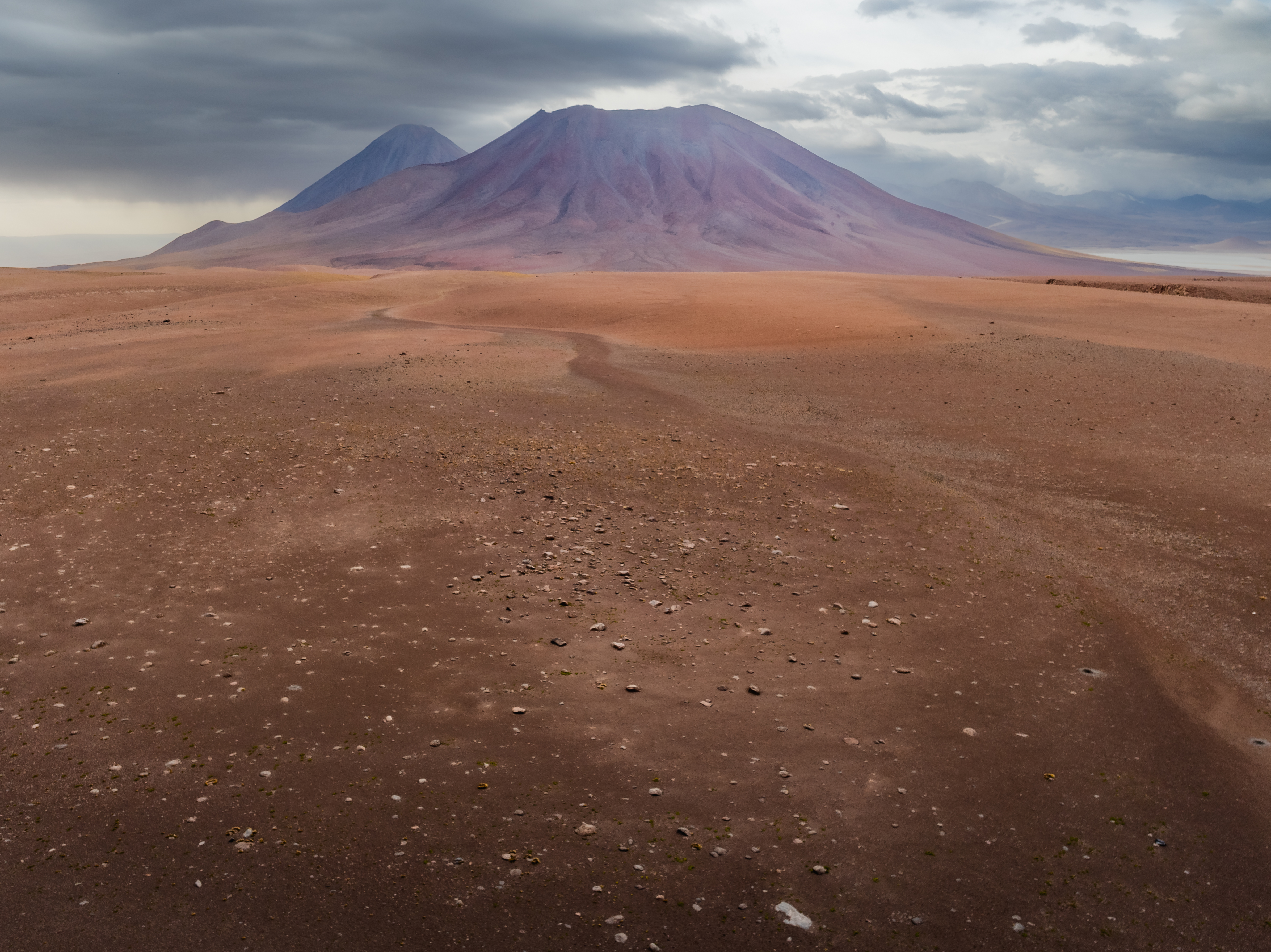
Licancabur and the Juriques volcanoes at San Pedro de Atacama is one place that bears some resemblance to Mars' surface.
Credits: Posnov/Getty Stock
Indeed, Mars and Earth share similarities: both planets have a day that's about 24 hours long, both experience seasonal weather patterns, and both boast geological features like volcanoes and canyons.
advertisement
While some may hold out hope that Perseverance is on a quest to find current Martian life, the rover's mission is actually to search for evidence of past life forms.
"Scientists don't expect to find living things currently thriving on Mars," NASA's website clarifies.
advertisement
"Instead, they're looking for signs of life that existed long ago, when Mars was warmer and covered with water."
We may not be packing up for a Martian move any time soon, but NASA isn't leaving any stone unturned when it comes to preparing for potential future expeditions.
advertisement
In Texas, a team of astronauts is living out a Mars simulation.
The CHAPEA A (Crew Health and Performance Exploration Analog) crew, consisting of four members, began their year-plus-long experiment in June 2023.
For an entire 378 days, they'll experience what life might be like on Mars.
advertisement
At the outset of this ambitious experiment, NASA announced:
"We're really looking at how the crew performance and health changes based on realistic Mars restrictions and the lifestyle of the crew members."
advertisement
"So the lifestyle is what we're trying to simulate by setting up a realistic environment and workload for the CHAPEA crew."
This is not just about exploring the final frontier; it's about understanding the human aspect of long-duration space travel and how we can thrive—not just survive—in an extraterrestrial environment.