You probably never knew that some great things were accomplished throughout our history by people who were blitzed! Believe it or not, these people either had amazing ideas or were part of something historical and they were totally wasted.
People Who Actually Pulled Off Great Things While Intoxicated
By
Editorial Staff in
Facts
On 20th August 2016
advertisement
#1 Some People Have Brilliant Ideas When Intoxicated
It's no secret that people go to work drunk or high. It happens every day, and it's pretty much a big no-no. Who wants to be responsible for mistakes or injuries cause by someone buzzed? Your boss will most likely send you home and if your lucky, you'll get off with only a warning. But say what you want about drugs and alcohol, but they've spurred just as many people to success as they have failures. For some historical figures, it was an integral part of their process. Others just happened to get wasted and have a good idea. Either way, being intoxicated helped these people make it into the history books.

#2 John Pemberton
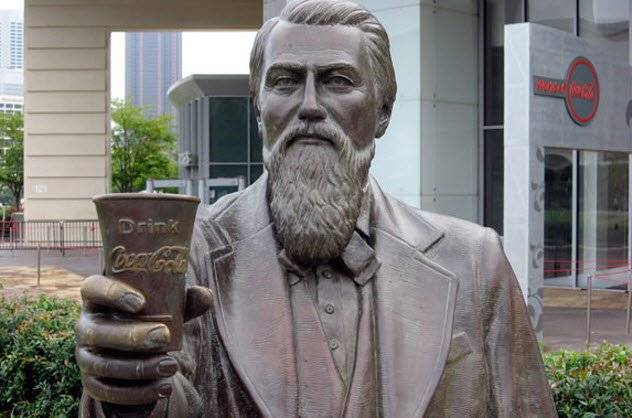
You may not know his name,but you sure know his product. John Pemberton, US Civil War as a Confederate soldier, invented Coca-Cola. To help him cope with his multiple war-related injuries, Pemberton grew addicted to morphine. He his pharmacological experience to develop a tonic that wound up being Pemberton's French Wine Coca, an alcoholic drink that mixed wine with cocaine and kola nuts. He sold his concoction by the barrel full as he promised it would cure a multitude of ailments. After complaints about the alcohol in the mixture, he took out the wine but kept the cocaine in the drink and created his first batch of Coca-Cola in 1886. Shortly after he sold the formula and it was later made without the cocaine when it became illegal.
advertisement
#3 Carl Sagan
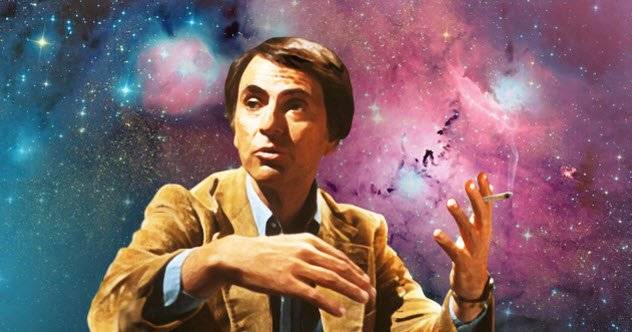
When Carl Sagen died he was regarded as one of the world's best-known scientists. However, today he is known for being very pro-marijuana and one of the most ardent advocates of the herb. Although Sagen kept his pot addiction a secret, he couldn't refrain from contributing an essay on marijuana for a 1971 book written by his friend and fellow smoker, Dr. Lester Grinspoon. The book was titled Marihuana Reconsidered, and Sagan published under the pseudonym Mr. X but left hints regarding his identity. In the finished essay, he credits marijuana for helping him appreciate food, music, and art better as well as improving his academic work. His family later came forward to state that he was Mr. X, and they often believed that his drug use inspired him to work.
#4 Douglas Adams
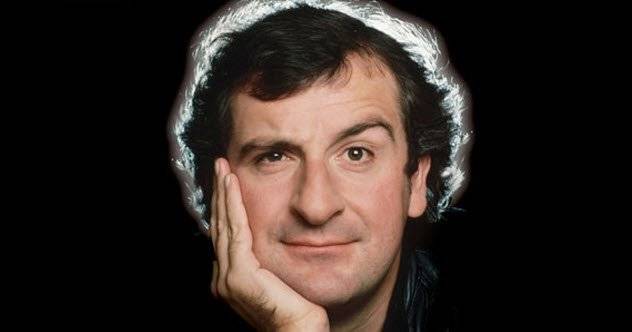
Douglas Adams developed a radio series in England in 1978 titled The Hitchhiker's Guide to the Galaxy which went on to spawn one of the biggest franchises ever. There were comics, more episodes of the show, a movie, and a five-book series written by Adams which sold over 15 million copies. According to Adams, he got the idea for the story in 1978 when he became so drunk that he wandered into a field in Austria and tried reading his hitchhiker's guide to Europe booklet. He faded out of consciousness and recalls thinking that someone needed to write a guide to the galaxy as he stared up at the sky.
advertisement
#5 Doug Ingle
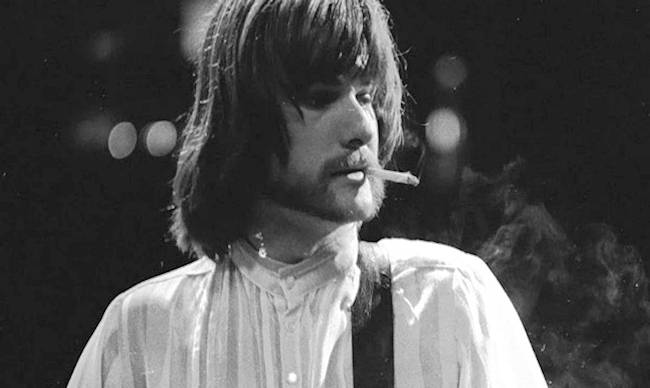
In 1968, Iron Butterfly released In-A-Gadda-Da-Vida. It became one of the best-selling albums of all time and the first album awarded a platinum certification by the Recording Industry Association of America. Most of that success is due to the album's eponymous 17-minute psychedelic epic which was written and named by lead vocalist Doug Ingle in a drunken stupor. When band member Ron Bushy tried to write down every word the drunken Ingle was translating, it was written down phonetically because he was slurring his words so badly. That's how "in the garden of Eden" became "in-a-gadda-da-vida" and rock history was made.
advertisement
#6 Jules Goux
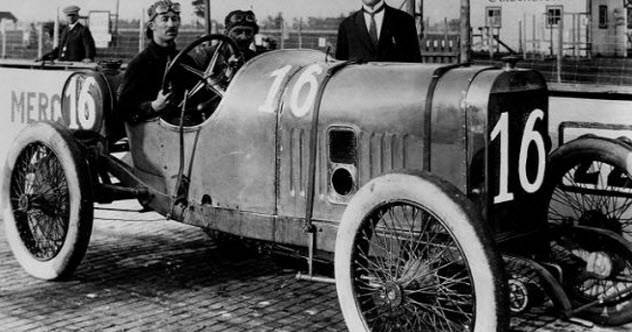
French racer Jules Goux became the first European to win the Indianapolis 500 on may 30, 1913. The following year, 1914, the race organisers banned alcohol use by drivers. That's because Goux is said to have drunk a bottle of champagne at every single pit stop on his way to victory. Historians say that amount is exaggerated, and Goux only had a few bottles of wine. Either way, Goux definitely drank more than advisable while racing one of the fastest cars of the time. Jules Goux won by 13 minutes and afterward said, "Without the good wine, I would not have won."
advertisement
#7 Sons Of Liberty
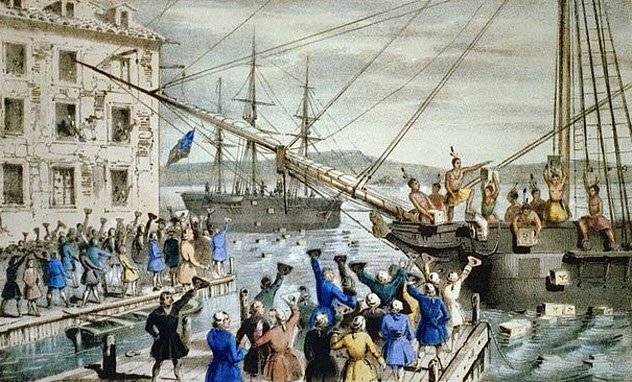
In 1773, prior to the Boston Tea Party, where patriots dressed up as Indians and threw all of the tea into the Boston Harbor, some of the participants gathered at the house of journalist Benjamin Edes to discuss their plans. At that meeting was a bowl filled with strong fruit punch which sustained the conspirators as they formulated their plans. That bowl is now in the possession of the Massachusetts Historical Society, as well as correspondence from Benjamin Edes's son, Peter. He recalls that his duty on that day was to make more punch and keep the bowl filled at all times with fruit mass and hard rum.
advertisement
#8 Alexandre Dumas
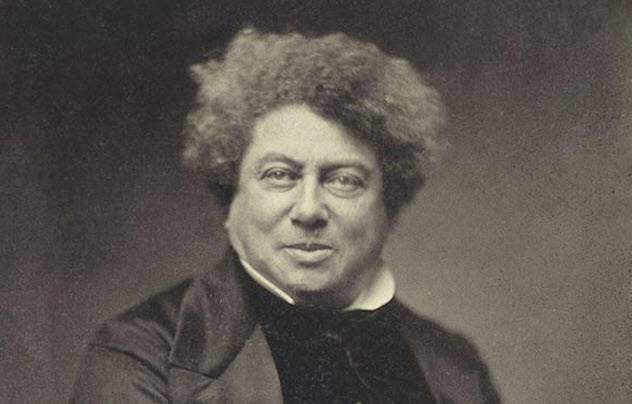
Between 1844 and 1849, Alexandre Dumas was part of the Hashish Club, a very exclusive group of Parisians who enjoyed gathering to experiment with drugs, mostly hashish. Hashish had only recently been introduced to France after Napoleon's campaign in Egypt. Dr. Jacques-Joseph Moreau pioneered the recreational use of the drug and was soon joined by many prominent Parisian intellectuals including Victor Hugo, Charles Baudelaire, and Alexandre Dumas. Dumas, while high as a kite, wrote his best-known novels between 1844 and 1846The Count of Monte Cristo and The Three Musketeers. The former even contains a memorable scene where Baron Franz d'Epinay smokes hashish with the main character, who assumed the guise of Sinbad the Sailor.
advertisement
#9 Paul Erdos
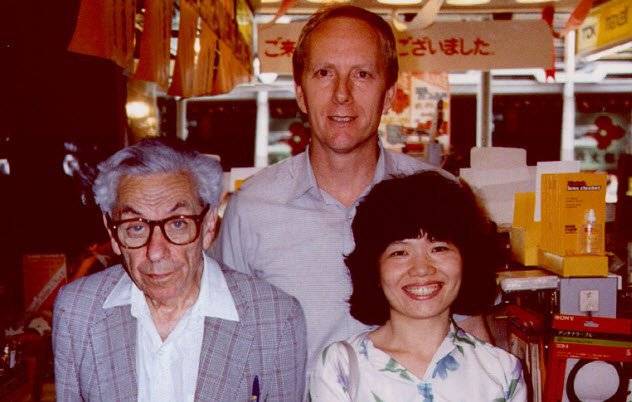
One of the greatest mathematicians, Paul Erdoes also had a serious 25-year amphetamine habit. Erdos had a reputation as being a 'nerdy' character who was often aloof, sporadic, and moody.He carried most of his possessions around with him in suitcases as he from conference to conference all over the world. He often stayed with other mathematicians or scientists who tended to his daily responsibilities as he focused on his math. Though he was known world wide for his sharp mind, a friend offered him $500 to stop taking drugs for a month. When he attempted to do so, his ability to compute simple problems failed and he gave up and started his habit once again.
advertisement
#10 William S. Burroughs
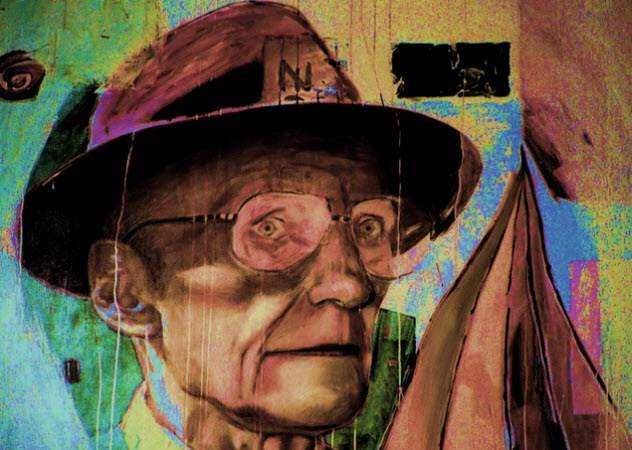
In 1959, Beat Generation figure William S. Burroughs published one of the most successful, most controversial novels of the 20th centuryNaked Lunch. It divided critics and was banned in several places in the United States and Europe on obscenity charges. At the time, Burroughs was a heavy drug user who had to move from place to place to evade the authorities. They were looking for him for various crimes brought on by his drug use, most notably the murder of his wife. When he wrote Naked Lunch, Burroughs was in Tangier, Morocco. He found it hard to obtain his usual supply of heroin, so he turned to eukodal, an opioid better known today as oxycodone. The book has since been herald as one of the 20th century's best novels.
advertisement
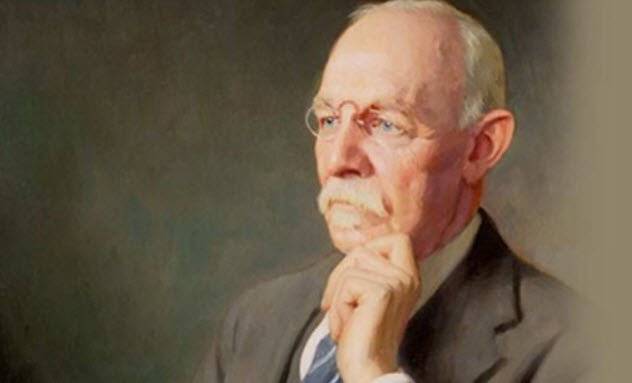
#11 William Halsted
One of the most renowned surgeons in history, Halstead championed anesthesia and the importance of cleanliness in hospitals. He also spent most of his career dealing with a severe cocaine and morphine addiction. When he began practicing medicine, not much was known about cocaine, except for the fact that it helped with pain and was an excellent anesthetic. Halsted decided to test it on himself and soon developed a habit. When his drug habit took control of his life he was fired from his position in New York and he went to an up-and-coming hospital in Baltimore named Johns Hopkins. By this time, Halsted had tried to treat his cocaine habit with morphine, failed, and developed another addiction. Between surgeries, Halsted was erratic, bipolar, and prone to disappearing. However, in the operating room he was praised for his accomplishments, and is known to be one of the first functioning addicts.