Perfect Plants For People With Out A Green Thumb! It's So Simple!
It's so simple!
Have you ever gone into someones home and just admired their beautiful house plants, wishing you could do the same? Well it's so easy even for a "beginner"! Don't be afraid to ask them for a clipping and go home and begin growing your own.
House plants add beauty to your home. Some offer many health benefits as well.
For people who love the beauty of plants but can't do any outside gardening this is also a great way to bring the outdoors inside!
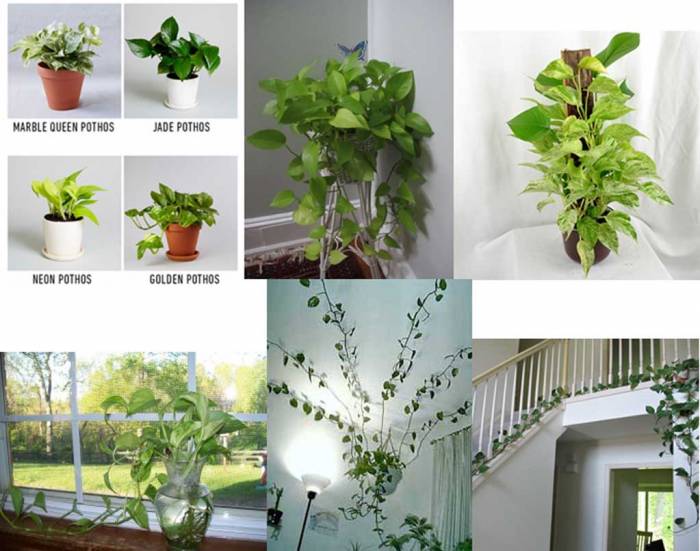
Epipremnum aureum
Also known as Pothos and even better known as Devil's Ivy. Many (including myself) confuse these plants with Philodendrons. But there are many differences, for instance;
The mature vine of a Philodendron is slightly brownish and new growth is green.
The mature vine of a Pothos is green and new growth is pale green.
These are also GREAT beginner plants. I think they are the most FUN plants! As you can see by the pictures, you can do almost anything with them. I have Devil's Ivy that have been growing in the same vase of water for over 10 years. That's right, you really don't ever have to plant them in soil if you don't want to. Especially if you are forgetful when it comes to watering your plants. But you do need to check the water in the vase from time to time. I usually use clear vases.
Devil's Ivy are versatile, you can train them to grow up a piece of wood in a pot, hang them, you can let them hang naturally or take the vines and run them along the wall or over a shelf or just where ever you like.
You can grow them in direct light or very low light. Watering them once a week in the Summer and every other week in the Winter is recommended, but can go with out watering for several weeks, however, they will begin to show you that they are not happy. They are hardy and resilient plants and can grow in just about any room of the house. The jury is still out on how they fair in the bathroom though.
The ASPCA says these plants ARE toxic to cats and dogs but not fatally but will become sick.
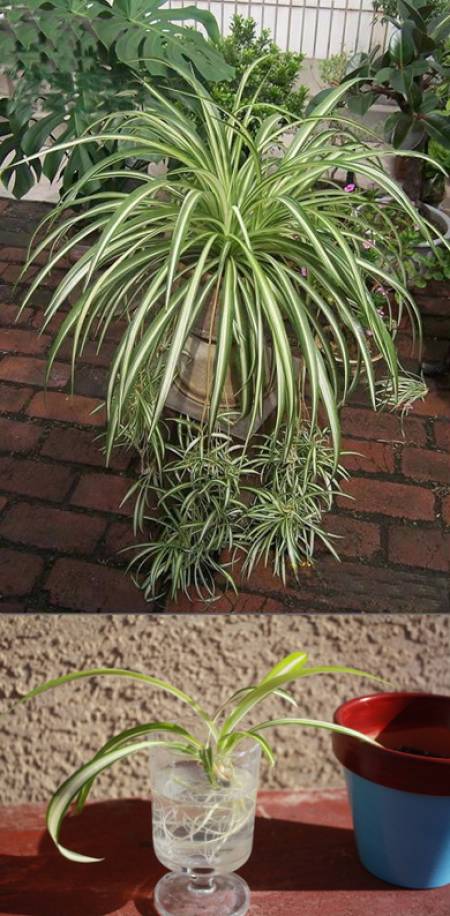
Chlorophytum comosum
Well the "scientific" name is Chlorophytum comosum. People call it by many different names but most commonly known as the Spider Plant.
They like indirect sunlight, moist soil and humidity. So if you live in a dry climate, misting it a time or two a week would make your plant very happy. If you are new to growing spider plants, they as most all plants, will give you signs of what to do. If you are over watering the tips will turn yellow, under watering they will turn brown. Do not let soil dry out. However, they will also turn brown if you have fluoride in your water, they don't like that. You can fertilize them in the Spring and Summer. If a baby happens to fall off or if you want to start a new Spider plant, just place the clipping into a glass of water.
Spider plants made NASA's list of the best air-purifying plants. They make great plants for fighting pollutants including benzene, formaldehyde, carbon monoxide and xylene. It is native to tropical and southern Africa.
Spider plants are a good plant to keep in any room of the house. I especially like keeping them in the bedrooms and even a baby's nursery (up high and NOT over or near the crib of course). You will almost always find one in someones kitchen as well. If you work in an office a good place to keep one is on your desk!
The ASPCA says Spider Plants are non toxic to cats and dogs.
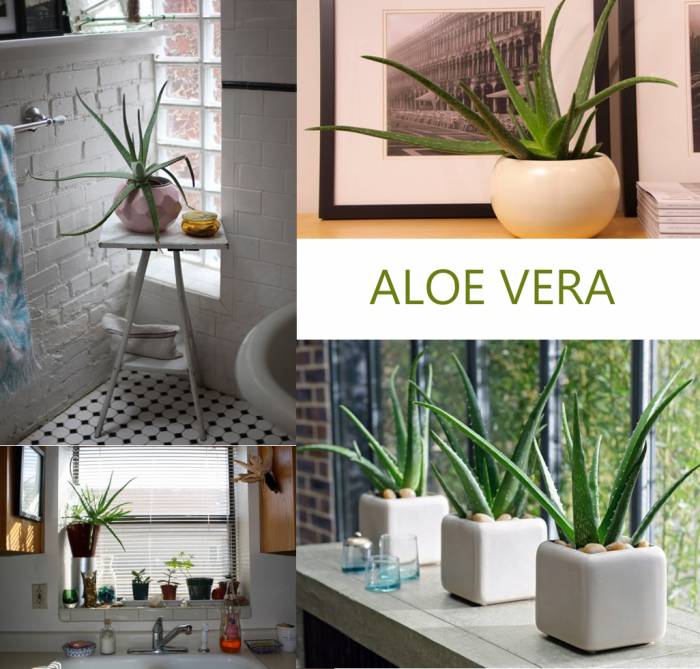
Aloe Vera
Well this is easy - it's scientific name is ...... Aloe Vera as well!
In most homes you will find these in the kitchen or bathroom as they are great for burns and cuts. The gel inside the plant is very soothing and helps heal. Folklore says an Aloe in your kitchen will help protect your home from fire.
It can also be used in your beauty regimen. All you have to do is just break a piece off when you need to use it. Cover the end with some plastic wrap and stick in the refrigerator when not using.
Aloe Vera is also suggested in the Feng Shui plant species to promote harmony and positive energy.
This plant adds beauty placed any where in the home.
Another easy plant for the beginner because if you forget to water it, that's ok.
(but like any other living thing it does need water so don't let too much time pass)
Light can be direct or indirect (prefers indirect though) and like most succulents it doesn't like very much water.
The ASPCA says that Aloe Vera is NOT safe for cats and dogs.
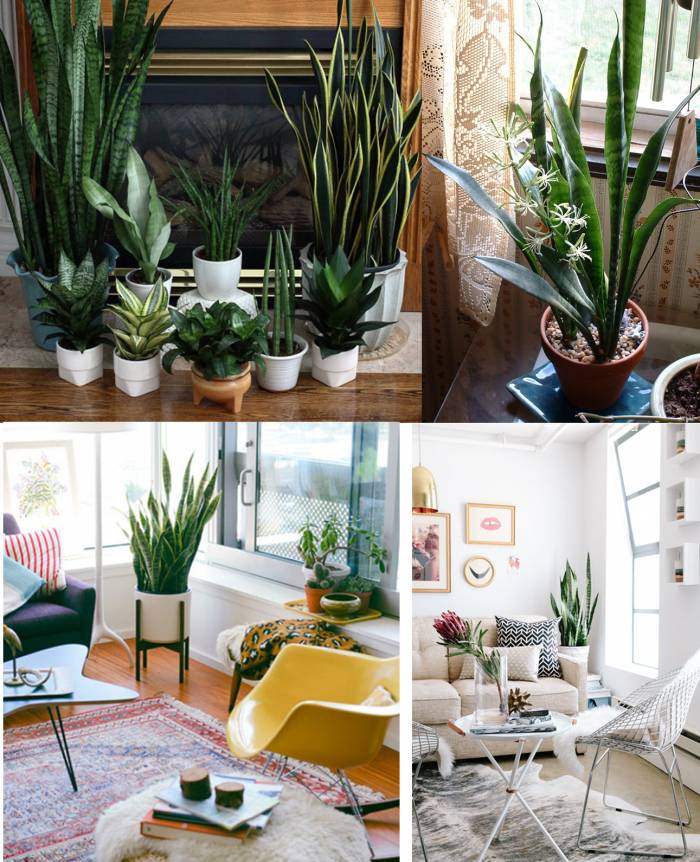
Sansevieria trifasciata
From the first picture you can see there are many varieties of this plant also known as the Snake Plant and a name that is even more fun Mother in Law's Tongue! Less common names of this plant are Viper's bowstring hemp and Saint Georges Sword.
As you can see this plant looks beautiful in any setting you put it. They will also flower. But don't fret if it doesn't (mine have never flowered, maybe not enough light) they are still beautiful either way.
Snake Plants prefer medium light and tolerate temperatures ranging from 50° - 80°.
Another great beginner plant. Once established you can literally forget about them. Depending on the size and the climate you are in, you can get away with watering as little as once a month. Just be sure to give them plenty of light and room in the pot to grow. This is a slow growing plant. Another one of my favorites.
You will see these in a lot of doctor offices and salons.
The ASPCA says the Snake Plant is NOT safe for cats and dogs.
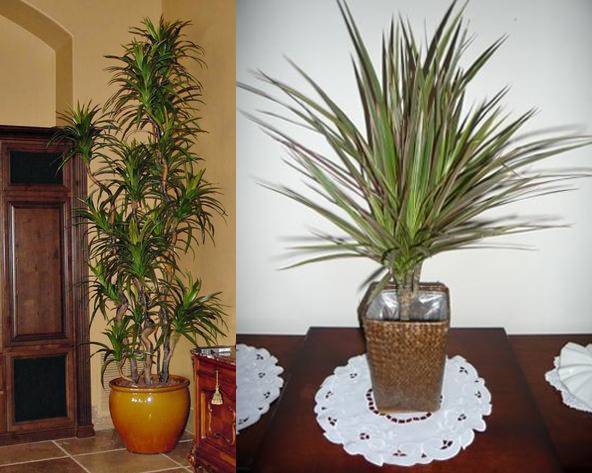
Dracaena
Also called Dracaena in the scientific world, this is another plant for the beginner. With 120 different species to choose from. (the one in the picture being my favorite)
This is a beautiful plant big or small. It is a great addition to any decor as well.
Dracaena don't need a lot of care. They are happy being left alone where it can have some bright or moderate light although it will tolerate low light and they like their home to be between 65° & 75°. You will know it is time to water when you stick your finger in the soil about 2 inches down, (about to your second knuckle) if the first 2 inches are dry then it is time to water. Water until water drains out the bottom but don't let it sit in the water. Drain the catch.
To keep your Dracaena looking its best, occasionally wipe the upper and under sides of each leaf with a damp cloth. Doing this opens the pores so the plant can exchange air freely, and it may help prevent spider mites. To make it shine you can also wipe each one with some mayonnaise on a rag or cotton ball a couple times a year.
Fertilize every two weeks in the Spring and Summer and once a month in the Winter.
Keep in mind when choosing this plant that they will eventually grow over 6 feet tall!
The ASPCA says Dracaena's are NOT safe for cats and dogs.