

China's Lion City, intentionally submerged in 1959 for a hydroelectric project, was rediscovered in 2001, showcasing remarkably preserved temples and archways that continue to fascinate divers and enthusiasts.
Perfectly Preserved 600-Year-Old Underwater City ‘Forgotten’ For Decades
By
Haider Ali in
News
On 10th December 2023
advertisement

Getty Images
Despite being underwater, a 600-year-old Chinese city has been remarkably preserved.
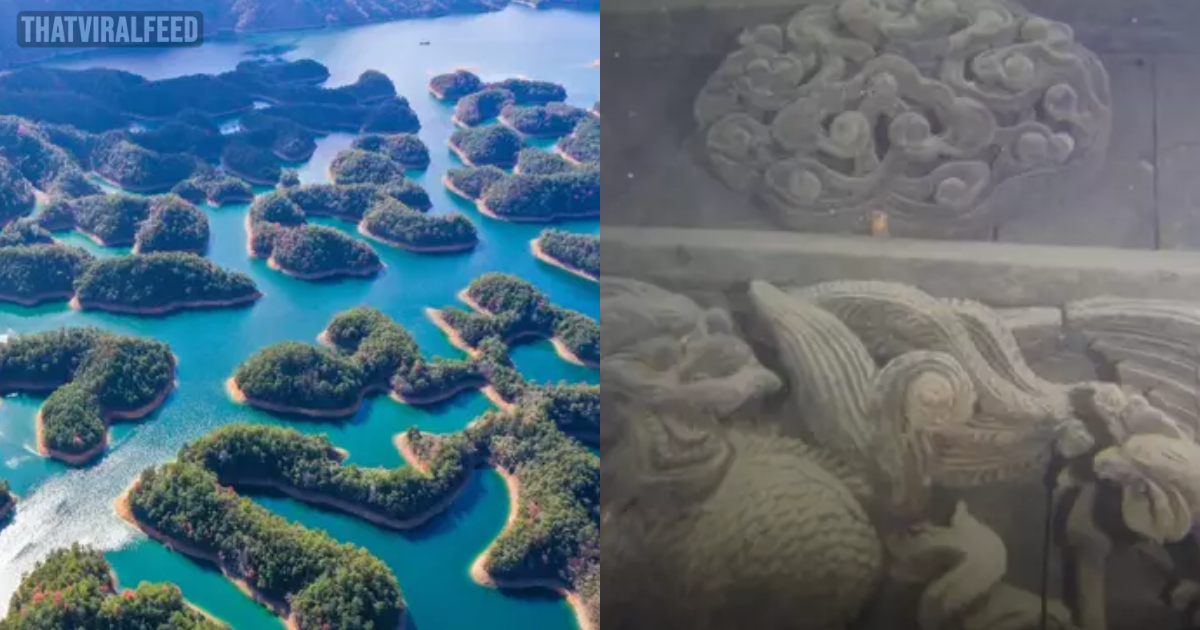
Cities rise and fall, of course, but one city in Zhejiang Province, China, beneath the surface of Qiandao Lake, appears to have remained eternal.
The main reason Shicheng is known as the Lion City is because of its closeness to Wu Shi Mountain, also known as the "Five Lion Mountain."
In 1959, the city was purposefully flooded; its cause and history remain a mystery.
advertisement
Credit: YouTube/CDub
That's why it's frequently referred to as the "Atlantis of the East." You might wonder why it flooded, though.
Basically, the government needed to clear the city to make room for the construction of the Xinan hydroelectric project, therefore the goal was to make room for advancement.
Naturally, the 300,000 residents of the city were moved to another location, and a lake was formed.
But until it was rediscovered back in 2001, Shicheng itself was largely forgotten.
advertisement

Getty Images
At this point, it is just 40 meters (131 feet) below the lake's surface, and divers have amassed a collection of remarkable photos throughout the years.
Moreover, visitors were allowed to dive into the city in 2017, according to Indy100.
advertisement
Sadly, you might not be able to cross it off your bucket list because you will require considerable diving experience, especially night, deep water, and exploratory diving.
The fact that a large portion of the undersea city is still unknown and has not yet been completely explored is another aspect.
advertisement
The BBC reports that although the city's history is unclear at best, the Ming and Qing eras are connected to the city's walls and other architectural features.
In spite of this, the city was only a little bit larger than half a square kilometer (0.2 square miles).
advertisement
It is thought that because the city lies under fresh water, it has been preserved so well.
Many of the elements of the city have survived despite the lack of sunlight, salt, and marine habitat.
advertisement
Thus far, comparatively well-preserved homes, temples, and paved roadways have been found.
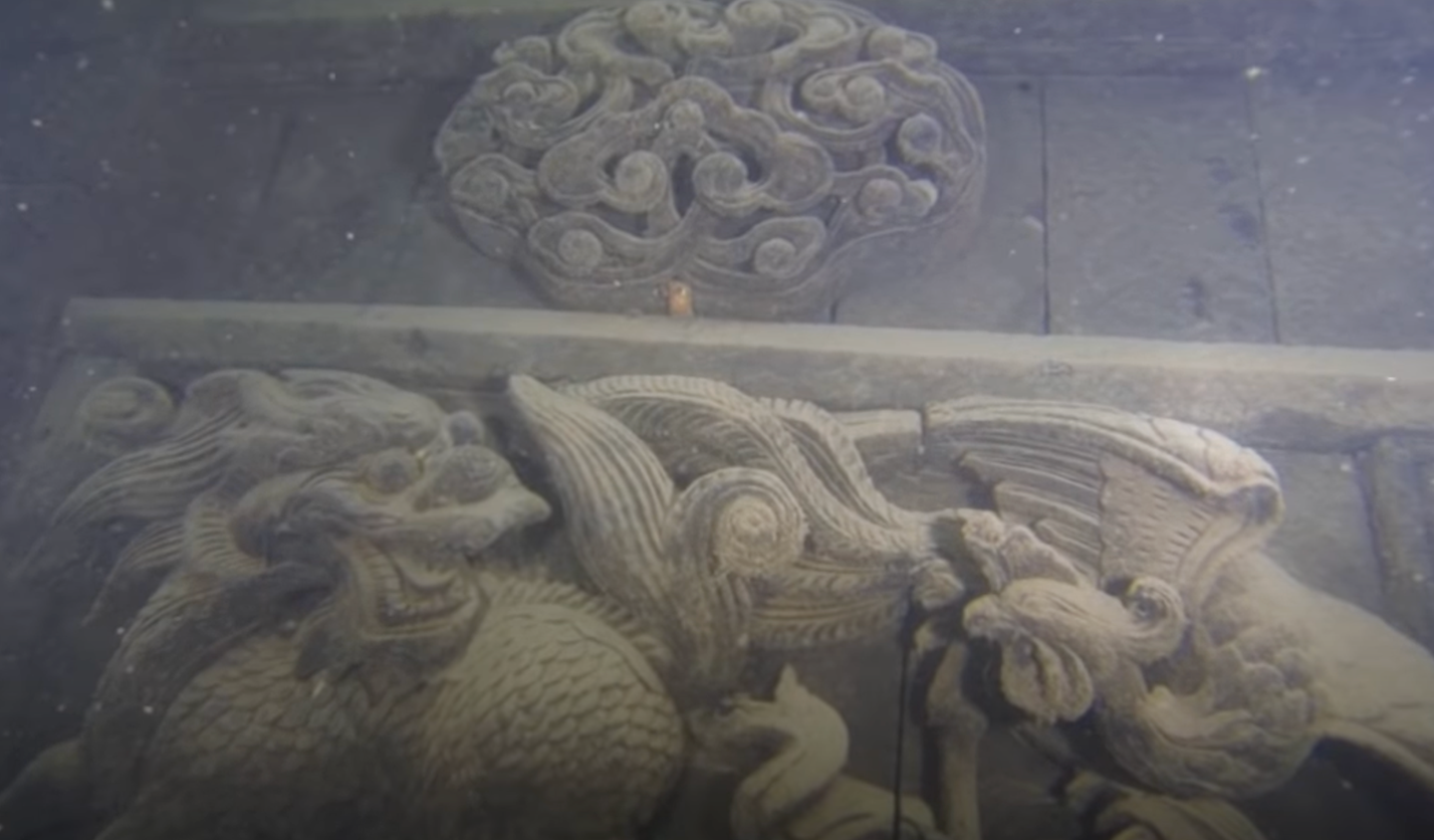
The underwater city also has 265 archways, all of which are adorned with carvings of lions, phoenixes, and dragons.
advertisement
In 2011, as the Chinese National Geography released images and graphics, curiosity in the city surged once more, with people eager to explore the underwater city.
Despite intentional flooding, its well-preserved structures and mysterious charm continue to captivate, inviting both curiosity and admiration.