

YouTuber Tavarish bought an abandoned minivan linked to Pimp My Ride and found that the vehicle shown before the makeover was not the one viewers saw at the end.
Pimp My Ride Fan Buys Abandoned $850 Minivan And Discovers The Makeover Used A Different Vehicle
By
maks in
Entertainment
On 15th July 2026
advertisement
Buying a forgotten vehicle from Pimp My Ride sounds like a chance to own a strange piece of 2000s television history. For automotive YouTuber Tavarish, the purchase also exposed how one of the show's famous transformations was created.
The van looked like the finished vehicle featured on MTV, complete with the sort of loud design that made the series hard to forget. Once Tavarish looked into its past, however, he found that the makeover had not started with that same minivan.
His discovery did more than reveal a detail about one old vehicle. It changed the way viewers could understand the before-and-after story presented in the episode.
Fans who watched Pimp My Ride during the 2000s may want to prepare themselves. One of the show's most satisfying ideas was that a battered vehicle entered the shop and came out looking almost impossible to recognize.
Tavarish paid just $850 for the abandoned minivan, which had appeared in an episode first broadcast in 2004. For less than the price of many major car repairs, he took ownership of a vehicle once displayed to millions of MTV viewers.
At the height of the show's popularity, plenty of young fans would have loved to keep one of its finished cars in their garage. Practicality did not matter much when a vehicle had bright paint, oversized wheels, screens, speakers, and modifications that looked like they belonged in a video game.
advertisement
The US creator has more than 3.1 million subscribers and is known for taking on unusual automotive projects. Buying the abandoned van allowed him to live out the kind of 2000s fantasy many viewers once had, though the low purchase price hinted that the vehicle's glamorous television days were long behind it.
The project soon became more interesting than a normal restoration. As Tavarish traced the van back to its episode, he noticed that the finished vehicle did not match the one introduced at the start.
That detail became the real story behind the purchase. Instead of only repairing a neglected custom minivan, he had uncovered one of the production methods used by the popular MTV reality show.
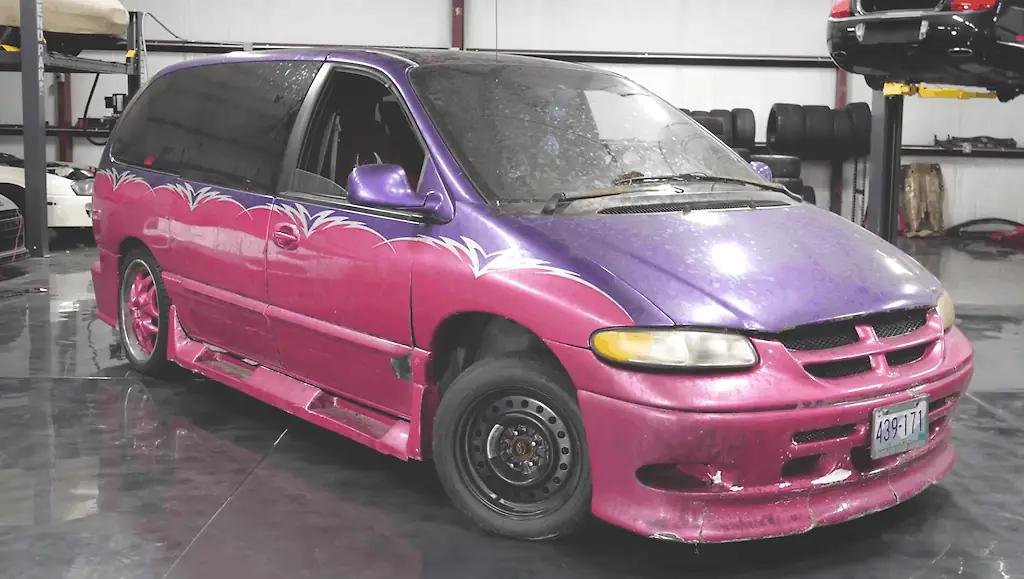
The minivan featured on the show in the early 2000s.
Credit: YouTube/Tavarish
The finished minivan was not the vehicle shown at the start
Rapper Xzibit hosted Pimp My Ride, welcoming owners before handing their worn-out cars over for extreme makeovers. Watching an old episode now can bring back the vehicles, music, editing, and fashion choices that defined that part of the decade.
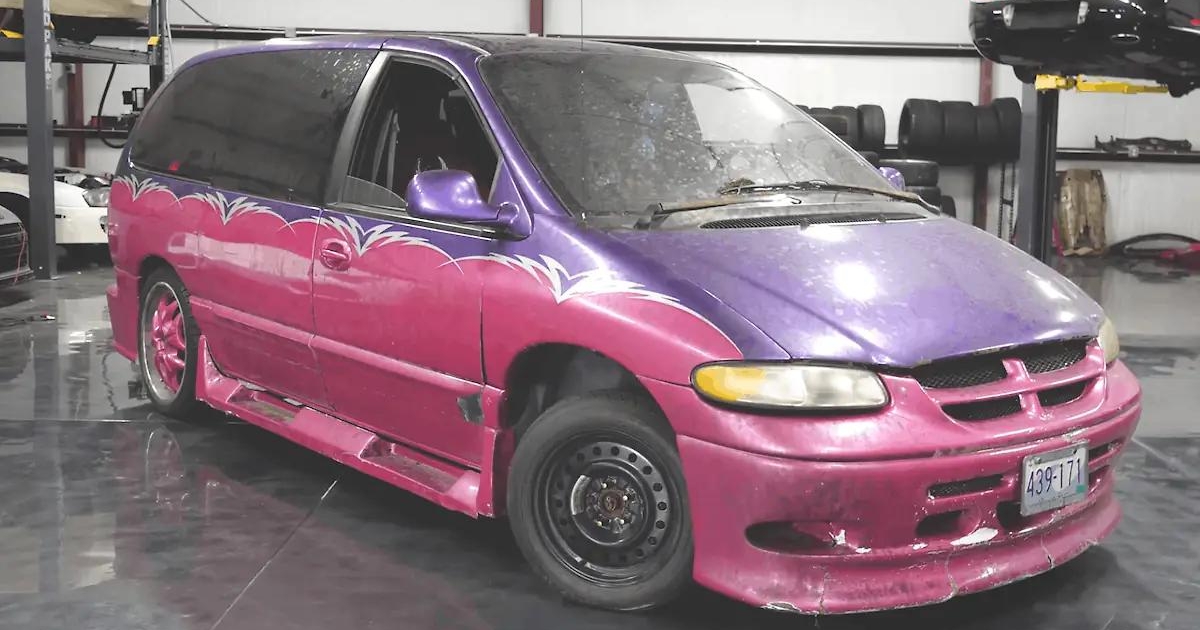
One episode ended with a pink-and-purple 1999 Dodge Grand Caravan. The color scheme and custom work made it memorable, even among a series filled with cars designed to attract as much attention as possible.
Yet the biggest surprise was not hidden in the paint or interior. The completed Dodge was not the original vehicle brought to the show, meaning the episode's final reveal involved a different minivan altogether.
advertisement
The switch becomes easier to spot when the beginning and end of the episode are compared side by side. The vehicle introduced by its owner does not have the same year, make, or model as the customized van shown during the reveal.
At the start, the woman arrives with a 1998 Plymouth Grand Voyager. By the final scenes, viewers are looking at a 1999 Dodge Grand Caravan that had been altered to resemble the vehicle the episode began with.
The two minivans share a close family resemblance, which helped the change pass unnoticed during normal viewing. With the makeover, editing, and excitement of the reveal taking center stage, many viewers had little reason to examine whether every body panel and badge still matched.
advertisement
The crew had therefore changed more than the paint, wheels, and interior. The finished project was built around another vehicle, while the episode continued to present the transformation as the same owner's car receiving an extreme makeover.
Tavarish explained: "A lot of times, the guys didn't use the original car."
He added, "They got cars that looked kind of like it, and then modified those." His comments suggest the Grand Caravan was not necessarily the only example of a replacement vehicle being selected because it looked close enough to the original.
advertisement
Why the replacement was easy for viewers to miss
The Plymouth Grand Voyager and Dodge Grand Caravan came from closely related Chrysler minivan lines. Their similar body shapes gave the production team a replacement that could pass for the original once the exterior had been covered by bright paint and custom parts.
Pimp My Ride also moved at a quick pace. Episodes focused on the owner's reaction, Xzibit's jokes, the condition of the old car, and the most dramatic additions made in the shop. Small differences between two similar minivans were easy to overlook when the final vehicle looked nothing like either one had before.
The discovery does not prove that every car on the series was replaced. It does show that at least some transformations were more complicated than the simple story presented on screen, with the production using a similar donor vehicle when the original was not used for the finished build.
advertisement
For anyone who remembered the show as a straightforward restoration series, the reveal was a genuine shock. The makeover was still real, but the starting point was not always the exact car viewers had been led to follow through the episode.
Tavarish did not leave the abandoned van in the condition in which he found it. He later restored the unusual vehicle, giving the aging custom work another chance after years away from television.
He eventually sold the van. That brought its time in his collection to an end, but his research gave the vehicle a new claim to fame: it was no longer just an old Pimp My Ride build, but physical proof of one of the show's behind-the-scenes shortcuts.
advertisement
Pimp My Ride arrived at the perfect moment for 2000s car culture
Modified cars were everywhere in the early 2000s. Need for Speed Underground turned street racing and customization into a gaming obsession, while the Fast & Furious films made bright paint, body kits, and tuned imports part of mainstream entertainment long before the franchise began sending its characters into space.
Pimp My Ride fit that mood perfectly. The car makeover series ran for six seasons on MTV between 2004 and 2007, drawing viewers who wanted to see what happened when a worn-out vehicle received an unlimited-looking dose of imagination.
Each episode began with another damaged, unreliable, or badly neglected car. The makeover team then rebuilt it around the owner's interests, adding features that reflected the loud design trends and pop culture habits of the decade.
advertisement
Interior upgrades often included huge television screens, sound systems, and game consoles fitted into places where most drivers would expect to find storage. A trunk could become an entertainment room, even though playing games at home would have been far more comfortable.
The outside received the same treatment. Bright paint, chrome trim, shiny alloy wheels, and thick body kits appeared often, giving ordinary vehicles the look of custom show cars built to stand out in every parking lot.
Some of those low body kits would have struggled with an average speed bump, but everyday use was never the main attraction. The cars looked bold on camera and carried the unmistakable "swag." that the show wanted viewers to remember.
advertisement
West Coast Customs handled the transformations during the show's first five seasons. The California shop became closely linked with Pimp My Ride as viewers watched its team turn damaged cars into colorful builds packed with unusual features.
Production moved to Galpin Auto Sports in Van Nuys for the sixth and final season. Although the workshop changed, the main formula stayed familiar: introduce a struggling owner, inspect an old vehicle, and reveal a dramatic custom build at the end.
Tavarish's minivan adds a less polished detail to that formula. The finished cars may still have delivered the visual surprise viewers expected, but at least one famous transformation began with a replacement vehicle rather than the exact one that first appeared on screen.