

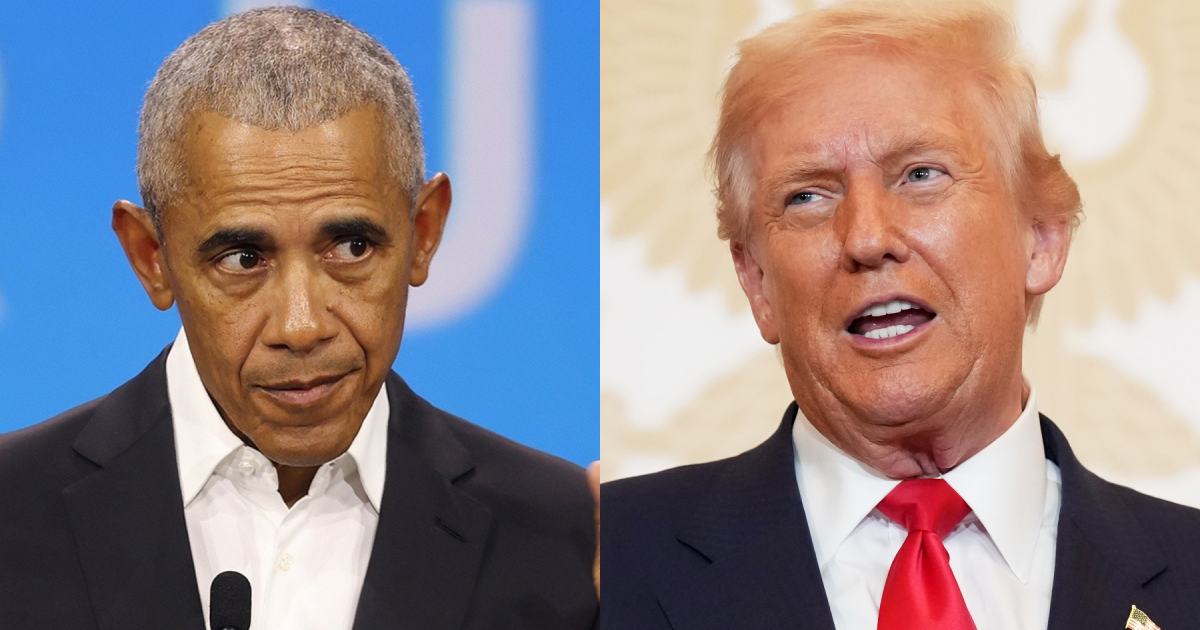
The poll results come just days before voters head to the polls for key gubernatorial races this Tuesday.
advertisement
A recent poll has revealed how Americans currently view former presidents Barack Obama and Donald Trump — and the results are sparking plenty of conversation. The survey offers an interesting look into how both leaders continue to shape public opinion years after leaving office.
Voters in Virginia and New Jersey are preparing for important gubernatorial elections on Tuesday, November 4, as political tensions grow ahead of the 2026 midterm elections. These races are being closely watched as indicators of the broader political climate across the country.
Over the weekend, Obama, now 64, appeared at rallies in Newark and Norfolk to show his support for Democratic candidates Mikie Sherrill and Abigail Spanberger. Both candidates are polling well, and Obama’s presence was seen as a strategic boost for their campaigns.
During his speeches, Obama stepped away from his usual calm, measured tone and took direct aim at Donald Trump’s administration. His remarks marked a clear shift in tone, suggesting growing frustration with the direction of Republican leadership.
Obama said that the GOP’s current policies are “worse than even I expected,” then went on to accuse Trump of attacking free speech, targeting immigrants, and undermining public health. He also criticized Trump’s use of the National Guard to respond to what he called “crime waves that don’t actually exist.”
Following those remarks, a new Marquette University poll shed light on how Americans now compare the two former presidents. The survey, conducted between September 5 and September 24, gathered responses from 1,005 adults nationwide and revealed that Obama remains more popular than Trump overall.
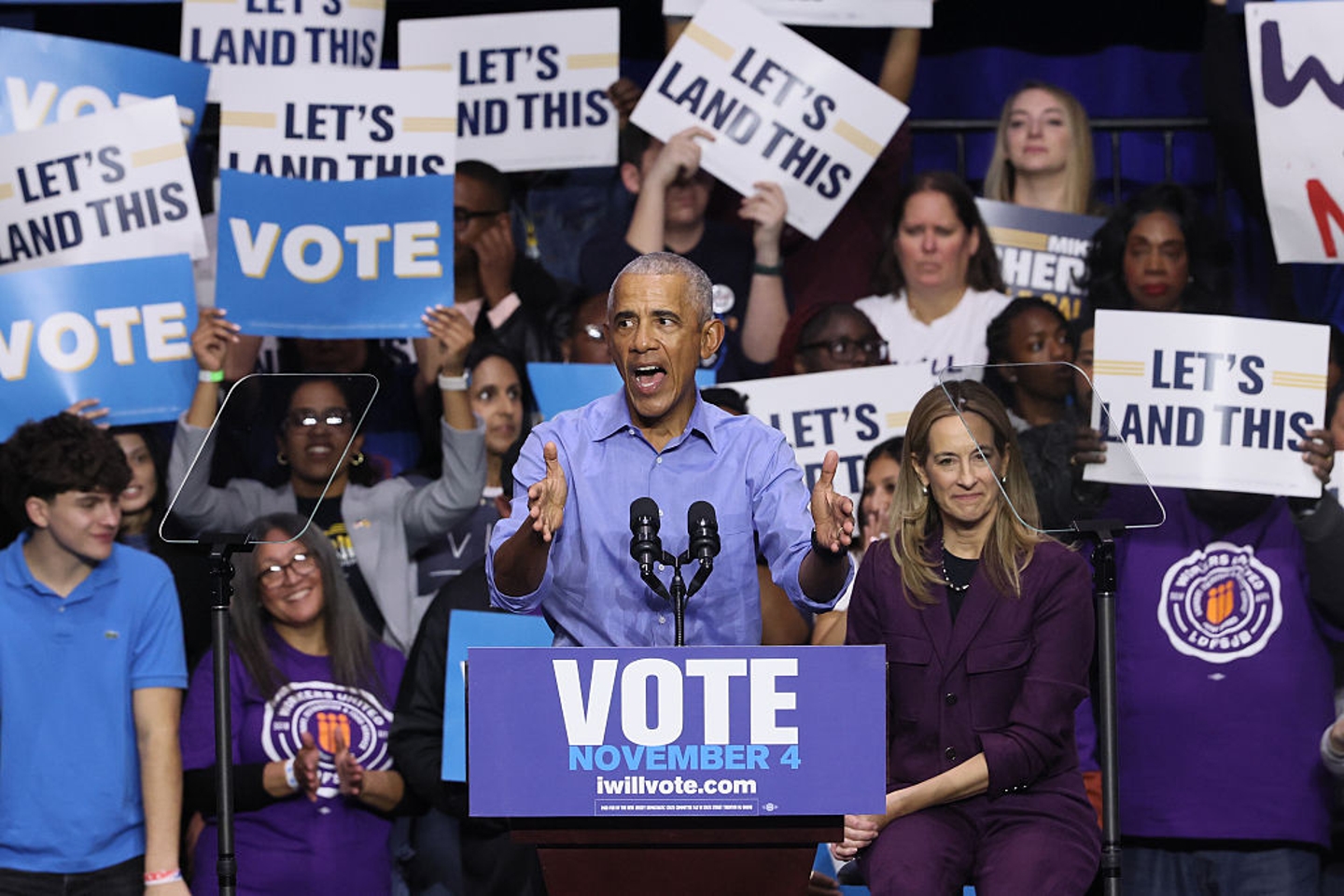
Obama slammed the Trump administration in his speeches over the weekend
Michael M. Santiago/Getty Images
advertisement
According to the poll, 42 percent of respondents said they view Trump favorably, while 57 percent expressed an unfavorable opinion — giving him a net favorability rating of -15 points. Meanwhile, 57 percent of participants said they view Obama favorably, compared to 40 percent who said they do not, giving him a net positive rating of +17 points.
Meena Bose, executive dean of Hofstra University’s Peter S. Kalikow School of Government, Public Policy, and International Affairs, told Newsweek that Obama’s strong favorability likely stems from his enduring reputation for charisma and leadership. She explained that his “personal appeal, inspirational rhetoric, and unanticipated success in the 2008 presidential race continue to have strong public support.”
She went on to add: "The promise of hope and change was a defining feature of the Obama presidential campaign and still influences assessments of his presidency."
However, analysts pointed out that the poll isn’t necessarily a sign of growing support for Democrats overall. The survey compared the favorability of all U.S. presidents since Ronald Reagan — who still holds the highest rating at +28. In contrast, Trump’s successor, Joe Biden, currently has the lowest rating of the group.
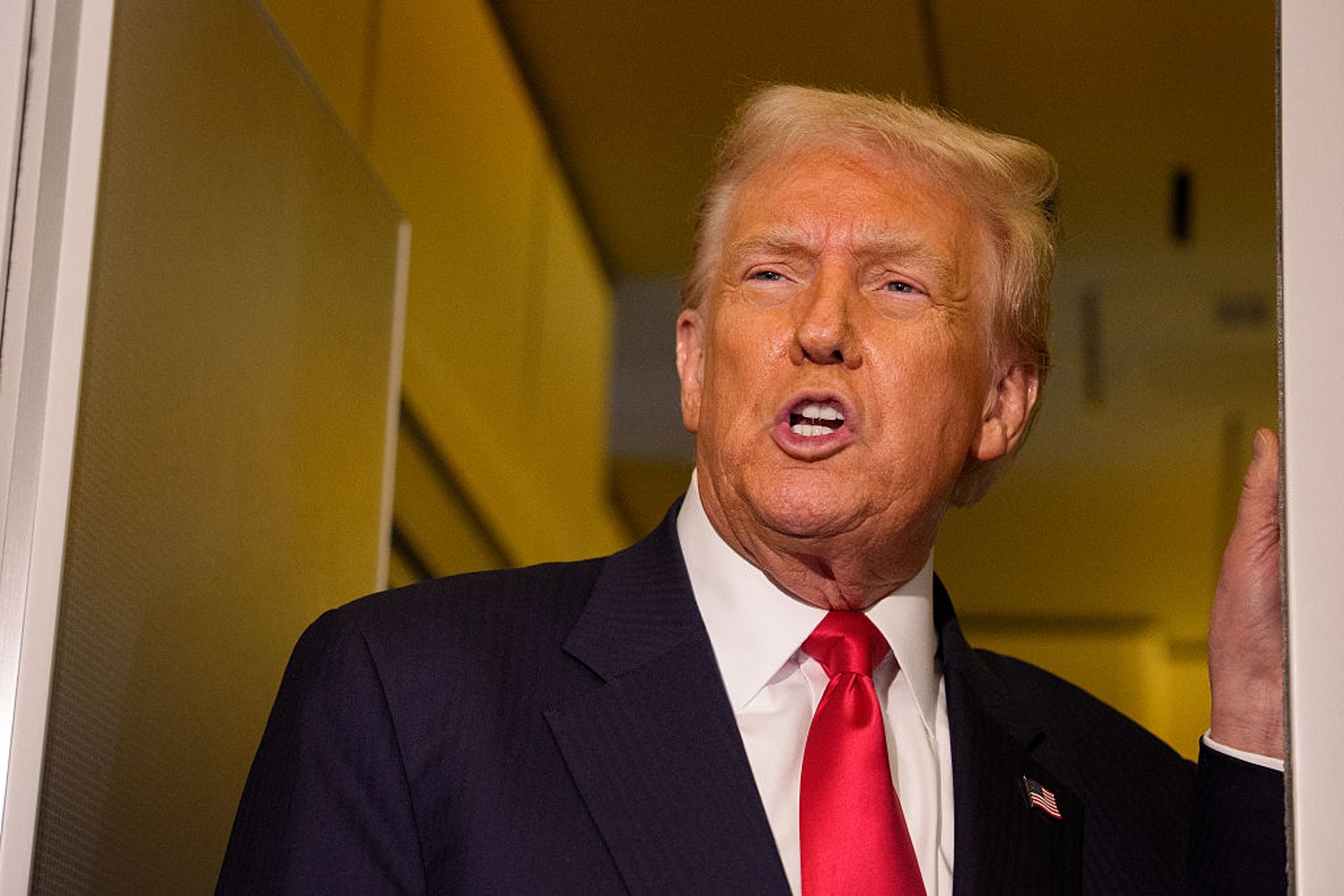
The poll ranks the POTUS with a negative favourability rating
Andrew Harnik/Getty Images
advertisement
The current president, Joe Biden, scored a net favorability of -24 points — the lowest of any modern U.S. leader. Experts suggest this drop may have been influenced by his decision to withdraw from the campaign, a move that has shifted public perception and overshadowed evaluations of his time in office.
Former President George H.W. Bush, by comparison, received a +17 favorability score, while Bill Clinton and George W. Bush both recorded +8 ratings, placing them in the middle of the pack.
advertisement
Even years after leaving office, Obama remains one of the most well-liked figures in American politics. A Gallup poll earlier this year found that 59 percent of respondents said they still view him favorably, compared to just 36 percent who did not — making him the most popular living president.
His continued popularity comes as Democrats work to link Republican candidates across the country to Trump’s legacy in the lead-up to both the gubernatorial and midterm elections. Party strategists hope that reminding voters of the contrast between the two former presidents could help energize Democratic turnout.
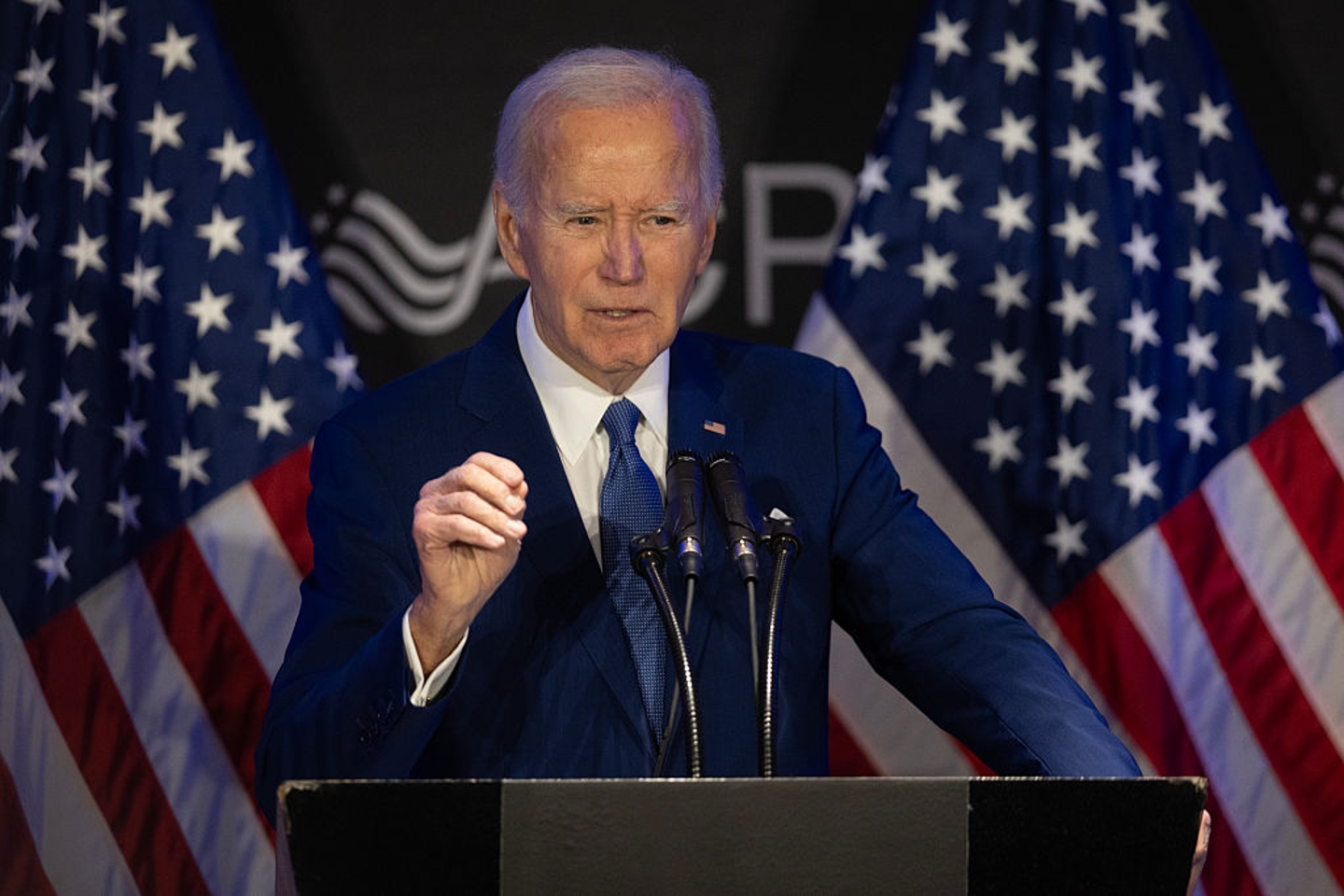
No other president scored as poorly as Joe Biden
Scott Olson/Getty Images
advertisement
Micah Rasmussen, director of the Rebovich Institute for New Jersey Politics at Rider University, told the Mirror US: "The question is whether or not Republicans are doing enough this time to completely breach it or partially breach it."
"I think even among the most nervous of Democrats, there's no question that Republicans have to have a very big Election Day in order to be able to overcome what could be as much as 250 or 275,000 vote margin for Democrats at this point."