What is Polydact?
The trait for polydact comes from a dominant gene, and only a polydactyl cat can parent another polydact. Although the Maine Coon (whose ancestors are also thought to have immigrated to the U.S. aboard ships) is believed to have been the first breed to have this trait, polydact is considered a fault in that breed, and indeed in every other breed except the Pixie Bob, a relatively new breed.
Its all about genetics
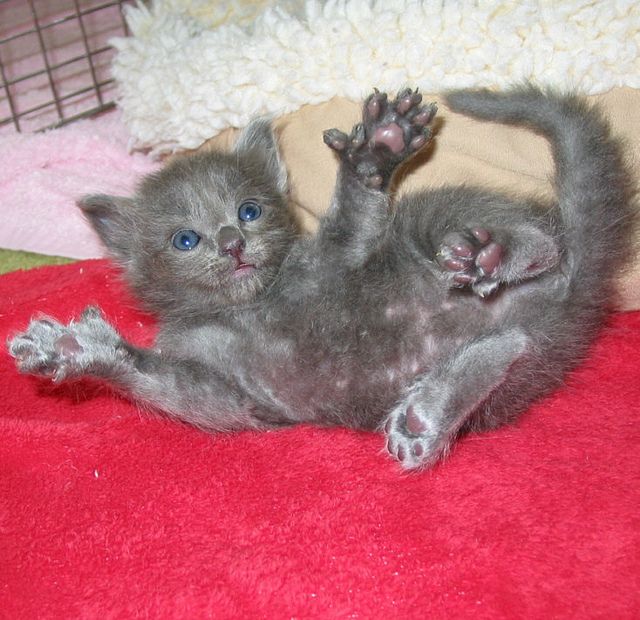
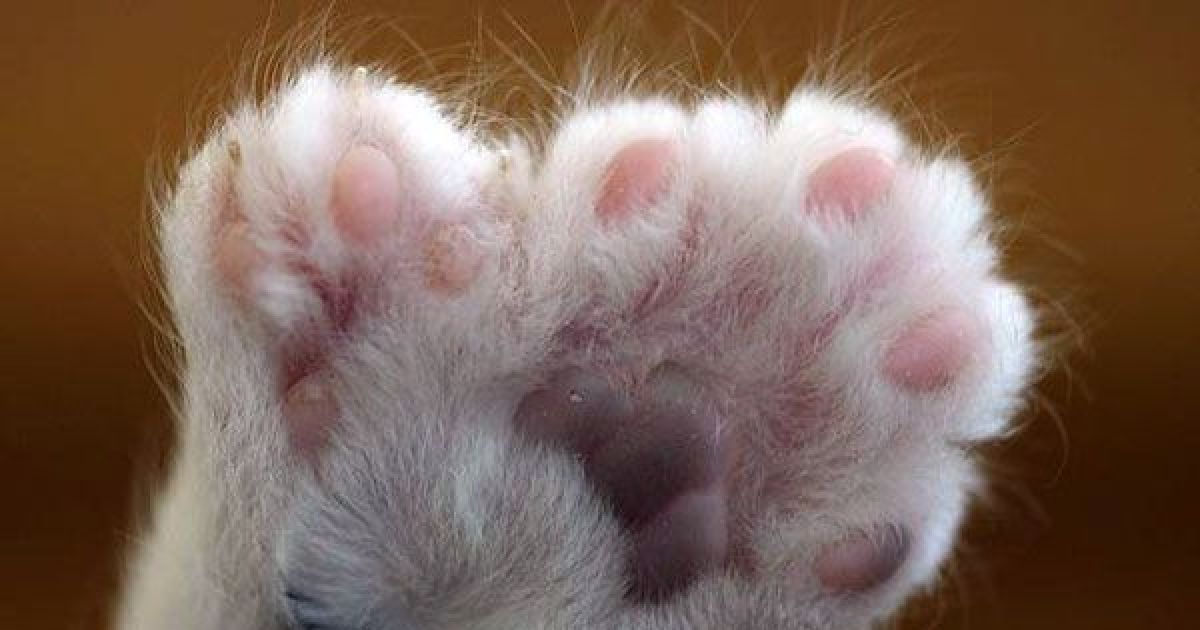
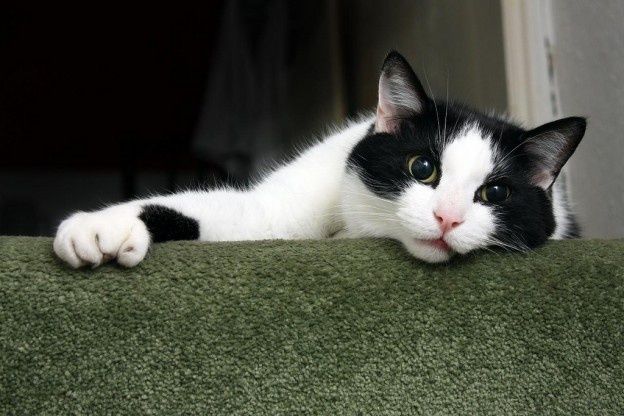
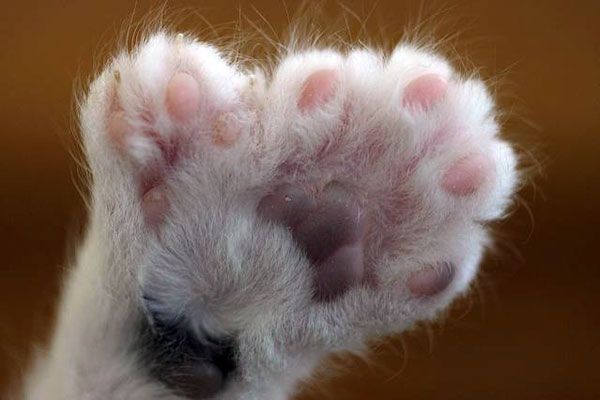
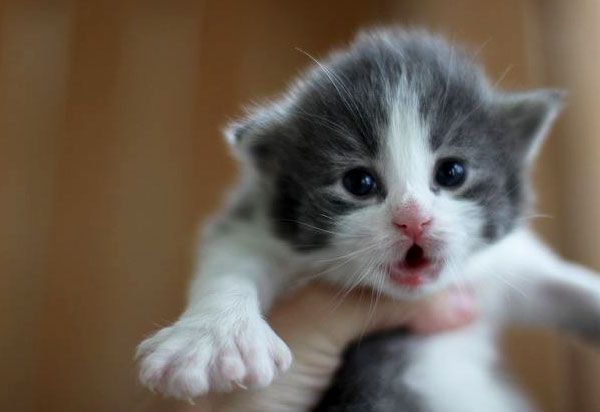
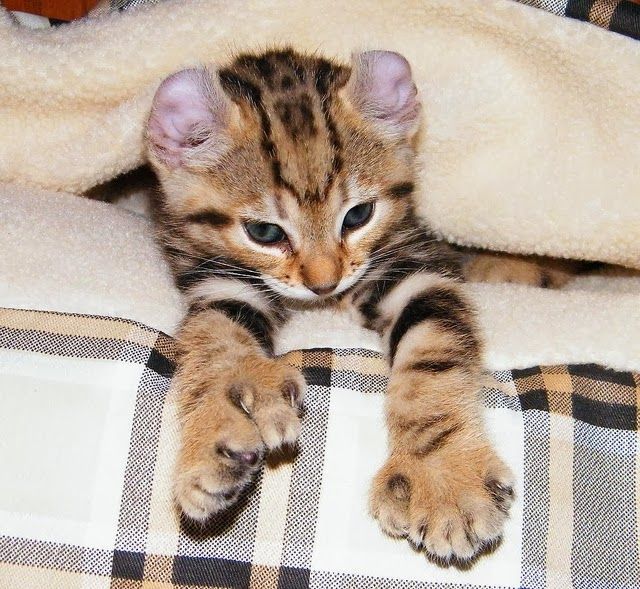
So, rather than a breed, polydact is just a genetic trait, somewhat like the genetics for the tabby pattern. Instead of the normal 18 toes (five on each front foot and four on the rear) found on most cats, polydacts have six or more toes on the front feet, and sometimes an extra toe on the rear. (The cat depicted in the first photo has seven toes in front, which makes it easy to understand why they are sometimes called "Mitten Cats.") However, unlike the popular tabby, whose pattern can be found in many breeds, the polydact is frowned upon by breed registries.
Why?
According to Barbara French, although not inherently dangerous, there is a possibility that the extra toes could be malformed, either with two toes fusing, or with ingrown toenails.
Although not approved as "purebreds," polydacts are adored by their human companions. Whether called "polydactyls," "Hemingway Cats," or "Mittens," these many-toed cats warm the hearts and hearths of those people fortunate to share a home with one.
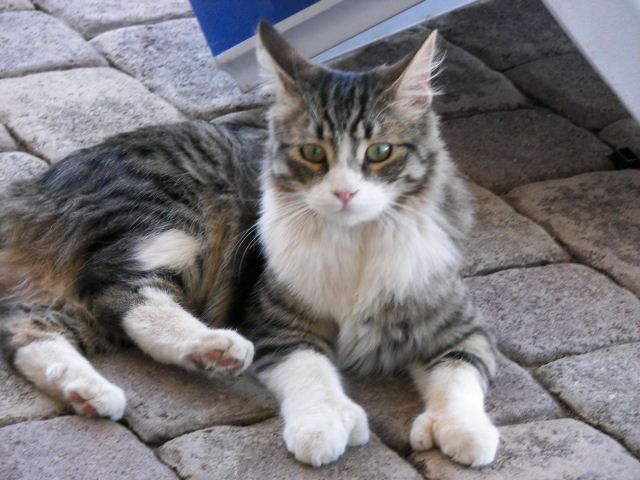
A polydactyl cat is a cat with a congenital physical anomaly
called polydactyly (or polydactylism, also known as hyperdactyly), that causes the cat to be born with more than the usual number of toes on one or more of its paws. Cats with this genetically inherited trait are most commonly found along the East Coast of North America (in the United States and Canada) and in South West England and Wales.
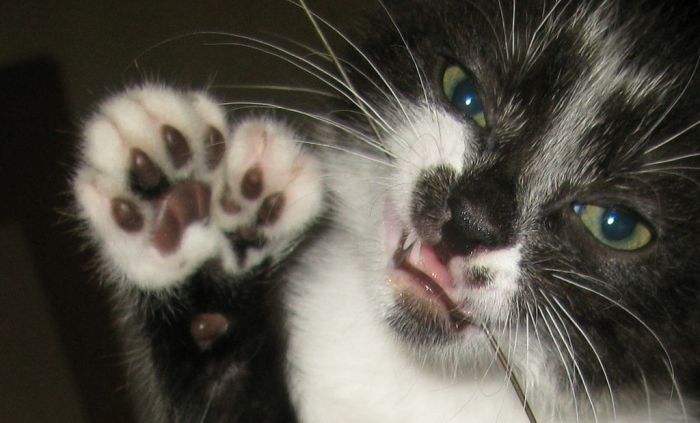
Polydactyl cats are said to be virtually non-existent in Europe
because "unusual looking cats" were destroyed due to witchcraft superstitions, practically eliminating the trait (Kelly, Larson,1993). I do not know whether Britain was included in the generic term "Europe" or whether it meant mainland (continental) Europe only. In Norway, polydactyl cats are known as "ship's cats" as the extra toes supposedly gave them better balance on ships in stormy weather; they are not uncommon and polydactyl kittens are sought after pets. Polydactyl random-bred cats have been reported in Sweden though other European cat lovers (locations not reported) had apparently never seen a polydactyl. They are common enough in Britain to be considered unremarkable.
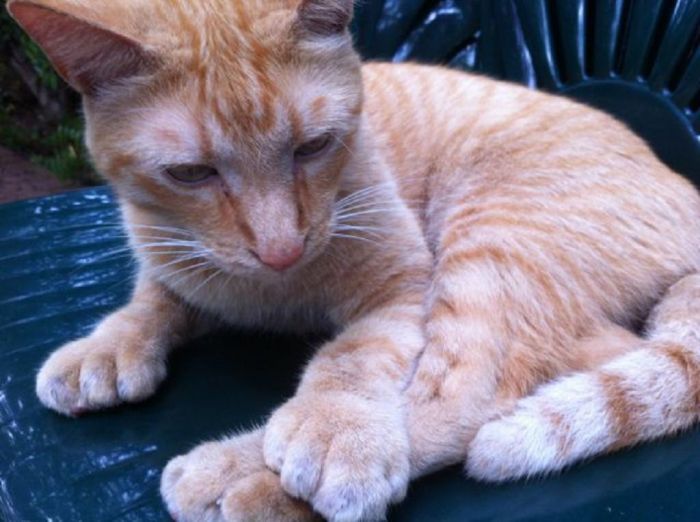
The condition is usually benign, and cats rarely suffer from having extra toes in and of itself.
There is a genetic condition called feline radial hypoplasia in which extra toes are common. Radial hypoplasia causes other birth defects in addition to polydactly, such as underdeveloped or twisted forelegs, which is a genuine disability, and such cats should be neutered to prevent passing on the abnormality. But those cases are in the minority.
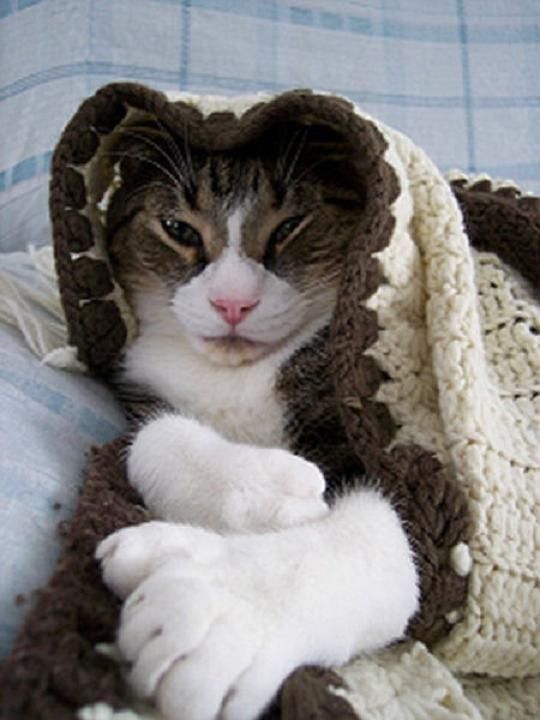
Regular cats have five toes on their front feet and four on their back, for a total of 18.
But polydactyl [pronounced pol-ee-dak-til] cats boast more toes, usually on their front feet.
If the word "polydactyl" sounds like Greek to you
that's because it is the Greek root poly means "many" and daktylos means "digits or toes." The record holder for most toes was a kitty named Jake, who had a whopping 28.
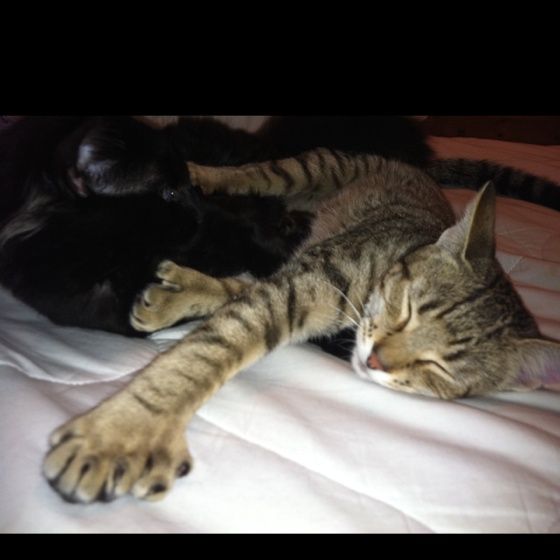
Various combinations of anywhere from four to seven toes per paw are common
Polydactyly is most commonly found on the front paws only, it is rare for a cat to have polydactyl hind paws only, and polydactyly of all four paws is even less common.
The nickname "double-pawed cat" is a misnomer since there is a specific double paw condition, although this condition may be interrelated with polydactyly
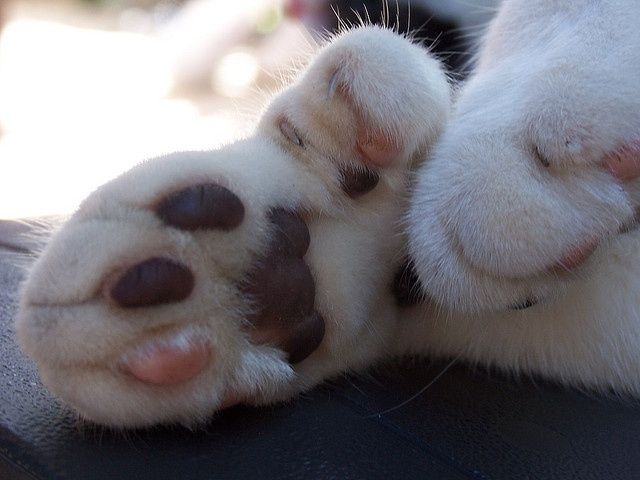
Unlike most mutations, extra toes don't hinder a cat, and can be considered an asset. Just the appearance of polydacts causes cat lovers to fall for them.
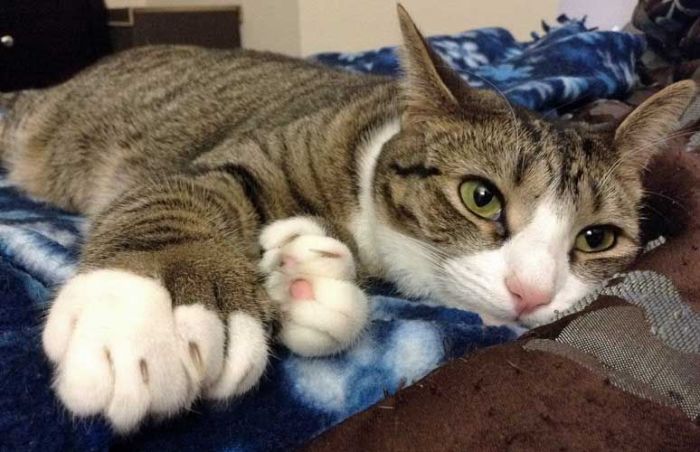
Some polydactyl cats present "mitten paws"
which occurs when the extra toes are attached on the medial side, or "thumb" side of the paw. This can lead to a cat that appears to have opposable thumbs. Some cats have learned to manipulate the extra digits like a human thumb. Cats have been known to use this ability to pull stunts that amaze their owners, such as opening latches and windows. I haven't found any case of a polydactyl cat successfully using a can opener, but there's always a first time. You know they are working on it!
"Snowshoe Paws"
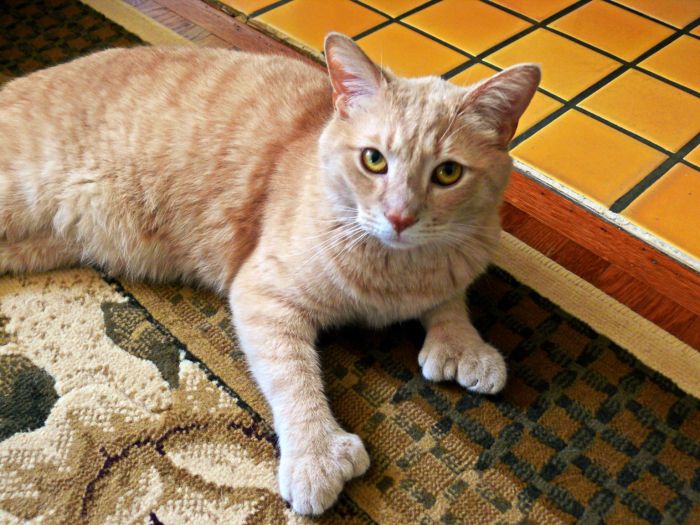
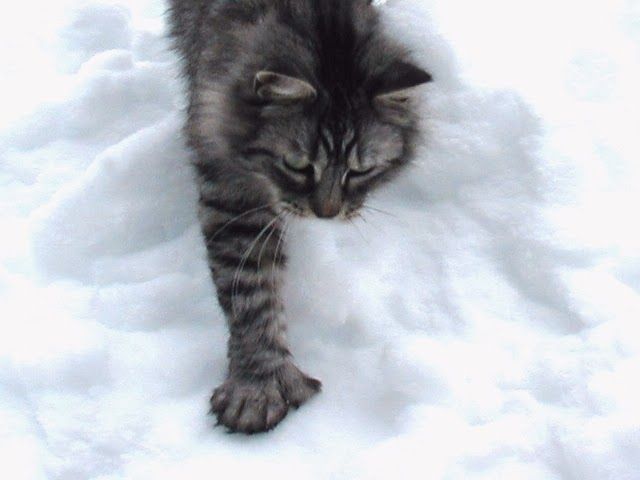
Cats that have multiple toes that aren't "mitten paws" just appear to have big feet, which are called "snowshoe paws" or "pancake feet." They might remind you of the Canada lynx, which normally has extra large paws (even without extra toes) which enables them to travel on top of snow.
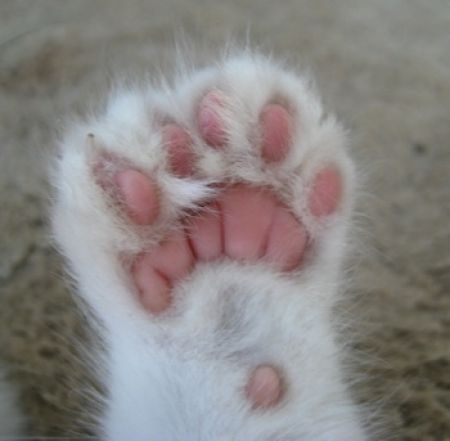
Polydactyls are also known as Hemingway cats
When a ship captain gave a white polydactyl cat named Snowball to writer Ernest Hemingway, the captain kicked off a pretty fantastic obsession for one of history's most prolific cat guys. At Hemingway's island home off Key West, FL, he collected more than 50 cats, almost half of whom had extra toes. Thanks to his obsession, today polydactyls are frequently called "Hemingway cats."
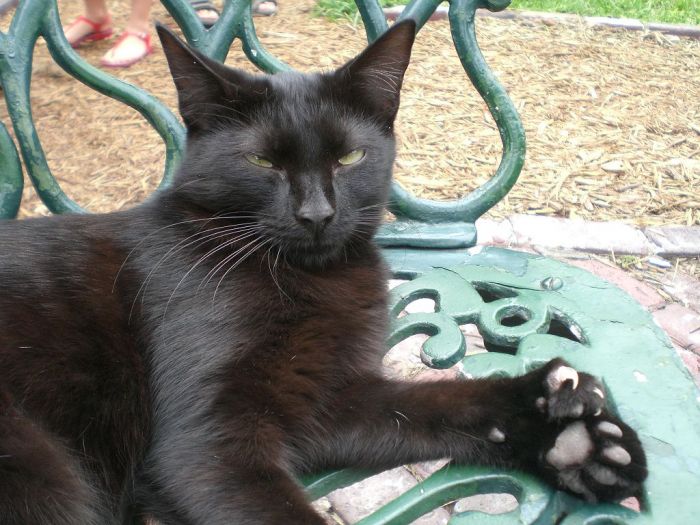
Ernest Hemingway Home and Museum
The Ernest Hemingway Home and Museum is home to approximately 40-50 polydactyl (six-toed) cats. Cats normally have five front toes and four back toes. About half of the cats at the museum have the physical polydactyl trait but they all carry the polydactyl gene in their DNA, which means that the ones that have 4 and 5 toes can still mother or father six-toed kittens. Most cats have extra toes on their front feet and sometimes on their back feet as well. Sometimes it looks as if they are wearing mittens because they appear to have a thumb on their paw.
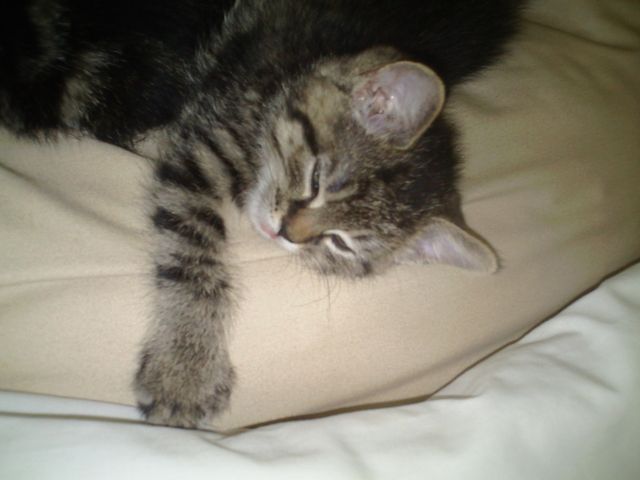
Hemingway Cats
At least some of those cats here are descendents of Hemingway's first cat, and are given fanciful names, as he once did, after movie stars and even characters in his book. The cats of the Hemingway Museum are so popular and so well-known, that the nickname "Hemingway Cats" has often been given to polydactyls.
Polydactyly is common in Maine Coons
Historically, polydactyly was a useful trait for Maine Coon cats. For a breed originating in snowy Maine, doublewide paws with extra digits functioned as natural snowshoes. At one time, as many as 40 percent of all Maine Coons had extra toes. Though the trait is no longer as predominant in the breed, Maine Coon polydactyls are still recognized as an official breed by many cat fanciers.
Polydactyl cats were once considered good luck at sea
Back in the day, polydactyl cats got their sea legs by accompanying fishermen on many journeys. And they earned their keep they were rumored to be excellent mouse hunters, and their extra toes gave them better balance on ships that encountered rough waters. The cats' many travels might explain their widespread presence today, predominantly in the United States, Canada, England, and Wales.
The first scientific record of polydactyls is from 1868.
They were mostly found in the northwestern United States and Nova Scotia. One theory is that the first mitten kittens were brought to America by English Puritans in the 1600s.
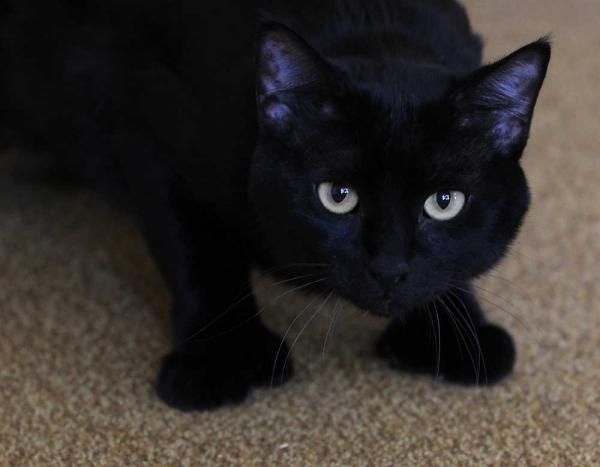
President Theodore Roosevelt’s poly kitty Slippers was one of the first cats to purr around the White House.
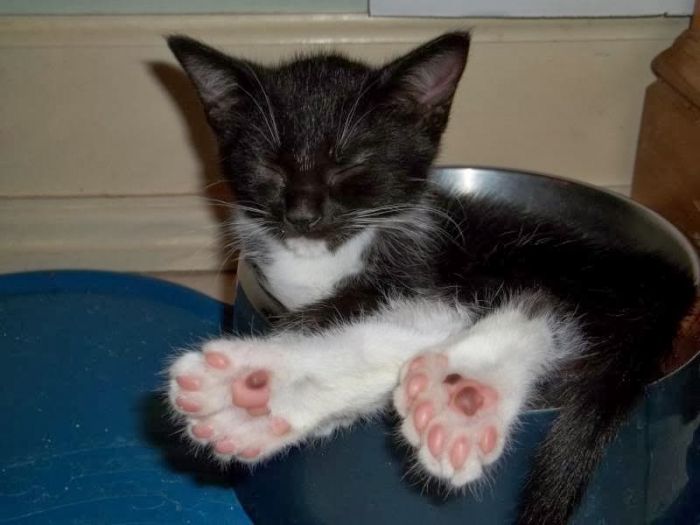
"Thumb Cat"
The term "thumb cat" comes from the form of polydactuly where it really looks like a cat has a thumb. For this to be the case, the toe needs to have both a terminal pad and paw pad (like the fingertip and the ball of thumb of humans). This thumb sticks out at an angle, and can be wiggled separately.