Rare Aging Condition : The Newborn Who Looks Like An 80-year-old
By
Editorial Staff in
Bizarre
On 28th September 2016
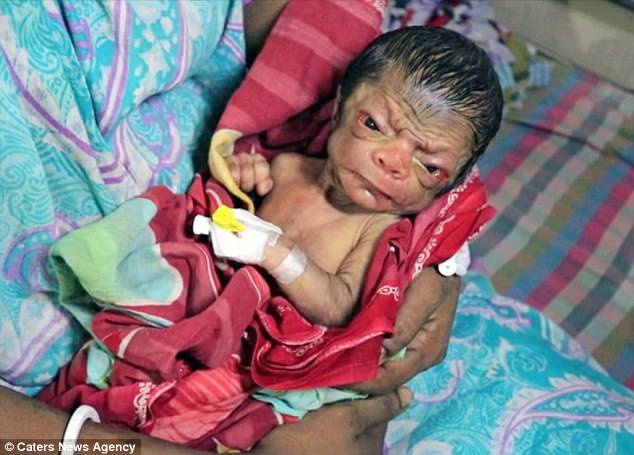
A baby boy who looks like an 80-year-old man actually has a rare condition which causes him to age quickly.
Born in Magura, Bangladesh, he has wrinkles, hollow eyes, a shrunken body and a thick layer of hair on his back.
Local doctors were left stunned as to what the cause of his ageing is - but they believe he has progeria.
#1 Born in Magura, Bangladesh, the baby boy has wrinkles, hollow eyes, a shrunken body and a thick layer of hair on his back
The condition - which affects just one in four million - often restricts children from having a normal life and causes their body to age faster than it should.
A doctor, who had been treating him, said: 'The baby does not look like a new born at all.
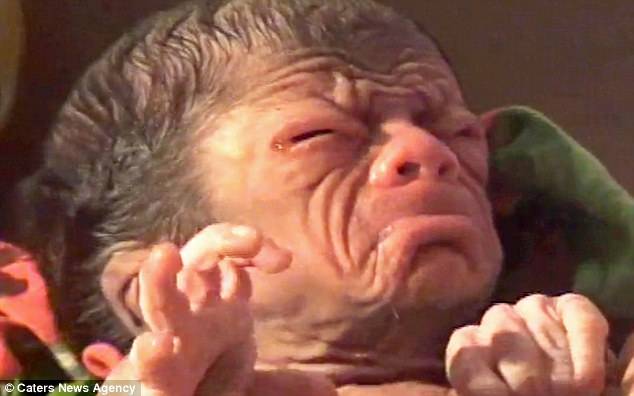
'There are prominent sings of ageing such a excessive wrinkles and rough skin texture.'
#2 Local doctors have been left stunned as to what the cause of his ageing is - but they believe he has progeria
But his parents are over the moon with the birth of their 'miracle' child and can't hold back their happiness.
Father Biswajit Patro said: 'We can only thank God. There is no need to be unhappy about the appearance of my son.
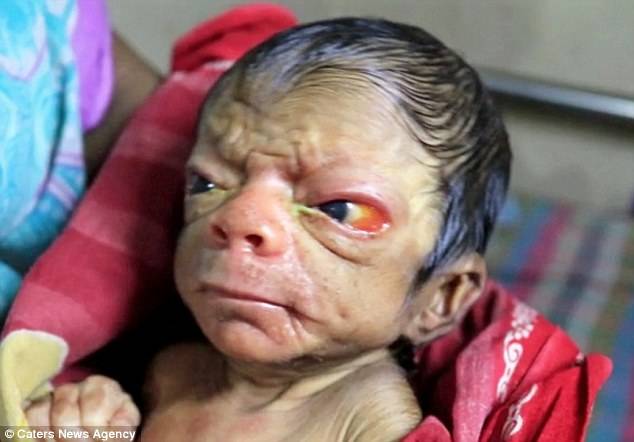
#3
Also known as Hutchinson-Gilford progeria syndrome (HGPS), the condition affects just one in four million and often restricts children from having a normal life
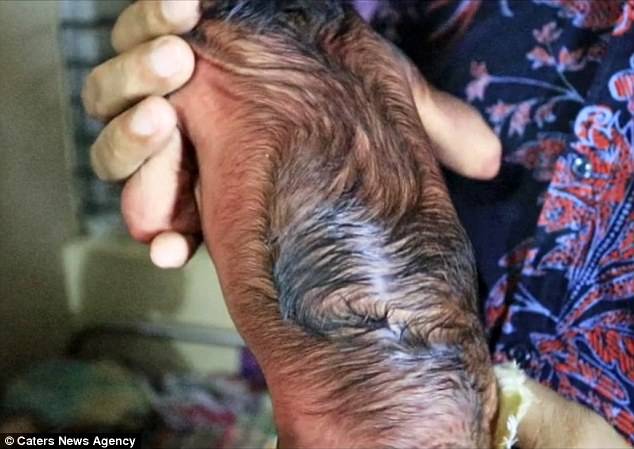
#4 The hair on his back (Pictured)
His family remain positive he will grow up healthily despite most children with the condition not living past the age of 13.
'We will accept him the way he is. We are so happy to have a baby boy in the house.
'We are already blessed to have to have a daughter. Now we are a family of four. What else can we ask for.'
Mr Patro and his wife, Parul, have had many curious people visit their home in a quest to catch a glimpse of their son.
The doctors at the local hospital have assured the family the baby will do well for now.
His family remain positive he will grow up healthily despite most children with the condition not living past the age of 13.
Progeria, also known as Hutchinson-Gilford progeria syndrome (HGPS), is caused by a single mistake in a gene which causes it to make an abnormal protein.
When cells use the protein - called progerin - they break down more easily.
Progerin builds up in many cells of children with progeria, causing them to age more quickly.
However, doctors remain uncertain what measures can be taken to treat the boy and help him with the condition as he grows older.