


A remarkable discovery was made 4,000 feet beneath the Gulf of Aqaba, offering insight into the origins of life.
advertisement
In the very waters where Moses is believed to have 'parted the Red Sea,' scientists have stumbled upon an extraordinary deep-sea phenomenon that could provide deeper insight into how life first began on Earth.
Stretching across four countries—Egypt, Israel, Jordan, and Saudi Arabia—the Gulf of Aqaba is a striking body of water that extends 98 miles in length and varies between seven and 14 miles in width, as reported by the US Naval Institute.
However, this gulf isn’t just known for its geographical significance. Many believe it holds historical and religious importance, as biblical accounts describe it as the location where Moses led the Israelites to safety by miraculously parting the sea. According to the Institute of Biblical Archaeology, Mount Sinai, the sacred mountain where Moses is said to have received divine guidance, is located just beyond the Sinai Peninsula, which borders the Gulf of Aqaba.
While this location has long been associated with legend, it has now captured the attention of scientists for a very different reason. Researchers exploring the ocean floor at a depth of 4,000 feet have identified what they call 'death pools'—brine-filled pockets that could offer groundbreaking insights into the formation of life.
Sam Purkis, a professor and chair of the Department of Marine Geosciences at the University of Miami, explained the significance of the discovery in an interview with Live Science in 2022: "Our current understanding is that life originated on Earth in the deep sea, almost certainly in anoxic — without oxygen — conditions."
"Deep-sea brine pools are a great analog for the early Earth and, despite being devoid of oxygen and hypersaline, are teeming with a rich community of so-called 'extremophile' microbes."
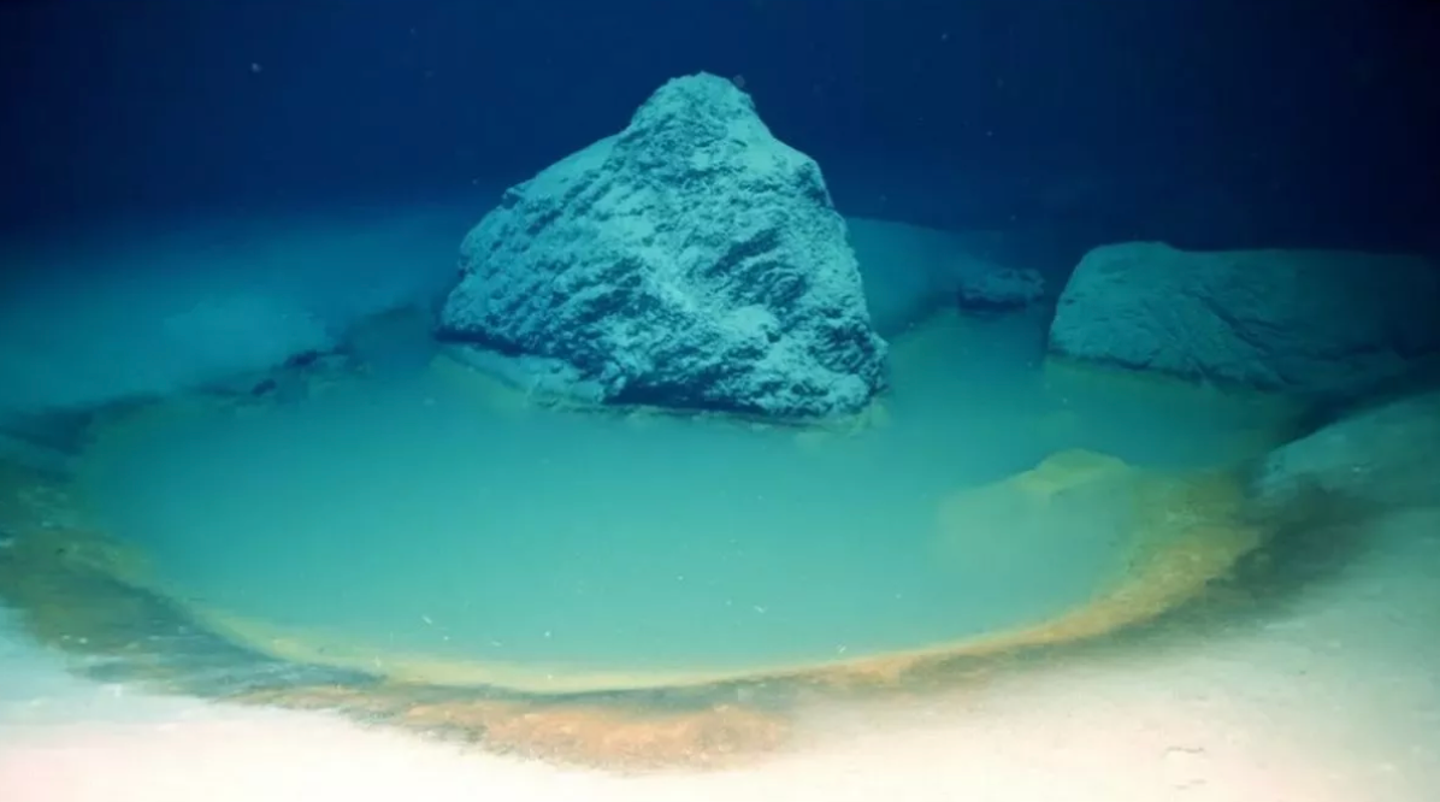
Brine pools were discovered at the bottom of the Red Sea
OceanX
advertisement
"Studying this community hence allows a glimpse into the sort of conditions where life first appeared on our planet, and might guide the search for life on other 'water worlds' in our solar system and beyond."
He elaborated further, explaining another fascinating aspect of these pools: "Molecules with antibacterial and anticancer properties have previously been isolated from deep-sea microbes living in brine pools."
But what makes this discovery particularly exciting?
Scientists have only identified a few dozen deep-sea brine pools across the world. Even more remarkably, these unique ecosystems have only been found in three major bodies of water—the Gulf of Mexico, the Mediterranean Sea, and the Red Sea.
The newly identified pools, known as the 'NEOM Brine Pools,' represent an important expansion of the known locations where these formations exist. According to researchers, they help extend our understanding of Red Sea brine pools and provide a rare opportunity to study sedimentary records that reveal past climatic and tectonic events.
Adding to their intrigue, previous brine pool discoveries in the Red Sea have been found at least 15.5 miles offshore, making their latest discovery all the more remarkable.
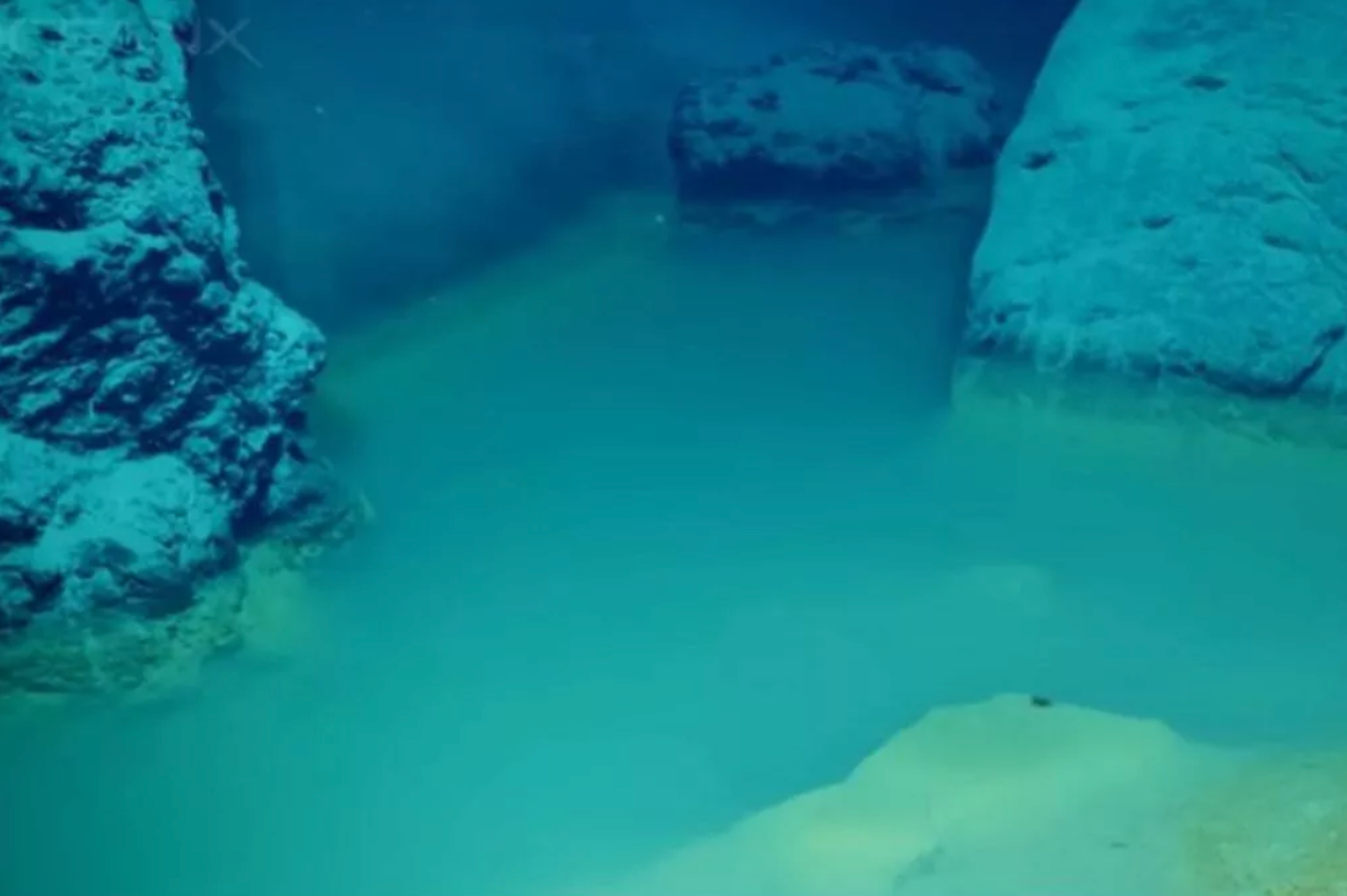
The brine pools are a rare find
OceanX
advertisement
The pools found in the Gulf of Aqaba, however, are astonishingly close to land—just 1.25 miles from shore.
Purkis further explained: "At this great depth, there is ordinarily not much life on the seabed. However, the brine pools are a rich oasis of life. Thick carpets of microbes support a diverse suite of animals."
The research team also observed fascinating behaviors among marine creatures in this harsh environment. According to Purkis, species such as fish, shrimp, and eels appear to take advantage of the brine pools when hunting.
advertisement
"Any animal that strays into the brine is immediately stunned or killed," he continued, highlighting the unique conditions of these extreme habitats. "Ordinarily, these animals bioturbate or churn up the seabed, disturbing the sediments that accumulate there."
"Not so with the brine pools. Here, any sedimentary layers that settle to the bed of the brine pool remain exquisitely intact."
According to researchers, studying these brine pools might offer more than just historical insights. They could serve as analogs for the 'water worlds' in our solar system, helping scientists reconstruct the ecosystems that existed millions of years ago and guiding the search for extraterrestrial life.