

The captivating moment where you see the crab push itself out of its outer shell, also known as its exoskeleton, was filmed in Galloway. Crabs have a hard outer shell that doesn’t grow, meaning the animals can’t grow like other creatures.
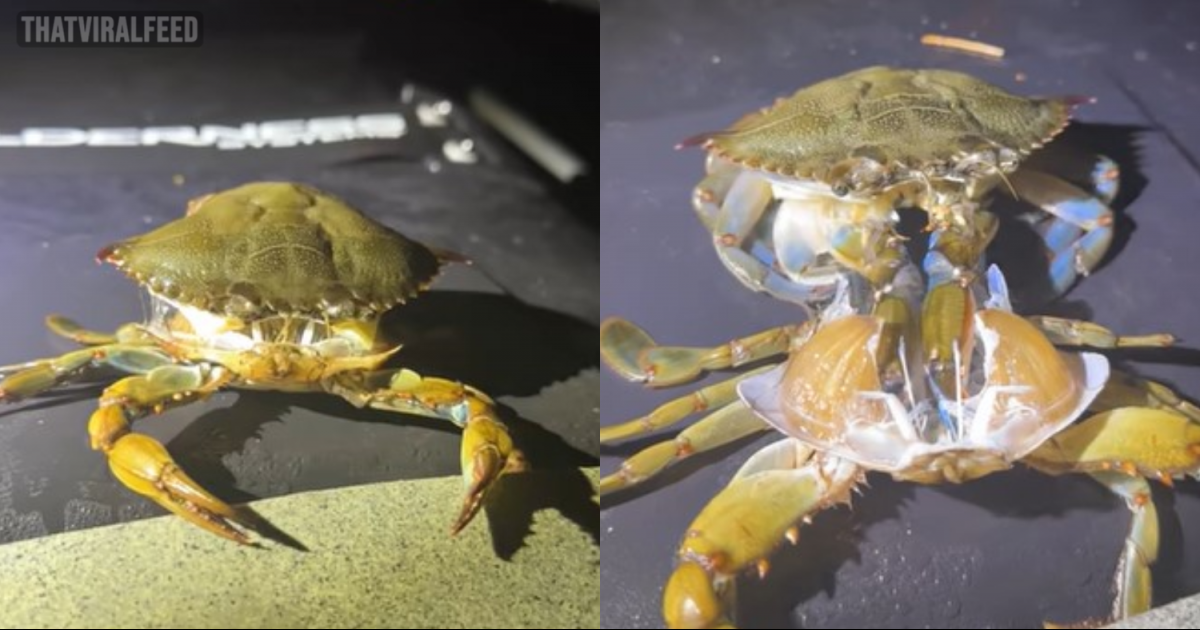
Remarkably Rare Sight Of Crab Shedding It's Shell Caught On Camera
By
Khadija Pervez in
Interesting
On 24th November 2023
advertisement
In a remarkably rare video, a crab has been captured shedding its shell.
Today, I discovered that crabs molt their shells in a manner reminiscent of snakes shedding their skins.
Youtube/ViralHog
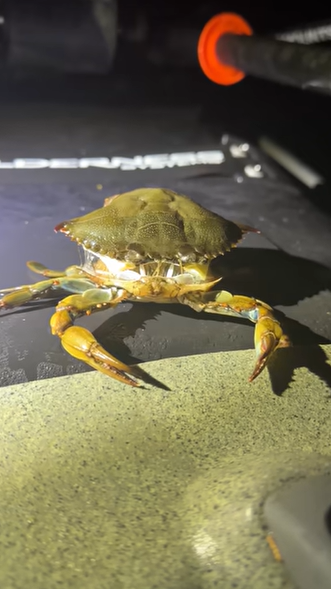
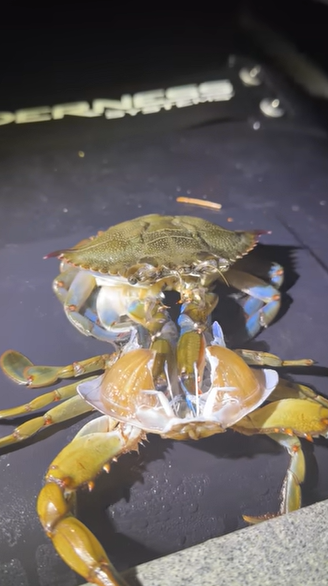
Observing the surreal process of a crab shedding its shell can only be described as a unique and fascinating experience.
The captivating moment when a crab maneuvers itself out of its external shell, also known as its exoskeleton, was captured on film in Galloway, New Jersey, USA.
advertisement
Youtube/ViralHog
During the intricate process of shedding its outer shell, the crab seemingly discards essential parts such as its legs, eye stalks, antennae, mouth parts, and gills – essentially, crucial components for a crustacean's survival.
Interestingly, the crab also leaves behind in its discarded shell its oesophagus, stomach lining, and the final half-inch of its intestine.
The question arises: why would a crab willingly subject itself to such a demanding and seemingly exhaustive molting process?
advertisement
One rationale behind this behavior is that a crab's exoskeleton doesn't expand as the crab grows, compelling it to shed the old shell through a process called 'molting,' analogous to how humans eventually outgrow their clothes.
advertisement
Following the molting process, a crab's freshly exposed shell is initially quite soft, gradually solidifying over the course of a few days. According to the National Oceanic and Atmospheric Administration (NOAA), it takes approximately a month for the shell to attain a state of being 'very hard.'
advertisement
The NOAA's website adds: "Besides allowing the crab to grow, molting helps to get rid of parasites, barnacles, and other animals growing on the shell."
"It also helps to get rid of shells damaged by bacteria that degrade the chitin in the exoskeleton."
advertisement
Remarkably, crabs that have lost a leg for various reasons have the ability to regenerate the limb over time, and this regrowth can occur in conjunction with the molting process.
Before shedding its old shell, crabs are reported to 'reabsorb some of the calcium carbonate from the old exoskeleton.'
advertisement
Subsequently, the crab produces and releases enzymes to facilitate the separation of the old shell from the underlying skin.
Given the discomfort associated with molting, it is understandable that larger crabs may undergo this process only about once a year.
advertisement
Adding to the rarity of the event, what makes the video particularly surreal is that crabs typically seek the safety of sand burrows to initiate the molting process.
However, in this instance, the crustacean opted to molt on the surface, seemingly on what appears to be a boat, providing the observer with a truly extraordinary and one-of-a-kind spectacle.