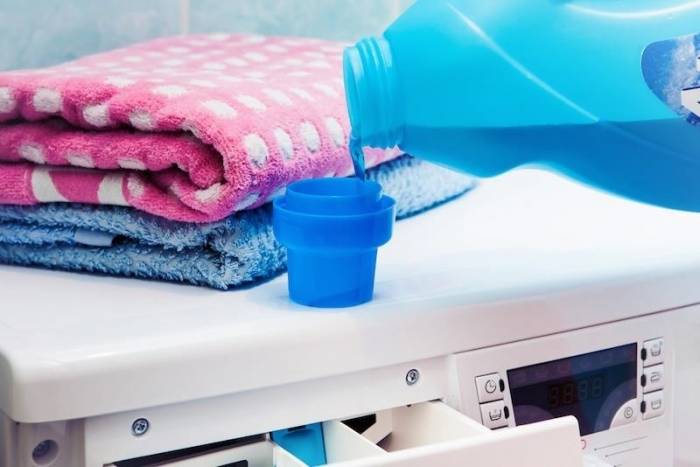
We recently reported that you should probably wash your bath towel after every three to four uses – something that the majority of us fail to do (come on, admit it).

Research Has Discovered Exactly How Dirty Your Towel Is And It's Disgusting
By
Editorial Staff in
Facts
On 23rd September 2017
advertisement
#1 That musty smell isn’t your imagination — because bath towels are extra-thick, they lock in moisture and harbor odors more quickly.
Do bath towels really ever get dirty? Most towels are made of 100 percent cotton. While it’s true that after a shower you have eliminated most of the germs and dirt from your skin, the process of rubbing a towel against the body rubs off dead skin that sticks to the moist towel. Towels become an ideal nesting place for the mildew endemic to humid bathrooms.
#2
The moment you use it, it becomes a breeding ground of bacteria; fungi; dead skin cells; salivary, anal, and urinary secretions; and many other germs lingering in your bathroom that may have hopped onto your towel — including droplets from your toilet.
advertisement
#3
But if anything's going to convince you to wash your towel more frequently, it's this. Because the true extent of just how dirty unwashed towels can get is starting to come to light, with new research revealing that the vast majority of towels are contaminated with potentially disease-causing bacteria.

#4
'Scuse me while I vomit at the thought of the thing I use to dry myself once clean actually being full of germs.
Dr Charles Gerba, a microbiologist at the University of Arizona, is currently working on an as-yet-unpublished study in which he found that nearly 90% of bathroom towels were contaminated with coliform bacteria (organisms that can indicate the presence of disease-causing bacteria in water), while roughly 14% carried E. Coli. In some instances, he has even found traces of salmonella. Ugh. Speaking to Time, he said:
"After about two days, if you dry your face on a hand towel, you're probably getting more E. coli on your face than if you stuck your head in a toilet and flushed it."
advertisement
#5
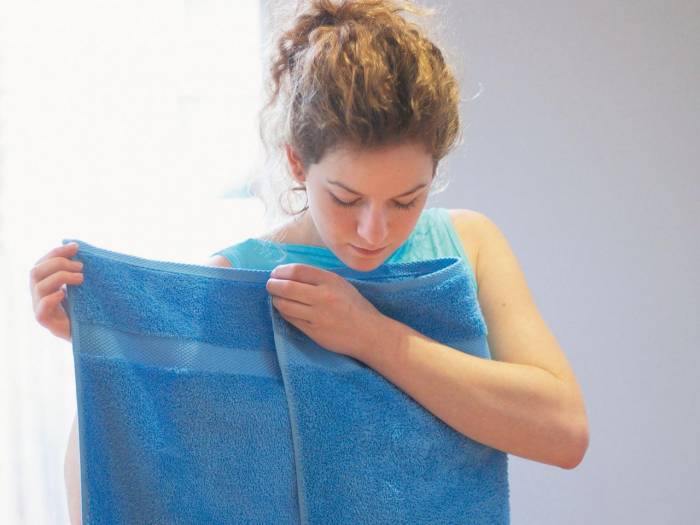
So how many times can you use your towel before concentrations of your own flora get so out of hand that you need to wash it? "If you can dry it completely, no more than three times max," Philip Tierno, a microbiologist and pathologist at the New York University School of Medicine, told Tech Insider.
And this is assuming you're hanging it somewhere dry so it can completely air out. "A damp towel is growing," Tierno said. "If there is odor coming from the towel, wherever there is odor, there are microbes growing, so it should be washed.'
advertisement
#6
The real risk comes when someone using a towel has open cuts, abrasions or very dry skin, as this can let microbes into your system.
So, the bottom line? Although kitchen and bathroom towels will never be 100% germ-free, the best way to reduce any potential health risks is to stick to a regular washing routine and to keep towels as dry as possible between uses.
advertisement
#7
When you wash them, use vinegar in place of fabric softener, says laundry expert Mary Marlowe Leverette. “Fabric softener residue traps odors,” she explains. “The vinegar strips it away.” (As a general rule, skipping the softener also keeps most towels absorbent).
Leverette recommends running your bath towels through the washing machine as normal, but with no soap and just one cup of vinegar. Then, wash again with regular detergent. Mary Gagliardi — aka Clorox’s “Dr. Laundry” expert — says to give them a “second rinse,” if your washer has that option. Dry immediately to prevent mustiness.
You may be accustomed to using your bath towels for weeks between washes (not that we, ahem, do that), but the experts we spoke with advise washing them after about every three uses. If you’re sick, it’s important to disinfect towels with chlorine bleach (if they’re white) or disinfectants like Lysol that contain phenolics (if the towels aren’t white), says Leverette.