

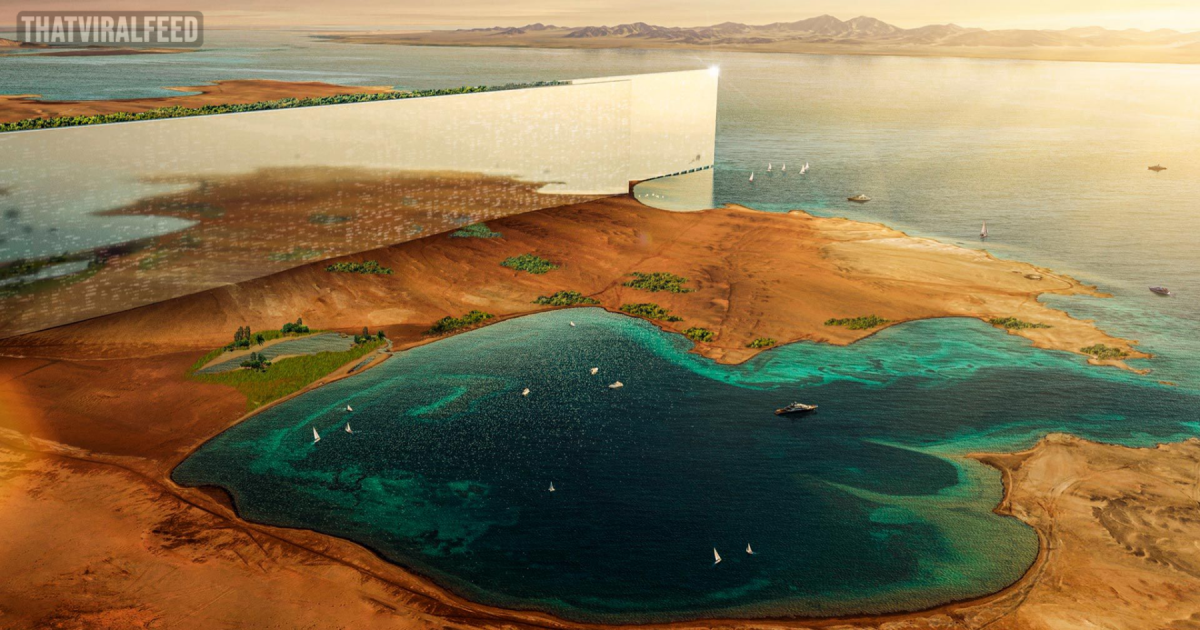
Developers in Saudi Arabia previously had very different goals in mind for 203.
advertisement
Saudi Arabia's mega project dubbed 'The Line' is dialing things down quite a bit from its original grand plan to stretch across 105 miles.
Part of the ambitious $1.5 trillion Neom urban project in Tabuk, The Line was first introduced as a futuristic cognitive city.
It boasted a 'mirrored architectural masterpiece' design intended to extend over 170 kilometers, or 105 miles.
The Neom website continues to describe the city as stretching 'from the epic mountains of Neom across inspirational desert valleys to the beautiful Red Sea'.

A vision of The Line.
Neom
However, recent reports are indicating a shift in the pace of its development.
advertisement
Bloomberg has shared insights from those in the know, revealing that the Saudi Arabian government had aspirations of housing 1.5 million residents in The Line by the year 2030.
"THE LINE will eventually accommodate 9 million people and will be built on a footprint of just 34 square kilometers," claims the Neom website.
It also promises 'never-before-seen efficiencies', an 'ideal climate all-year-round', and convenient access to daily necessities within a five-minute walk.
Yet, it now seems that officials are adjusting their expectations.
advertisement
They predict the city will house fewer than 300,000 residents by 2030, with only 2.4 kilometers (1.4 miles) of the project completed by then.
This adjustment in plans has led to at least one contractor reducing its workforce on the project.
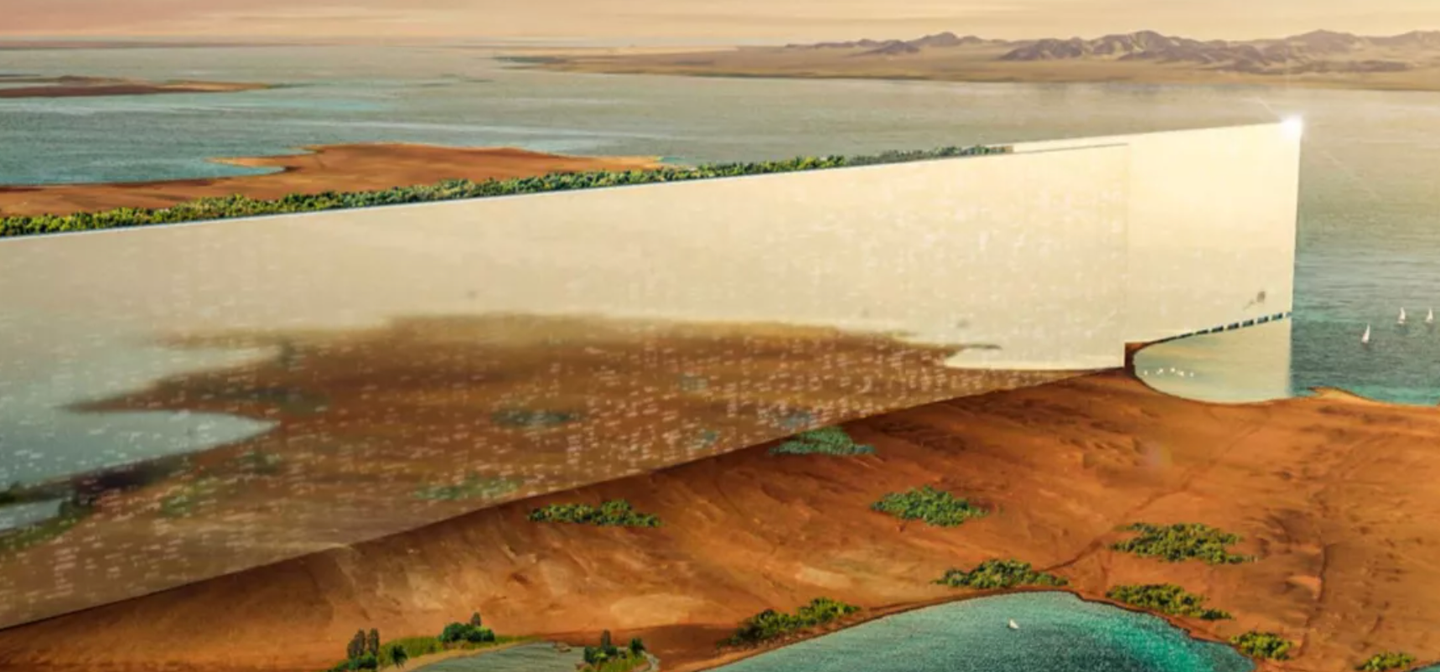
The Line is set to be made of mirrored material.
Neom
Despite the slowdown in The Line's progress, the work on other sections of the Neom project continues.
advertisement
Sources indicate that officials are still committed to the overarching goals for The Line.
This news of scaling back comes at a time when the government is waiting for this year's budget approval for Neom.
advertisement
It suggests there's a level of concern within the government about reaching the goals of its Vision 2030 program.
There's an acknowledgment from officials that certain delays beyond the 2030 target are to be expected.
advertisement
Finance Minister Mohammed Al Jadaan mentioned in December that more time would be needed to 'build even sufficient human resources'.
"The delay or rather the extension of some projects will serve the economy," he commented.
advertisement
Nadhmi Al-Nasr, CEO of Neom, remains optimistic about overcoming the challenges that lie ahead.
"If we are to solve the challenges of tomorrow, we must face up to them today, no matter how difficult they may seem," he stated.
advertisement
"At Neom, we are tackling some of humanity's biggest challenges by gathering a community of brilliant minds to rethink what a sustainable future could look like in 20 to 30 years, and we're creating it now."
"We are not just envisioning the future; we are creating it today. NEOM is open for business."