Science-Based Ways Of Predicting What Your Future Kid Will Look Like.
By
Sughra Hafeez in
Amazing
On 26th January 2017
Expectant parents love to guess what their future child will look like. Whose eye, hair color will the baby take after? Every feature from the nose to the toes is dreamed about. Science is trying to determine and predict so anxious moms and dads can know in advance.
Although it cannot verify with 100 percent accuracy, there are guides that can give you a small glimpse into the future traits and features of your offspring.
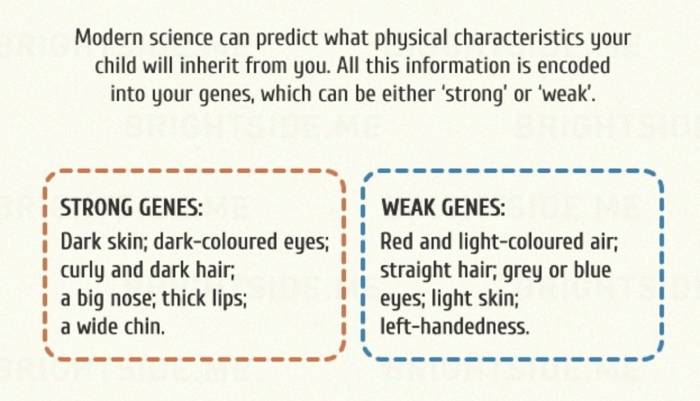
#1 Dominant vs. recessive genes
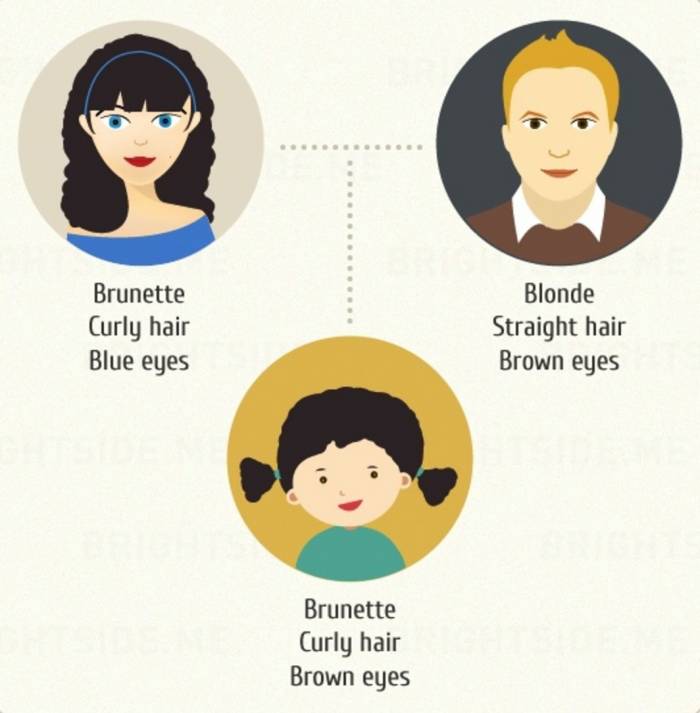
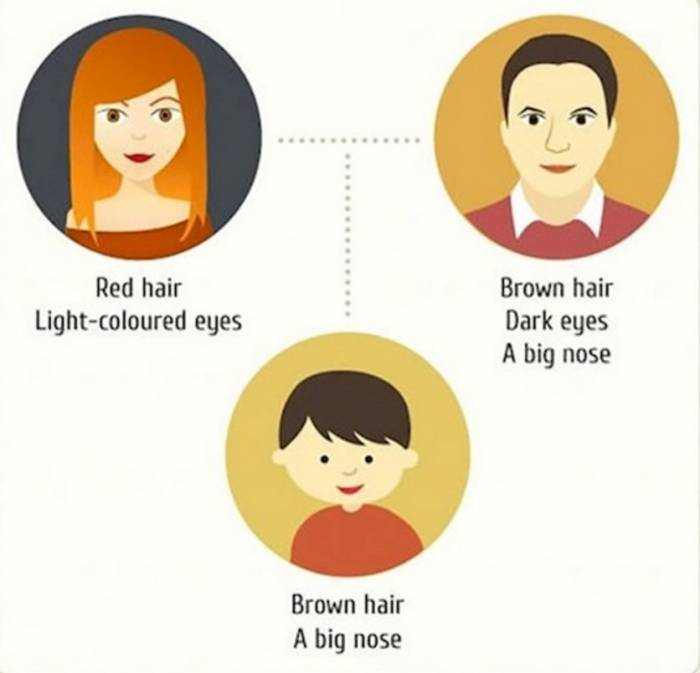
Dark eyes, hair, and skin are considered recessive genes. For example, if one of the parents has brown curly hair and the other has a straight blonde lock, the child is likely to be a brunette with curly hair. Nonetheless, even when both parents have light hair, dark genes come into existence.
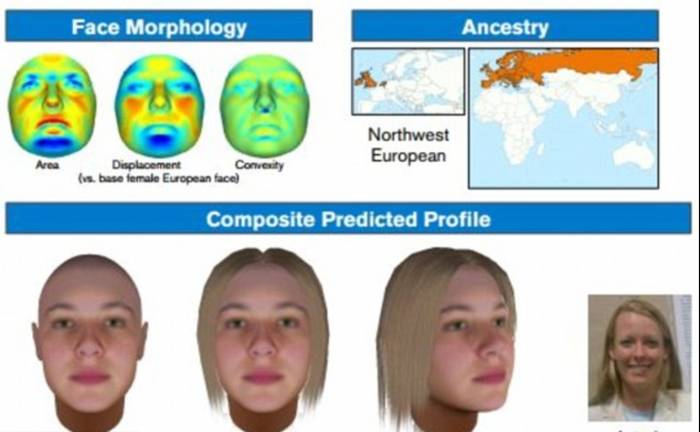
#2 The computerized image of the baby based on the parents’ DNA.
Scientists are working on a way to use strands of DNA and bone structure to predict what the child will look like based on ancestry.
#3 Compare both parents' features and take an educated guess.
Some features will overpower others but you can still be surprised when two parents with brown hair give birth to a blonde baby.
#4 Scientists say traits are complex and unpredictable.
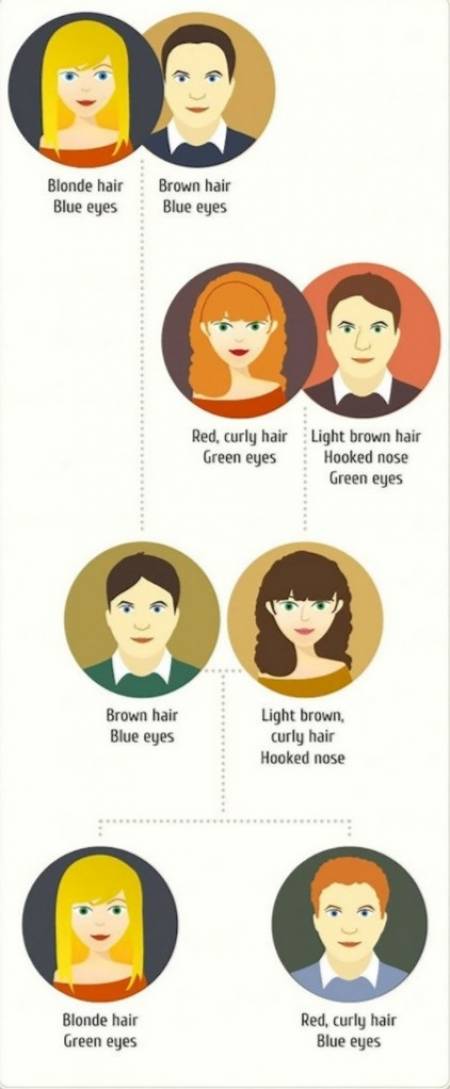
Genes can skip one or several generations.
#5 Just like recessive genes can skip generations, so can dominant ones.
"Most traits are actually determined by many genes working together, rather than a single gene," says Kate Garber, Ph.D., Director of Education in the Department of Human Genetics at Emory University School of Medicine, in Atlanta, Georgia.
#6 Some siblings from the same parents can even look totally different from each other.
One study found that families have similar expressions, though. When kids are happy, sad, surprised, or deep in thought, they tend to make the same face.
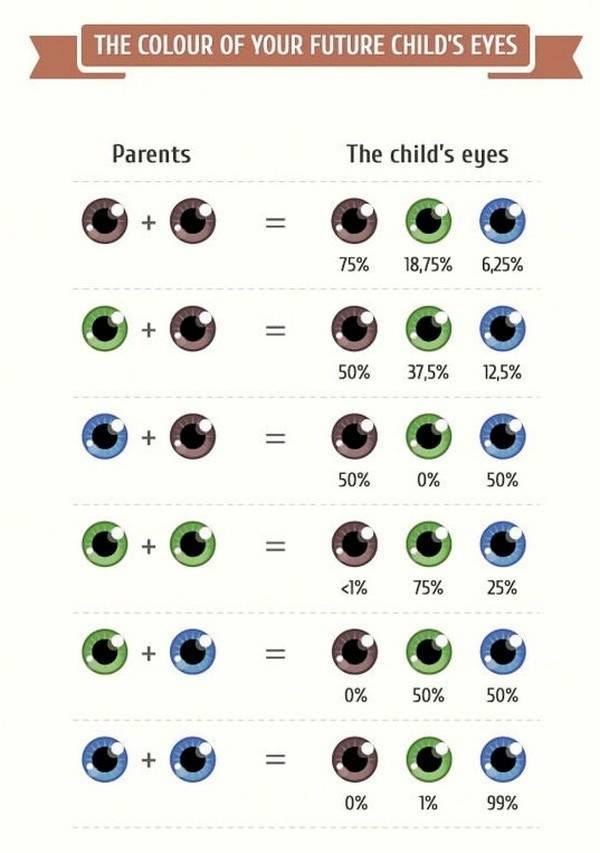
This chart, however, may explain how your kids got their eye color. A child is likely to have brown eyes if both the parents have brown eyes. However, surprisingly, even when both the parents have green eyes, the child is likely to have brown eyes because they are not dominant.