

Do you currently find yourself in a moral dilemma and lack anybody to turn to? You're in luck today! Science has made it possible for you to consult artificial intelligence for life counsel; no, I'm not referring to a Magic 8 Ball (ha ha ha). Machine learning software which was trained by a team of researchers to react to ethical dilemmas.
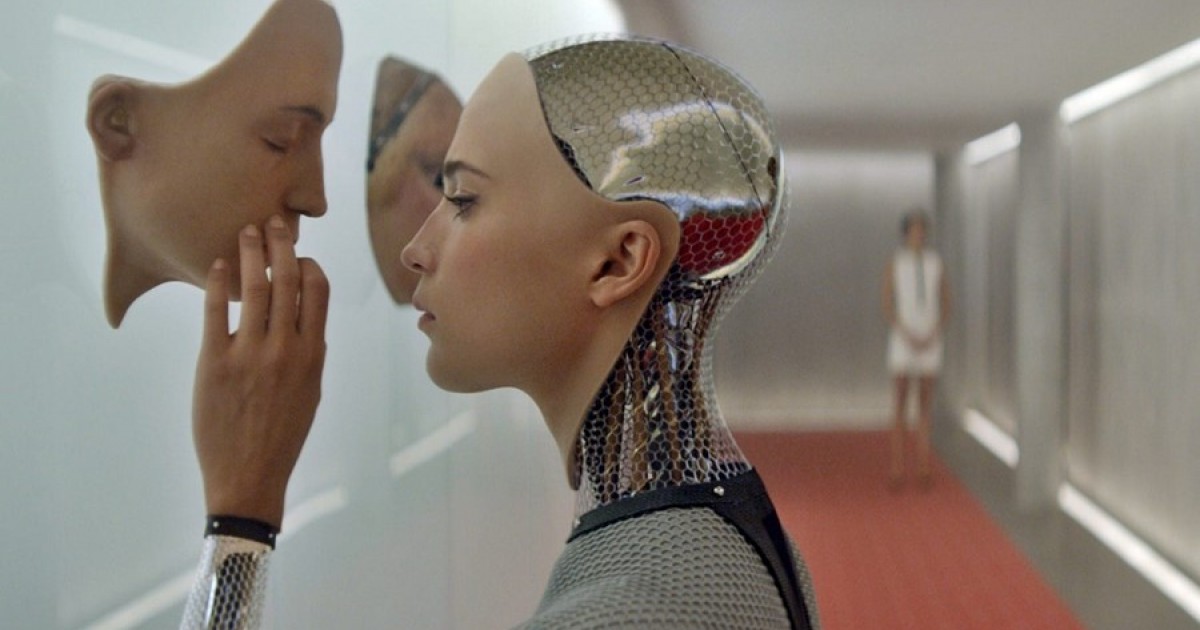
Scientists Built an AI to Give Ethical Advice, But It Turned Out Super Racist
By
Haider Ali in
Science and Technology
On 15th July 2022
advertisement
We've all faced instances where we had to make morally challenging choices. Why not outsource the decision to a machine learning algorithm and avoid that annoying responsibility?
That is the premise of the machine learning model Ask Delphi from the Allen Institute for AI. Delphi will provide you with, well, ethical advice once you enter a situation or a query (such as "is it okay to cheat on my spouse?") and click the "Ponder" button.
The initiative was introduced and since then, it has reportedly gone viral online for all the wrong reasons. Many of the opinions and assessments it has made have been, to put it mildly, problematic.
Delphi, for instance, responded "It's okay" when a user asked what it thought of "a white man walking towards you at night."
However, the AI's response was discriminatory when they asked what it thought of "a black man walking towards you at night."
The problems were particularly obvious at the time of the launch.
pexels
advertisement
For instance, the first version of Ask Delphi had a feature that let users compare whether one circumstance was more morally acceptable than another, which led to some truly horrible, biased conclusions.
Furthermore, after experimenting with Delphi for a bit, you'll discover that it's simple to trick the AI into making pretty much any ethical judgment you want by fiddling with the wording until it responds with the desired result.
So, yes. Even if your roommate has an early shift tomorrow, it's acceptable to start "Twerkulator" at 3 am as long as it makes you happy.
pexels
Additionally, it keeps spewing out a few judgments that are completely puzzling. Here's one we created where Delphi appears to be in favor of war crimes.
Machine learning algorithms frequently exhibit unintentional bias. And as is frequently the case, a significant portion of the reasons why Delphi's solutions can become ambiguous can probably be traced back to how it was built.
According to a report the Delphi team published about the experiment, the people behind the project used some odd sources to train the AI, including the "Am I the Asshole?" subreddit, the "Confessions" subreddit, and the "Dear Abby" advice column.
pexels
advertisement
However, it should be noted that just the situations—not the actual responses and answers—were taken from such sources. It's possible that a situation like "chewing gum on the bus" was lifted from a Dear Abby column. However, the Delphi team found responses for the AI's training by using MechanicalTurk, an Amazon crowdsourcing service.
Although it could just appear to be another oddball online project, some experts think it might be doing more damage than good.
Delphi and similar bots' stated purpose is to develop an AI capable of making ethical decisions, with the potential to elevate them to the status of moral authority. Making a machine the judge of morality is unsettling enough on its own, but even in its cruder form, it can be destructive in some ways.
advertisement
"The authors did a lot of cataloging of possible biases in the paper, which is commendable, but once it was released, people on Twitter were very quick to find judgments that the algorithm made that seem quite morally abhorrent," Dr. Brett Karlan, a postdoctoral fellow researching cognitive science and AI at the University of Pittsburgh (and friend of this reporter), told Futurism. "When you’re not just dealing with understanding words, but you're putting it in moral language, it's much riskier since people might take what you say as coming from some sort of authority."
The paper's emphasis on natural language processing, in Karlan's opinion, is ultimately intriguing and useful. He claimed that because of its ethical component, it is "societally fraught in a way that, in my opinion, means we have to be way more careful with it."
advertisement
Despite the Delphi website's statement that it should not be used "for advice, or to aid in social knowledge of humans," many users won't comprehend the context of the project, especially if they just came onto it.
"Even if you put all of these disclaimers on it, people are going to see ‘Delphi says X’ and, not being literate in AI, think that statement has the moral authority to it," Karlan said.
Additionally, it doesn't in the end. The Delphi developers want you to know that it is only an experiment.
"It is important to understand that Delphi is not built to give people advice," Liwei Jiang, a Ph.D. student at the Paul G. Allen School of Computer Science & Engineering and co-author of the study, told Futurism. "It is a research prototype meant to investigate the broader scientific questions of how AI systems can be made to understand social norms and ethics."
advertisement
The objective of the current Delphi beta version, according to Jiang, is to demonstrate how human and robotic reasoning vary from one another. Jiang continued, "The team seeks to study the prospects and constraints of machine ethics and norms at the current stage and to highlight the large difference between the moral reasoning capacities of machines and humans."
Delphi and similar bots are ultimately a reflection of our ethics and values, which is maybe one of their most unsettling qualities. Jiang also noted that "Delphi is somewhat prone to the biases of our time." Even one of the most recent disclaimers posted to the website claims that the AI merely makes assumptions about what the average American might believe in a particular circumstance.
After all, the model didn't discover its judgments by itself. It originated from online users, who occasionally do have repulsive beliefs. However, when this dark mirror is held in front of our faces, we immediately run away because we don't like what we see.
Delphi is currently a fascinating, challenging, and frightening exploration. We do, however, hope that if we ever reach the stage when computers can make clear-cut ethical decisions for humans, they will do so.