

Scientists discovery of an X-ray technique that will 'transform the world'

Scientists Capture World's First X-Ray Of A Single Atom In Groundbreaking Discovery
By
maks in
Science and Technology
On 25th April 2024
advertisement
For the first time ever, scientists have successfully used X-rays to study a single atom in detail.
If you've ever had a broken bone, you're probably familiar with X-rays.
You go through a machine that uses electromagnetic radiation to create images of your internal structures.
Similarly, you've probably encountered X-ray machines at airport security, where you have to empty your pockets before passing through.
While X-rays are great for these purposes, until recently, scientists hadn't been able to use them to study individual atoms.
Leading the charge was Professor Saw Wai Hla from Ohio University, who also works as a scientist at Argonne National Laboratory.

Until now, the smallest number of atoms X-rays could pick up was 10,000
Getty Images
The research, funded by the US Department of Energy’s Office of Basic Energy Sciences, aimed to detect a single atom using X-rays—a significant leap from the previous capability of detecting clusters of 10,000 atoms or more, according to a press release by Ohio University on Eurek Alert.
advertisement
So, why is detecting a single atom so crucial?
According to Hla, without the ability to observe single atoms with X-rays, we’re essentially blind to understanding what an atom is truly "made of."
He likens an X-ray of a single atom to a fingerprint, providing not just physical but also chemical insights about the atom.
Prior to this breakthrough, while atoms could be "routinely imaged with scanning probe microscopes," identifying the exact "type of a particular atom, one atom-at-a-time" along with its chemical state was beyond our reach.
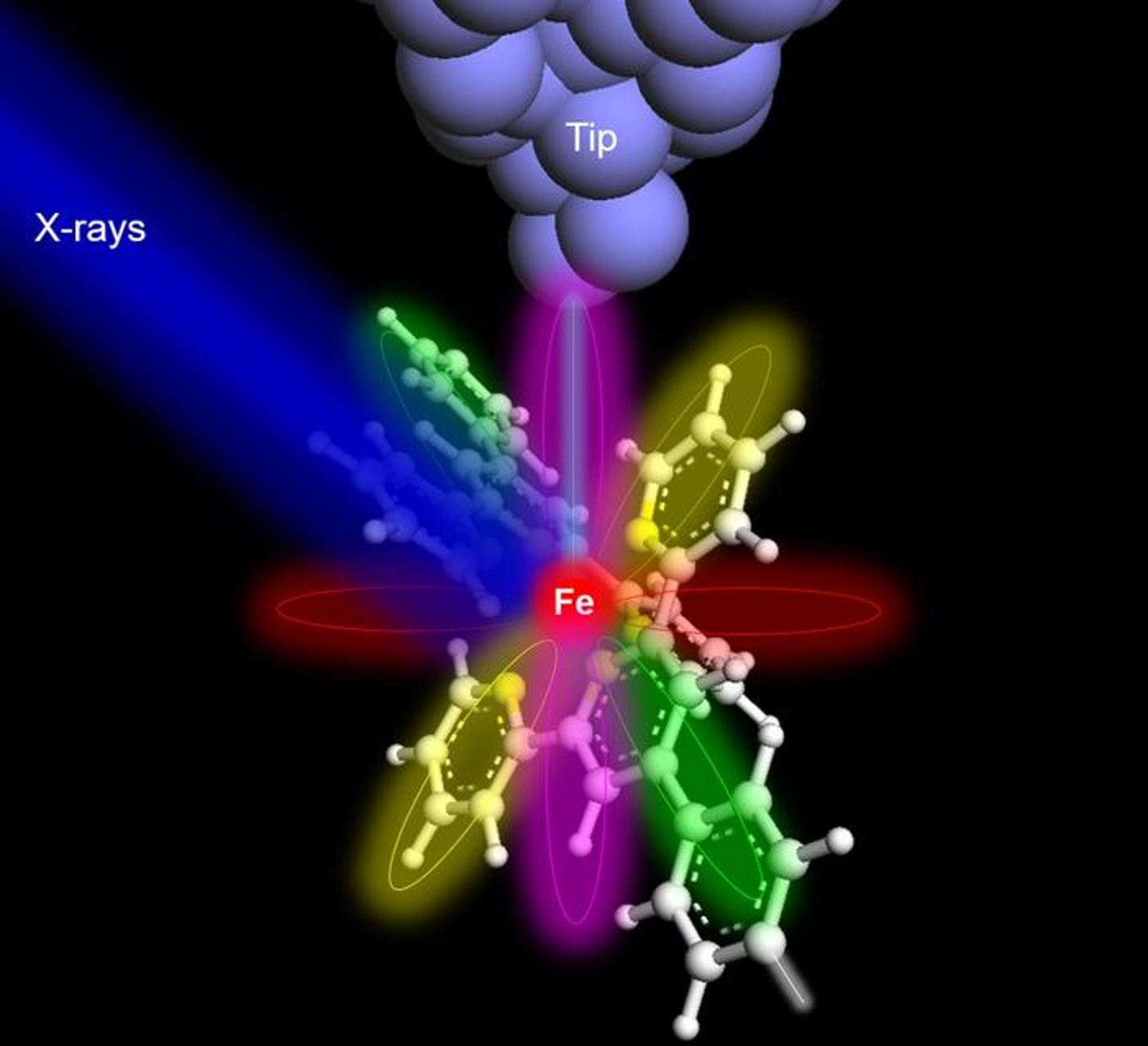
The technique the team used to successfully got an X-ray image of a singular atom
(Saw-Wai Hla/ Ohio University
advertisement
How did they achieve this?
The team used a specially designed synchrotron X-ray instrument at the Argonne National Laboratory's Center for Nanoscale Materials.
They experimented with individual iron and terbium atoms, placing each in "respective molecular hosts."
To pick up the X-ray signals from these single atoms, they enhanced "conventional detectors in X-rays with specialized detectors made of a sharp metal tip positioned extremely close to the sample to collect X-ray excited electrons."
advertisement
This method is known as synchrotron X-ray scanning tunneling microscopy (SX-STM), and according to Tolilope Michael Ajayi, the paper's first author, it represented a significant advance in both X-ray science and nanoscale studies.
The results? The team not only detected the unique X-ray signature of single atoms but also identified the chemical states of these atoms.
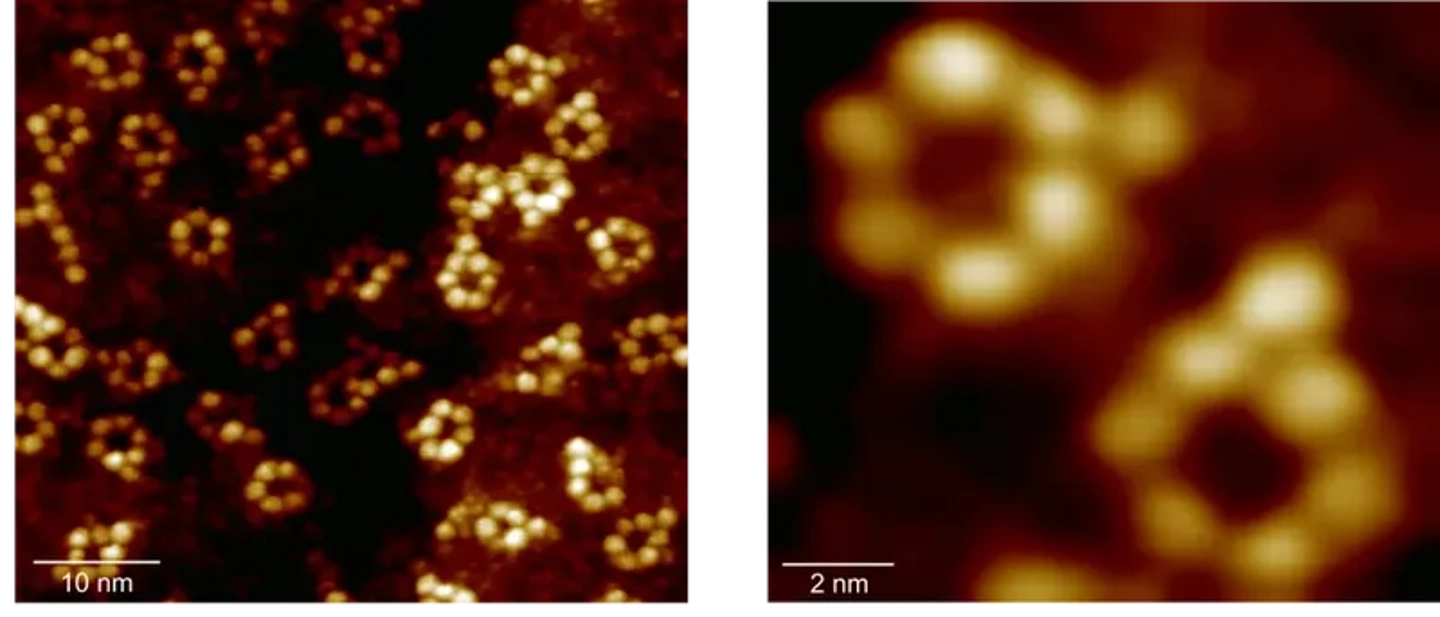
The X-ray technique revealed six rubidium atoms and an iron atom
Ajayi et al., Nature
They discovered that the terbium atom remains fairly isolated and stable, whereas the iron atom interacts intensely with its environment.
The research was documented in a paper published in Nature, titled "Characterization of just one atom using synchrotron rays."
advertisement
It highlights how this technique bridges synchrotron X-rays with quantum tunneling, paving the way for future experiments that can simultaneously analyze the elemental and chemical properties of materials at the single-atom level.
Hla shared his enthusiasm about the broader implications of this discovery: "Once we are able to do that, we can trace the materials down to the ultimate limit of just one atom.
"This will have a great impact on environmental and medical sciences and maybe even find a cure that can have a huge impact for humankind. This discovery will transform the world."