

Geologists have made significant discoveries about Earth, uncovering a time when it experienced relentless rainfall for millions of years.
advertisement
This unique period was crucial for spreading life throughout the planet.
Thinking back to the era of Pangea, which existed about 200 to 300 million years ago, the world was a single supercontinent comprising all the landmasses on Earth.
It was a drastically different environment from what we know today.
Scientists have even pinpointed a span during which it is believed there was continuous rainfall lasting from one to two million years.
advertisement
In their research during the 1970s and 80s, geologists came across some peculiar layers within ancient rocks dating back approximately 232 to 244 million years.
One team of researchers, working in the eastern Alps, delved into a layer consisting of siliciclastic sedimentation found within carbonate.
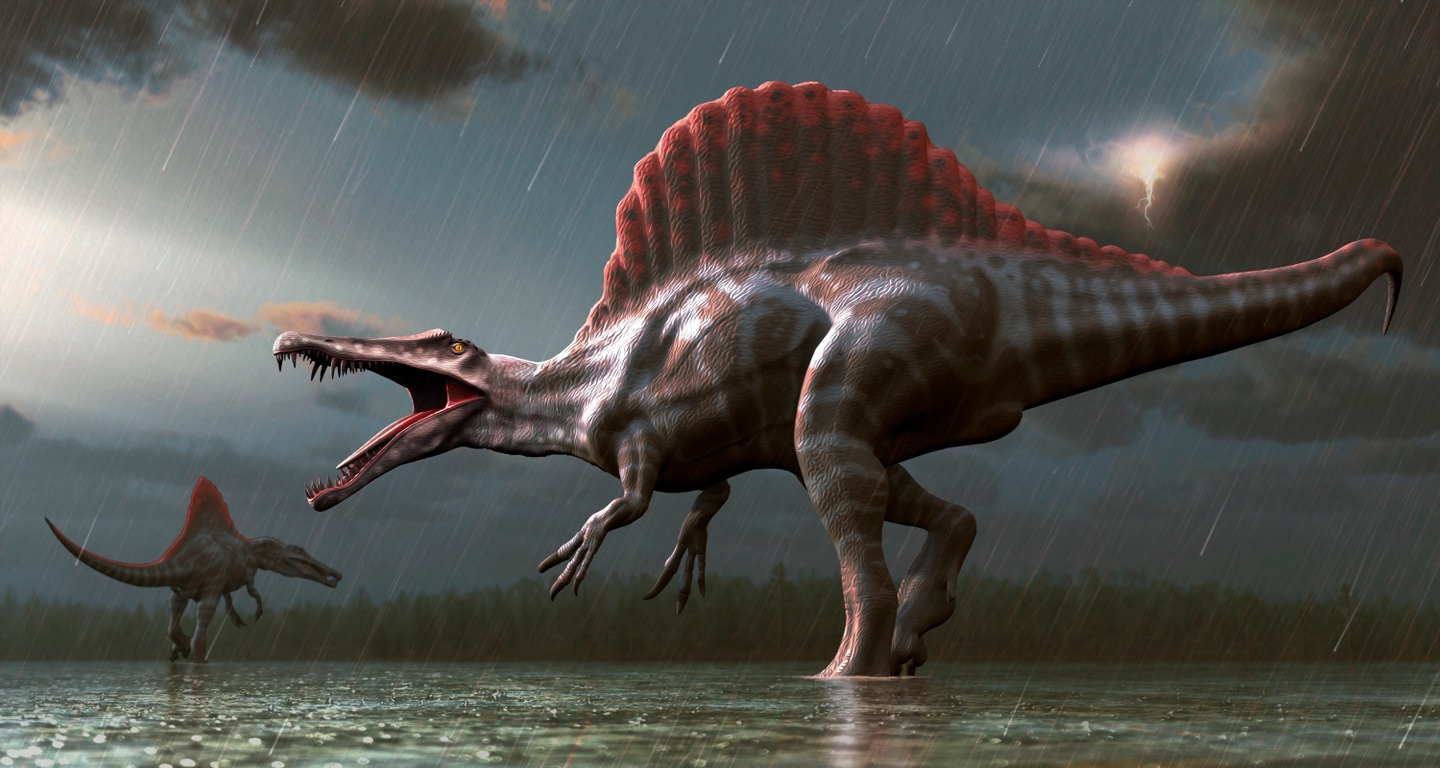
Scientists believe there was a time period where it rained for one million to two million years.
Credit: Getty Stock Image
Meanwhile, another group in the UK was examining a layer of gray rock nestled within the region's renowned red stone.
The findings from these investigations, along with other studies around the world, led to a consensus:
Earth experienced a significant dry period followed by an extended phase of rainfall.
advertisement
These discoveries allowed geologists to ascertain that the dawn of the dinosaur era was marked by an unusually moist period.
This epoch is now referred to as the Carnian Pluvial Event, sparking curiosity among scientists to delve deeper into the reasons behind such prolonged precipitation.
advertisement
The prevailing theory attributes this surge in rainfall to a dramatic increase in humidity, likely triggered by a massive volcanic eruption within the Wrangellia Large Igneous Province.
This event would have caused a rise in global temperatures, warming the oceans and increasing the amount of moisture in the atmosphere.
advertisement
A study featured in the Journal of the Geological Society highlighted how this wet period was incredibly beneficial for the dinosaurs that managed to survive.
It facilitated a diversification phase after a tumultuous era dominated by constant volcanic activity.
Geologists found there was an unusually wet period at the beginning of the age of the dinosaurs.
Credit: Getty Stock Image
The researchers elaborated: "In the wake of wide extinctions of plants and key herbivores on land, the dinosaurs were seemingly the main beneficiaries in the time of recovery, expanding rapidly in diversity, ecological impact (relative abundance) and regional distribution, from South America initially, to all continents."
advertisement
"It may have been one of the most important [rapid events] in the history of life in terms of its role in allowing not only the 'age of dinosaurs', but also the origins of most key clades that form the modern fauna of terrestrial tetrapods, namely the lissamphibians, turtles, crocodiles, lizards, and mammals."
advertisement
This period of extended rainfall not only paved the way for the "age of dinosaurs" but also set the stage for the evolution of most of the main groups that make up today's terrestrial animal life, marking a pivotal moment in the history of life on Earth.