

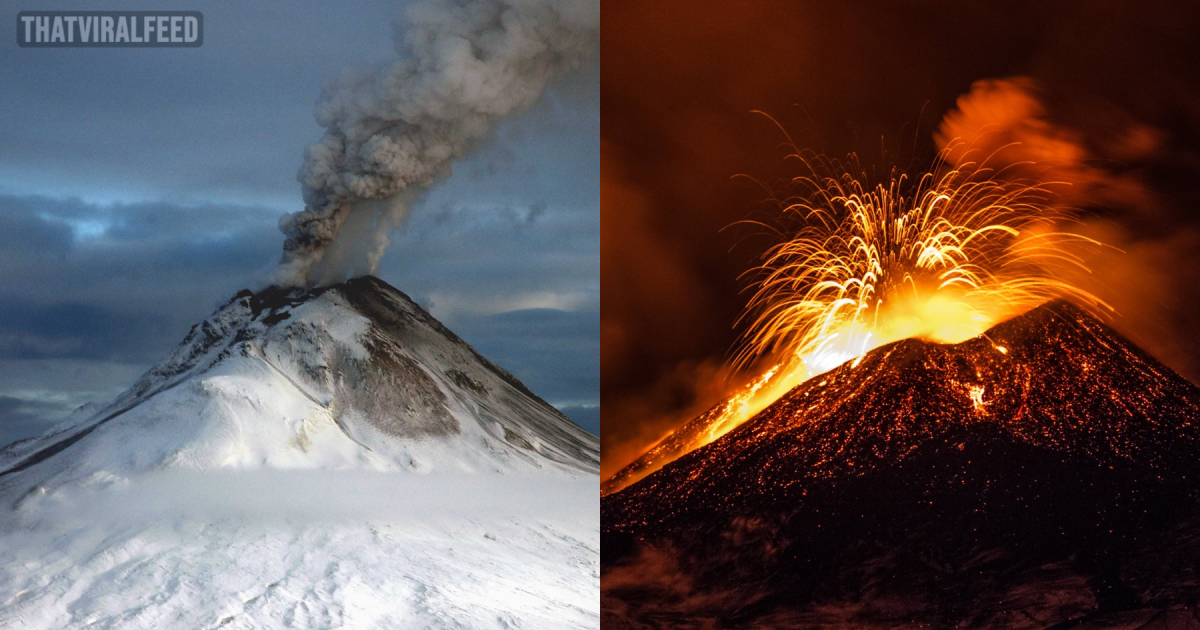
You might dream of money growing on trees, but what about gold spewing from a volcano?
advertisement
Who wouldn't wish that money could just grow on trees or even better, fall right from the sky, right?
Imagine venturing to the chilly expanse of Antarctica and coming close to the tallest active volcano on the continent.
There, the idea of money falling from the sky isn't too far from reality.
Back in 1991, American geologists made a groundbreaking discovery, as reported by New Scientist.
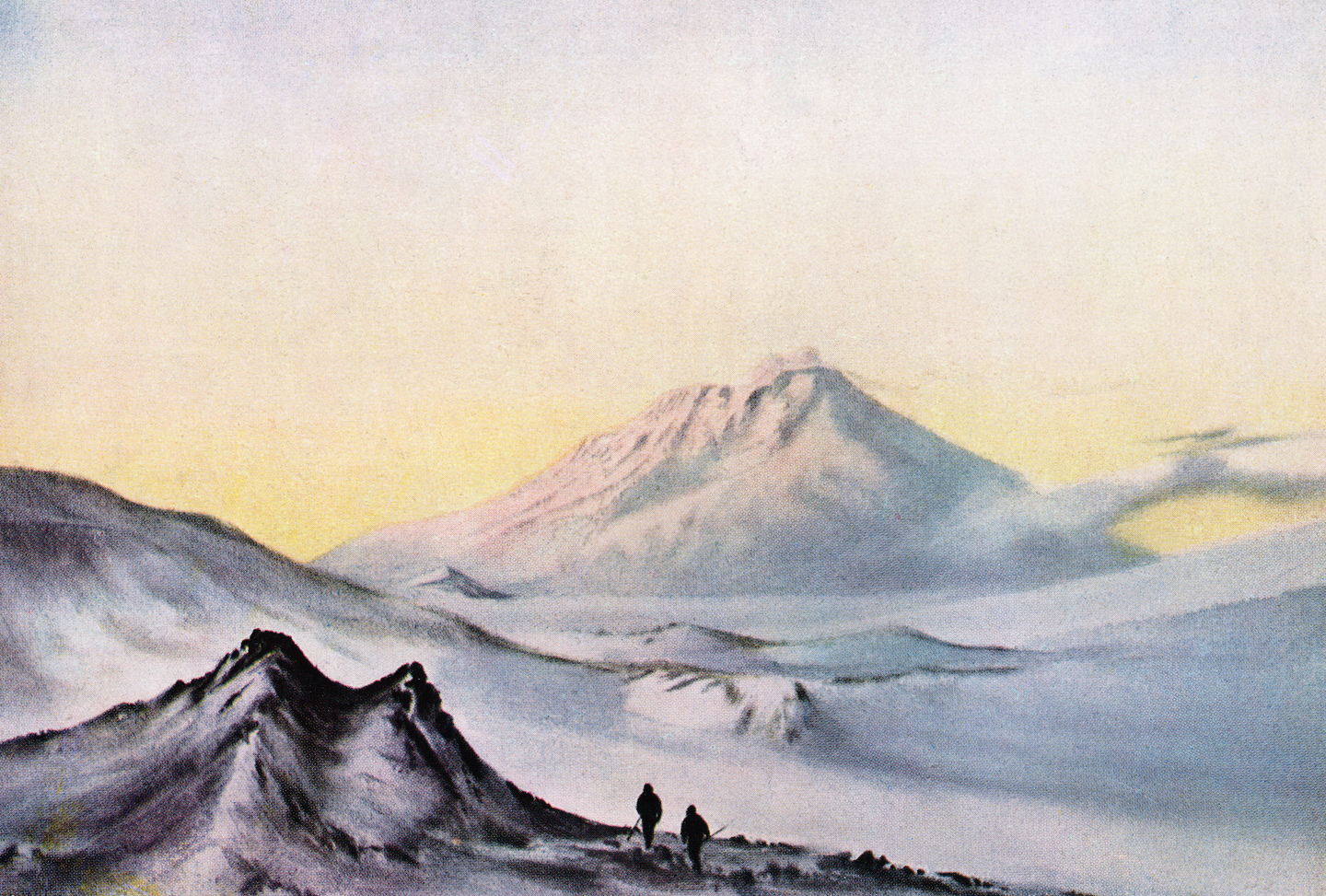
The mountain is the tallest active volcano in Antarctica.
Universal History Archive/Universal Images Group via Getty Images
During their research, they found traces of gold in the volcanic gases and in the snow near the volcano.
advertisement
According to IFL Science, these particles of the precious metal were even found as far as 1,000km (621 miles) away.
And yes, this volcano is still active today.
Philip Kyle, from the New Mexico Institute of Mining and Technology in Socorro, has explained that gold deposits can form in volcanic rock.
So, when the volcano spews lava and emits hot gases from its peak, which reaches 3,794 meters (12,448 feet), it also sends gold particles into the air.
advertisement
But just how much gold does this volcano produce, and what’s the name of this gold-spewing mountain, you might ask?
It's called Mount Erebus, and the tiny gold flecks that the geologists discovered being ejected range from '0.1 to 20 micrometers' in the volcanic gases and '60 micrometers' in nearby snow.
advertisement
While these amounts might seem small, scientists estimate that each day, the volcano ejects about 80g (2.8 ounces) of gold.
As per the latest figures from Gold.co.uk, the price of gold per gram stands at $75.76.
advertisement
This calculates to about $6,060 worth of gold being expelled from the volcano daily, although this would likely vary depending on the quality and other factors—bear in mind, I'm not a gold expert.
Yet, despite this fascinating natural phenomenon, Mount Erebus is visited for reasons that extend beyond its golden emissions.

Gold specks were found spewed out the mountain during an expedition in the early 90s.
Pexels / cottonbro studio
Mount Erebus is infamously recognized as the site of a major tragedy.
advertisement
On November 28, 1979, Air New Zealand Flight 901 collided with the mountain while flying over Ross Island, where Mount Erebus is located, as part of a scheduled Antarctic sightseeing flight that had been in operation since 1977.
Tragically, all 237 passengers and 20 crew members on board perished in the crash.
advertisement
Following this incident, Air New Zealand ceased all Antarctic flight tours.
This event has since been known as the Erebus disaster.