

Could This Be from a Movie? You Won't Believe It!
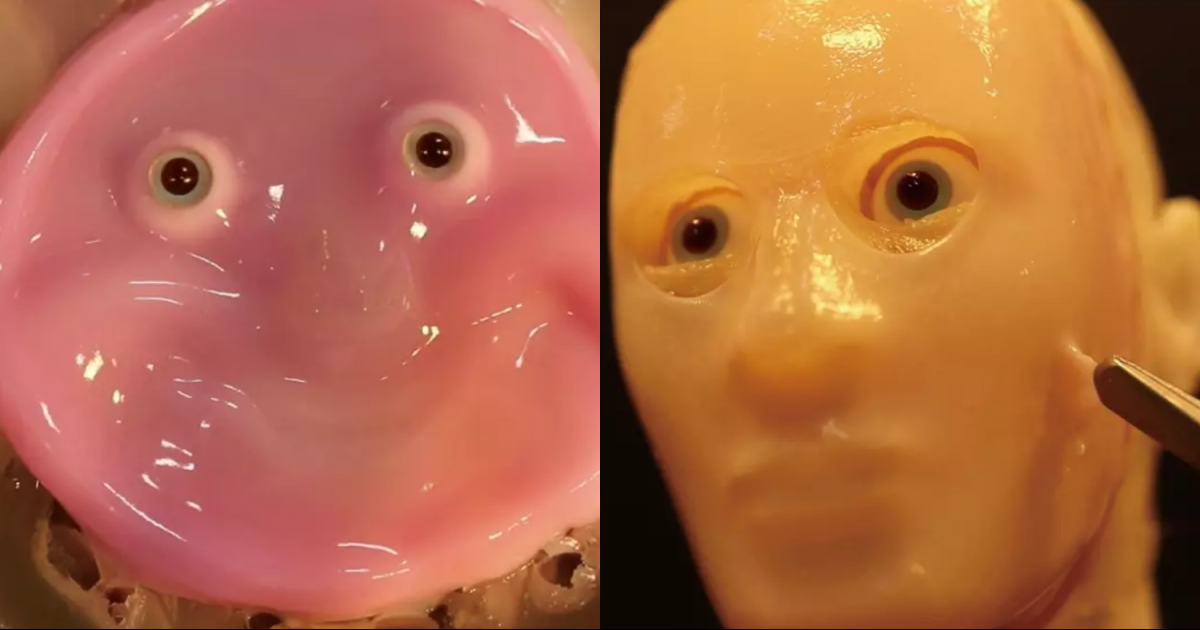
Scientists Made Robots With Lab-Grown Human Skin And Everyone's Spooked
By
Editorial Staff in
Science and Technology
On 3rd July 2024
advertisement
Robots have taken a huge leap forward in becoming even more lifelike, thanks to a breakthrough by scientists who have developed lab-grown 'human skin.'
In Tokyo, researchers have found a way to create skin tissue that closely mimics human skin and apply it to robots.
This innovative work is being led by Professor Shoji Takeuchi at the University of Tokyo, where his team has successfully covered a robot’s face with a layer of this human-like skin.
The skin was developed in their lab, crafted from a mix of human skin cells that sit on a resin base.
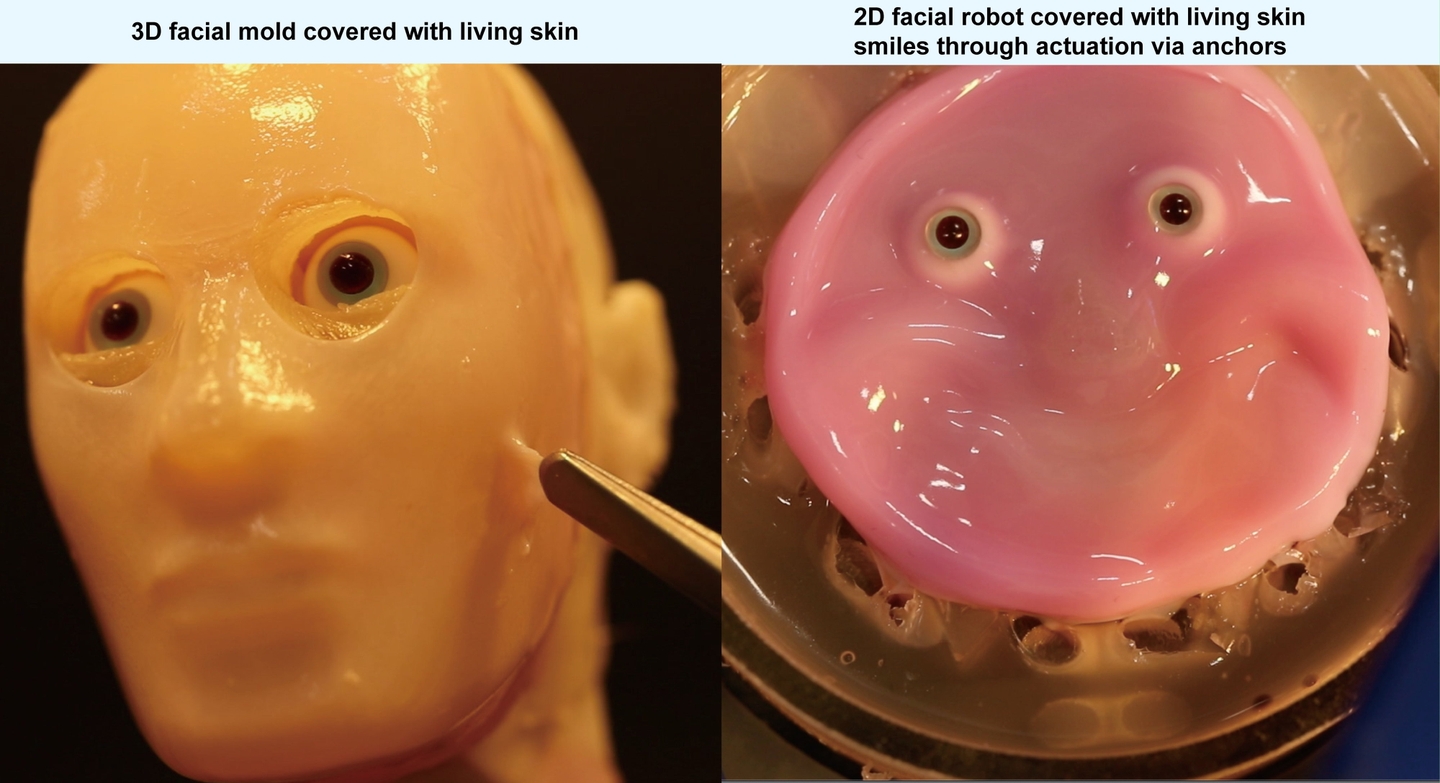
Researchers have created human-like skin.
SWNS / Takeuchi et al 2024
Professor Takeuchi shared with the Times, "This living skin would be particularly useful for robots that interact closely with humans, such as health care, service, companion and humanoid robots, where human-like functions are needed."
advertisement
He went on to explain, "The skin can repair itself if damaged, similar to how human skin heals wounds. And integrating sensory functions like touch and temperature detection is more feasible with living tissue."
So, what's the process behind creating this human-like skin? Takeuchi detailed that they started by developing dermal cells, then added epidermal cells.
This self-healing skin layer is then carefully attached to a robot’s face using perforations in the resin, which mimic the ligaments found under human and animal skin.
To secure the skin to the resin, the team used a collagen gel that fills these perforations, which Takeuchi describes as "It creates a smooth, strong bond between the skin and the robot."
advertisement
He highlighted, "The natural flexibility of the skin and the strong method of adhesion mean the skin can move with the mechanical components of the robot without tearing or peeling away."
However, the process isn't without its challenges, such as maintaining a sterile environment to prevent infections.
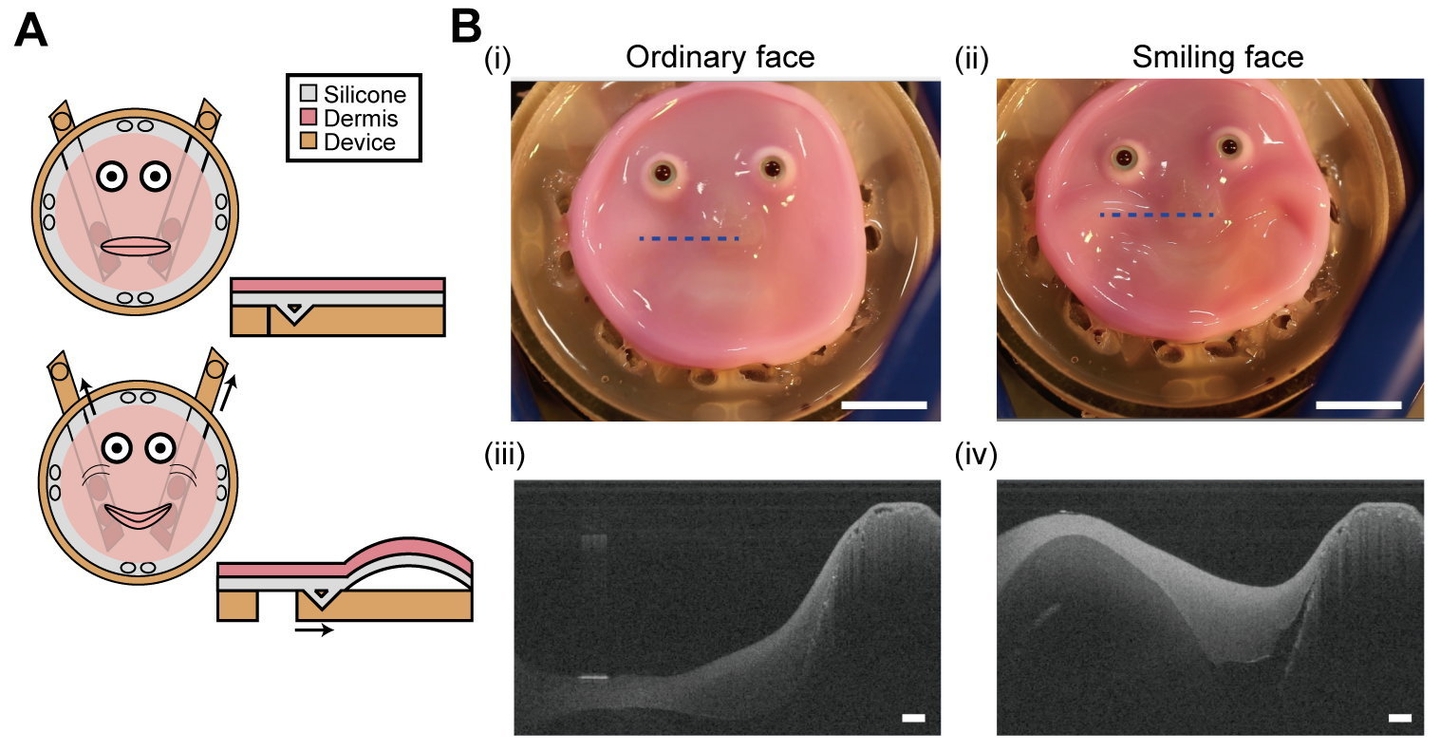
The skin can be layered on a robot's face.
SWNS / Takeuchi et al 2024
"Manipulating soft, wet biological tissues during the development process is much harder than people outside the field might think.
advertisement
"For instance, if sterility is not maintained, bacteria can enter and the tissue will die," Takeuchi noted.
He emphasized the potential of this technology, "However, now that we can do this, living skin can bring a range of new abilities to robots.
advertisement
"Self-healing is a big deal - some chemical-based materials can be made to heal themselves, but they require triggers such as heat, pressure or other signals, and they also do not proliferate like cells.
"Biological skin repairs minor lacerations as ours does, and nerves and other skin organs can be added for use in sensing and so on."
advertisement
Professor Takeuchi is optimistic about the applications of this development, which could revolutionize medical research in areas like skin aging, cosmetics, surgical procedures, and plastic surgery.
He is also excited about the possibility of enhancing the realism of this skin layer by adding features like 'sweat glands, sebaceous glands, pores, blood vessels, fat and nerves'.
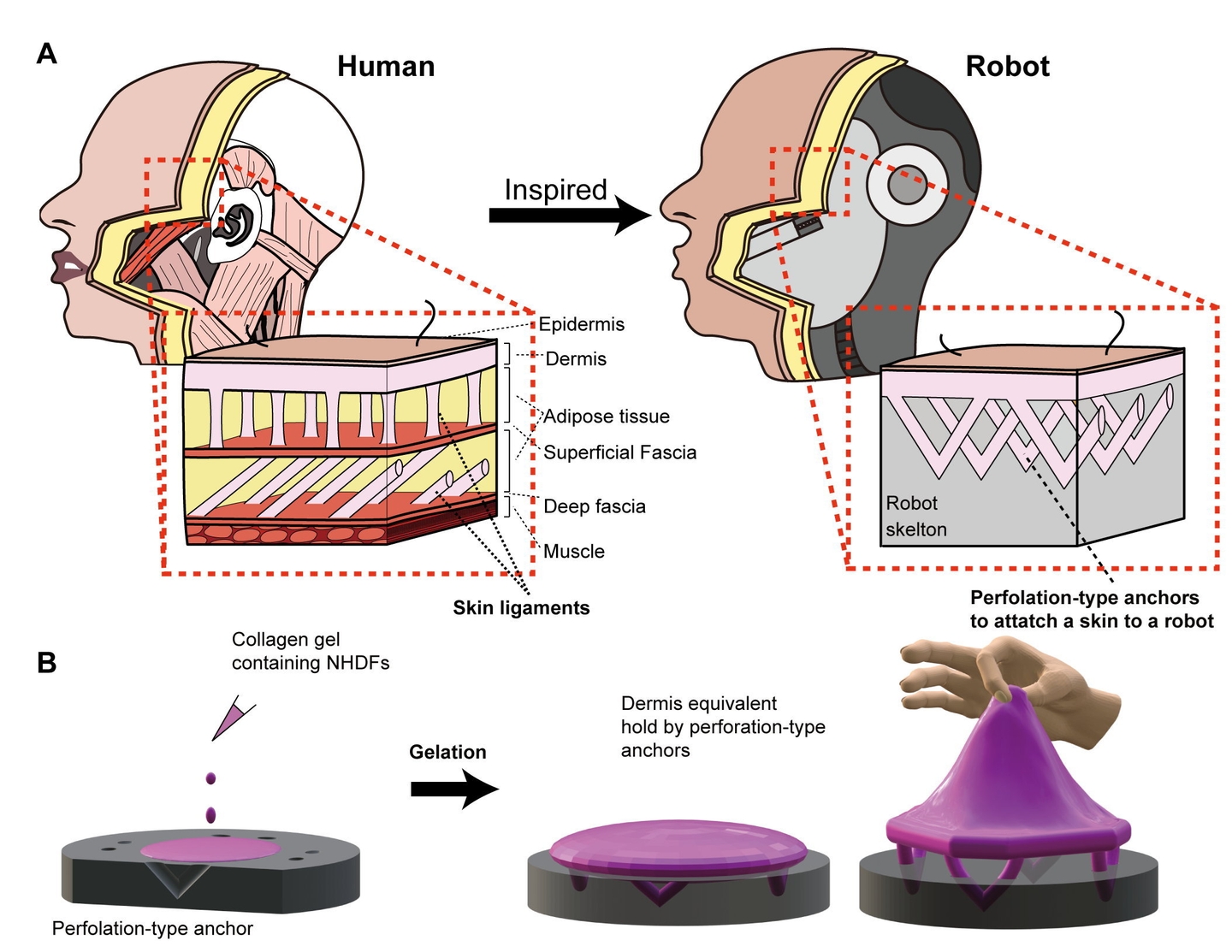
Takeuchi believes that even more realistic skin can be created with the addition of glands, pores, blood vessels and fat.
SWNS / Takeuchi et al 2024
"Of course, movement is also a crucial factor, not just the material, so another important challenge is creating humanlike expressions by integrating sophisticated actuators, or muscles, inside the robot," he concluded.
advertisement
"Creating robots that can heal themselves, sense their environment more accurately and perform tasks with human-like dexterity is incredibly motivating."