

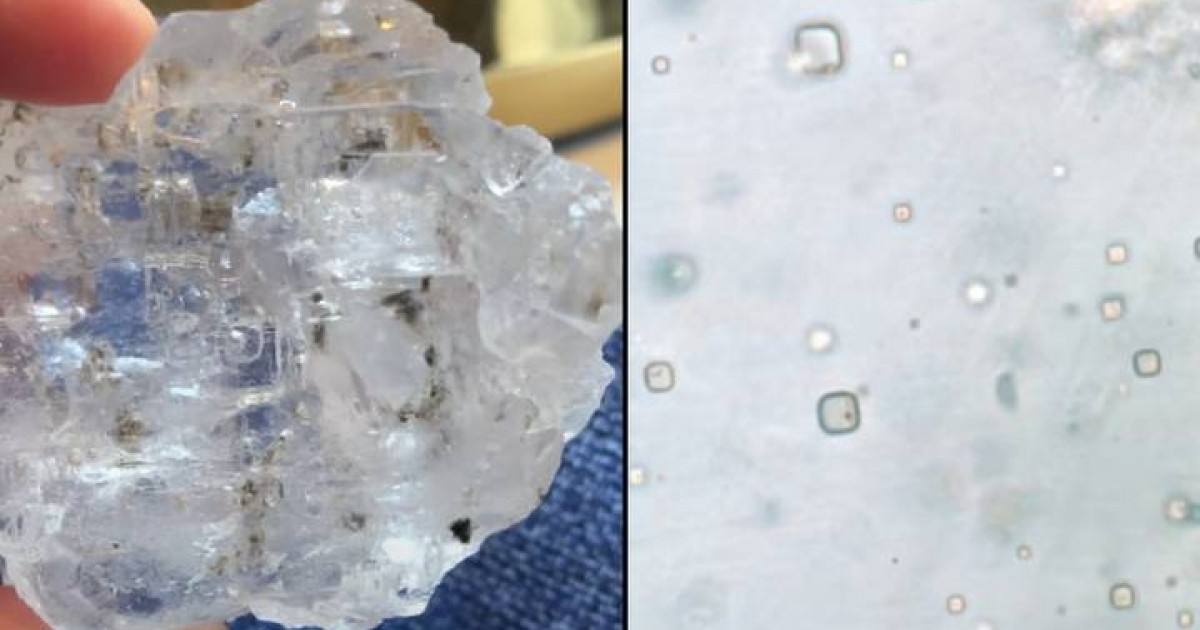
Scientists are set to crack open an 830-million-year-old rock salt crystal, which is said to contain ancient microorganisms that may still be alive. Remnants of prokaryotic and algal life have been found inside the crystal.
Scientists Set To Crack Open 830 Million Year Old Crystal Containing Ancient Microorganisms That Might Be 'Alive'
By
Zainab Pervez in
Science and Technology
On 28th May 2022
advertisement
Scientists are planning to crack open an 830-million-year-old rock salt crystal, which they believe contains ancient microorganisms that may still be alive.
Researchers from the Geological Society of America first announced their discovery of tiny remnants of prokaryotic and algal life inside an ancient halite crystal earlier this month.
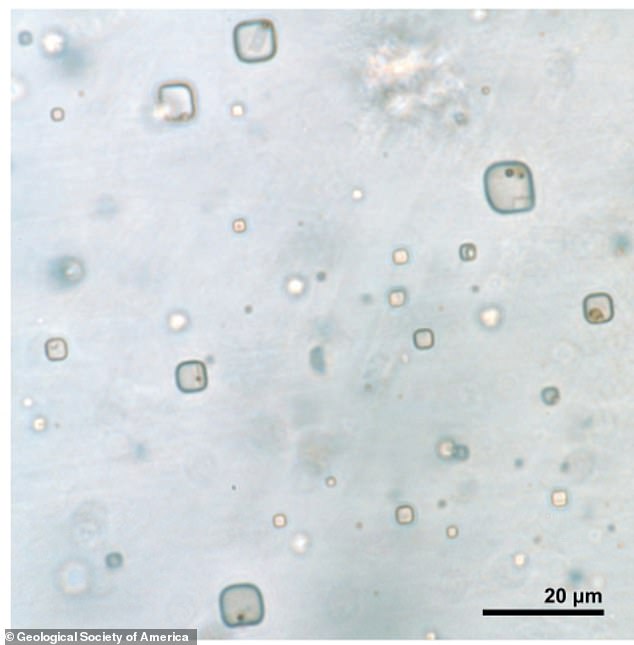
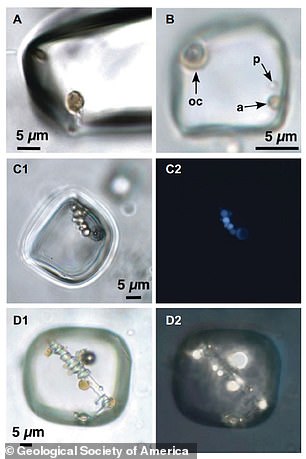
These organisms were found inside microscopic bubbles of liquid in the crystal, known as fluid inclusions, which could serve as microhabitats for the tiny colonies to thrive.
They explained that by using a selection of imaging techniques they had managed to discover tiny remnants of prokaryotic and algal life, which had been preserved within tiny, microscopic pockets of fluid within the crystal for millions of years.
Now the researchers want to crack open the crystal, to discover whether or not this ancient life is truly still alive.
While bringing 830-million-year-old life forms back into the modern world might not sound like the most sensible idea, researchers insist it will be carried out with the utmost caution.
advertisement
'It does sound like a really bad B-movie, but there is a lot of detailed work that's been going on for years to try to figure out how to do that in the safest possible way,' said study author Kathy Benison, a geologist at West Virginia University.
"There are little cubes of the original liquid from which that salt grew," Benison explained. “And the surprise for us is that we also saw shapes that are consistent with what we would expect from microorganisms. And they could be still surviving within that 830-million-year-old preserved microhabitat."
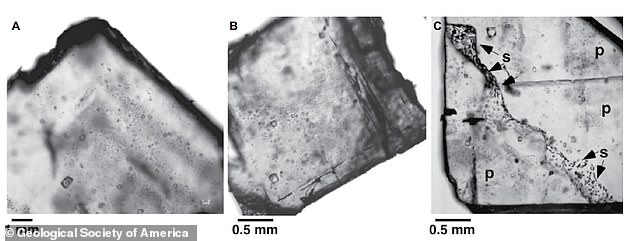
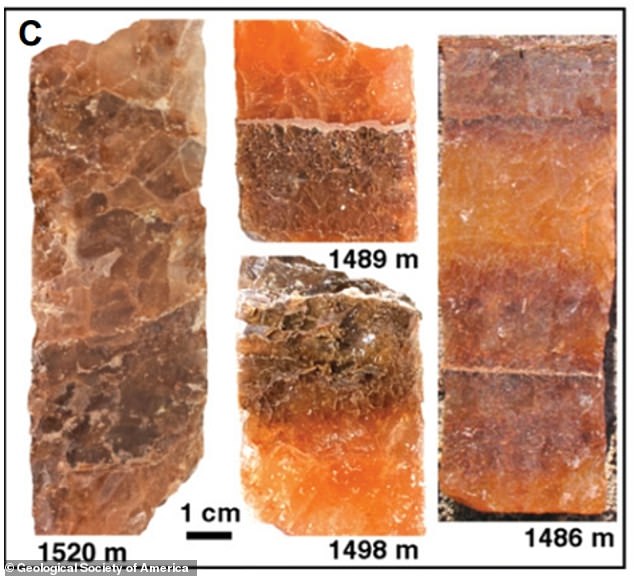
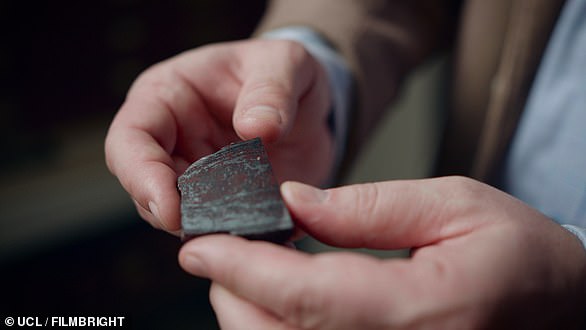
The extraordinary discovery was initially reported in the journal Geology on May 11. They discovered organic solids and liquids that were consistent in size, shape, and fluorescent response to cells of prokaryotes and algae in a chunk of halite from the 830-million-year-old Browne Formation in central Australia.
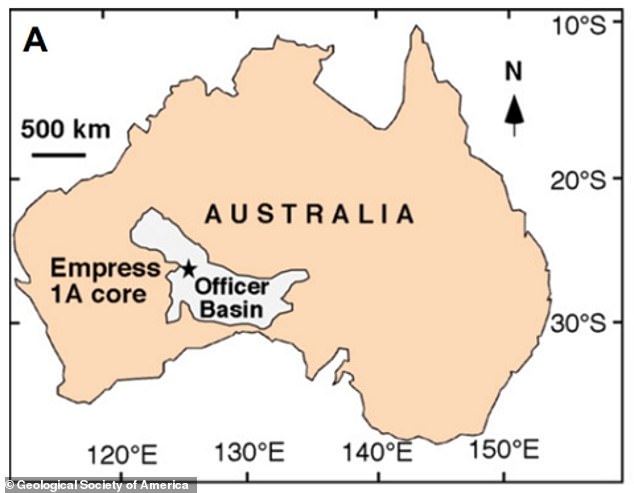
The discovery shows that microorganisms can remain well preserved in halite over hundreds of millions of years which has implications for the search for alien life in Mars, according to the researchers.
advertisement
It is possible that similar biosignatures could be detected in chemical sediments from Mars, where large salt deposits have been identified as evidence of ancient liquid-water reservoirs.
Bonnie Baxter, a biologist at Westminster College in Salt Lake City, was not involved in the study but offered her thoughts on the subject. She said that these findings weren't just a major step in studying the origins of life on Earth, but also opened the door to finding life on other planets.
"When we're thinking about Mars, we're talking about billions of years, probably, since microbial life could have been flourishing in the waters on that planet. And so we really need longer experiments in rocks that have been around longer on our planet in order to understand what could happen on Mars," she said.
advertisement
While it may sound implausible that the microorganisms inside the crystal could still be alive, living prokaryotes have previously been extracted from halite dating back 250 million years, so it is not impossible they could survive 830 million years.
'Possible survival of microorganisms over geologic time scales is not fully understood,' the researchers wrote in their study.
'It has been suggested that radiation would destroy organic matter over long time periods, yet Nicastro et al. (2002) found that buried 250 million-year-old halite was exposed to only negligible amounts of radiation.
'Additionally, microorganisms may survive in fluid inclusions by metabolic changes, including starvation survival and cyst stages, and coexistence with organic compounds or dead cells that could serve as nutrient sources.'
advertisement
Bonnie Baxter also said that the risk of unleashing an apocalyptic pandemic was relatively low.
'An environmental organism that has never seen a human is not going to have the mechanism to get inside of us and cause disease,' she told NPR.
'So I personally, from a science perspective, have no fear of that.'
Until now, the earliest known evidence of life on Earth was a 3.46-billion-year-old rock from Western Australia containing microscopic worm-like fossils.