Never overly demanding, the soft-spoken Scottish Fold welcomes laps slightly more than games of fetch. They simply enjoy your company and revel in spending time with you.
advertisement
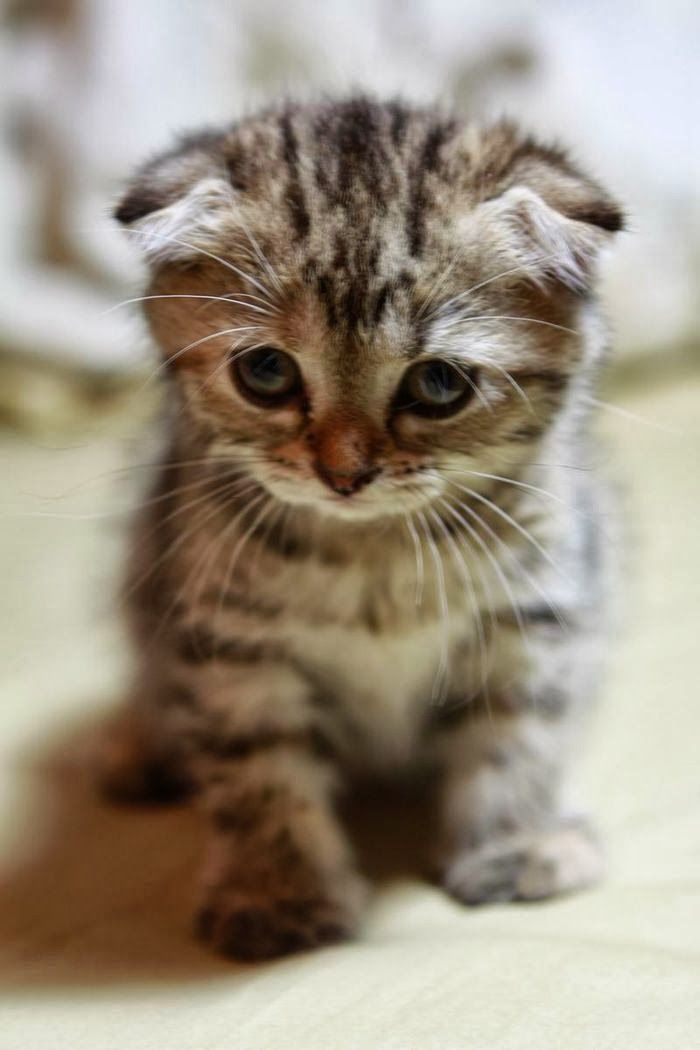
With her uniquely folded ears
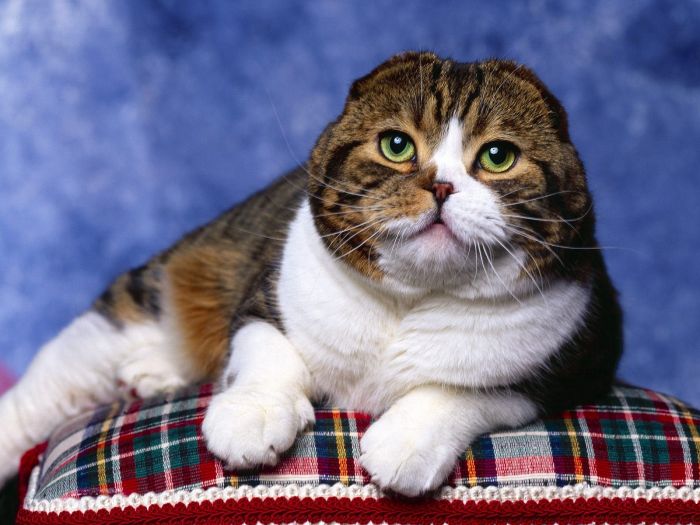
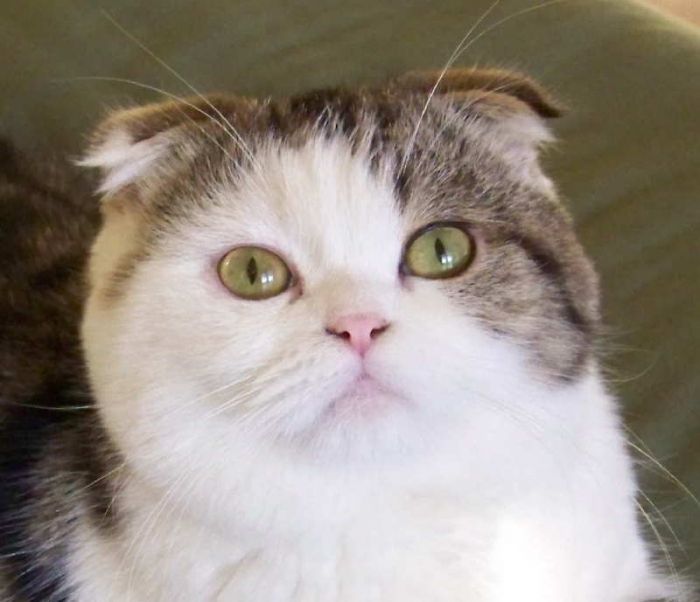
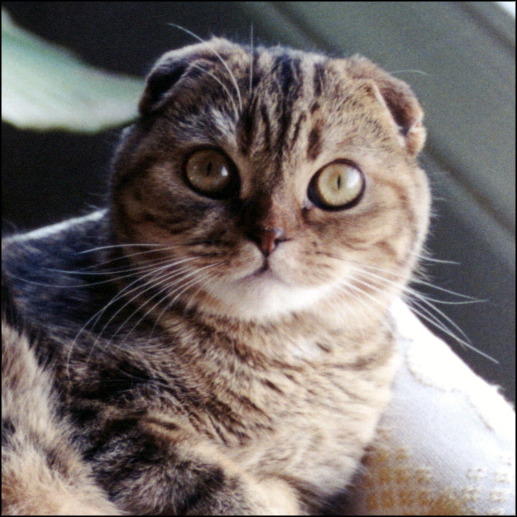
round face and wide eyes, the Scottish Fold is described as looking like a pixie, an owl or a teddy bear. A mellow, loving breed, this cat adapts easily to new environments and enjoys adults, children and other pets. The Scottish Fold usually bonds to one person, following you from room to room like a loyal puppy. This playful, intelligent breed has two coat varieties, longhair and shorthair.
What is a Scottish Fold?
The Scottish Fold is a very special breed of cat. They are good "people" cats with a temperament that is generally sweet, bright and quiet with an easy-going nature. They require minimal care and are a real treasure to have in your home.
advertisement
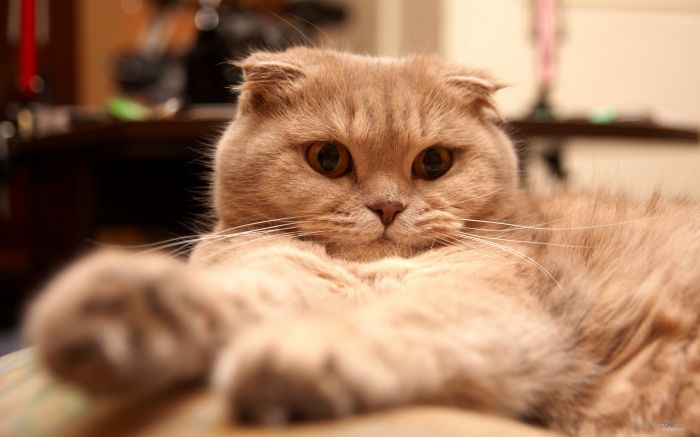
The Scottish Fold is a breed of domestic cat
with a natural dominant-gene mutation that affects cartilage throughout the body, causing the ears to "fold", bending forward and down towards the front of their head, which gives the cat what is often described as an "owl-like" appearance
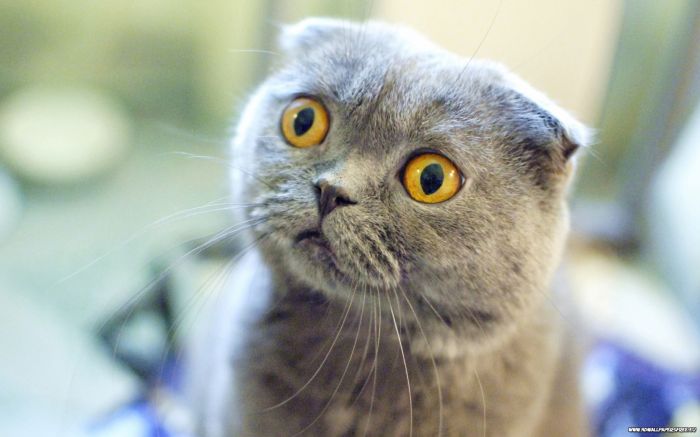
Originally called lop-eared
or lops after the lop-eared rabbit, Scottish Fold became the breed's name in 1966.[1] Depending on registries, longhaired Scottish Folds are varyingly known as Highland Fold, Scottish Fold Longhair, Longhair Fold and Coupari
advertisement
Scottish Fold History
All pure-bred Scottish Folds can trace their lineage back to a white barn cat named Susie, the first folded-ear cat discovered in the Tayside Region of Perthshire, Scotland, in 1961 by the breed founders, William and Mary Ross.
After receiving one of Susie's folded-ear kittens and with the help of English genetists, the Rosses started a breeding program using British Shorthairs and farm cats. These cats were first called "lops" after the lop-eared rabbits, but in 1966 they were renamed "Scottish Folds" in honour of their origin. Brought over to the U.S. in the early 70s and registered in the Cat Fanciers' Association, the shorthair Scottish Fold was entitled to compete for championship status by the 1978-79 show season. The longhair Scottish Fold was not accepted for competition in CFA until 1993.
advertisement
Physical Characteristics
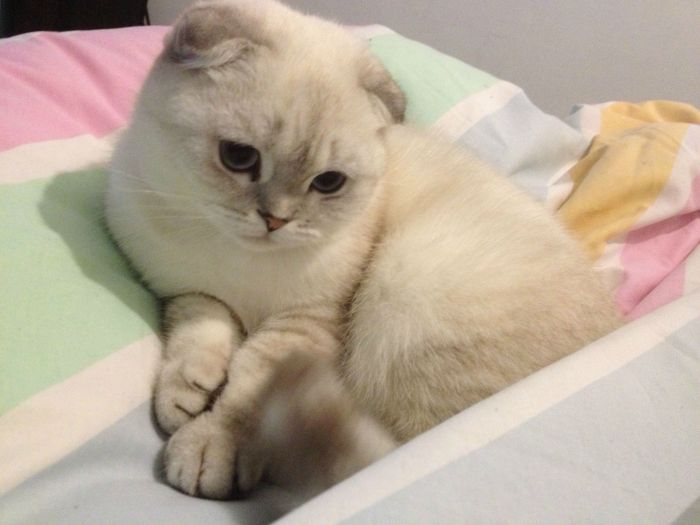
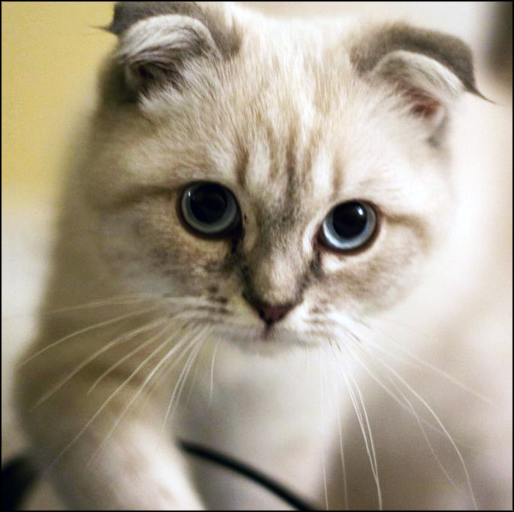
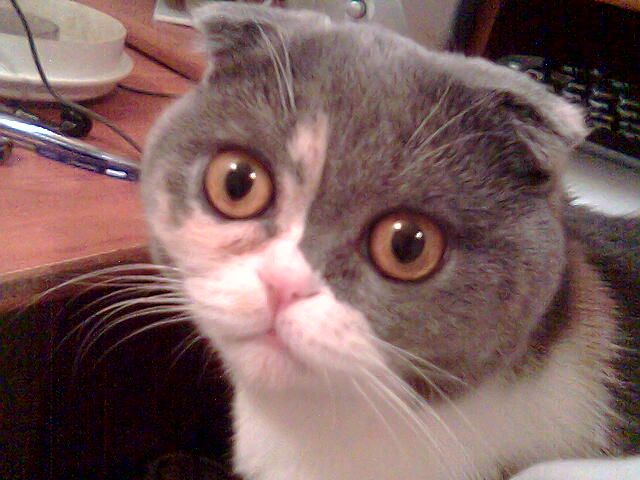
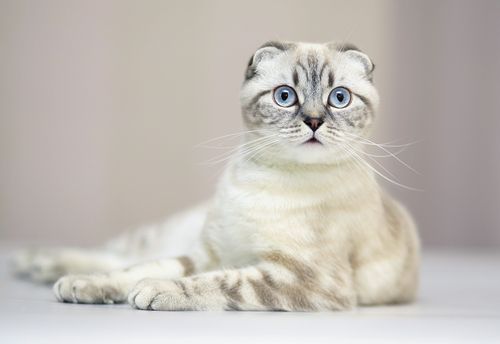
The Scottish Fold is recognized by its medium-sized body and unusual ears, which fold forward and downward, and are quite small. The ears begin to fold when they are three weeks old, pricking up at sudden noises and then laying back to display anger. Most Scottish Folds also have short, silky hair, although there is a long-haired variety as well. And while originally bred to have white coats, it can now be seen in a variety of colors.
advertisement
Personality & Temperment
It is a gentle, intelligent and docile cat. Extremely flexible and well-adjusted, the Scottish fold is also very affectionate. And though it can get extremely attached to you, it will not be a pest or a nuisance. Like many other cats, it enjoys playing, but is especially responsive to training.
advertisement
Health
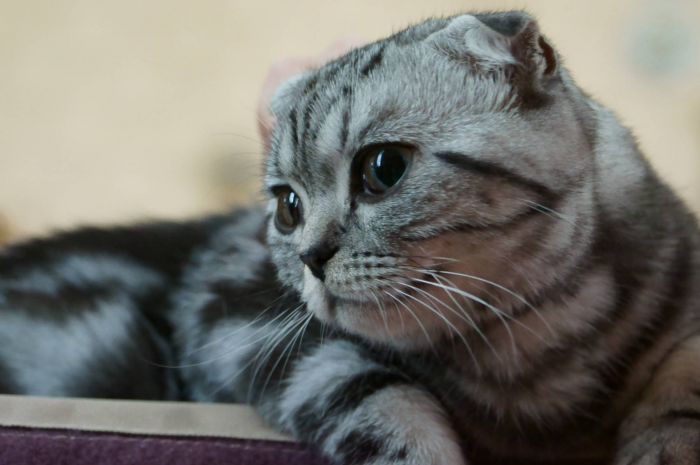
This breed can suffer from health problems, especially due to faulty breeding. (Crossing within the same breed can often causes deformities.) Folds that inherit the folded ear gene from both parents (homozygous Folds) are much more likely to develop congenital osteodystrophy -- a genetic condition which causes the bones to distort and enlarge. Early warning signs include a thickness or lack of mobility of the legs or tail.
advertisement
History
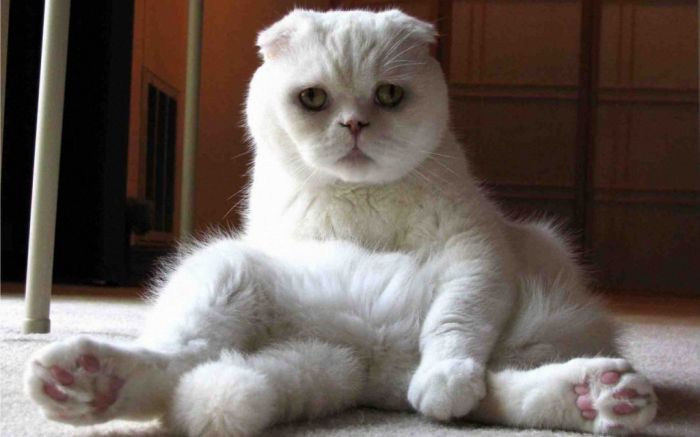
Often, the creation of a new cat breed hinges on a natural genetic mutation that occurs unexpectedly in an otherwise ordinary cat. Such was the case with the Scottish Fold. Members of the breed today can all trace their heritage back to Susie, a white cat with unusual folded ears who earned her keep as a mouser in a barn in Scotland's Tayside region. Susie might have lived her life in obscurity had she not been noticed in 1961 by a shepherd named William Ross who had an interest in cats. When Susie had kittens with a local tom, Ross acquired one of them, a female he named Snooks. In the natural way of things, Snooks had kittens, and one, a male was bred to a British Shorthair. Thus began the development of what were first known as "lop-eared cats," later as Scottish Folds, a nod to their country of origin and their defining characteristic.
advertisement
Other breeders became involved
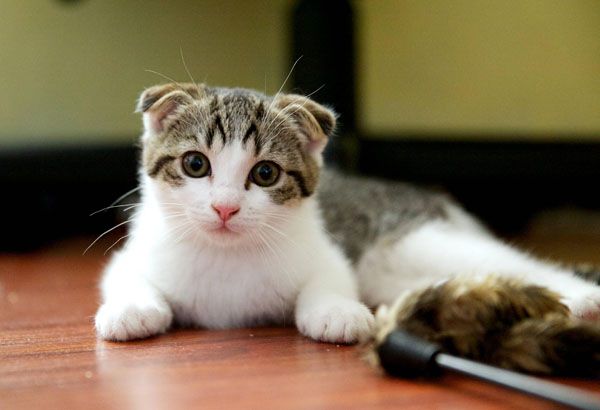
and it was determined that the gene mutation for the fold was dominant, meaning that if one parent passed on a gene for straight ears and the other a gene for folded ears, the resulting kitten would have folded ears. A gene for long hair was another gift Susie passed on to her descendants. The longhaired variety is known as a Highland Fold in some associations.
advertisement
Scottish Folds were first imported into the United States in 1971
By the mid-1970s, they had been recognized by most cat associations in North America. They can be outcrossed to American Shorthairs and British Shorthairs. Ironically, they are not recognized as a breed in their country of origin over concerns that the folded ear might lead to ear infections or deafness and because of a related cartilage problem.
advertisement
Scottish Folds come in two types: folded ear and straight (normal) ear.
The folded ear is produced by an incomplete dominant gene and is the result of a spontaneous mutation.
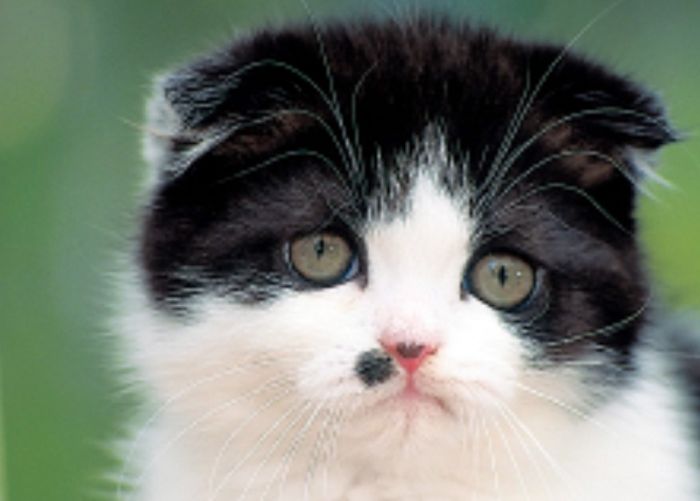
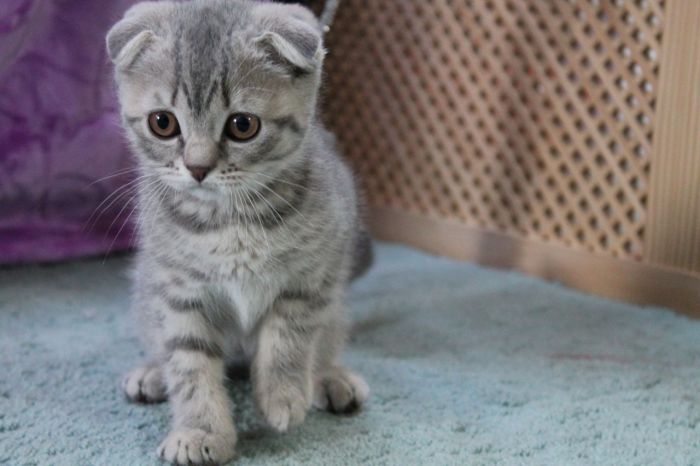
Scottish Fold kittens are born with straight ears
At about three to four weeks of age, their ears foldor they don't!
advertisement
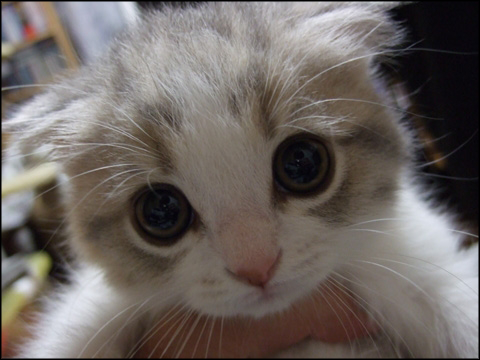
Despite being folded
the ears are still expressive and swivel to listen, lay back in anger, and prick up when the can opener whirrs. The fold in the ear can become less pronounced when the cat is in heat, upset, or ill. Although some Fold owners report an increased production of wax buildup in their cats' ears, apparently the folded ears do not make the cat more susceptible to mites or infections. The previously reported susceptibility to deafness may be related to the fact that many early Scottish Folds were white, and white cats can be prone to deafness unrelated to the fold gene.
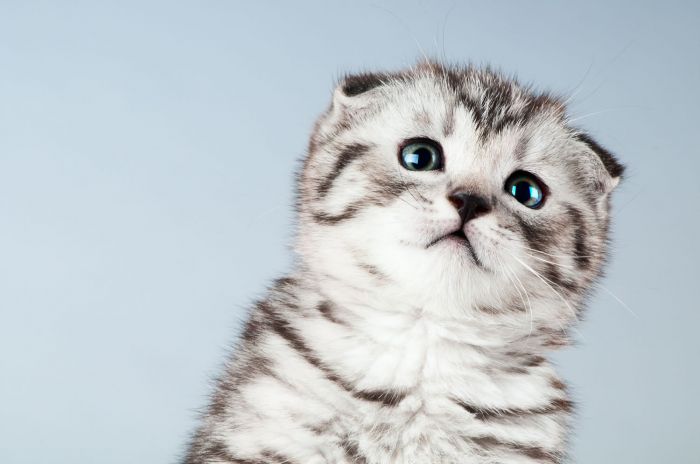
Scottish Folds are hardy cats, much like their barnyard ancestors.
Their disposition matches their sweet expression. They have tiny voices and are not extremely vocal. They adore human companionship and display this in their own quiet way.
advertisement
What They Are Like to Live With
This laid-back breed does not get startled easily and makes for a good travel mate or hostess when you wish to have company. This breed also likes other cats, dogs and even children.
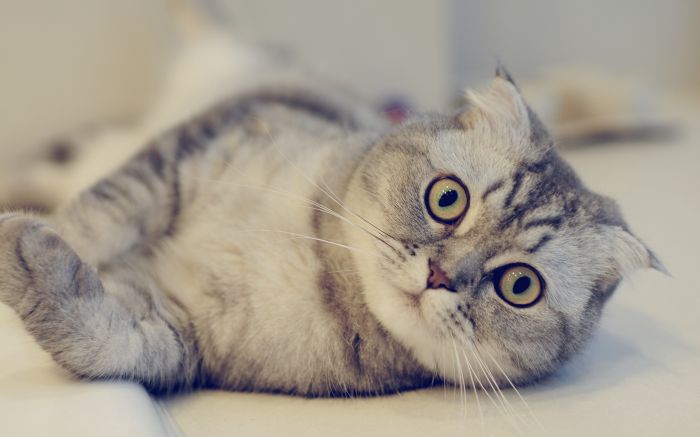
It is common for this breed to suddenly flop on their backs and go into a sound sleep in this position. They won't take offense if you regard them as catty couch potatoes.
Things You Should Know
If you have a longhaired Scottish Fold, be prepared to comb his coat three or four times a week to maintain a mat-free, healthy look.
The folded-ears tend to build up wax and need to be cleaned at least twice a month.
advertisement
Scottish Fold Cat Personality
Scottish Folds are intelligent, sweet-tempered, soft-spoken, and easily adaptable to new people and situations. They are very loyal and tend to bond with one person in the household. While they will usually allow others to cuddle and pet them, their primary attachment becomes quickly clear as they single out their chosen humans. They thrive on attention, but it must be on their own terms.
Health
Both pedigreed cats and mixed-breed cats have varying incidences of health problems that may be genetic in nature. A typical lifespan is 15 years. Problems that may affect the Scottish Fold include the following:
Degenerative joint disease, especially in the tail but also in the ankle and knee joints, causing pain or poor mobility. It's important to handle the tail carefully if it has developed stiffness.
Hypertrophic cardiomyopathy, a form of heart disease, has been seen in the breed, but it has not yet been proven to be a heritable form of the disease.