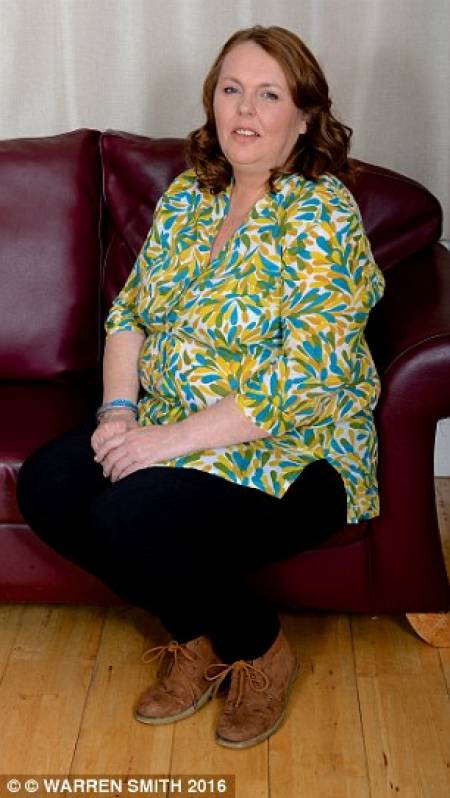
Beth Goodier was 16-year-old when just one day before her 17th birthday she slept on couch. Now what is shocking here is that she didn't wake up properly for six months.

She Fell Asleep And Hasn't Properly Woken Up In Five Years!
By
Editorial Staff in
Bizarre
On 8th December 2016
advertisement
Introduction
By rights, Beth Goodier should have finished university by now and started her training as a child psychologist. With a string of impressive exam results as well as a confident, outgoing personality, she was a young woman who had every reason to believe she had a bright future ahead of her.
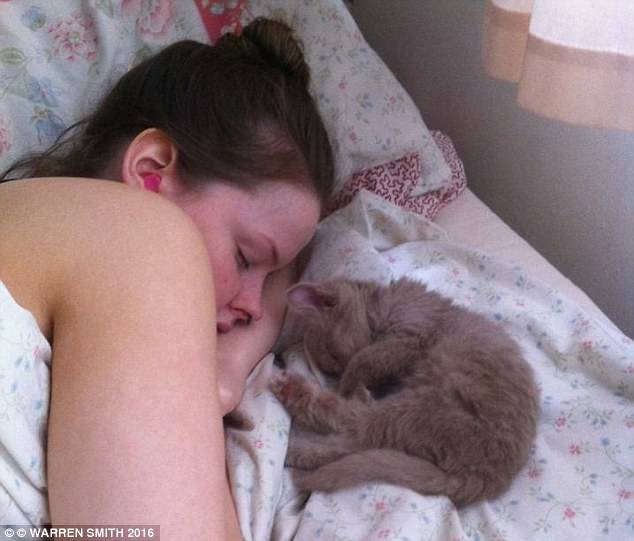
But then in the run-up to her 17th birthday in November five years ago, Beth fell asleep and didn't wake up properly for six months. For 22 hours a day, she kept sleeping, only waking in a dream-like trance to take a little food and drink and go to the toilet.

#1 Asleep 75 percent of the time
Over the past five years, Beth's mother, Janine, calculates that her daughter has been asleep 75 per cent of the time.
Beth, now 22, is one of more than 100 young people in Britain diagnosed with Kleine-Levin syndrome (KLS) known as Sleeping Beauty syndrome.
But that fairy-tale name is far from the grim reality faced by those youngsters who are sleeping through the most formative times of their lives.
advertisement
#2 This syndrome mainly hits teenagers
What is known is that it mainly hits teenagers the average age it strikes is 16 and lasts around 13 years, destroying young people's hopes of passing exams, going to university or forging a career.
At the moment, Beth is two-and-a half months into another deep sleep episode. Nothing not drugs, loud noises, pleading or cajoling will wake her.
So her life is spent in pyjamas in bed or asleep on the sofa. On the rare occasions she leaves her home in Stockport, Cheshire, to see a doctor, she must be pushed in a wheelchair because she is too tired to walk.
All Janine can do is sit and wait desperately for the 'on' switch to flick back in her daughter's head.
#3 It can happen anytime
'It is like night and day,' says Janine, 48. 'She might wake up tomorrow and then it's a race against time to live the life she should have had. She rushes off to catch up with her friends and get her hair done. But no one knows when she might fall asleep again.'
Beth first started feeling exhausted as a 16-year-old and Janine assumed it was normal teenage torpor.
Then, one evening, Beth fell asleep on the couch and wouldn't wake up. When Janine tried to rouse her, she was horrified when Beth could only babble incoherently in the voice of a five-year-old.

advertisement
#4 Even medical team had no idea about her condition at that time
Naturally, her mother assumed the worse: that she had a brain tumour or haemorrhage, and Beth was rushed to hospital. But all tests drew a blank.
Her condition baffled medical staff until a doctor remembered a colleague who had dealt with a similar case.
At the time, Beth had just recovered from tonsillitis, and her medical team suspects the illness was the trigger.
Researchers believe an infection may set off inflammation in the brain in people with a genetic predisposition, and this may damage the thalamus and hypothalamus, the areas responsible for sleep and sensory input.
Since her diagnosis, Beth has been asleep more than she has been awake, sleeping through many of her birthdays and Christmases, as well as holidays. When she wakes up, she has no recollection she was ill or realisation that time has moved on.

advertisement
#5 What hurt her when she woke up
'The most horrible symptom is her confusion,' says Janine. 'When she wakes for a few hours a day, she does not know where she is and becomes very agitated.
'The toughest year was when her friends finished their A-levels and went off to university, because Beth knew when she woke up that it should have been her, and that hurt her badly. And when she hurts, I hurt.'

advertisement
#6 Let her sleep, for when she wakes, she will shake the world
She could not fulfil her goal of becoming a special effects make-up artist for films because to avoid a relapse, she must get plenty of normal sleep and work regular hours.
For Beth's mum Janine, it's a long waiting game for her daughter to wake up and resume her life. All she can do is watch and try to look forward to the day Beth finally wakes for good.
Normally this happens at some point in a sufferer's mid-20s, when the time between episodes become longer before the conditions burns itself out. At the moment, that day seems a long way off.
'One day, I want Beth to be able to travel, to have a family, to go back to university, to be the woman she was meant to be,' says Janine.
'When I watch her, I think of that quote: 'Let her sleep, for when she wakes, she will shake the world.' '