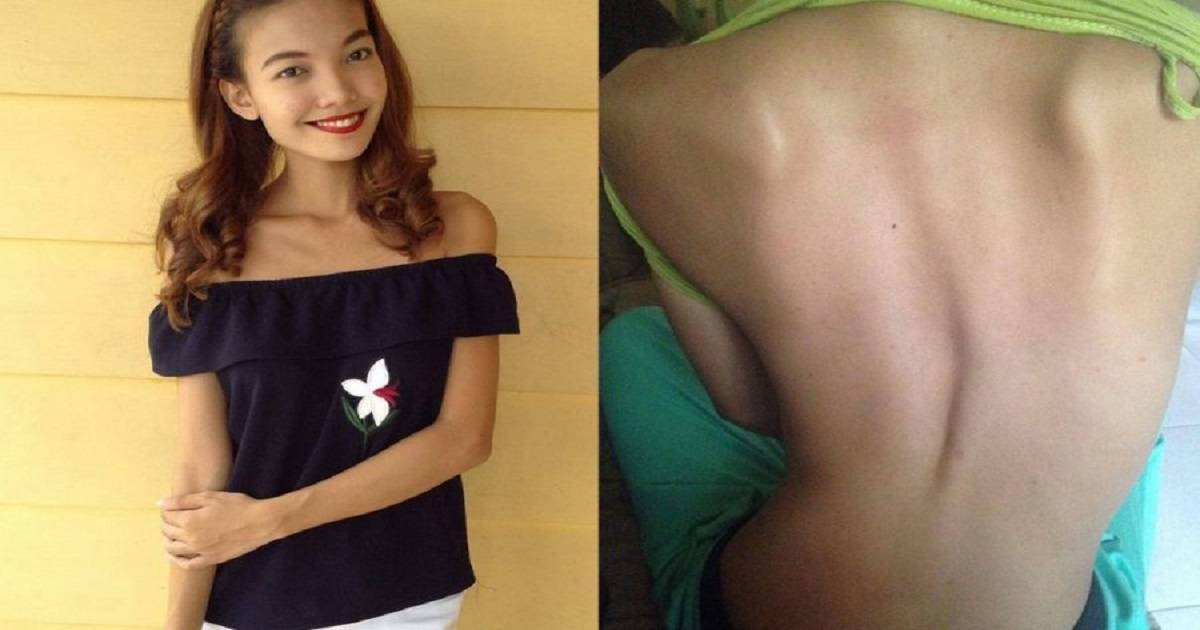
She Was Always Thin Despite Eating More Than An Average Person But Her Condition Is No Joke!
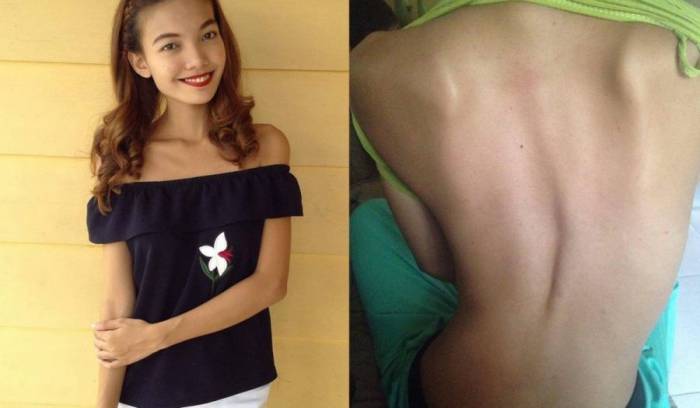
People would tell her that she looked so thin like she wasn’t eating anything—but she eats more than anybody!
Do you want a skinny body despite eating all the food you want? Many people want to lose weight and NEVER gain weight again even after eating so much. This woman doesn’t gain weight despite eating more than an average person—but it isn’t as easy as we expect.
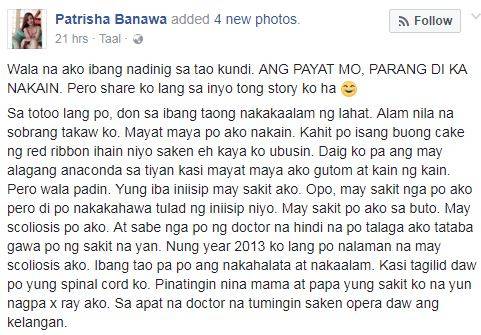
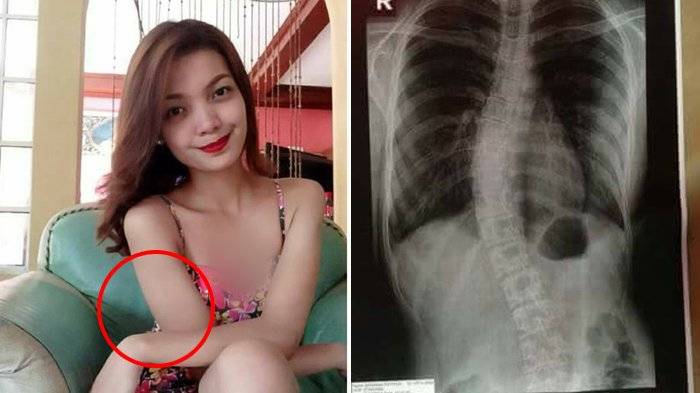
#1 A netizen shared her experience with the condition on Facebook.
She added that people would always say that she is so thin – it appeared as though she doesn’t eat.
#2 The netizen, Patrisha Banawa’s status has recently gained 4.9 thousand likes as of this writing.
Even other netizens shared her post in their respective timelines for 2,680 times. Some even tagged their friends in the comments section and indicated that they should read Patrisha’s story.
#3 In the post, she mentioned that she loves to eat food.
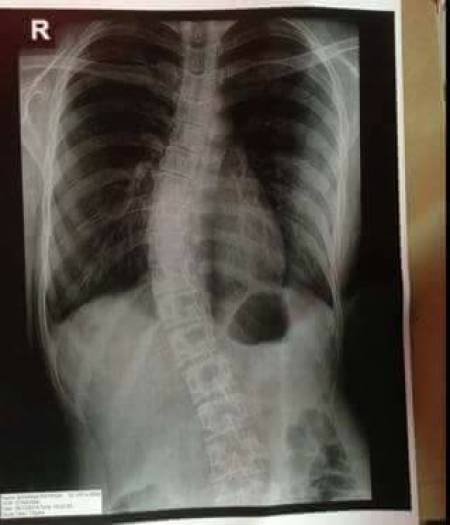
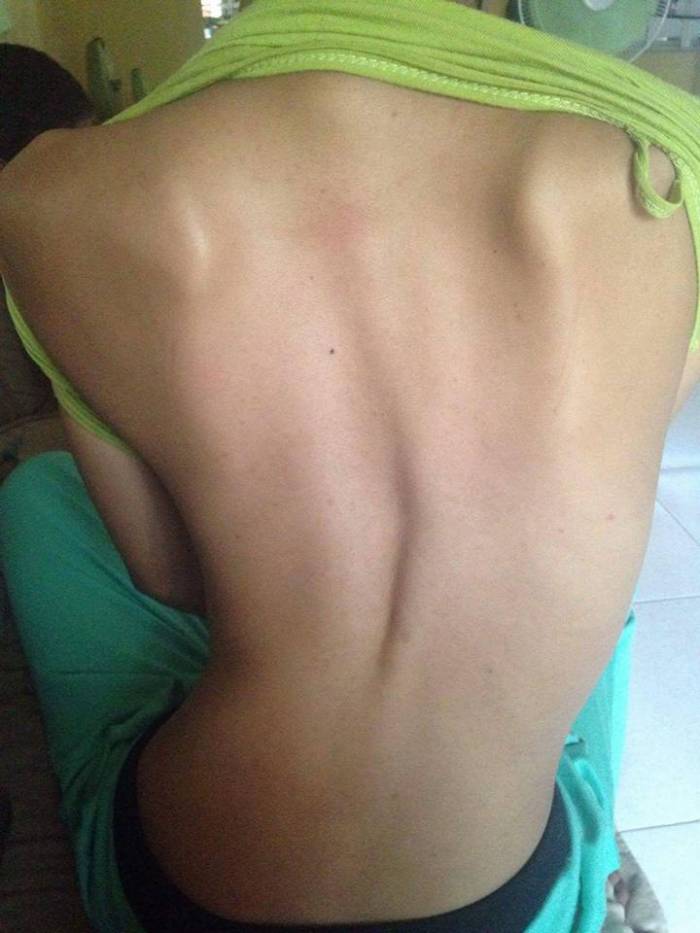
She likes to eat food very much but unfortunately, it doesn’t show on her body. This was because she has scoliosis. In 2013, she found that she had the condition.
#4 Though scoliosis doesn’t seem like a deadly disease, the pain from it is definitely unbearable.
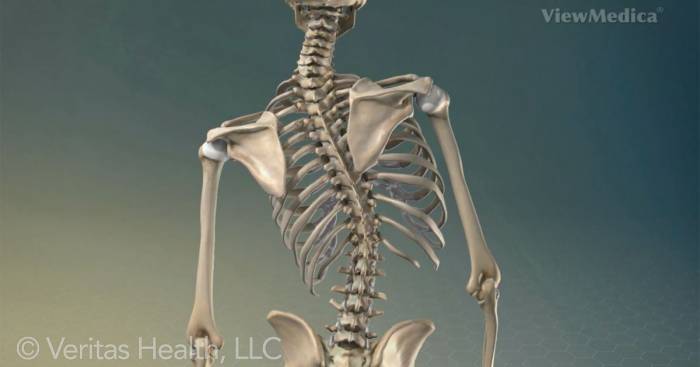
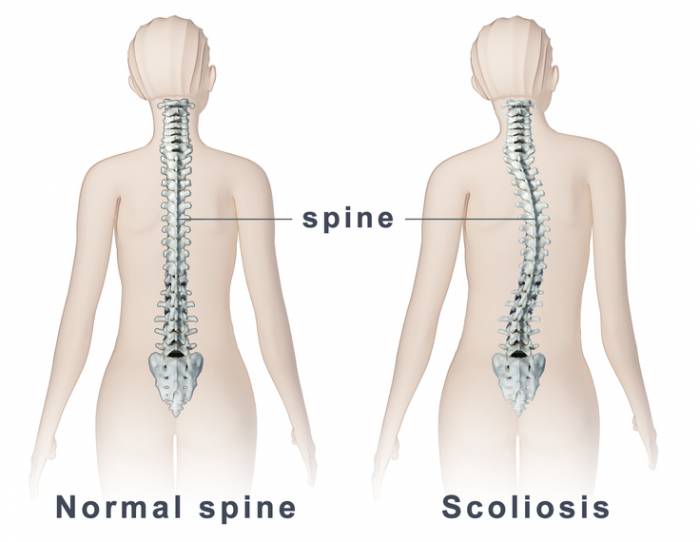
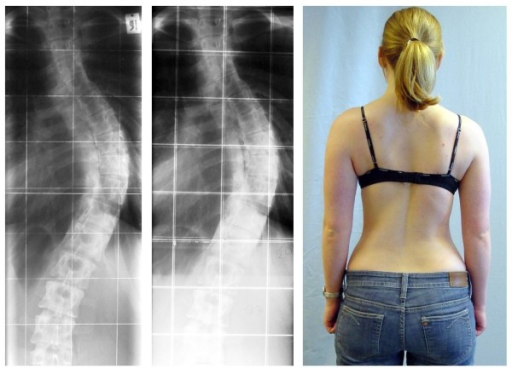
If you look at someone’s back, you’ll see that the spine runs straight down the middle. When a person has scoliosis, their backbone curves to the side.
#5 People would often criticize her for being too thin, looking too haggard, and even looking as if she doesn’t eat.
But Patrisha says she eats so much, but never gains weight. But it doesn’t come easy. The pain she experiences from the illness can be unbearable at times.
#6 According to her, she would feel as if her internal organs are squished because of her spine’s position.
She would often feel nauseous and would have a hard time breathing.
#7 She also cited that people would criticize her for ‘over-acting’ when she complains about the pain.
But it wasn’t the case at all. She says she only complains about the pain when it reaches extreme levels. Her post warns other scoliosis sufferers to have their condition treated as soon as possible—and for them NOT to carry heavy objects.
#8 Her condition didn’t restrict her from entering a pageant in 2014.
She said that she aspired to be a beauty queen so she joined the pageant without thinking about her condition. It is to be noted that in pageants, one is supposed to stand as tall and as straight as possible.
#9 She passed all of that and won as the first runner-up in the competition.
She also added that despite what people are thinking, scoliosis may be painful for the person afflicted. She mentioned that there were times she couldn’t stand for long periods.
#10 Going through so much of pain, she is happy in life and urged everyone with scoliosis to look after themselves.
#11 What Is Scoliosis and What Causes It?
If you look at someone’s back, you’ll see that the spine runs straight down the middle. When a person has scoliosis, their backbone curves to the side.
The angle of the curve may be small, large or somewhere in between. But anything that measures more than 10 degrees is considered scoliosis. Doctors may use the letters “C” and “S” to describe the curve of the backbone.
You probably don’t look directly at too many spines, but what you might notice about someone with scoliosis is the way they stand. They may lean a little or have shoulders or hips that look uneven.
#12 What Causes Scoliosis?
In as many as 80% of cases, doctors don’t find the exact reason for a curved spine. Scoliosis without a known cause is what doctors call “idiopathic.”
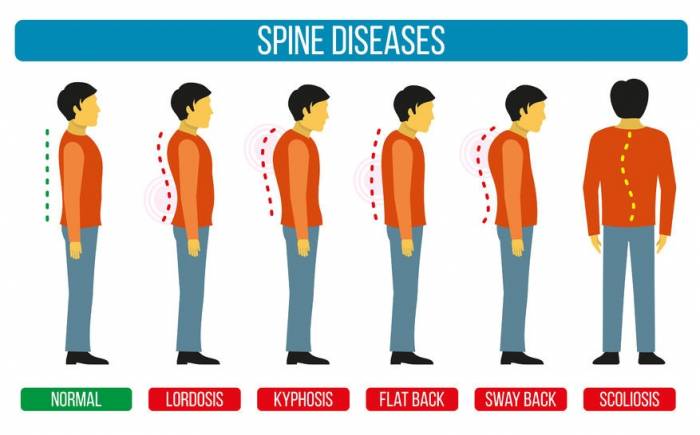
Some kinds of scoliosis do have clear causes. Doctors divide those curves into two types -- structural and nonstructural.
In nonstructural scoliosis, the spine works normally but looks curved. Why does this happen? There are a number of reasons, such as one leg’s being longer than the other, muscle spasms, and inflammations like appendicitis. When these problems are treated, this type of scoliosis often goes away.
#13 In structural scoliosis, the curve of the spine is rigid and can’t be reversed.
Causes include:
Cerebral palsy
Muscular dystrophy
Birth defects
Infections
Tumors
Genetic conditions like Marfan syndrome and Down syndrome.
#14 Congenital scoliosis begins as a baby’s back develops before birth.
Problems with the tiny bones in the back, called vertebrae, can cause the spine to curve. The vertebrae may be incomplete or fail to divide properly. Doctors may detect this condition when the child is born. Or, they may not find it until the teen years.
Family history and genetics can also be risk factors for idiopathic scoliosis. If you or one of your children have this condition, make sure your other kids are screened regularly.
Scoliosis shows up most often during growth spurts, usually when kids are between 10 and 15 years old. About the same number of boys and girls are diagnosed with minor idiopathic scoliosis. But curves in girls are 10 times more likely to get worse and may need to be treated.
Scoliosis diagnosed during the teen years can continue into adulthood. The greater the angle of the spine curve, the more likely it is to increase over time. If you had scoliosis in the past, have your doctor check your back regularly.
Degenerative scoliosis affects adults. It usually develops in the lower back as the disks and joints of the spine begin to wear out as you age.
#15 Can It Be Prevented?
No. So forget the rumors you may have heard, such as, “Childhood sports injuries can cause scoliosis.” Not true.
#16 Likewise, if your kids are in school, you may be concerned about the weight of the textbooks they carry.
While heavy backpacks may cause back, shoulder, and neck pain, they don’t lead to scoliosis.
#17 And what about poor posture?
The way a person stands or sits doesn’t affect their chances for scoliosis. But a curved spine may cause a noticeable lean. If your child isn’t able to stand upright, ask your doctor to look at her spine.